Plant care card
Basil
Ocimum basilicum · Albahaca
Also called sweet basil
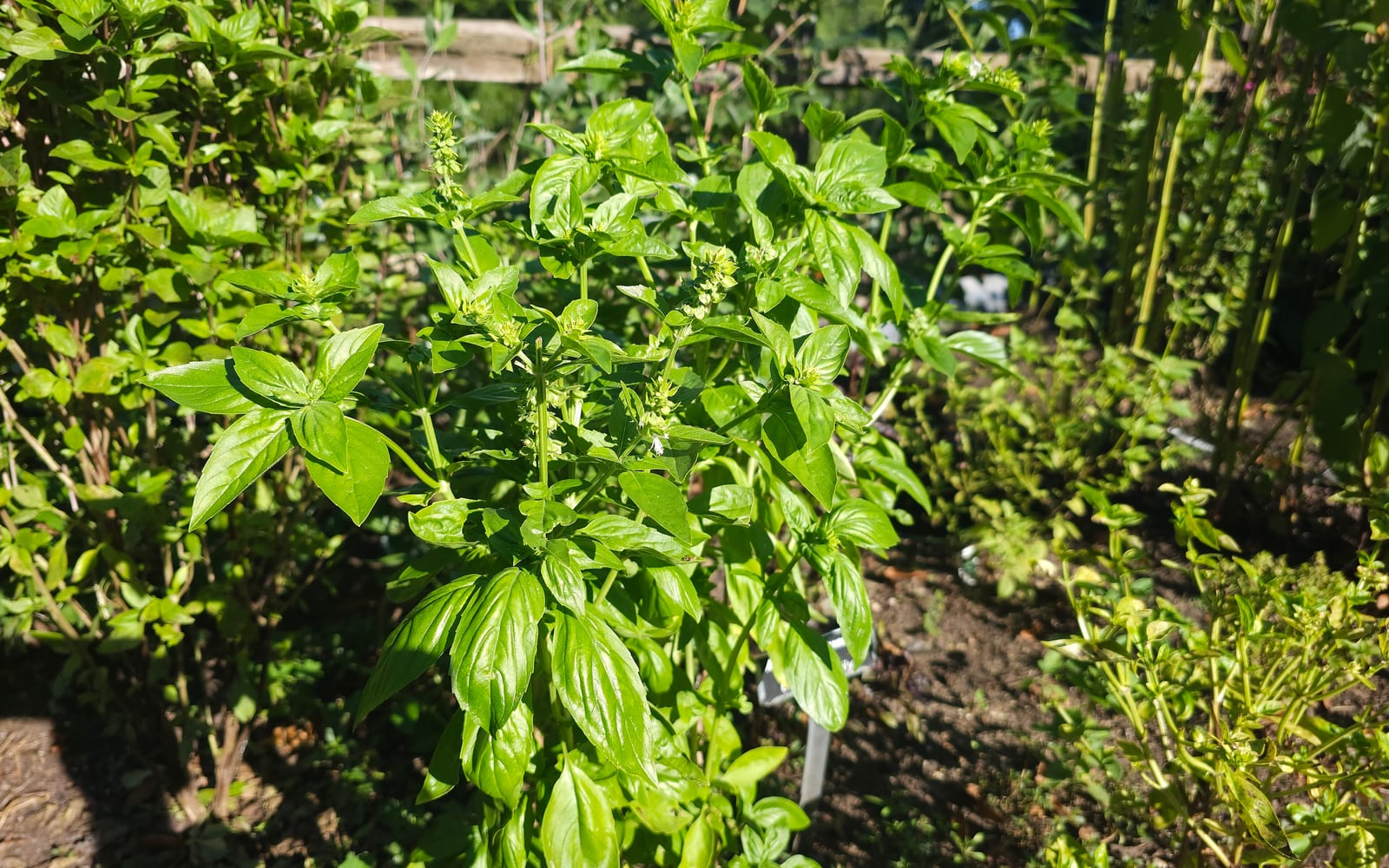
Photo by TheTechnician27 on Wikimedia Commons

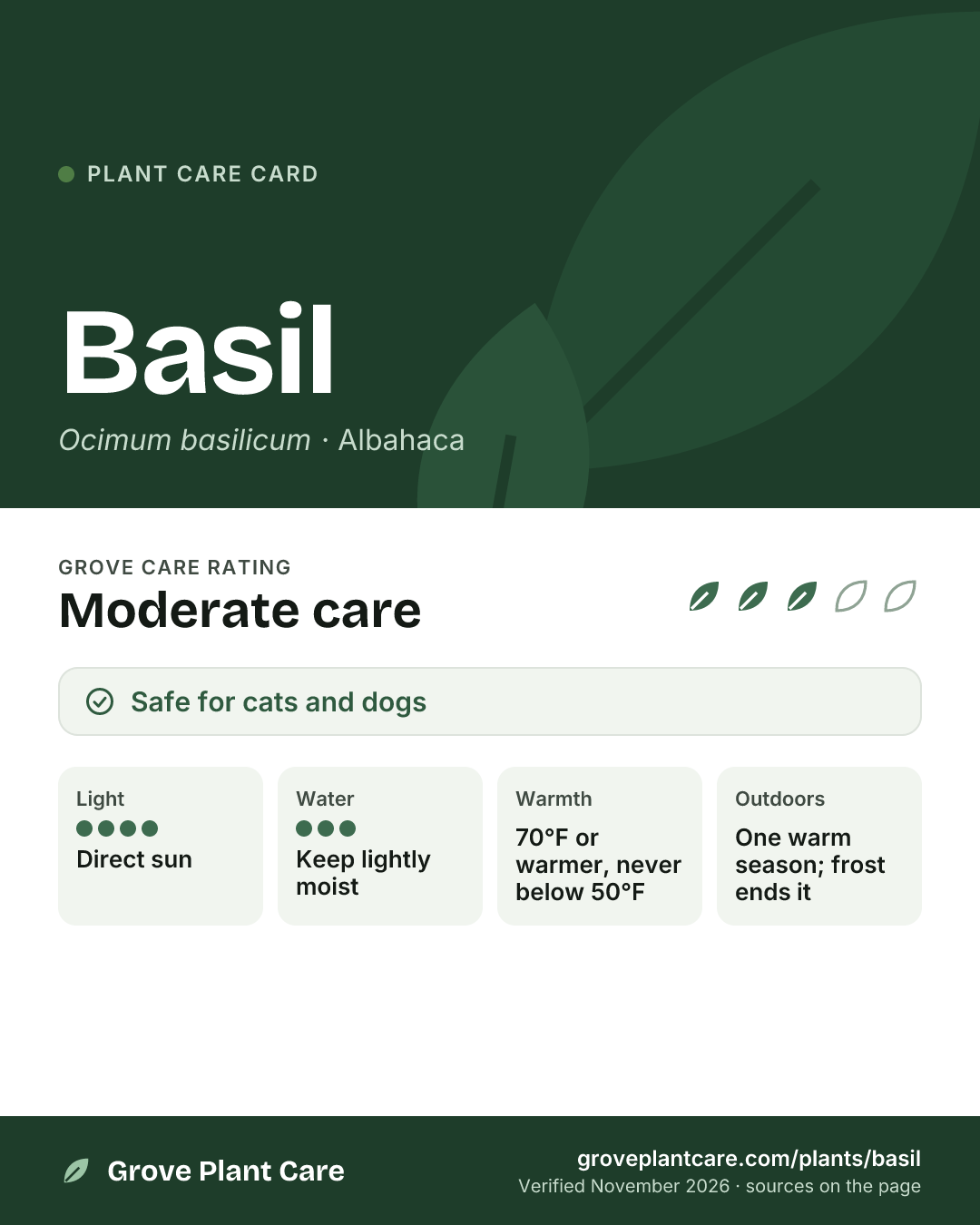
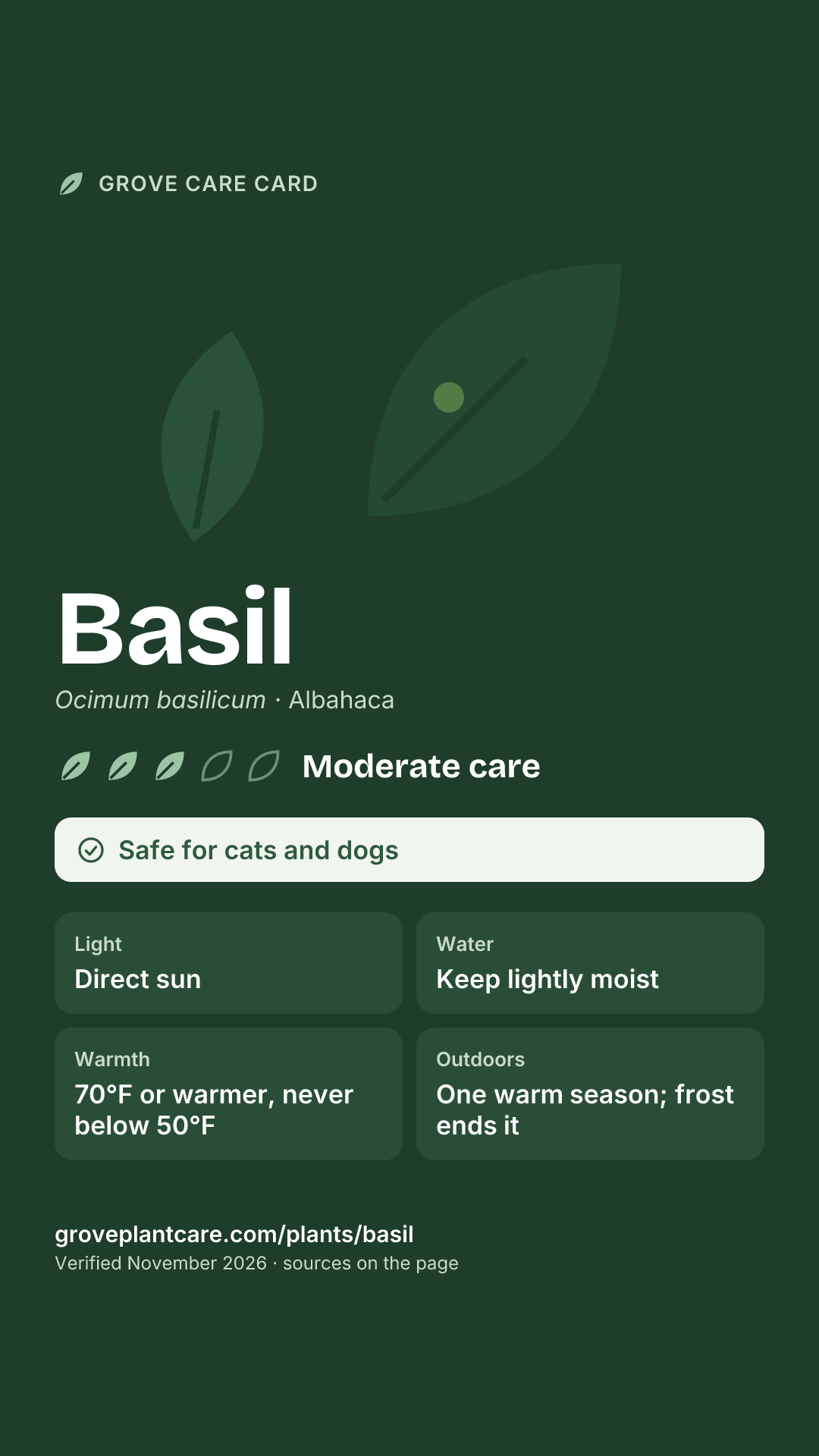
Basil is a warm-weather herb that wants at least 6 hours of sun (or a grow light), soil that stays lightly moist, and temperatures above 50°F (10°C). Pinch the tips and the flower buds often, and it keeps making leaves for months. Cold and a dried-out pot are what usually ruin it. The ASPCA lists basil as non-toxic to cats and dogs.
Non-toxic to cats and dogs
No signs of poisoning listed. Eating a lot of any plant can still upset a pet’s stomach. Children: A kitchen herb; NC State lists it as edible.
Pet poison line: ASPCA (888) 426-4435
Good for: snipping for cooking, sunny windowsills and patio pots, bees and butterflies, if you let a plant flower · Think twice if: your sunniest window gets cold in winter, you often forget to water.
Needs at a glance
- Light4 of 4 · Direct sun6 hours of direct sun, or a grow light
- Water3 of 3 · Keep lightly moistNever let the pot dry out; water at the base and keep leaves dry
- Humidity1 of 3 · AverageKeep the leaves dry and the air moving
- Soil when pottedRich, well-drained mixMoist but never soggy, in a pot with drainage holes
Indoors: best at 70°F (21°C) or warmer. Keep it above 50°F (10°C) and away from drafts and heat vents.
How the rating adds up
0 = easiest · 1 = moderate · 2 = hardest
- Missed waterings2 of 2 · HardestWilts and suffers when a pot dries out
- Light flexibility2 of 2 · HardestNeeds 6 hours of sun or a grow light
- Humidity0 of 2 · EasiestNo need for humid air; dry leaves help it stay healthy
- Pests and disease1 of 2 · ModerateDowny mildew in humid summers; beetles, slugs and aphids
- Sensitivity to change1 of 2 · ModerateCold below 50°F (10°C) damages the leaves
Growing outdoors
Each year: grown for one warm season. Frost kills it, so it is sown or planted again each year.
Elsewhere: summer outside in full sun, 6+ hours. Bring it in before nights drop below 50°F (10°C).
- Containers and window boxes
- Herb and vegetable gardens
- A summer annual in most climates
Sources: NC State, Penn State Extension, UF/IFAS, Illinois Extension, Clemson, Maryland Extension, Iowa State, ASPCA, USDA zone map, USDA PLANTS, FISC, Cal-IPC and GISD. Full list below.
Verified · How we rate plants
Is basil safe for cats and dogs?
Yes. The ASPCA lists basil as non-toxic to cats and dogs, and NC State tags it non-toxic for both. Non-toxic means low risk: eating a lot of any plant can still upset a pet's stomach. If your pet seems unwell after chewing a plant, call your vet.
How often should I water basil in a pot?
Often enough that the potting mix never dries out completely. Penn State Extension warns that basil is sensitive to drought, and its indoor herb guide says never to let the mix dry out. Check the soil often, especially in warm weather, water at the base until it drains, and empty the saucer so the roots never sit in water. Keep water off the leaves when you can: UF/IFAS and Clemson both say dry leaves help prevent disease.
How much sun does basil need, and can I grow it indoors?
Lots of sun. I'm a warm-climate plant, so give me at least 6 hours of direct sun a day, as Clemson and Maryland Extension advise. Indoors that means your sunniest window or a grow light. Penn State's general herb advice is to set plants 6 to 12 inches below fluorescent tubes for 14 to 16 hours a day, and to turn pots so every side gets light. Iowa State notes that indoor basil tends to have a milder flavor and smell. In very hot climates, UF/IFAS suggests a little afternoon shade.
Clemson, Maryland Extension, Penn State Extension, Iowa State, UF/IFAS
Why are my basil leaves turning black?
Usually cold. Illinois Extension says leaves can blacken at 50°F (10°C), Penn State says they decline below 50°F, and UF/IFAS says many types blacken and drop below 40°F (4°C). Frost kills it outright. Keep potted basil away from cold windows in winter, and don't move it outside until nights stay above 50°F (Clemson) or, by Penn State's stricter rule, above 60°F (16°C).
Why is my basil turning yellow or wilting?
Check the soil first: a pot that dried out makes basil wilt, and one that stays soggy can rot the roots. Then look under the leaves. Basil downy mildew starts as yellowing between the veins and leaves gray fuzz on the undersides (Iowa State); UF/IFAS says to check in the early morning. Remove sick plants and don't compost them (Penn State). Leaves from an infected plant are still safe to eat, says Maryland Extension. A plant that grows normally to 6 to 12 inches and then suddenly wilts may have Fusarium wilt, a soil fungus, according to Clemson. Next time, grow resistant varieties such as Prospera or the Rutgers DMR series, and give plants room so air can move.
Penn State Extension, Iowa State, UF/IFAS, Maryland Extension, Clemson
Should I pinch off basil flowers?
Yes, if you want leaves. Pinch the growing tips to make the plant bushy, and pinch off flower buds as soon as they appear: Penn State and Illinois Extension both say flowering changes the flavor, and UF/IFAS says letting it flower shortens the season. Pick leaves often, taking a branch tip with one or two pairs of leaves (Clemson). If you'd like to feed bees, let one plant bloom; Penn State notes that bees and butterflies visit the flowers.
Can I keep basil alive over winter?
You can try. Clemson suggests potting up a garden plant before the first frost and setting it in a sunny window, with regular water and no standing water in the saucer. Keep it above 50°F (10°C): Penn State's indoor herb guide warns that basil can't survive colder, so a chilly windowsill in winter is a bad spot. Later, Illinois Extension says, tip cuttings from the overwintered plant can start new ones.
How do I grow basil from cuttings?
Cut a healthy stem tip without flowers, pull off the lower leaves and stand it in a glass of water. Penn State says basil stems root easily in water, and NC State, Illinois and Iowa State all list cuttings as a way to grow new plants. Once the roots are a little long, pot it up. Seed works too: sow it about a quarter inch deep after the last frost, or indoors about 6 weeks earlier, and it sprouts in one to two weeks (Penn State).
Penn State Extension, NC State, Illinois Extension, Iowa State
Thai, lemon or holy basil: which basil is which?
Sweet basil, Genovese and Thai basil are all Ocimum basilicum, the plant on this card; NC State and the ASPCA list Thai basil as one of its names, and Kew files the old Thai basil variety name under it. Lemon basil (Ocimum × africanum) and holy basil (Ocimum tenuiflorum) are different species in Kew's checklist. Iowa State lists them among the many kinds of basil people grow. Their everyday care is similar, but their pet listings are separate, so this card's ASPCA rating covers sweet basil only.
How Grove helps
Grove sets a regular soil check instead of a fixed schedule, so the pot doesn't dry out between waterings. You can add a weekly pinch-the-tips task and a fall reminder to bring it in before nights drop below 50°F, and assign them to whoever is home.
Sources
- NC State Extension Gardener Plant Toolbox: Ocimum basilicum
- Penn State Extension: Growing Herbs Indoors (E. Sánchez and E. Kinley, updated 2024-11-01)
- Penn State Extension: Herb Garden Plants: Basil (S. Kapadia, updated 2026-04-22)
- UF/IFAS Gardening Solutions: Basil
- Illinois Extension: Herb Gardening, Basil
- Clemson Cooperative Extension HGIC: Basil (J. Williamson, updated 2019-05-01)
- University of Maryland Extension: Basil (updated 2026-02-25)
- Iowa State University Extension and Outreach: Growing Basil in the Home Garden (reviewed July 2025)
- ASPCA Animal Poison Control: Basil
- USDA ARS Plant Hardiness Zone Map (2023)
- USDA PLANTS Database: Ocimum basilicum (symbol OCBA)
- Florida Invasive Species Council: Invasive Plant List and Watch List (April 2026)
- California Invasive Plant Council (Cal-IPC): Inventory (no listing for Ocimum)
- IUCN Global Invasive Species Database: Ocimum basilicum (no entry)
- Kew WCVP data release (2026-06-04 file), plant_name_id 136820: Ocimum basilicum