Plant care card
Caladium
Caladium bicolor · Caladium
Also called angel wings, elephant ears, heart of Jesus or fancy-leaved caladium
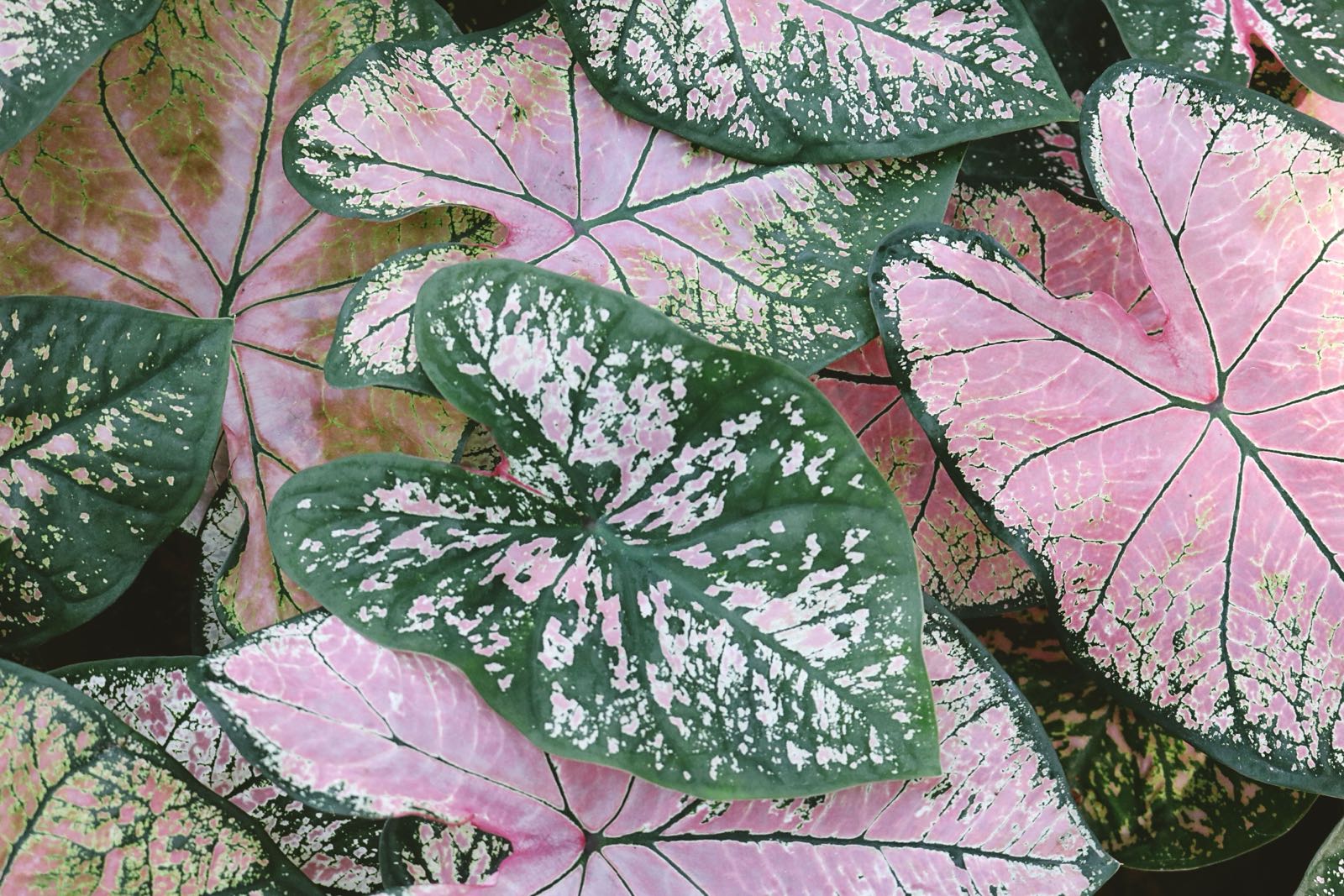
Photo by Madison Inouye on Pexels
Caladium grows from a tuber and rests every year. In fall, as days shorten and nights cool, the leaves yellow and flop. That's normal: the tuber is alive and waiting for spring. While it's in leaf, give it bright indirect light indoors or shade outdoors, keep the soil evenly moist and keep it warm. Then let it dry out and rest somewhere warm until spring. It's toxic to cats, dogs and horses, so keep it out of reach.
Toxic to cats, dogs and horses · Moderate
Mouth pain and swelling, drooling, vomiting and trouble swallowing. Every part holds calcium oxalate crystals; NC State rates it medium severity. The sap can irritate skin. Children: moderate severity. NC State rates it medium severity; chewing burns and swells the mouth, and the sap can irritate skin.
Pet poison line: ASPCA (888) 426-4435
Good for: color in shady spots, summer containers, people who remember to water · Think twice if: pets or small children chew plants, you want leaves all year round.
Needs at a glance
- Light3 of 4 · Bright indirectOutdoors, shade or morning sun; hot afternoon sun scorches it
- Water3 of 3 · Keep lightly moistEvenly moist while in leaf, never soggy; stop as it goes dormant
- Humidity2 of 3 · Above averageLikes humid air; a tray of moist pebbles helps indoors
- Soil when pottedRich, well-drained mixStays moist but drains; heavy clay rots the tubers
Indoors: best at 65 to 75°F (18 to 24°C). Keep it above 55°F (13°C) and away from drafts and heat vents.
How the rating adds up
0 = easiest · 1 = moderate · 2 = hardest
- Missed waterings2 of 2 · HardestWants evenly moist soil while it is in leaf
- Light flexibility1 of 2 · ModerateBright indirect light indoors, shade outdoors; hot sun scorches it
- Humidity1 of 2 · ModerateLikes humid air
- Pests and disease1 of 2 · ModerateFew pests; tubers rot in cold, wet soil or damp storage
- Sensitivity to change1 of 2 · ModerateChills and cold soil set it back
Growing outdoors
All year: USDA zones 9 to 11, where the coldest winter nights average 20°F (−7°C) or warmer.
Elsewhere: summer outside in shade or morning sun. Bring it in when nights reach 55 to 60°F (13 to 16°C).
- Bedding and edging in shade
- Containers and window boxes
- Houseplant for the warm months
Sources: NC State, Clemson, Wisconsin Extension, Penn State, Iowa State, Texas A&M, RHS, UF/IFAS, ASPCA, Mississippi State, LSU AgCenter, USDA zone map, FISC, Hawaii Dept. of Agriculture, IUCN GISD and USDA PLANTS. Full list below.
Verified · How we rate plants
Is caladium poisonous to cats and dogs?
Yes. The ASPCA lists caladium as toxic to cats, dogs and horses. Every part holds calcium oxalate crystals, which cause mouth pain and swelling, drooling, vomiting and trouble swallowing. NC State rates it medium severity for pets and children, and the sap can irritate skin, so gloves help when you divide tubers. Keep it out of reach. If a pet eats any part of it, call your vet or the ASPCA Animal Poison Control Center at (888) 426-4435. If a child eats some, call Poison Help at 1-800-222-1222.
Why is my caladium dying in the fall?
It's most likely going dormant. Caladiums rest every year: as days shorten and nights cool, the leaves yellow, droop and collapse, and the tuber underground stores energy for spring. Wisconsin Extension notes that even a caladium kept indoors goes dormant after a few months in leaf. When the leaves start to fade, cut back on water, let them dry, then remove them. The tuber is the plant now, so keep it dry and warm until spring.
LSU AgCenter, Penn State, Wisconsin Extension, UF/IFAS, Iowa State
How do I keep caladium tubers over winter?
Two ways. In a pot, the easy one: stop watering as the leaves die back, remove the dry leaves and keep the pot dry and above 55 to 60°F (13 to 16°C) all winter, in light or dark. In a garden bed where winters are cold, dig the tubers in fall as the leaves yellow, before frost, and dry them in a warm, shady spot for one to two weeks. Then pack them in dry peat moss, vermiculite or a mesh bag so they don't touch. Sources give different storage temperatures; 60°F (16°C) or a little warmer is the safest, because cold kills stored tubers, and Clemson says never below 50°F (10°C). Never use the refrigerator. Check them now and then and throw out any that turn soft or moldy.
Wisconsin Extension, RHS, Iowa State, Clemson, Penn State, UF/IFAS
When do I restart caladium tubers in spring?
Start them indoors in late winter or early spring, about 4 to 6 weeks before your last frost. Plant each tuber knobby side up, 1 to 2 inches deep, in a warm spot around 70°F (21°C) with bright light. Water lightly until leaves show, because cold, wet soil rots tubers. Move them outside only once the soil is warm: about 70°F (21°C) by Clemson and Wisconsin, 68°F by Penn State, 65°F by LSU. Clemson notes second-year leaves are often weaker and suggests fresh tubers each year, while Wisconsin, Penn State and the RHS describe replanting stored ones.
Wisconsin Extension, Iowa State, LSU AgCenter, RHS, Clemson, Penn State
How often should I water a caladium?
Often enough to keep the soil evenly moist while it's in leaf, without letting it go soggy. NC State calls it a water guzzler, and Penn State says it droops and browns at the edges when it dries out. Use a pot with drainage holes, since waterlogged soil rots the tuber. Once the leaves start to fade in fall, water less and then stop for the winter rest.
NC State, Penn State, Clemson, Wisconsin Extension, Iowa State
Does caladium need sun or shade?
Mostly shade. Indoors, give it bright indirect light out of direct sun, which burns the thin leaves. Outdoors, it does best in dappled shade or morning sun with shade in the afternoon; UF/IFAS says two to four hours of direct sun is plenty for most, and colors are richer in shade. Strap-leaf types and newer sun-tolerant varieties handle more sun. Wisconsin notes that deep shade dulls the color.
Iowa State, RHS, UF/IFAS, Clemson, Penn State, Wisconsin Extension
Can I grow caladium as a houseplant?
Yes, for the warm months. Give it bright indirect light, evenly moist soil and humid air: Texas A&M suggests a tray of moist pebbles. It likes about 65 to 75°F (18 to 24°C) and should stay above 55°F (13°C). Feed it lightly while it grows, every two weeks (Clemson) or monthly (Penn State), with a fertilizer low in nitrogen so the colors stay bright. Expect it to rest after a few months; NC State says the winter die-back makes it a poor pick if you want leaves all year.
Iowa State, Wisconsin Extension, Texas A&M, Clemson, Penn State, NC State
Can caladium grow outdoors?
Yes, as a summer bedding plant almost anywhere, and all year in USDA zones 9 to 11, where LSU says tubers can stay in the ground under thick mulch (Penn State says zones 10 and 11). The leaves still die back every winter. Plant after the last frost once the soil is warm, in shade or morning sun, as edging, in masses or in containers. In colder places, bring pots in or dig tubers before the soil drops below 55 to 60°F (13 to 16°C). No official invasive list names it in Florida, Hawaii or worldwide, and UF/IFAS calls it not known to be invasive.
LSU AgCenter, Penn State, NC State, Clemson, Wisconsin Extension, FISC, Hawaii Dept. of Agriculture, IUCN GISD, UF/IFAS
How do I get more caladiums, or a fuller one?
Divide the tubers in spring before you pot them. Cut so each piece has at least one eye (bud), and let the cut surfaces dry for a few days before planting. For a bushier plant, Wisconsin and Clemson suggest cutting out the big central eye, about 1/8 to 1/4 inch deep, so the smaller buds grow into more leaves. Bigger tubers have more eyes and make fuller plants. Snip off the small flowers so the energy goes to the leaves.
Wisconsin Extension, Clemson, LSU AgCenter, Penn State, UF/IFAS
How Grove helps
Grove sets a watering check based on how dry the soil is, so the soil stays evenly moist while the leaves are up. When they fade in fall, you can add the winter rest as a task and assign the spring day to pot the tubers again, so whoever is home that week wakes them up on time.
Sources
- NC State Extension Gardener Plant Toolbox: Caladium bicolor
- Clemson Cooperative Extension HGIC 1160: Caladium (reviewed 2022)
- University of Wisconsin-Madison Extension, Wisconsin Horticulture: Caladium (S. Mahr)
- Penn State Extension: Caladiums for the Home Garden (2026)
- Iowa State University Extension, Yard and Garden: Bulbs Well-Suited as Houseplants
- Texas A&M AgriLife Extension, Ornamental Production: Caladium (plant care, handling and merchandising guide)
- Royal Horticultural Society: Caladium 'Florida Roselight'
- UF/IFAS Extension EDIS FPS83: Caladium x hortulanum, Caladium (rev. 2022)
- Iowa State University Extension, Yard and Garden: How to Overwinter Tender Perennials
- ASPCA Animal Poison Control: Caladium
- UF/IFAS Gardening Solutions: Caladiums
- Mississippi State University Extension: How to store caladiums
- LSU AgCenter: It's time to harvest caladium bulbs (2020)
- USDA ARS Plant Hardiness Zone Map (2023)
- Florida Invasive Species Council: 2023 Invasive Plant List
- Hawaii Department of Agriculture: Noxious Weed Rules, HAR chapter 4-68 (list of designated noxious weeds)
- IUCN Global Invasive Species Database: Caladium bicolor (no entry)
- USDA PLANTS Database: Caladium bicolor (CABI11)
- Royal Horticultural Society: Caladium bicolor
- Kew WCVP data release (2026-06-04 file), plant_name_id 28777: Caladium bicolor