Plant care card
Corn plant
Dracaena fragrans · Tronco de Brasil
Also called cornstalk plant, fragrant dracaena, mass cane or Janet Craig
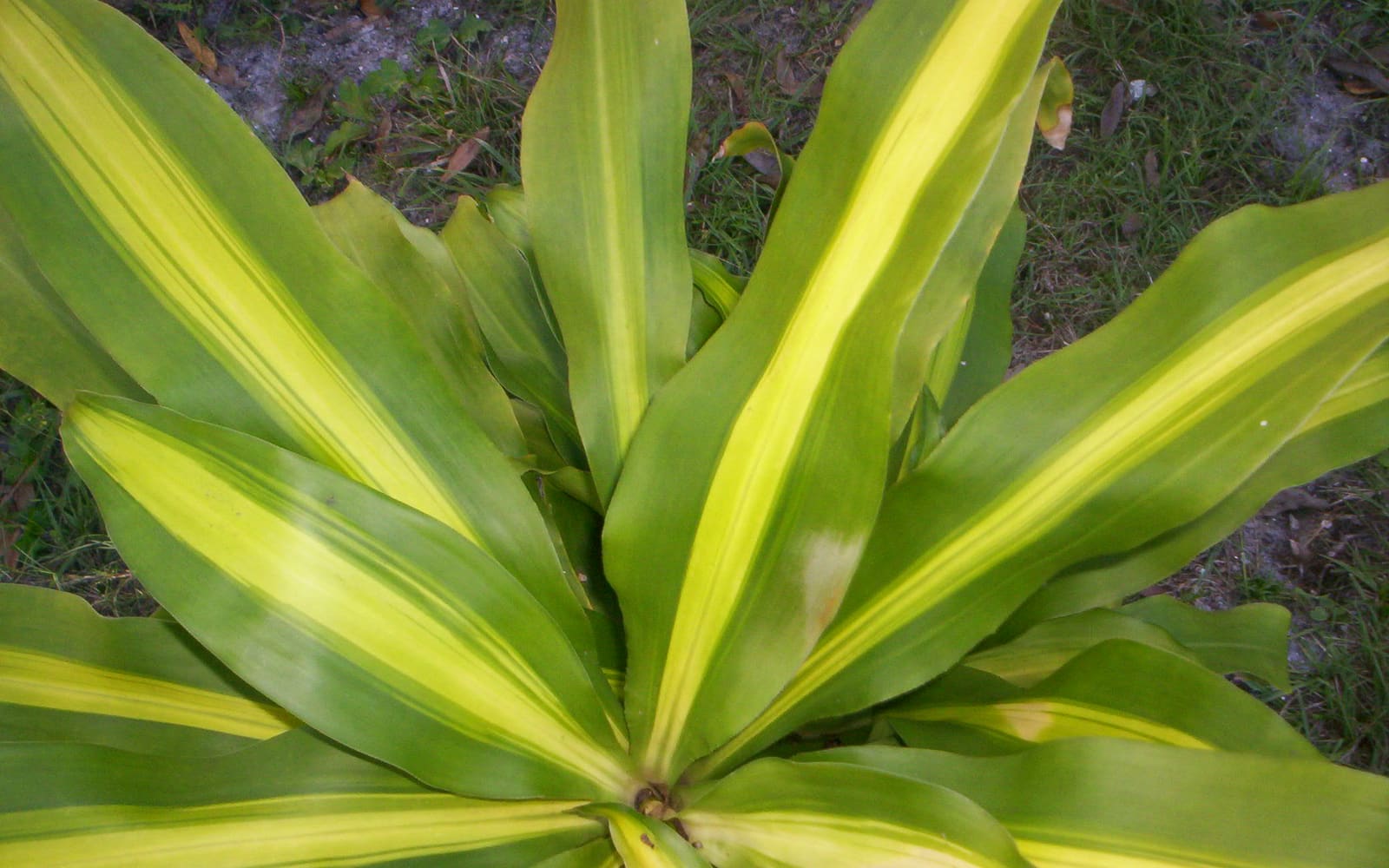
Photo by jkrup4 on Wikimedia Commons

The corn plant is a slow, tough dracaena from tropical Africa that copes with low light. Give it bright, indirect light if you can, keep the soil lightly moist from spring to fall, and keep it above 60°F (16°C). Its one fuss is water quality: fluoride and salts brown the leaf tips. 'Janet Craig' and mass cane are the same species. It's toxic to cats and dogs.
Toxic to cats and dogs · Mild
Vomiting (sometimes with blood), drooling, loss of appetite, depression; dilated pupils in cats. Saponins in every part of the plant. The RHS adds rabbits and rodents, and NC State also tags horses. Children: low severity. NC State rates it low severity; it should never be eaten, and the sap can irritate skin.
Pet poison line: ASPCA (888) 426-4435
Good for: rooms with medium or low light, tall spots on the floor, people new to houseplants · Think twice if: pets chew plants, your tap water has fluoride and rain or distilled water is a hassle.
Needs at a glance
- Light3 of 4 · Bright indirectCopes with less light, but the stripes fade; direct sun scorches
- Water3 of 3 · Keep lightly moistFrom spring to fall; in winter, let the top inch dry first
- Humidity1 of 3 · AverageAbove 40% helps prevent brown tips
- Soil when pottedHouseplant mix that drainsA pot with drainage holes; skip mixes heavy in perlite, which can carry fluoride
Indoors: best at 70 to 80°F (21 to 27°C). Keep it above 60°F (16°C) and away from drafts and heat vents.
How the rating adds up
0 = easiest · 1 = moderate · 2 = hardest
- Missed waterings1 of 2 · ModerateLikes light, steady moisture but copes with a little irregular watering
- Light flexibility0 of 2 · EasiestCopes with low light; stripes fade, and hot sun scorches it
- Humidity0 of 2 · EasiestAn average home is fine; very dry winter air browns the tips
- Pests and disease1 of 2 · ModerateScale, mites, mealybugs and thrips; root rot if overwatered
- Sensitivity to change1 of 2 · ModerateFluoride and salts burn the tips; cold and drafts drop leaves
Growing outdoors
All year: USDA zones 10 to 11, where the coldest winter nights average 30°F (−1°C) or warmer.
Elsewhere: summer outside in shade or bright shade, out of hot sun. Bring it in before nights drop below 60°F (16°C).
- Houseplant
- Shrub, screen or hedge outdoors in zones 10 to 11
Sources: NC State, NYBG, University of Missouri, Clemson, UF/IFAS, RHS, ASPCA, USDA zone map, FISC and GISD. Full list below.
Verified · How we rate plants
Is a corn plant toxic to cats and dogs?
Yes. The ASPCA lists dracaenas, corn plant included, as toxic to cats and dogs. They contain saponins, which can cause vomiting (sometimes with blood), drooling, loss of appetite and depression, plus dilated pupils in cats. NC State rates it low severity, lists every part of the plant as toxic and says the sap can irritate skin. The RHS adds rabbits and rodents, and NC State also tags horses. Some articles online call it pet safe; the ASPCA and NC State disagree, so keep it out of reach of pets that chew. If a pet eats some, call your vet or the ASPCA Animal Poison Control Center at (888) 426-4435. If a child eats some, call Poison Help at 1-800-222-1222.
Are corn plant, mass cane and 'Janet Craig' the same plant?
Yes, they're all Dracaena fragrans. The plain green corn plant is the species; 'Massangeana', sold as mass cane, has a wide yellow stripe down each leaf. 'Janet Craig', 'Warneckii' and 'Lemon Lime' were long sold as Dracaena deremensis, and some labels still say so, but Kew's World Checklist and NC State now file that name under Dracaena fragrans, and the RHS lists 'Janet Craig' there too. Watch the shared names: the ASPCA and NC State also call it dragon tree and ribbon plant, names other dracaenas share: UF/IFAS lists 'Madagascar Dragon Tree' as Dracaena marginata and 'Ribbon Plant' as lucky bamboo's species. The botanical name is the surest way to know what you have.
Kew WCVP, NC State, RHS, UF/IFAS, University of Missouri, ASPCA
How much light does a corn plant need?
Bright, indirect light is best, but it copes with much less. Clemson says many dracaenas tolerate low light, and Missouri says Janet Craig types manage in very dim offices. The cost is looks: in low light the yellow stripe on mass cane fades to green, new leaves come in narrower and lower leaves drop sooner. Direct sun is the one thing it can't take. NYBG says pale, dry patches mean it's too close to the light, and Clemson links round dry streaks to direct sun on the leaves. Turning the pot a quarter turn when you water keeps it even.
How often should I water a corn plant?
Water when the top of the soil feels dry, and keep it lightly moist from spring to fall. NYBG says to water thoroughly, let the pot drain and empty the saucer after about 15 minutes. In winter water less, letting the top inch dry first, but never let the whole root ball dry out. Missouri says it puts up with somewhat irregular watering, though a bone-dry pot brings leaf drop and brown tips. Overwatering is the bigger danger: UF/IFAS warns root rot can kill it, so use a pot with drainage holes.
Why are the leaf tips on my corn plant turning brown?
Usually water quality or dry air. Dracaenas are very sensitive to fluoride, which yellows and burns the tips and edges (Clemson, Missouri, NC State). Salts from fertilizer or hard water do the same. Missouri suggests rain or deionized water if your tap water has fluoride, and NC State suggests flushing the pot with plenty of water once a month to wash out salts. Clemson adds: skip perlite-heavy mixes and superphosphate fertilizer, which can carry fluoride. Dry winter air is the other common cause; NYBG says humidity above 40% prevents brown tips in most cases. Burned tips won't turn green again, so you can trim them and focus on the new leaves.
Why are corn plant leaves turning yellow or falling off?
Check the soil and the room. Yellow, drooping leaves usually mean too much water (NYBG), and soggy soil leads to root rot (Clemson, UF/IFAS). Sudden leaf drop can follow cold, drafts or a big temperature change; UF/IFAS says chilling below 60°F (16°C) causes slimy spots and heavy leaf drop. Heavy pests can do it too, so look under the leaves for scale, mites and mealybugs. A few lower leaves yellowing and dropping slowly is normal: the plant sheds old leaves at the bottom as it grows taller at the top, and Missouri says low light speeds that up.
Does a corn plant flower?
Sometimes, though rarely indoors. NC State describes long sprays of small white flowers, pink in bud, that are highly fragrant at night, followed by small orange-red berries. UF/IFAS calls the flowers extremely fragrant and says they open during the night. The flowers are toxic like the rest of the plant (NC State), so keep fallen ones away from pets.
My corn plant is too tall. Can I cut it back or propagate it?
Yes. Cut the cane at the height you want, and new shoots grow from buds below the cut (Clemson, Missouri); the RHS says weak stems can go back as low as 6 in (15 cm) in spring. The top you cut off can become a new plant: NYBG suggests a 3 to 6 in tip, rooting hormone and a moist mix of peat with sand or perlite, kept warm and covered in light shade, with roots in 4 to 6 weeks. Air layering works for big plants too. Nurseries grow corn plants from rooted cane pieces, which is why many pots hold several canes of different heights.
What temperature does a corn plant like, and can it go outside?
Warm. NC State says it thrives at 70 to 80°F (21 to 27°C), and UF/IFAS agrees; NYBG finds 65 to 75°F (18 to 24°C) comfortable. UF/IFAS says to keep dracaenas above 60°F (16°C) at all times, and NYBG warns cold can be fatal, so keep it away from drafty doors and heating or cooling vents. It can spend warm months outside in shade, out of hot sun, but bring it in before nights drop below 60°F (16°C). It grows outdoors all year only in USDA zones 10 to 11, where it can reach 5 to 15 ft as a hedge or screen. UF/IFAS says it isn't known to be invasive, and no official invasive list names it.
How Grove helps
Grove can set a repeating reminder to check the soil and water your corn plant, plus a monthly task to flush the pot and wash out salts. You can assign them to whoever is home that week, so the plant gets steady care without the job always landing on the same person.
Sources
- NC State Extension Gardener Plant Toolbox: Dracaena fragrans
- New York Botanical Garden, Mertz Library: Tall houseplants, Dracaena
- University of Missouri IPM: Of dragons and dracaenas (2021)
- Clemson Cooperative Extension HGIC 1504: Dracaena (1999)
- UF/IFAS EDIS FPS184: Dracaena fragrans 'Massangeana', corn plant, fragrant dracaena (revised 2023)
- Royal Horticultural Society: Dracaena fragrans (corn plant)
- UF/IFAS EDIS ENH892: Cultural guidelines for commercial production of interiorscape Dracaena
- ASPCA Animal Poison Control: Dracaena
- USDA ARS Plant Hardiness Zone Map (2023)
- Florida Invasive Species Council: Invasive Plant List
- IUCN Global Invasive Species Database: Dracaena fragrans (no entry)
- Royal Horticultural Society: Dracaena fragrans 'Janet Craig'
- Kew WCVP data release (2026-06-04 file), plant_name_id 304662: Dracaena fragrans