Plant care card
Lucky bamboo
Dracaena sanderiana · Bambú de la suerte
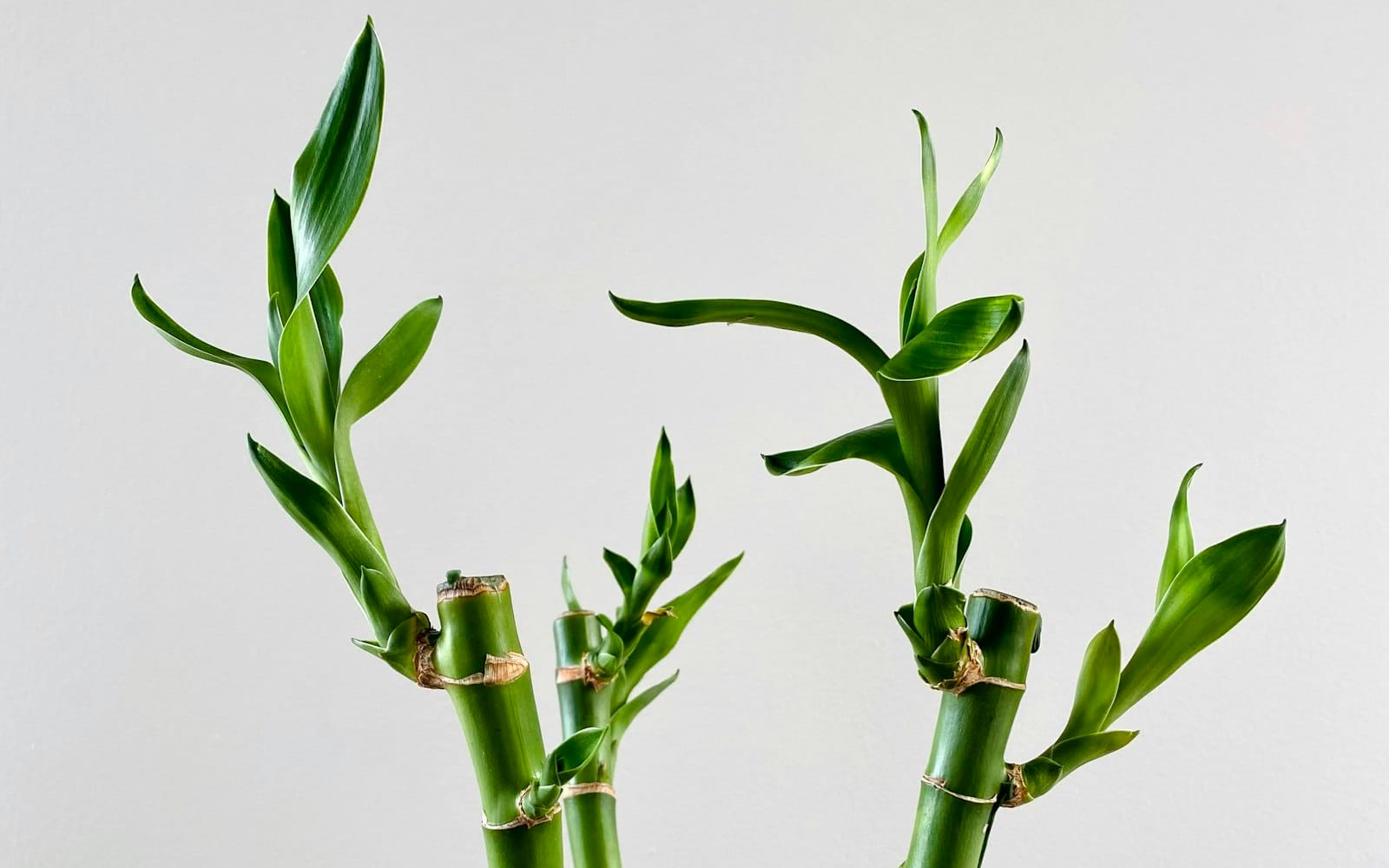
Also called ribbon plant, Chinese water bamboo or friendship bamboo
Photo by Jean da Silva on Unsplash
Lucky bamboo is a dracaena from Africa that looks like bamboo. Keep it in bright light out of direct sun, with its roots and about an inch of stem underwater, and change the water every week or two. Its leaves are fussy about tap water: fluoride, chlorine and salts brown the tips, so rain or distilled water works best. It's toxic to cats and dogs.
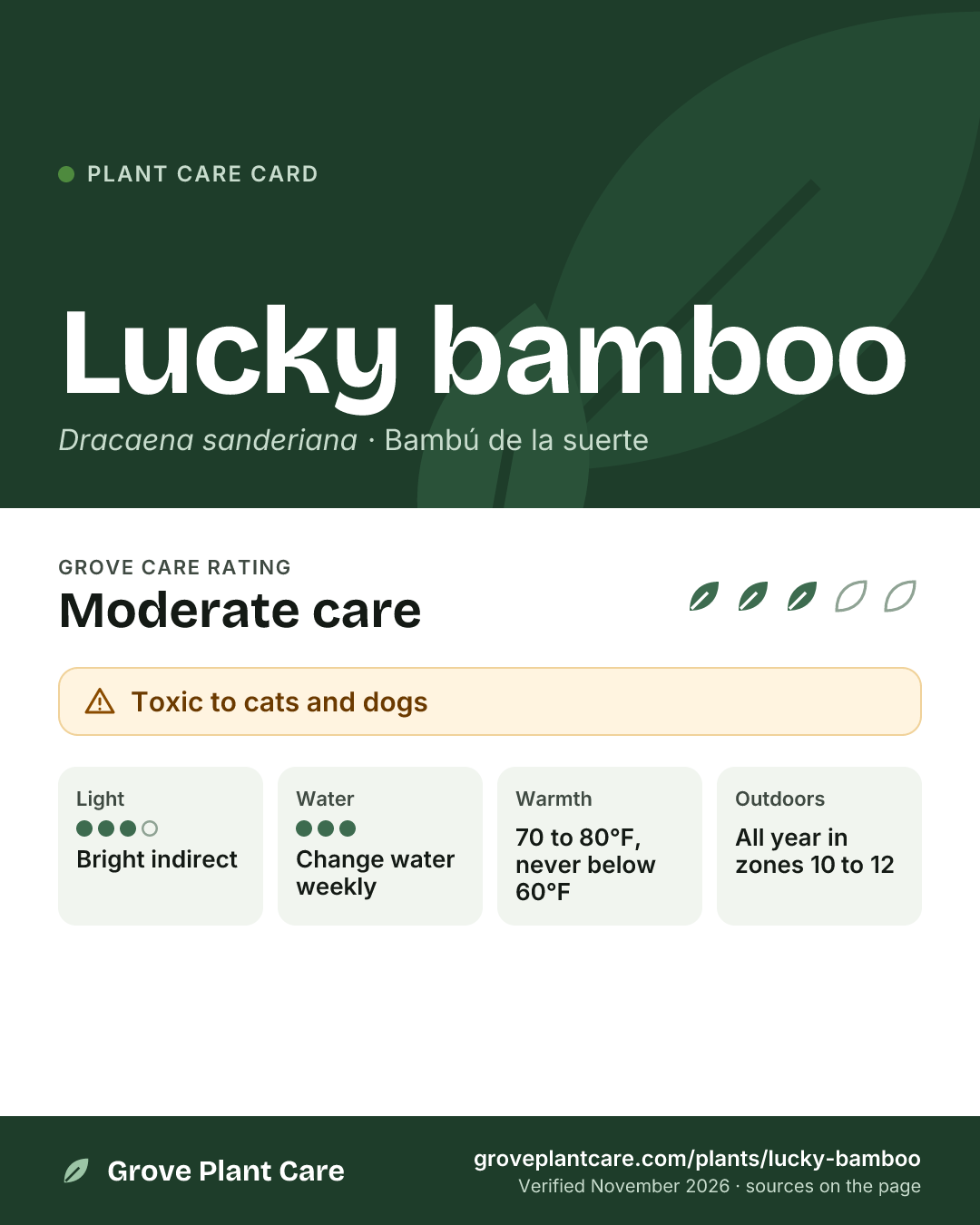
Toxic to cats and dogs · Mild
Vomiting (sometimes with blood), drooling, loss of appetite, depression; dilated pupils in cats. Saponins in every part of the plant. True bamboo is a different, non-toxic plant. Children: low severity. NC State rates it low severity; it should never be eaten, and the sap can irritate skin.
Pet poison line: ASPCA (888) 426-4435
Good for: growing without soil, bright rooms out of direct sun, lunar New Year gifts · Think twice if: pets chew plants, changing its water every week or two sounds like a chore.
Needs at a glance
- Light3 of 4 · Bright indirectNear a window, out of direct sun, which browns the leaves
- Water3 of 3 · Keep roots coveredIn a vase, keep the roots and about 1 in of stem underwater
- Humidity2 of 3 · Above averageDry air can brown the leaf tips
- Soil when pottedWater and pebbles, or potting mixPebbles hold the stems up; in soil, a well-drained indoor or tropical mix
Indoors: best at 70 to 80°F (21 to 27°C). Keep it above 60°F (16°C) and away from drafts and heat vents.
How the rating adds up
0 = easiest · 1 = moderate · 2 = hardest
- Missed waterings2 of 2 · HardestRoots stay in water in a vase; keep soil moist
- Light flexibility1 of 2 · ModerateBright indirect light; direct sun burns the leaves
- Humidity1 of 2 · ModerateDry air can brown the leaf tips
- Pests and disease1 of 2 · ModerateSpider mites, mealybugs, scale; rot in stale water
- Sensitivity to change1 of 2 · ModerateFluoride, chlorine and salts in tap water burn the tips
Growing outdoors
All year: USDA zones 10 to 12, where the coldest winter nights average 30°F (−1°C) or warmer.
Elsewhere: summer outside in partial shade. Bring it in before nights drop below 65°F (18°C).
- Houseplant in water or soil
- Tropical shrub outdoors in zones 10 to 12
Sources: NC State, Clemson, NYBG, UF/IFAS, Arkansas Extension, RHS, University of Missouri, ASPCA, USDA zone map, UF/IFAS Assessment, FISC and GISD. Full list below.
Verified · How we rate plants
Is lucky bamboo poisonous to cats and dogs?
Yes. Lucky bamboo is a dracaena, and the ASPCA lists dracaenas as toxic to cats and dogs. They contain saponins, which can cause vomiting (sometimes with blood), drooling, loss of appetite and depression, plus dilated pupils in cats. NC State rates it low severity, lists every part of the plant as toxic, and says the sap can irritate skin. The RHS adds rabbits and rodents to the list of pets it can harm. Here's the catch: true bamboo is a different plant, and the ASPCA lists golden bamboo as non-toxic, so check which one you have. If a pet eats lucky bamboo, call your vet or the ASPCA Animal Poison Control Center at (888) 426-4435. If a child eats some, call Poison Help at 1-800-222-1222.
Is lucky bamboo a real bamboo?
No. It's Dracaena sanderiana, a tropical shrub from west-central Africa. Growers strip the leaves off canes of the leafy ribbon plant so they look like bamboo stalks. True bamboos are grasses, and the two differ for pets: the ASPCA lists golden bamboo as non-toxic and dracaenas as toxic. Names overlap too. "Ribbon plant" also means the spider plant, so the botanical name is the surest way to know what you have.
What kind of water is best for lucky bamboo?
Rain or distilled water. Dracaenas are very sensitive to fluoride, and salts and chlorine in tap water can brown or yellow the leaves too. NYBG, Arkansas Extension and Missouri all suggest rain or distilled (or deionized) water, and UF/IFAS suggests filtered water. If tap water is all you have, letting it sit out uncovered for a day or two lets the chlorine escape (UF/IFAS, Singapore's NParks). That won't fix fluoride, and UF/IFAS adds that very alkaline tap or bottled water can cause yellowing as well. Damaged tips won't turn green again, so prevention is the whole game.
NYBG, Arkansas Extension, University of Missouri, UF/IFAS, NParks
How often should I change lucky bamboo water?
Every week, or every two weeks at most. Clemson and NC State say weekly (NC State notes it also keeps mosquitoes from breeding); NYBG says change all of it every one to two weeks and gently clean the vase. Keep the water deep enough to cover the roots plus about an inch of stem, and top it up between changes. Pebbles or marbles in the bottom hold the stems upright and give the roots something to grip.
What do I do about algae or cloudy water in the vase?
Treat it as a sign the water is overdue. Pour it all out, gently clean the vase, rinse the pebbles and refill with fresh rain or distilled water. Cloudy water usually means bacteria, which can attack the plant, according to the UBC Botanical Garden advice quoted by an MSU Extension Master Gardener. The university sources we checked don't say whether a green algae film harms lucky bamboo itself, so we won't guess. Regular changes and light feeding keep the water clearest.
How much light does lucky bamboo need?
Bright, indirect light. Clemson suggests a bright room and warns that direct sun browns the leaves; NYBG suggests a spot near a window but out of the sun's rays, and UF/IFAS says never right in the window. It grows in the shade of taller plants in the wild. It can put up with less light, but Singapore's NParks says too much shade fades the green.
Why are my lucky bamboo leaves turning yellow or brown?
Usually the water. Fluoride, chlorine, salts or very alkaline water can yellow the leaves or burn the tips brown. Too much fertilizer yellows it from the bottom up; NYBG says change the water and stop feeding. Too much sun yellows and scorches it, and dry air can brown the tips. If one stalk in a group turns yellow, take it out and change the water. A soft, smelly spot on a stem is rot: cut above it and root the healthy top in fresh water on its own. Check under the leaves for spider mites, mealybugs and scale too.
UF/IFAS, Arkansas Extension, Ask Extension (MSU), NYBG, NC State, Ask Extension (OSU), Clemson
Can lucky bamboo grow in soil?
Yes, and it's less upkeep, since there's no water to change. Use a well-drained potting mix made for indoor or tropical plants, water when the top inch feels dry, and don't leave water in the saucer (Clemson). NC State says to keep the mix moist and warns that overwatering yellows the leaves and rots the stems. Feed very lightly either way: Clemson suggests a quarter-strength liquid houseplant fertilizer every other month for plants in water, and NYBG says no more than once a month. NYBG notes plants kept in water often last two years or less, so moving one to soil is worth a try.
Clemson, NC State, NYBG, Ask Extension (MSU), Arkansas Extension
What temperature does lucky bamboo like, and can it go outside?
Warm. UF/IFAS finds 70 to 80°F (21 to 27°C) best indoors and says to keep dracaenas above 60°F (16°C), since colder air can injure the leaves. NYBG says to avoid anything below 55°F (13°C) or above 85°F (29°C), and to keep it away from heating and air conditioning vents. It can spend summer outside in partial shade, but Clemson says to bring it in before nights drop below 65°F (18°C). It grows outdoors all year only in USDA zones 10 to 12. UF/IFAS rates it a low invasion risk in Florida, and no official invasive list names it.
How Grove helps
Grove can set a weekly water change for lucky bamboo as a repeating task, so the vase never sits stale. You can assign it to whoever is home that week, so the job doesn't always land on the same person.
Sources
- NC State Extension Gardener Plant Toolbox: Dracaena sanderiana
- Clemson Cooperative Extension HGIC: How to grow and care for lucky bamboo (2026)
- New York Botanical Garden: How can I save my lucky bamboo plant that is yellowing?
- UF/IFAS Extension Nassau County: Q: The leaves on my lucky bamboo are turning yellow
- University of Arkansas Extension, Plant of the Week: Lucky bamboo (2004)
- Royal Horticultural Society: Dracaena sanderiana (v)
- UF/IFAS EDIS ENH892: Cultural guidelines for commercial production of interiorscape Dracaena
- University of Missouri IPM: Of dragons and dracaenas (2021)
- ASPCA Animal Poison Control: Dracaena
- ASPCA Animal Poison Control: Bamboo (Phyllostachys aurea)
- USDA ARS Plant Hardiness Zone Map (2023)
- UF/IFAS Assessment of Non-Native Plants: Dracaena sanderiana
- Florida Invasive Species Council: Invasive Plant List
- IUCN Global Invasive Species Database: Dracaena sanderiana (no entry)
- NParks Flora & Fauna Web (Singapore): Dracaena sanderiana
- Kew WCVP data release (2026-06-04 file), plant_name_id 304813: Dracaena sanderiana
- Ask Extension: Lucky bamboo illness? (answered by an MSU Extension Master Gardener, 2017)
- Ask Extension: lucky bamboo stem spot (answered by an OSU Extension Master Gardener, 2018)