Lunar New Year plants: gift ideas for the Year of the Goat
Lunar New Year, often called Chinese New Year, is a time for visits, food and decorating the home, and plants are part of it in many places. Here are the plants people bring home and give at the new year, what museums, universities and botanical gardens say each one stands for, and how to keep each one healthy. Customs differ from place to place and home to home, so take these as gift ideas that fit the season, and ask your host when in doubt.
Start with your question
- What plants are lucky for Lunar New Year?On this page
- What should I bring to a Lunar New Year dinner?On this page
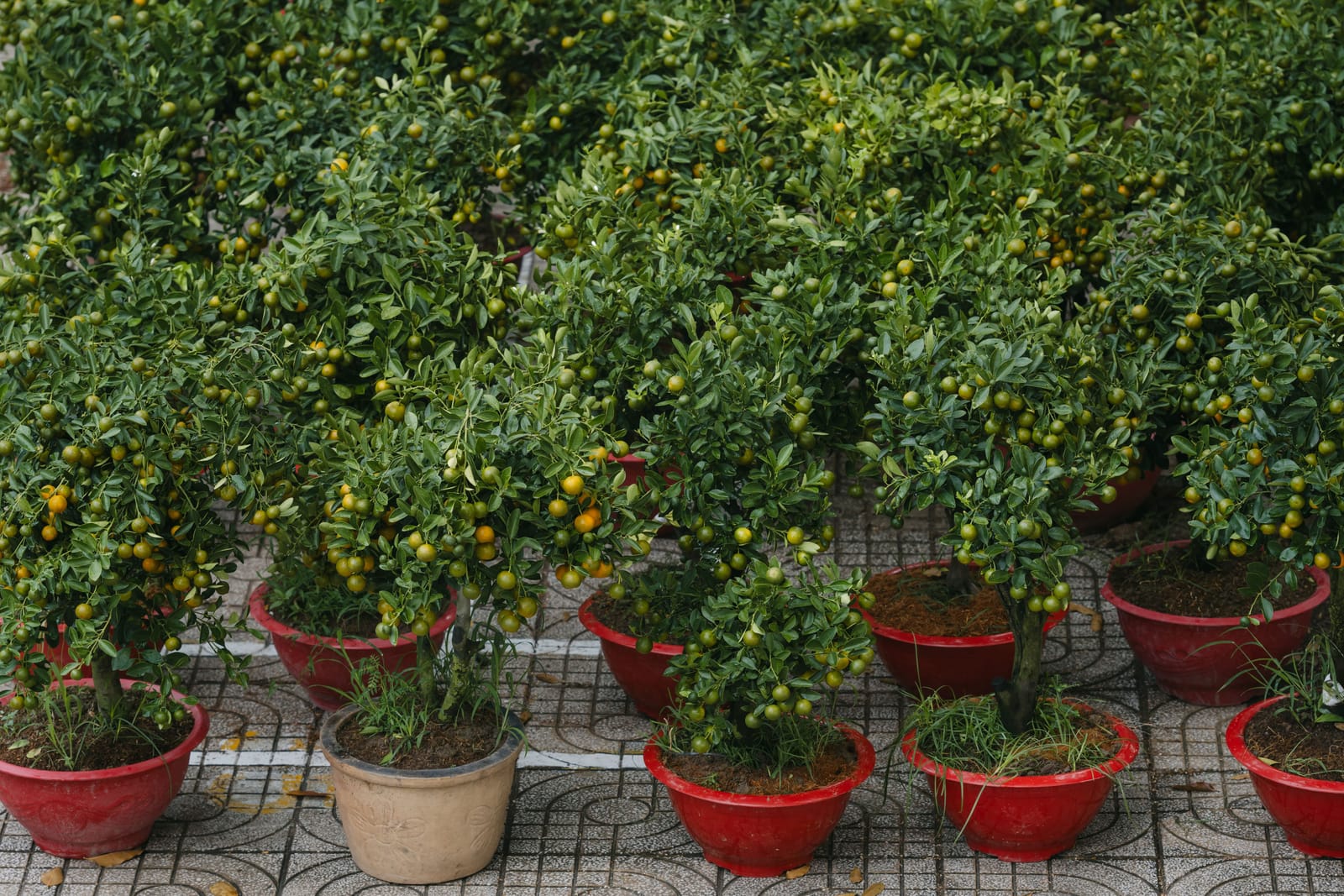
- Why are kumquat and mandarin trees given at Lunar New Year?On this page
- How many lucky bamboo stalks should you give?On this page
- Which Lunar New Year plants are safe for cats and dogs?On this page
- When is Lunar New Year 2027?On this page
What plants are lucky for Lunar New Year?
Lunar New Year is celebrated in China, Vietnam (Tết), Korea (Seollal), Singapore, Mongolia and beyond, and each place has its own customs (University of Central Florida, Case Western Reserve University). These are the plants that sources describe at the new year:
| Plant | What sources say about it | Cats and dogs |
|---|---|---|
| Kumquat tree | Its gold-orange fruit is linked to wealth and good fortune (Brooklyn Botanic Garden) | Treat as toxic: the ASPCA lists other citrus as toxic |
| Mandarin or tangerine tree | In Cantonese, the word for mandarin sounds like the word for gold (UC San Diego); tangerines are a sign of good luck and wealth (Hong Kong Education Bureau) | Treat as toxic: the ASPCA lists other citrus as toxic |
| Lucky bamboo | Often given for Chinese New Year, with meanings for the number of stalks (Clemson Extension, UBC Botanical Garden) | Toxic (ASPCA) |
| Moth orchid | Beauty, refinement and success (UBC Botanical Garden); red ones suggested for the festive season (Singapore's National Parks Board) | Safe (ASPCA) |
| Cymbidium orchid | The orchid is one of the "Four Gentlemen" of classical Chinese culture, for refinement and integrity (Gardens by the Bay) | Not rated: no trusted source rates it |
| Narcissus (Chinese sacred lily) | The flower of the first lunar month, grown in bowls to bloom for the new year (Lan Su Chinese Garden, UBC Botanical Garden) | Toxic (ASPCA), the bulb most |
| Jade plant | Its round leaves are said to look like coins (UBC Botanical Garden); NC State lists "lucky plant" and "money plant" among its names | Toxic (ASPCA) |
| Money tree | Valued in feng shui for prosperity, with braided trunks said to lock in luck (NC State, UBC Botanical Garden) | Mildly toxic to cats, seeds only (NC State) |
| Chrysanthemum | Its Chinese name sounds like the word for long life (UBC Botanical Garden); one of the "Four Gentlemen" (Gardens by the Bay) | Toxic (ASPCA) |
Bright colors matter too. The University of Central Florida and the Hong Kong Education Bureau describe red and gold as the main festive colors: red for energy and happiness, gold for wealth. A plant in a red pot fits right in.
What should I bring to a Lunar New Year dinner?
Read moreShow less
Here's what the sources describe:
- A pair of mandarins. Case Western Reserve University says that in Singapore, visitors bring two mandarin oranges to the host and receive two in return, because the word sounds like good fortune or gold.
- A living plant. The University of Central Florida describes people decorating tangerine trees at home for the festival, much like Christmas trees. A small potted citrus tree, an orchid or a lucky bamboo arrangement fits the same spirit and keeps growing after the visit.
- Red and gold. Red and gold are the festive colors (University of Central Florida, Hong Kong Education Bureau), so a red pot or ribbon is a nice touch.
When in doubt, ask the host. If they have cats or dogs, an orchid is the safest pick on this page (see pets).
Why are kumquat and mandarin trees given at Lunar New Year?
Read moreShow less
What sources say. UC San Diego's David K. Jordan explains that in Cantonese, the word for mandarin sounds like the word for gold, and that round, yellow fruit is thought to look like money. A professor at the University of Central Florida who grew up in South China says tangerines are popular because their name sounds like "luck." Brooklyn Botanic Garden links the kumquat's gold-orange fruit to wealth and good fortune, and the calamondin, another small citrus, to prosperity. In Vietnam, potted mandarin trees are a popular Tết decoration, per Case Western Reserve University.
How to keep a potted citrus tree going. Kumquat (Citrus japonica, formerly Fortunella) and mandarin (Citrus reticulata) want much the same care:
- Light: at least 6 hours of direct sun, in a south or west window or a sunroom (Iowa State, University of Wisconsin, Clemson). Without enough light it won't flower or fruit (Iowa State).
- Temperature: a cool room in winter, about 55 to 65°F (13 to 18°C) at night (Iowa State, Clemson). Drops below 50°F (10°C) can make leaves fall, and frost kills it (Iowa State). Keep it away from drafts and heat vents, since sudden changes and dry air also drop leaves (RHS).
- Water: let the surface dry a little, then water deeply, and never leave the pot standing in water. Overwatering is the most common winter problem (RHS, University of Wisconsin, Clemson, Iowa State).
- Humidity: a humidifier or a tray of damp pebbles helps in a heated home (Clemson, RHS, Iowa State).
- Summer: it can go outside once nights stay above 50°F (10°C), and comes back in before they drop into the 40s (University of Wisconsin).
- Fruit: kumquats are eaten whole: the peel is sweet and the flesh tart (UF/IFAS, RHS). Potted trees often drop some fruit (University of Wisconsin).
The RHS points out that citrus do best in a cool, bright room and struggle in a warm, dry living room, so think of a sunroom or a bright, cool window.
How many lucky bamboo stalks should you give?
Read moreShow less
What the counts mean, per the sources. Clemson Extension notes that lucky bamboo is often given for Chinese New Year and lists the meanings above. The University of Arkansas and UBC Botanical Garden describe a three-tiered arrangement said to stand for happiness, wealth and long life. Singapore's National Parks Board says some people believe the number and arrangement of stalks bring prosperity and good health. Since sources give slightly different meanings, pick a count the person will enjoy.
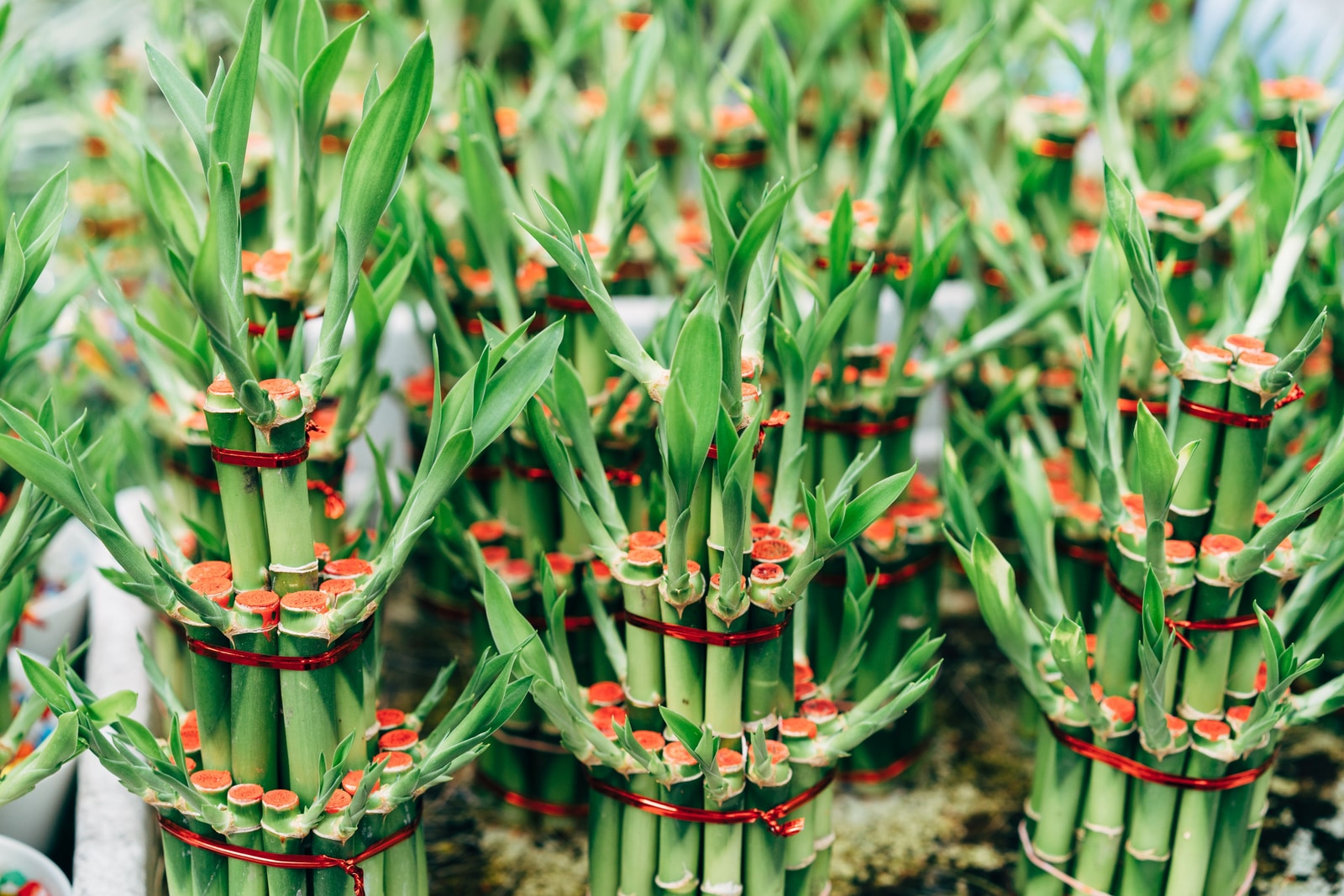
It isn't a real bamboo. Lucky bamboo is Dracaena sanderiana, a plant from Africa, and true bamboos are grasses. That matters for pets: the ASPCA lists dracaena as toxic to cats and dogs and true bamboo as non-toxic.
Care in short: bright light out of direct sun, the roots and about an inch of stem kept underwater, and fresh water so tap water salts don't burn the tips. The lucky bamboo card has the details.
What do orchids mean at Lunar New Year?
Read moreShow less
What sources say:
- Gardens by the Bay (Singapore) uses cymbidium orchids in its Lunar New Year display, as one of the "Four Gentlemen" of classical Chinese culture with plum, bamboo and chrysanthemum, standing for refinement and integrity. It says cymbidium blooms can last 8 to 10 weeks.
- UBC Botanical Garden lists the moth orchid (Phalaenopsis) for beauty, refinement, harmony and success.
- Singapore's National Parks Board suggests a red moth orchid for the festive season, since red decorations are believed to bring good fortune, and says the flowers can last up to three months.
- Brooklyn Botanic Garden ties the orchid to upright character and success in study.
Which one to give. A moth orchid is the easy choice and safe for pets. A cymbidium has taller spikes and needs a cooler spot; see its card. Our guide to a gift orchid's first week covers what to do when one arrives.
Which Lunar New Year plants are safe for cats and dogs?
| Plant | Cats and dogs | Source |
|---|---|---|
| Moth orchid | Safe | ASPCA |
| Money tree | Mildly toxic to cats, seeds only | NC State; the ASPCA lists it as non-toxic |
| Cymbidium orchid | Not rated | Neither the ASPCA nor NC State rates it |
| Kumquat and mandarin trees | Treat as toxic | The ASPCA doesn't list them; it lists orange, lemon, lime, grapefruit and calamondin as toxic (essential oils and psoralens) |
| Lucky bamboo | Toxic | ASPCA, NC State |
| Jade plant | Toxic | ASPCA |
| Chrysanthemum | Toxic | ASPCA |
| Narcissus (Chinese sacred lily) | Toxic, the bulb most | ASPCA |
| Kalanchoe | Toxic | ASPCA; Singapore's National Parks Board lists it as a festive flower |
The ASPCA notes that citrus fruit itself is edible, while the peel and the plant cause the trouble. Even a safe plant can upset a pet's stomach if it eats a lot. For more on holiday plants and pets, see our guide to holiday plants and pets.
When is Lunar New Year 2027?
Read moreShow less
The date comes from the Hong Kong Observatory's calendar table and the Hong Kong government's holiday list, which agree, and the Royal Museums Greenwich also gives February 6. Holidays around it differ by country: in Korea, the Seollal holiday runs February 6 to 9, 2027 (Korea Astronomy and Space Science Institute).
If you want narcissus in bloom. Lan Su Chinese Garden says its bulbs take about six weeks from planting to full bloom, and Clemson Extension says this type needs no cold period. Start bulbs around late December, or buy them already growing. Our paperwhite card covers a close relative grown the same way.
Frequently asked questions (FAQ)
Can you eat the kumquats from a gift tree?
Kumquats are the citrus people eat whole, peel and all: UF/IFAS describes a sweet peel and a tart center, and the RHS also lists both the rind and the pulp as edible. Keep the leaves and peels away from pets (see pets).
Can a kumquat tree live indoors?
Yes, with at least 6 hours of direct sun and a cool room in winter (Iowa State, University of Wisconsin, Clemson). The RHS says citrus do best in a cool, bright room, and a summer outside helps.
Is lucky bamboo real bamboo?
No. It's Dracaena sanderiana, a plant from Africa, while true bamboos are grasses (Clemson, University of Arkansas). The ASPCA lists dracaena as toxic to cats and dogs.
What flowers are used for Tết?
In Vietnam, yellow mai flowers (Ochna integerrima) bloom just before Tết, and people abroad often use forsythia instead (University of Washington Botanic Gardens). Case Western Reserve University says flowering peach branches are popular too, and potted mandarin trees are a common decoration.
What do plum blossoms mean at Lunar New Year?
Lan Su Chinese Garden calls the plum blossom a symbol of courage and perseverance, blooming in late winter around the end of the new year festivities. Gardens by the Bay names the plum as one of the "Four Gentlemen."
Sources
- Celebrating the Lunar New Year : University of Central Florida
- Lunar New Year research guide : Case Western Reserve University Libraries
- Oranges and tangerines (Chinese happiness symbols) : David K. Jordan, UC San Diego
- Chinese New Year : Hong Kong Education Bureau
- Lunar New Year scavenger hunt : Brooklyn Botanic Garden
- Auspicious plants for Lunar New Year : UBC Botanical Garden
- Boat orchids : Gardens by the Bay, Singapore
- Phalaenopsis Champion Lightning : National Parks Board Singapore, Flora and Fauna Web
- Kalanchoe blossfeldiana : National Parks Board Singapore, Flora and Fauna Web
- Dracaena sanderiana : National Parks Board Singapore, Flora and Fauna Web
- Hort Tidbit, January 2026: narcissus : Lan Su Chinese Garden, Portland
- Culture spotlight: plum blossoms : Lan Su Chinese Garden, Portland
- Lunar New Year and the legend of the mai flower : University of Washington Botanic Gardens (2022)
- How to grow and care for lucky bamboo : Clemson Cooperative Extension, Home and Garden Information Center
- Plant of the Week: Lucky bamboo : University of Arkansas Cooperative Extension
- Forcing bulbs indoors : Clemson Cooperative Extension, Home and Garden Information Center
- Pachira aquatica : NC State Extension Gardener Plant Toolbox
- Crassula ovata : NC State Extension Gardener Plant Toolbox
- Dracaena sanderiana : NC State Extension Gardener Plant Toolbox
- Kumquat : UF/IFAS Gardening Solutions
- Citrus japonica : Royal Horticultural Society
- How to grow citrus : Royal Horticultural Society
- Growing citrus indoors : Iowa State University Extension and Outreach
- Indoor citrus : University of Wisconsin-Madison Extension
- Container citrus production : Clemson Cooperative Extension, Home and Garden Information Center
- Toxic and Non-Toxic Plants : ASPCA Animal Poison Control (orange, lemon, lime, grapefruit, calamondin orange, dracaena, bamboo, jade plant, narcissus, chrysanthemum, kalanchoe, money tree, orchid)
- Gregorian-Lunar Calendar Conversion Table, 2027 : Hong Kong Observatory
- General holidays for 2027 : GovHK
- Lunar New Year dates and animals : Royal Museums Greenwich
- Calendar data, 2027 : Korea Astronomy and Space Science Institute (in Korean)