Plant care card
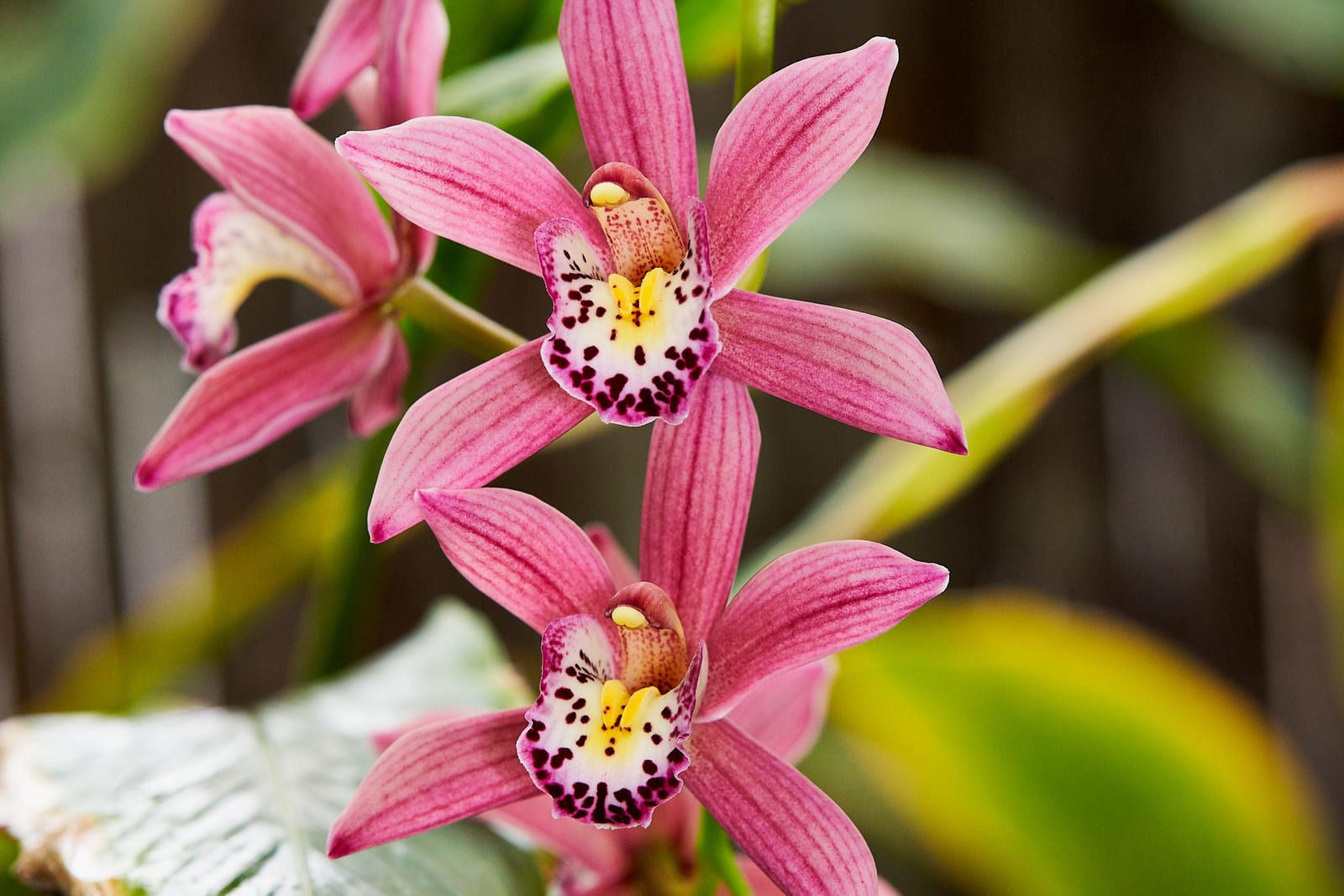
Cymbidium
Cymbidium · Orquídea cymbidium
Also called boat orchid
Photo by Geoff McKay on Wikimedia Commons, CC BY 2.0

A cymbidium flowers when it gets strong light and cool nights, so it does best spending summer outside in light shade and coming in before frost. Keep it evenly moist while it grows and much drier in winter. A cymbidium kept in a warm room all year often grows well and never blooms.
Not rated for pets
The ASPCA doesn’t list it. NC State gives no rating. No reputable source rates it, so keep it away from pets that chew plants until one does. Children: No poison information listed by NC State or the ASPCA.
Pet poison line: ASPCA (888) 426-4435
Good for: a patio or balcony in summer, a cool, bright sunroom, long-lasting flowers for cutting · Think twice if: it has to stay in a warm room all year, you have no spot with a few hours of strong light.
Needs at a glance
- Light4 of 4 · Some direct sunA few hours of direct sun, shaded from strong summer sun
- Water3 of 3 · Keep lightly moistEvenly moist in spring and summer, less in late summer, barely moist in winter
- Humidity2 of 3 · Above average40 to 60%, most important in winter when it’s in bud
- Soil when pottedBark-based cymbidium mixOne that holds some water and drains well; repot about every two years
Indoors: best at 50 to 75°F (10 to 24°C). Keep it above 40°F (4°C) and away from drafts and heat vents.
How the rating adds up
0 = easiest · 1 = moderate · 2 = hardest
- Missed waterings1 of 2 · ModerateEvenly moist while it grows, much drier in winter
- Light flexibility2 of 2 · HardestAs much light as it can take short of hot midday sun
- Humidity1 of 2 · ModeratePrefers 40 to 60%, most of all when in bud
- Pests and disease1 of 2 · ModerateAphids, mites, scale, mealybugs; rot if overwatered
- Sensitivity to change2 of 2 · HardestDrops buds in a warm room; scorches if moved into sun too fast
Growing outdoors
All year: USDA zones 10 to 12, where the coldest winter nights average 30°F (−1°C) or warmer.
Elsewhere: summer outside in light shade. Bring it in when nights reach 40 to 45°F (4 to 7°C).
- Containers
- Patio plant in summer
- Cut flowers
Sources: NC State, American Orchid Society, RHS, ASPCA plant list and USDA zone map. Full list below.
Verified · How we rate plants
How do I get my cymbidium to bloom again?
Give it bright light and cool nights from late summer on. Flower spikes start in mid to late summer, when nights drop and days stay mild, and the flowers open from late fall to spring. The American Orchid Society asks for nights of 50 to 57°F (10 to 14°C) with days near 75°F (24°C) from fall to spring, and says heat above 75°F at any time stops blooming. The RHS is less strict: it keeps plants under 86°F (30°C) in summer and below 59°F (15°C) while spikes develop. Both agree that a summer outside is the easy way to get that cool night. Kept warm indoors all year, it usually won’t flower. New divisions also take two to three years to bloom, per the RHS.
Can a cymbidium live outdoors?
Yes, in summer almost anywhere, and all year where winters stay mild. The American Orchid Society moves it out once nights stay in the mid 40s°F (about 7°C) and brings it in at 40°F (4°C); the RHS puts it out from June to mid-September in a sheltered spot in light shade, once it has been hardened off to the brighter light. For year-round growing, NC State lists USDA zones 10 to 12, while the AOS says zone 8b and warmer can work and a light frost won’t kill it, though it’s best avoided. Watch for slugs and snails while it’s outside.
How much light does a cymbidium need?
More than most orchids: as much as it can take without hot midday sun. The American Orchid Society says only miniatures do well indoors, in a window with four or more hours of direct sun. The leaves tell you: medium to golden green is right, and dark green means too little light. Shade it from strong summer sun, and feel the leaves on hot days, since they can burn.
How often should I water a cymbidium?
It depends on the season. In spring and summer, while it grows, keep the mix evenly moist. In late summer, once the new pseudobulbs are full size, let it dry a little before you water. In winter, keep it barely moist. The RHS lets the mix dry slightly between waterings even in summer and waters weekly or every two weeks in winter. Use rainwater or filtered water if your tap water is hard, never softened water, and don’t let the pot stand in water. Our orchid watering guide has more.
Why are my cymbidium’s buds falling off?
Usually because it got too warm while the buds were forming. The RHS keeps it below 59°F (15°C) while the spikes develop to prevent bud drop, and says flowers also fade early in heat. The American Orchid Society asks for steady temperatures while it’s in bud. A move from a cool porch into a warm living room in fall is a common way to make that happen, so give it the coolest bright room you have.
What do I do after my cymbidium blooms?
Cut each finished flower spike off at the base, and keep caring for it as usual. Each spike stays in flower about six to eight weeks, according to the RHS, and NC State says the blooms can last one to three months. Spring, right after flowering, is also the time to repot or divide it.
When should I repot or divide a cymbidium?
About every two years, in spring after it flowers, or sooner if the mix breaks down. Move it to a pot about 4 in (10 cm) wider, in a bark-based mix that holds some water. When you divide it, keep at least three pseudobulbs in each piece (American Orchid Society) or five (RHS). Expect a new division to take two to three years to flower.
Standard or miniature cymbidium?
Pick by your summer nights. Standards are the big ones, up to 4 ft (1.2 m), and need cool nights to flower. Miniatures stay 1 to 2 ft, take 5 to 10°F more heat, per NC State, and are the American Orchid Society’s pick where summer nights stay above 70°F (21°C). The AOS also recommends only miniatures for growing indoors.
Is a cymbidium safe for cats and dogs?
We don’t know yet. The ASPCA doesn’t list Cymbidium, and NC State gives it no toxicity rating. We found no reputable source that lists it as toxic either. Until one rates it, keep it away from pets that chew plants. If a pet eats part of it and seems unwell, call your vet or the ASPCA Animal Poison Control Center at (888) 426-4435.
How Grove helps
Grove can remind you to move your cymbidium outside in spring and back in before nights drop to 40°F, and assign each move to whoever is home that day. Watering checks follow the season, so it gets more in summer and less in winter.
Sources
- NC State Extension Gardener Plant Toolbox: Cymbidium (boat orchid)
- American Orchid Society: Novice Culture Sheet, Cymbidium
- American Orchid Society: Cymbidium culture sheet
- Royal Horticultural Society: How to grow cymbidium orchids
- ASPCA Animal Poison Control: Toxic and Non-Toxic Plants
- USDA ARS Plant Hardiness Zone Map (2023)
- Kew Plants of the World Online: Cymbidium
- Kew: World Checklist of Vascular Plants (June 2026 release), the data behind Plants of the World Online
- UConn Home and Garden Education Center: A Beginner’s Guide to Orchids (2024)
- Hinsley et al., A review of the trade in orchids and its implications for conservation (Botanical Journal of the Linnean Society, 2018)
- New York Botanical Garden, Mertz Library: Fragrant Orchids research guide