Plant care card
Lemon tree
Citrus × limon · Limonero
Also called lemon or Meyer lemon
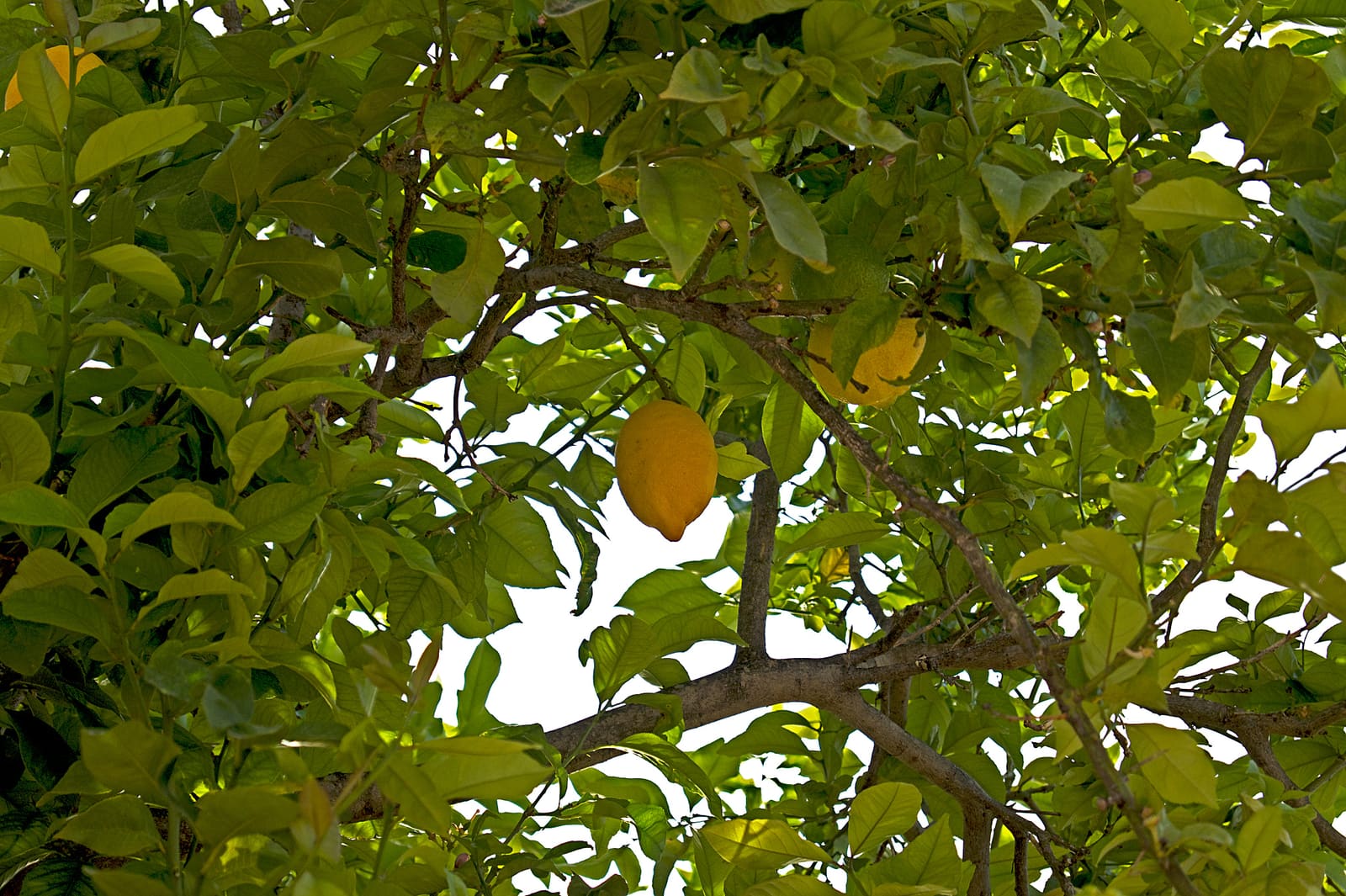
Photo by Alex Kulikov on Wikimedia Commons, CC BY 3.0

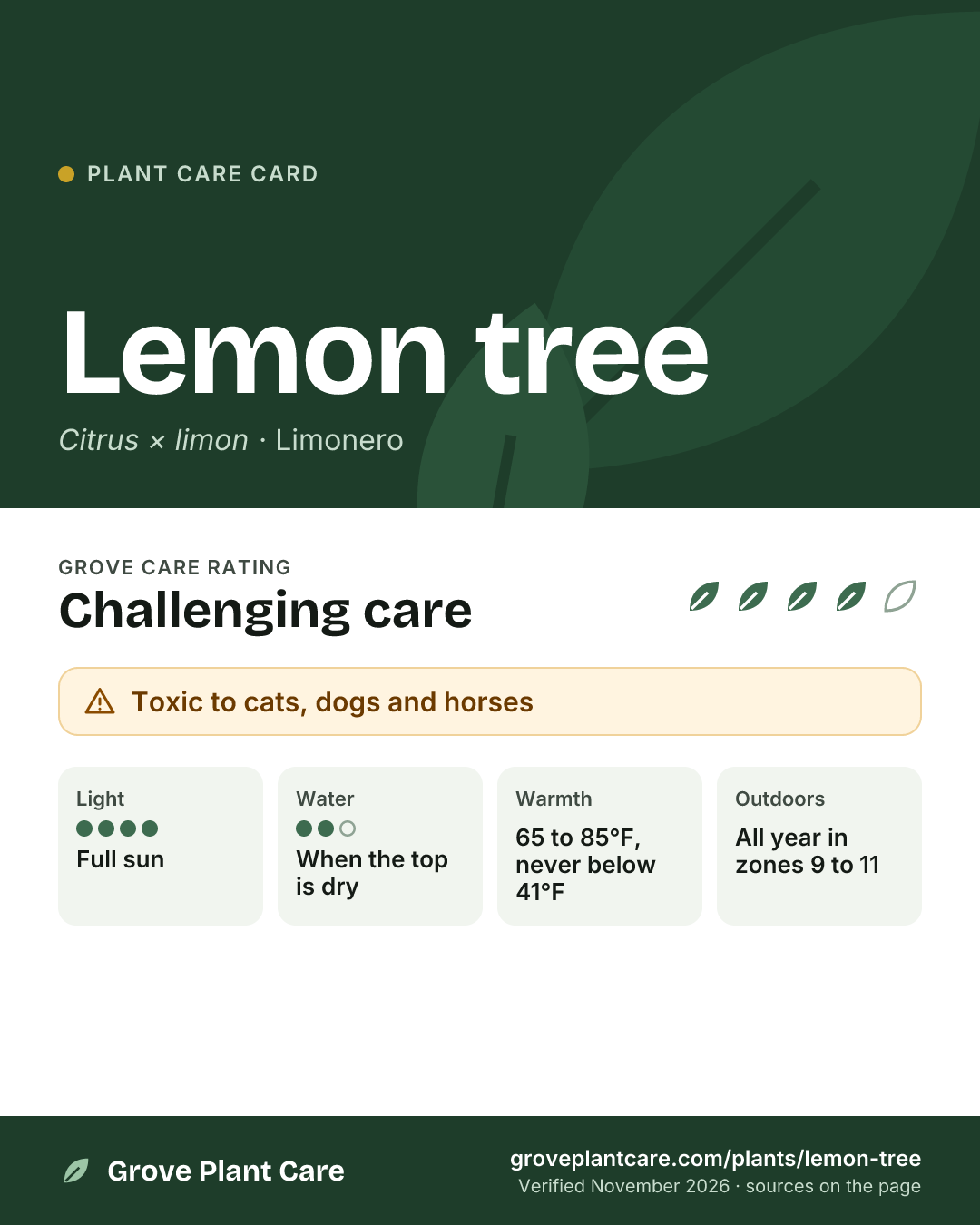
A lemon tree can live in a pot if it gets full sun, a fast-draining mix and steady care. Give it 8 hours of sun, outside in summer if you can, and water when the top inch or two is dry, never letting the root ball dry out. Bring it in before nights drop to about 41 to 50°F (5 to 10°C), to a bright, cool room away from heaters and drafts, which make it drop leaves. Lemons are toxic to cats, dogs and horses.
Toxic to cats, dogs and horses · Mild
Vomiting, diarrhea and depression; skin irritation is possible. The essential oils and psoralens in the peel, leaves and stems cause the trouble. Children: low severity. NC State rates it low: the peel and plant can upset a stomach, the oils can irritate skin, and the stems have sharp thorns.
Pet poison line: ASPCA (888) 426-4435
Good for: a sunny patio in summer, a bright, cool sunroom in winter, lemons from one tree: it needs no partner to fruit · Think twice if: cats, dogs or horses chew on plants, your sunniest window gets only a few hours of sun, its only winter spot is a warm, dry room by a heater.
Needs at a glance
- Light4 of 4 · Full sun8 hours or more: a south-facing window inside, full sun outside
- Water2 of 3 · Let the top dryWater when the top 1 to 2 in are dry; never leave the pot in a saucer of water
- Humidity2 of 3 · Above averageIndoors in winter, a pebble tray or humidifier helps
- Soil when pottedFast-draining potting mixPine-bark mix or citrus compost, never garden soil, in a pot with drain holes
Indoors: best at 65 to 85°F (18 to 29°C). Keep it above 41°F (5°C) and away from drafts and heat vents.
How the rating adds up
0 = easiest · 1 = moderate · 2 = hardest
- Missed waterings1 of 2 · ModerateA pot dries fast; never let the root ball dry out
- Light flexibility2 of 2 · HardestFull sun, 8 hours or more
- Humidity1 of 2 · ModerateDry indoor air can drop leaves; a pebble tray helps
- Pests and disease1 of 2 · ModerateScale, mealybugs, spider mites and aphids; root rot in wet mix
- Sensitivity to change2 of 2 · HardestDrops leaves with drafts and temperature swings; dislikes root disturbance
Growing outdoors
All year: USDA zones 9 to 11, where the coldest winter nights average 20°F (−7°C) or warmer.
Elsewhere: summer outside in full sun, sheltered from wind. Bring it in when nights reach 41 to 50°F (5 to 10°C).
- Container tree that summers outdoors
- Fruit tree in the ground in warm climates
- Conservatory or sunroom plant in winter
Sources: NC State, Mississippi State, Clemson, RHS, ASPCA, ASPCA plant list, UF/IFAS, USDA zone map, FISC, Cal-IPC, Global Invasive Species Database and Hawaii weed risk assessment. Full list below.
Verified · How we rate plants
Can a lemon tree grow indoors?
Yes, for part of the year. NC State says a lemon can grow in a pot and spend winter indoors in a bright spot that isn't too warm, with summers outside in cold climates. The RHS grows citrus the same way: outdoors in a sunny, sheltered spot in summer, indoors for winter. Clemson suggests a south-facing window or a sunroom kept at 55 to 65°F (13 to 18°C). A dim, warm living room all year is the hard case: the tree needs a lot of light to keep its leaves.
How much sun does a lemon tree need?
A lot. NC State asks for full sun, 6 or more hours, and calls it shade intolerant; Clemson and Mississippi State both ask for at least 8 hours of direct sun or grow lights. Outside, pick a sunny spot out of the wind, such as a south-facing wall. Inside, use your sunniest south-facing window.
How often should I water a potted lemon tree?
Check often, water only when needed. Mississippi State says to feel below the top 1 to 2 inches before watering, and Clemson checks the top 2 to 3 inches. In hot, dry weather a pot may need water every day. Never let the root ball dry out completely, since it can shrink from the pot and get hard to rewet, and never leave the pot in a saucer of water: soggy mix causes root rot, the most serious problem for potted citrus. In winter the RHS lets the surface dry a little between waterings.
Why are my lemon tree leaves dropping or turning yellow?
Cold, swings in temperature and dry air are the usual causes of leaf drop, especially after a move indoors: the RHS names cool or fluctuating temperatures, dry air and cold drafts. Keep it away from doors, vents and heaters, and raise the humidity with a tray of wet gravel. Yellow or falling leaves can also mean too much water or too little fertilizer, the RHS adds, and Clemson warns that a soggy mix leads to root rot. Check the pot drains, then feed it in the growing season. Leaves can also drop after cold nights outside; the tree often survives, Mississippi State says.
Will a potted lemon tree grow lemons?
It can. Lemons are self-fertile, so one tree is enough, say the RHS and UF/IFAS. Indoors, the RHS suggests hand-pollinating the flowers and raising the humidity to help fruit set. Be patient: Clemson says lemons take about 1 to 3 years to be mature enough to flower, so a bigger tree fruits sooner, and the RHS says fruit takes 9 to 12 months to ripen, which is why a tree often carries flowers and fruit at once. Give it full sun and steady water, and pick ripe fruit with a short piece of stem.
Is a lemon tree safe for cats and dogs?
No. The ASPCA lists lemon as toxic to dogs, cats and horses. The essential oils and psoralens in the plant can cause vomiting, diarrhea and depression, and skin irritation is possible. The fruit itself is eaten by people, but the peel and the rest of the plant are the problem. NC State agrees and rates the poison risk to people as low; the RHS adds that the fruit can irritate skin in sunlight, and the stems have sharp thorns. Keep it where pets can't chew it. If a pet eats part of the plant and seems unwell, call your vet or the ASPCA Animal Poison Control Center at (888) 426-4435.
How cold can a lemon tree get?
Not very. In the ground, UF/IFAS says lemon trees drop their leaves at 22 to 24°F (−4 to −6°C), suffer severe wood damage at 20°F (−7°C), and lose flowers and young fruit at 29°F (−2°C). Potted and young trees take less, and Mississippi State says to cover or move pots inside when 28°F (−2°C) or colder is forecast. For a tree that spends winter inside, the RHS says lemons can take lows of 5°C (41°F), and Clemson notes most citrus are fine down to about 50°F (10°C). Bring it in when nights start dropping toward 41 to 50°F (5 to 10°C), and move it out again gradually once nights warm up.
Is a Meyer lemon different from a regular lemon?
A little. UF/IFAS describes 'Meyer' as a cross of a lemon and a mandarin, and Mississippi State calls 'Improved Meyer' a cross of a true lemon and an orange. NC State says it's more cold hardy, with thinner skin and sweeter fruit, and Clemson finds it easier for home gardeners. Mississippi State names it the only lemon it recommends for containers. The grocery-store lemon is usually 'Eureka', Clemson says. Kew's checklist counts Meyer under Citrus × limon, so the care on this card covers both.
Can a lemon tree grow outdoors?
Yes, all year in USDA zones 9 to 11, says NC State. In the ground it grows 10 to 20 feet tall and wants full sun, well-drained soil and room: UF/IFAS plants it 15 to 25 feet from buildings and other trees, in the warmest spot that doesn't flood. Two diseases, citrus canker and citrus greening, can limit lemons in Florida, so UF/IFAS recommends certified disease-free trees. Rules may apply: Clemson says citrus can't be sold in or shipped out of Charleston, Beaufort and Colleton counties in South Carolina because of a greening quarantine. No official invasive list names lemon, and Hawaii's weed risk screen rates it low risk.
NC State, UF/IFAS, Clemson, Hawaii weed risk assessment, FISC
How Grove helps
Grove sets a watering check based on how dry the soil is, so the pot gets water before the root ball dries out and never sits soggy. You can add moving it outside in spring and bringing it in before cold nights as tasks and assign them, so whoever is home that day carries the pot.
Sources
- NC State Extension Gardener Plant Toolbox: Citrus × limon
- Mississippi State University Extension P2542: Growing Citrus in Containers in Mississippi
- Clemson Cooperative Extension HGIC: Citrus
- Royal Horticultural Society: How to grow citrus
- ASPCA Animal Poison Control: Lemon
- ASPCA Animal Poison Control: Toxic and Non-Toxic Plants
- Royal Horticultural Society: Citrus × limon (F)
- UF/IFAS EDIS HS402: Lemon Growing in the Florida Home Landscape
- USDA ARS Plant Hardiness Zone Map (2023)
- Florida Invasive Species Council: 2026 Plant List, Category I and II (April 2026)
- California Invasive Plant Council: Cal-IPC Inventory
- Global Invasive Species Database (IUCN ISSG): search for Citrus limon
- Hawaii-Pacific Weed Risk Assessment (Plant Pono): Citrus × limon (2002)
- Kew WCVP data release (2026-06-04 file), plant_name_id 2724178: Citrus × limon