Plant care card
Swiss cheese vine
Monstera adansonii · Monstera adansonii
Also called Adanson’s monstera or five hole plant
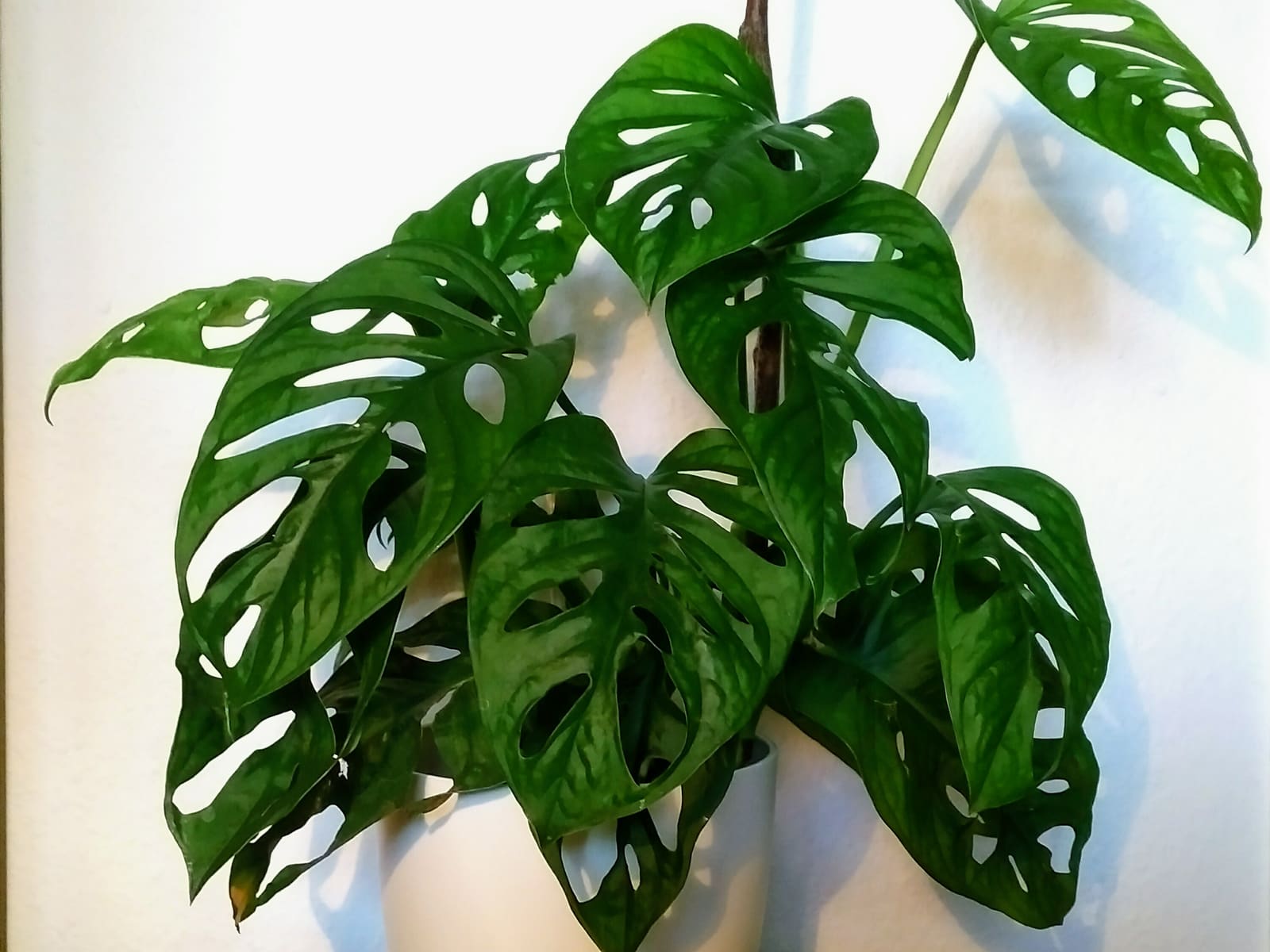
Photo by Waithamai on Wikimedia Commons, CC BY 4.0

Monstera adansonii, the Swiss cheese vine, is the small, fast-growing cousin of the big monstera. Give it bright indirect light, soil that stays lightly moist but never soggy, and humid air, and its heart-shaped leaves fill with oval holes. Let it climb a pole or trail from a basket. It's toxic to cats and dogs, though the ASPCA rates monstera poisoning as low severity.
Toxic to cats and dogs · Mild
Mouth irritation, drooling, vomiting and loss of appetite. The ASPCA lists all monsteras as toxic, with low severity; NC State rates it low too. Children: low severity. NC State rates it low severity; chewing irritates the mouth and throat, and the sap can irritate skin.
Pet poison line: ASPCA (888) 426-4435
Good for: small spaces, hanging baskets and shelves, a monstera look without the size · Think twice if: pets or small children chew plants, your air is very dry and you won’t add humidity.
Needs at a glance
- Light3 of 4 · Bright indirectNear a bright window, out of direct sun; low light means fewer holes
- Water3 of 3 · Keep lightly moistMoist but never soggy; water less in winter
- Humidity2 of 3 · Above averageHumid air; a humidifier or pebble tray helps
- Soil when pottedLoose, well-drained mixRich and slightly acidic, in a pot with drainage holes
Indoors: best at 65 to 77°F (18 to 25°C). Keep it above 50°F (10°C) and away from drafts and heat vents.
How the rating adds up
0 = easiest · 1 = moderate · 2 = hardest
- Missed waterings1 of 2 · ModerateLikes evenly moist soil, but never soggy; less water in winter
- Light flexibility1 of 2 · ModerateBright indirect light; low light means fewer holes
- Humidity1 of 2 · ModeratePrefers humid air; dry air browns the leaf edges
- Pests and disease1 of 2 · ModerateSpider mites, mealybugs, scale; root rot if kept wet
- Sensitivity to change0 of 2 · EasiestEasygoing; keep it out of cold drafts
Growing outdoors
All year: USDA zones 10 to 12, where the coldest winter nights average 30°F (−1°C) or warmer.
Elsewhere: summer outside in part shade, sheltered; direct sun scorches the leaves. Bring it in before nights drop below 50°F (10°C).
- Hanging baskets
- Climbing a moss pole or trellis
Sources: NC State, NParks Singapore, RHS, ASPCA, UF/IFAS, ASPCA plant list, USDA, FISC and Global Invasive Species Database. Full list below.
Verified · How we rate plants
How is Monstera adansonii different from Monstera deliciosa?
It's the smaller plant. NC State says Monstera adansonii reaches about 3 to 8 ft indoors on a pole and grows fast, while Monstera deliciosa is larger, with bigger leaves. The RHS suggests adansonii where space is limited. The leaves differ too: adansonii has heart-shaped leaves with oval holes between the veins, while deliciosa leaves split as they mature. Both are sold as Swiss cheese plant, which is why NC State says they get confused. Care is close: the RHS covers both in one guide, and adansonii likes its soil a little more evenly moist and the air more humid.
Is Monstera adansonii toxic to cats and dogs?
Yes. The ASPCA lists the Swiss cheese plant group (all monsteras) among plants with insoluble calcium oxalate crystals, which are toxic when chewed. UF/IFAS names Adanson's monstera as toxic to cats, dogs and people. A pet that bites it may drool, paw at its mouth, vomit or lose its appetite. NC State and the ASPCA rate the severity as low, and the ASPCA says rare large exposures can swell the throat. The sap can irritate skin, so wear gloves when you prune. If a pet eats some, call your vet or the ASPCA Animal Poison Control Center at (888) 426-4435. If a child eats some, call Poison Help at 1-800-222-1222.
How much light does a Monstera adansonii need?
Bright indirect light. NC State and the RHS both say bright, indirect light suits it, and the RHS suggests a spot near an east or west window. Direct sun can scorch the leaves. Very low light has a cost: the RHS says monsteras grown too dark make leaves with fewer holes. NParks in Singapore, where it grows outdoors, gives it several hours of indirect light a day.
How often should I water a Monstera adansonii?
Keep the soil lightly moist while it grows, never soggy. NC State says moist but well drained, and NParks says keep it consistently moist. The RHS species page says water freely in spring and summer and sparingly in winter. The RHS growing guide for Swiss cheese plants lets the pot get almost dry before a thorough soak, so a short dry spell is fine. Empty the saucer every time: both NC State and the RHS warn that waterlogged soil leads to root rot.
Why are my Monstera adansonii leaves turning yellow?
Check the soil first. Too much water is the problem both NC State and the RHS warn about most: soggy soil rots the roots, and the RHS says a waterlogged plant can collapse. Feel the mix and look at the drainage holes. If the soil is wet, let it dry more between waterings and make sure the pot drains. If the soil is fine, look under the leaves for spider mites and mealybugs, which NC State lists among its pests.
Does a Monstera adansonii need a moss pole, or can it hang?
Either works. It climbs with aerial roots in the wild, and NC State suggests a trellis or moss pole indoors. The RHS says it can climb or trail and lists hanging baskets among good spots. On a pole, keep the moss damp so roots grab it: the RHS says climbing monsteras make larger leaves with more holes.
How do I propagate a Monstera adansonii? Can it root in water?
Yes, from stem cuttings. The RHS suggests taking cuttings from spring to late summer and standing them in water in a bright spot until they have good roots, then potting them up. NParks roots cuttings in soil or water, and the RHS species page adds that gentle warmth from below helps.
What temperature and humidity does a Monstera adansonii like?
Warm rooms, about 65 to 77°F (18 to 25°C), as the RHS suggests for Swiss cheese plants. Keep it above 50°F (10°C) and away from cold drafts, per NC State. It prefers high humidity: NC State suggests a humidifier or a tray of wet pebbles, and the RHS says dry, heated air browns the leaf edges. Keep it away from radiators in winter.
Can a Monstera adansonii grow outdoors?
All year only where it never freezes. NC State lists USDA zones 10 to 12, where it can climb 10 to 13 ft. Elsewhere it can spend summer outside in part shade, sheltered from wind and direct sun; bring it in before nights drop to 50°F (10°C). No official invasive species list (Florida, Hawaii or the Global Invasive Species Database) names it. It grows wild from southern Mexico and the Caribbean to tropical South America.
NC State, RHS, USDA, FISC, Global Invasive Species Database, Kew
How Grove helps
Grove sets a watering check based on how dry the soil is, so the Swiss cheese vine gets water before it dries out and never sits soggy. You can add misting the moss pole or turning the pot as repeating tasks and assign them.
Sources
- NC State Extension Gardener Plant Toolbox: Monstera adansonii
- National Parks Board Singapore, GardeningSG: Adanson's Monstera (2023)
- Royal Horticultural Society: Monstera adansonii (Mexican breadfruit plant)
- RHS: How to grow Swiss cheese plants
- ASPCA: These Houseplants Can Cause Trouble for Your Pets (2025), Swiss cheese plant (Monstera spp.)
- UF/IFAS EDIS ENH1375/EP639: Common Poisonous Houseplant Species in Florida (Khamare and Marble)
- ASPCA Animal Poison Control: Toxic and Non-Toxic Plants
- USDA ARS Plant Hardiness Zone Map (2023)
- Florida Invasive Species Council: Plant List, Category I and II (April 2026); no Monstera listed
- IUCN Global Invasive Species Database: Monstera adansonii (no record)
- Kew WCVP data release (2026-06-04 file), plant_name_id 129569: Monstera adansonii
- Kew WCVP data release (2026-06-04 file), plant_name_id 491533: Monstera adansonii subsp. laniata (synonym Monstera friedrichsthalii)
- NC State Extension Gardener Plant Toolbox: Monstera deliciosa
- ASPCA Animal Poison Control: Swiss Cheese Plant
- Royal Horticultural Society: Monstera obliqua 'Monkey Mask' (synonym Monstera adansonii 'Monkey Mask')
- Royal Horticultural Society: Monstera adansonii [Monkey Leaf] ('Ppimon001')
- National Parks Board Singapore, Flora & Fauna Web: Monstera obliqua
- Kew WCVP data release (2026-06-04 file), plant_name_id 129639: Monstera obliqua