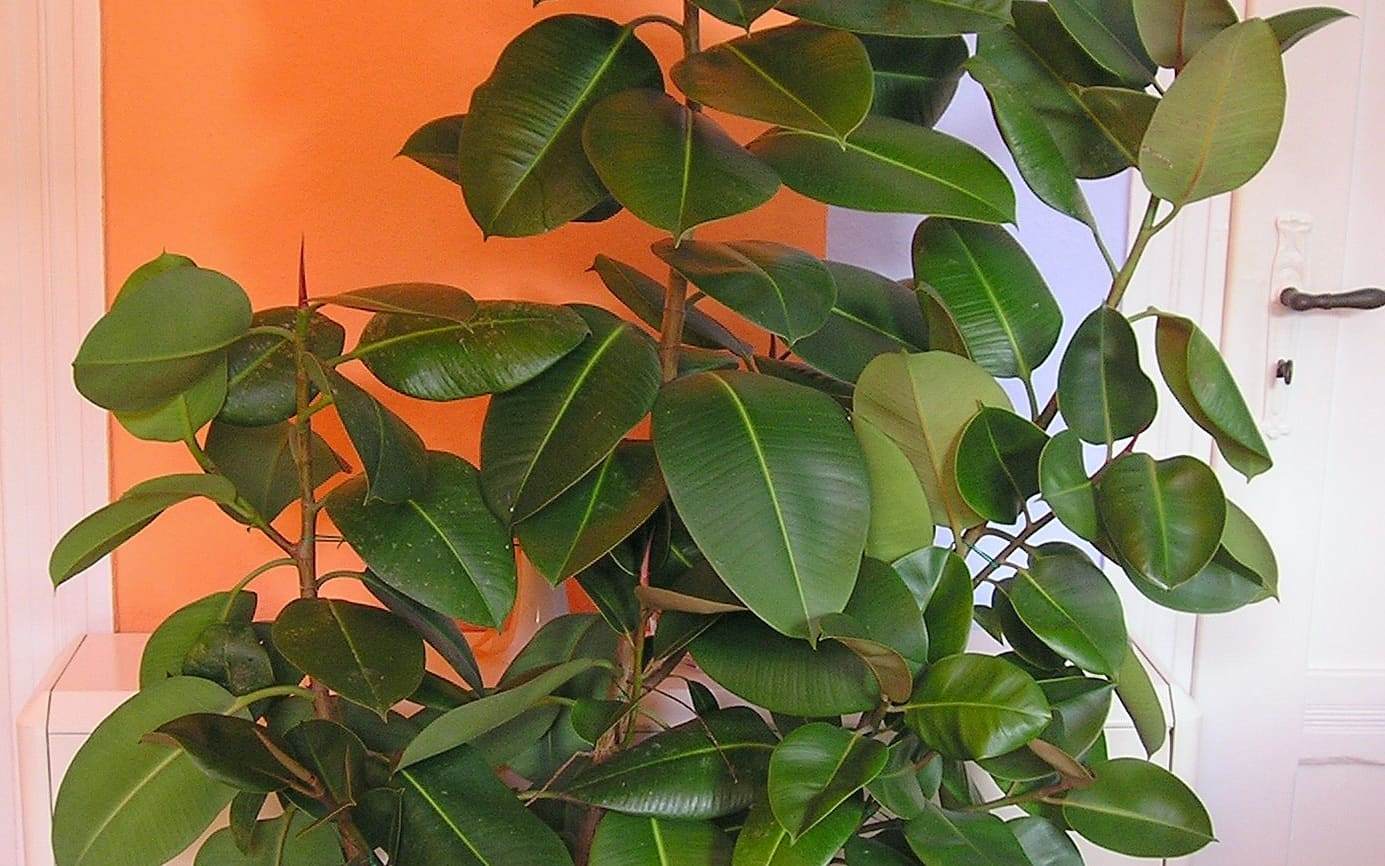
Plant care card
Rubber plant
Ficus elastica · Ficus elastica
Also called rubber tree, India rubber plant or rubber fig
Photo by Maja Dumat on Wikimedia Commons, CC BY 2.0

A rubber plant wants bright light, water when the top of the soil feels dry, and a warm spot away from cold drafts. It's one of the easier figs: Clemson calls it an excellent plant for beginners. Most trouble comes from soggy soil or a chilly window, and the plant tells you by dropping leaves. Give it room, because it can grow 6 to 10 feet tall indoors.
Toxic to cats, dogs and horses · Mild
The milky sap can irritate the mouth and stomach and the skin. The ASPCA lists the whole fig genus as toxic; its "Indian rubber plant" entry is the weeping fig. Children: low severity. The sticky white sap can irritate skin or the stomach; wear gloves when pruning.
Pet poison line: ASPCA (888) 426-4435
Good for: a bright room with space for a tall plant, beginners, someone who sometimes waters late · Think twice if: pets or kids chew plants, your only spot is next to a drafty door or a cold window, you want a small plant that stays small without pruning.
Needs at a glance
- Light3 of 4 · Bright indirectNear a bright window; morning sun from an east window is ideal, shade it from afternoon sun
- Water2 of 3 · Let the top dryWater thoroughly when the top of the soil feels dry; much less from fall to late winter
- Humidity1 of 3 · AverageA normal home is fine; it likes humid air but tolerates dry rooms
- Soil when pottedWell-drained potting mixSoil-based mix, lightened with bark, in a pot with drain holes
Indoors: best at 60 to 80°F (16 to 27°C). Keep it above 55°F (13°C) and away from drafts and heat vents.
How the rating adds up
0 = easiest · 1 = moderate · 2 = hardest
- Missed waterings1 of 2 · ModerateLet the top dry between waterings; it handles a short dry spell better than most figs
- Light flexibility1 of 2 · ModeratePrefers bright light; copes with less but may drop leaves
- Humidity0 of 2 · EasiestAverage home humidity is fine; thick leaves handle dry air
- Pests and disease1 of 2 · ModerateMealybugs, scale and spider mites; root rot when wet
- Sensitivity to change1 of 2 · ModerateDrops leaves after cold drafts and sudden temperature drops
Growing outdoors
All year: USDA zones 10b to 12, where the coldest winter nights average 35°F (2°C) or warmer.
Elsewhere: summer outside in bright shade or morning sun. Bring it in before nights drop below 55°F (13°C).
- Containers
- Indoor tree
- Shade or specimen tree in the tropics
Sources: NC State, Clemson, UF/IFAS, University of Missouri, RHS, ASPCA, USDA zone map and UF/IFAS Assessment. Full list below.
Verified · How we rate plants
How often should I water a rubber plant?
When the top of the soil feels dry to the touch. Water thoroughly until it drains, then empty the saucer, Clemson says. The University of Missouri suggests watering once the top 25 to 50% of the mix has dried, and UF/IFAS says to let a potted rubber plant get fairly dry between waterings. From fall to late winter it drinks far less, NC State and the RHS say, so check before you water instead of keeping a schedule. Overwatering is the usual way to lose one: soil that stays wet yellows the leaves and rots the roots.
How much light does a rubber plant need?
Bright light, ideally with some gentle sun. Clemson says it grows best with morning light from an east window, and NC State says to protect it from afternoon sun. The RHS asks for bright, filtered or indirect light. It can adapt to lower light, but too little light can make it drop leaves, and the University of Missouri says every fig does better in a brighter spot. Variegated kinds need more light than plain green ones, the RHS adds.
Why is my rubber plant dropping leaves?
Usually water, cold or light. The RHS says sudden leaf drop on figs is most often overwatering, and can also come from low winter temperatures, low light, too much fertilizer or cold drafts. Clemson names cold drafts, too little light and dry air, and NC State adds overwatering and sudden temperature drops. Keep it above 55°F (13°C), away from drafty doors, windows and vents, and let the top of the soil dry before watering. One or two old, yellow leaves falling from the bottom now and then is normal, as NC State and the RHS both note.
Why are my rubber plant leaves turning yellow or brown?
Yellow leaves usually mean the soil stays too wet, say Clemson and the RHS, which adds that dark spots on the leaves are another sign of overwatering. Lower leaves also yellow and drop with age, which is normal. Dry, shriveled or brown leaves point the other way: dry air, dry soil or too much direct sun, according to the RHS. Check the soil first. If it's wet, water less and make sure the pot drains; if it's bone dry, water thoroughly.
How do I make a rubber plant bushier?
Prune it. NC State says cutting back the main stems encourages a bushier plant, while leaving them unpruned gives a tall, narrow tree. Clemson suggests pruning in spring, and the RHS says late winter or early spring, cutting just above a leaf. Figs cope well even with hard pruning, the RHS adds. The cuts drip a sticky white sap that can irritate skin, so wear gloves. On a variegated plant, remove any all-green shoots, which can take over.
When should I repot a rubber plant?
In late winter or early spring, when it has outgrown its pot. Clemson gives that timing; the RHS says every 2 to 3 years for this species, moving up only slightly, and the University of Missouri says every year or two keeps growth at its best. Use a soil-based mix with some bark and a pot with drain holes. When a plant is too big to repot, the RHS suggests scraping off the top inch (2.5 cm) of mix each year and replacing it with fresh mix.
How do I propagate a rubber plant?
Take a stem or tip cutting, or air layer a branch. Clemson, UF/IFAS and the RHS all list cuttings and layering. The RHS suggests semi-ripe cuttings in spring or summer, which root faster with bottom heat. Air layering, where roots grow on a stem before you cut it off, works well for rubber plants in spring or late summer and takes about a year, the RHS says. Wear gloves, since the sap irritates skin.
Is a rubber plant toxic to cats and dogs?
Yes, mildly. The ASPCA has no separate rubber plant entry, but it lists figs (Ficus) as toxic to dogs, cats and horses, with stomach and skin irritation, and its entry named "Indian rubber plant" is actually the weeping fig. NC State tags the rubber plant as a problem for cats, dogs and horses, and Clemson says the sticky white sap may irritate skin or the stomach if eaten. Keep it away from pets and young children that chew plants. If a pet eats some and seems unwell, call your vet or the ASPCA Animal Poison Control Center at (888) 426-4435.
Can a rubber plant grow outdoors?
Yes, all year in about USDA zones 10b to 12, where the coldest winter nights average 35°F (2°C) or warmer. UF/IFAS lists zones 10B to 11 and NC State 9a to 12b, so the cautious low end is used here. In the ground it becomes a fast-growing tree of 35 to 45 feet with large surface roots, UF/IFAS says. Elsewhere it can spend summer outside in bright shade or morning sun. Too much direct sun can dry and scorch the leaves, so start it in shade, and bring it in before nights drop below 55°F (13°C).
How Grove helps
Grove turns watering into a check of the soil, so the rubber plant gets water when the top is dry and nobody drowns it in winter. You can add a leaf wipe and a spring pruning as tasks and assign them, so whoever is home keeps it clean and full.
Sources
- NC State Extension Gardener Plant Toolbox: Ficus elastica
- Clemson Cooperative Extension HGIC 1510: Rubber Plant
- UF/IFAS Extension ENH411: Ficus elastica, Rubber Tree (2018)
- University of Missouri IPM: Ficus, 2026 Houseplant of the Year
- Royal Horticultural Society: Ficus elastica
- Royal Horticultural Society: How to grow ornamental figs
- ASPCA Animal Poison Control: Weeping Fig (Ficus sp.)
- ASPCA Animal Poison Control: Fig (Ficus benjamina)
- USDA ARS Plant Hardiness Zone Map (2023)
- UF/IFAS Assessment of Non-Native Plants: Ficus elastica
- ASPCA Animal Poison Control: Baby Rubber Plant (Peperomia obtusifolia)
- NC State Extension Gardener Plant Toolbox: Crassula ovata (jade plant, money plant)
- ASPCA Animal Poison Control: Jade Plant (Crassula argentea)