Plant care card
Shell ginger
Alpinia zerumbet · Alpinia
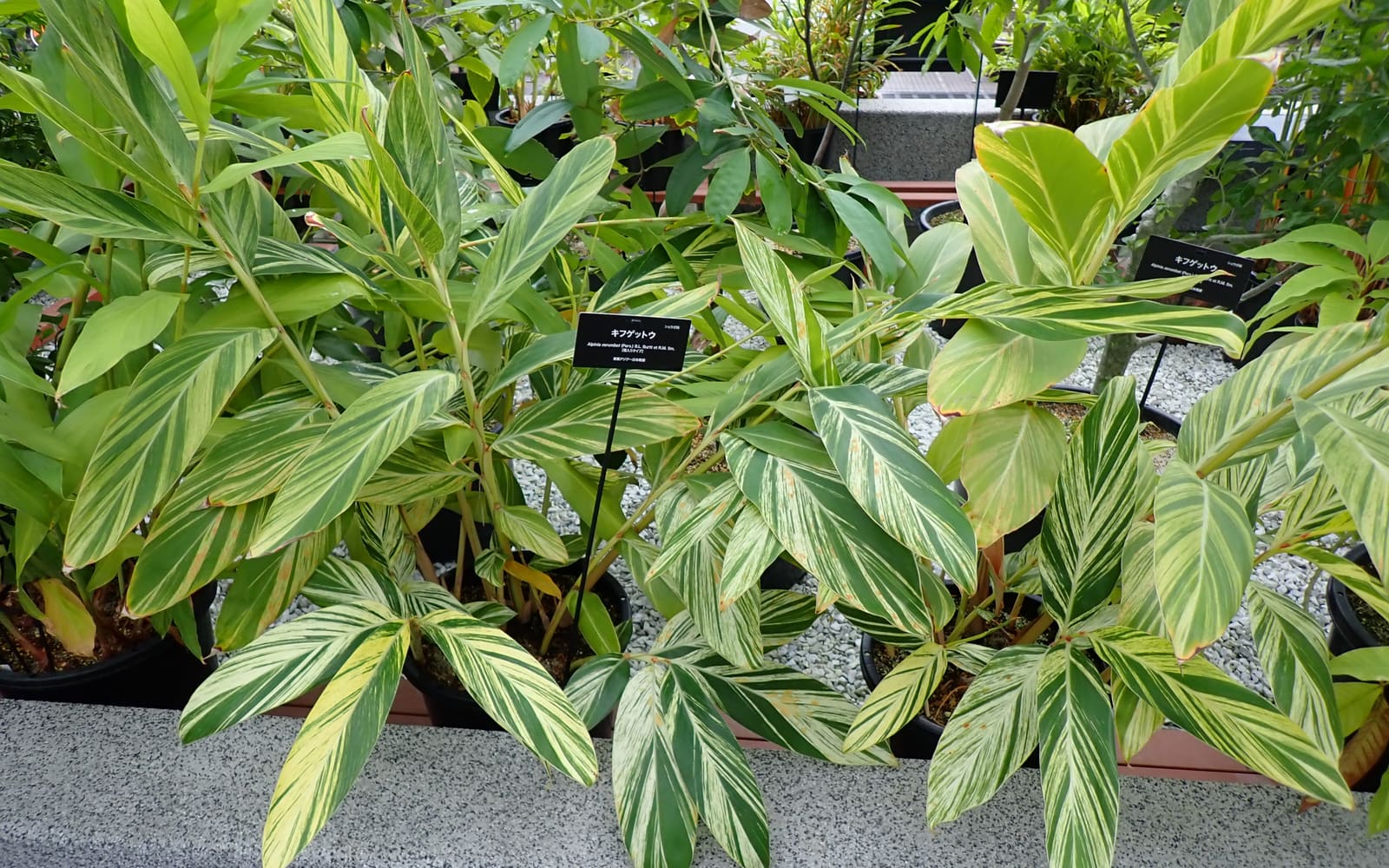
Also called variegated shell ginger, pink porcelain lily or shell flower
Photo by M108t on Wikimedia Commons, CC BY 4.0

Shell ginger (Alpinia zerumbet) is a big tropical ginger. The variegated kind sold in pots has long leaves striped green and creamy yellow. Give it bright light, keep the soil moist without letting it get soggy, and keep it warm and humid. Outdoors it stays green all year in USDA zones 9b to 11; in cooler spots frost kills the stems and new shoots come back in spring. No pet toxicity rating exists. Florida doesn't list it as invasive, but it runs wild in Hawaii, Puerto Rico and on some other islands.
Not rated for pets
Neither the ASPCA nor NC State rates shell ginger. No reputable source lists it as toxic, but none rates it either. Hawaii's weed risk assessment found no evidence of toxicity. Children: No poisoning information found.
Pet poison line: ASPCA (888) 426-4435
Good for: bright rooms and patios, striped leaves all year, warm-climate gardens with some shade · Think twice if: your home is dry or dim in winter, you garden in Hawaii or on another tropical island where it escapes.
Needs at a glance
- Light3 of 4 · Bright indirectBright light indoors; part shade or dappled light outdoors
- Water3 of 3 · Keep lightly moistWater generously while it grows; never let it dry out or sit soggy
- Humidity2 of 3 · Above averageHumid air keeps the leaf edges from browning
- Soil when pottedRich, moist, well-drained mixOrganic-rich soil that holds moisture and still drains
Indoors: best at 60 to 75°F (16 to 24°C). Keep it above 55°F (13°C) and away from drafts and heat vents.
How the rating adds up
0 = easiest · 1 = moderate · 2 = hardest
- Missed waterings2 of 2 · HardestKeep the soil moist; never let it dry out or stay soggy
- Light flexibility1 of 2 · ModerateBright light indoors; part shade outdoors
- Humidity1 of 2 · ModerateLikes humid air; dry air browns the leaf edges
- Pests and disease0 of 2 · EasiestMites now and then; no serious pests or diseases
- Sensitivity to change1 of 2 · ModerateCold or dry spells brown the leaves; stored plants skip a bloom
Growing outdoors
All year: USDA zones 9b to 11, where the coldest winter nights average 25°F (−4°C) or warmer.
Elsewhere: summer outside in part shade or dappled light; ease it into brighter spots. Bring it in when nights reach 55 to 60°F (13 to 16°C).
Invasive in: Puerto Rico. Florida doesn't list it. It has gone wild on several islands: the Global Invasive Species Database records harm to rare plants on Ascension Island, and Hawaii's weed risk assessment rates it high risk. Never dump divisions outdoors. Lists checked .
- Large containers and patios
- Specimen, border or mass planting in warm climates
- Houseplant in bright light
Sources: Port St. Lucie Botanical Gardens, Wisconsin Extension, NParks Singapore, UF/IFAS, UF/IFAS Santa Rosa County, ASPCA plant list, Hawaii weed risk assessment, Clemson, USDA, Global Invasive Species Database, Biological Invasions, FISC and UF/IFAS Assessment. Full list below.
Verified · How we rate plants
Is shell ginger toxic to cats and dogs?
We can't say for sure. Neither the ASPCA nor NC State rates shell ginger, and we found no reputable source that lists it as toxic. Hawaii's weed risk assessment found no evidence that it harms animals or people, which is useful to know but isn't a pet safety rating. Keep it out of reach of pets that chew plants. If your pet chewed a plant and seems unwell, call your vet or the ASPCA Animal Poison Control Center at (888) 426-4435. If a child eats some, call Poison Help at 1-800-222-1222.
How much light does shell ginger need?
Indoors, bright light. Wisconsin Extension says a potted shell ginger wants bright light and humid air. Outdoors it is happier with some shade: UF/IFAS says it does well in part shade, and Singapore's National Parks Board lists semi-shade or dappled light. If you move a pot outside for summer, start it in shade and ease it into brighter light over a week or so, as Clemson suggests for houseplants, so the leaves don't scorch.
How often should I water shell ginger?
Often enough that the soil stays moist. Wisconsin Extension says to water generously while it grows and to keep the soil moist, never soggy and never dry. Singapore's National Parks Board lists it as a plant that likes lots of water. In the ground in Florida, UF/IFAS calls it moderately drought tolerant, but it may still need watering in a dry spell. A pot dries much faster than garden soil, so check it every few days in summer.
Why are the leaf edges on my shell ginger turning brown?
Usually dry soil, dry air or cold. Wisconsin Extension says the leaf edges brown when the plant lacks moisture or gets too cold. Check that the soil hasn't dried out, move it away from cold windows and drafts, and give it more humid air in winter, for example with a humidifier nearby. Trim off the brown tips if they bother you; new leaves come in clean once the cause is fixed.
Why won't my shell ginger flower?
It blooms on older stems. Wisconsin Extension explains that the flowers form on old growth, so plants grown for one summer, or cut back and stored over winter, usually don't bloom. Where it grows all year, as in Florida, UF/IFAS says the white, fragrant flowers appear on and off through the year, hanging in clusters near the ends of leafy stems. In a pot, keep the old stems healthy through winter and give it bright light, and an older clump has the best chance to flower.
How cold can shell ginger get, and what do I do in winter?
Keep a potted plant above about 55°F (13°C). Clemson warns that 50°F (10°C) or lower damages many tropical plants, so bring it in before nights drop that far, and wait until nights stay above 60°F (16°C) before moving it back out. Wisconsin Extension gives a second option for cold climates: after the first frost, dig up the rhizomes and store them dry and cool, at about 55°F (13°C), then replant after frost danger passes. In the ground, UF/IFAS says frost in north Florida kills the stems to the ground and new shoots come back in spring.
What pests and diseases bother shell ginger?
Very few. UF/IFAS lists mites as a minor pest and no diseases of major concern, and Wisconsin Extension says it has no significant pests. Mites like dry air, so look under the leaves now and then, especially indoors in winter. Wisconsin adds that deer usually leave it alone.
How do I propagate shell ginger?
By dividing the clump. UF/IFAS divides the rhizomes during the growing season, and Wisconsin Extension says to divide a clump once it outgrows its pot. Seed is possible but slow: Wisconsin soaks it overnight and keeps it at 72 to 75°F, and germination is patchy, taking one to three months. Put extra divisions in the trash or give them to someone with a pot to fill; never dump them in wild areas.
Can shell ginger grow outdoors, and is it invasive?
It lives outdoors all year in USDA zones 9b to 11, per UF/IFAS, and Wisconsin Extension and LSU say the roots can survive in zone 8 with the stems dying back. In Florida it isn't listed: the Florida Invasive Species Council leaves it off its list, and UF/IFAS rates it not a problem species there. On tropical islands it's a different story. Hawaii's weed risk assessment rates it high risk and says it has gone wild on Kauaʻi, Oʻahu, Molokaʻi and Maui, forming dense thickets near streams. The Global Invasive Species Database records it crowding rare native ferns on Ascension Island and lists it as alien in Puerto Rico, Guam and other islands, and a peer-reviewed study counts it among the invasive plants of Puerto Rico and the Virgin Islands. Wherever you live, keep it where you planted it and never dump divisions outdoors.
UF/IFAS, Wisconsin Extension, LSU, FISC, UF/IFAS Assessment, Hawaii weed risk assessment, Global Invasive Species Database, Biological Invasions
How Grove helps
Grove sets a watering check based on how dry the soil is, so shell ginger gets water before the pot dries out. You can add a winter move indoors as a task and assign it to whoever is home when the nights turn cold.
Sources
- Port St. Lucie Botanical Gardens: Shell Ginger (Alpinia zerumbet)
- University of Wisconsin-Madison Extension: Variegated Shell Ginger, Alpinia zerumbet 'Variegata' (S. Mahr, rev. June 2026)
- National Parks Board Singapore, Flora & Fauna Web: Alpinia zerumbet 'Variegata'
- UF/IFAS Extension EDIS FPS036: Alpinia zerumbet 'Variegata', Variegated Shell Ginger (rev. November 2025)
- UF/IFAS Extension Santa Rosa County Demonstration Gardens: Variegated Shell Ginger (2024)
- ASPCA Animal Poison Control: Toxic and Non-Toxic Plants
- Hawaii-Pacific Weed Risk Assessment (Plant Pono): Alpinia zerumbet, high risk, score 10
- Clemson Cooperative Extension HGIC 1454: Moving Houseplants Indoors and Outdoors
- USDA ARS Plant Hardiness Zone Map (2023)
- IUCN Global Invasive Species Database: Alpinia zerumbet
- Rojas-Sandoval and Acevedo-Rodríguez (2015), Naturalization and invasion of alien plants in Puerto Rico and the Virgin Islands, Biological Invasions 17 (Table S2)
- Florida Invasive Species Council: Plant List, Category I and II (April 2026)
- UF/IFAS Assessment of Non-Native Plants: Alpinia zerumbet
- Royal Horticultural Society: Alpinia zerumbet (shell ginger, pink porcelain lily)
- National Tropical Botanical Garden, Tropical Plant Database: Alpinia zerumbet
- Kew WCVP data release (2026-06-04 file), plant_name_id 219119: Alpinia zerumbet
- LSU Department of Horticulture plant materials: Alpinia zerumbet (shell ginger)
- NC State Extension Gardener Plant Toolbox: Zingiber officinale (cooking ginger)
- NC State Extension Gardener Plant Toolbox: Zingiber zerumbet (shampoo ginger)