Plant care card
Song of India
Dracaena reflexa · Canción de la India
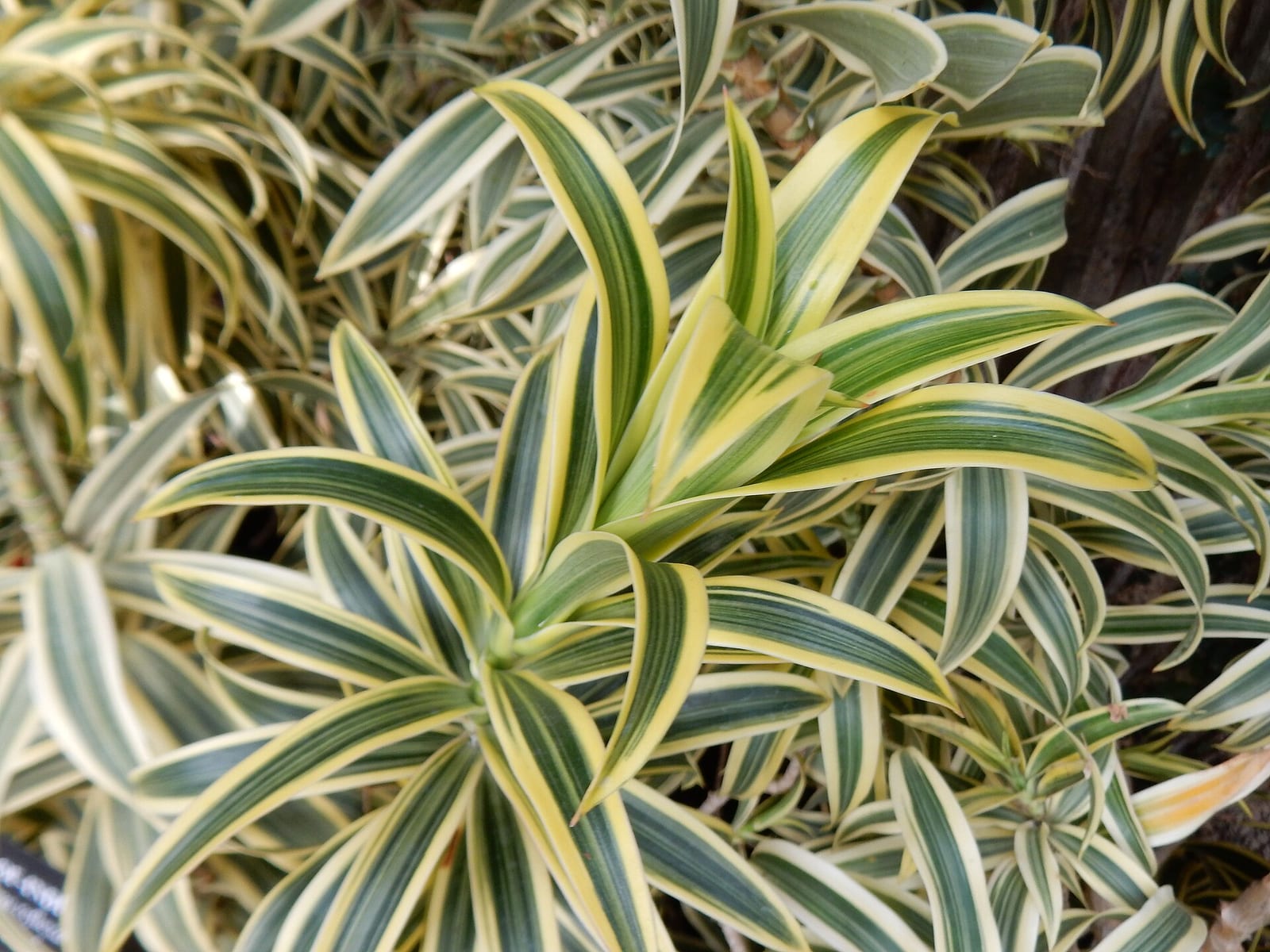
Also called Malaysian dracaena, pleomele or reflexed dracaena
Photo by Shuvaev on Wikimedia Commons, CC BY 4.0

Song of India is a slow, branching dracaena from Madagascar and nearby Indian Ocean islands, with short leaves striped cream and green that spiral up its stems. Give it bright, indirect light, keep the soil lightly moist, and use filtered or rain water: fluoride and chlorine brown the tips. Keep it above 60°F (16°C). It is toxic to cats, dogs and horses.
Toxic to cats, dogs and horses · Mild
Vomiting (sometimes with blood), drooling, loss of appetite, depression; dilated pupils in cats. Saponins in the leaves, sap and fruit. NC State rates the severity as low; the RHS adds rabbits and rodents. Children: low severity. NC State rates it low severity; eating it can irritate the mouth and stomach, and the sap may irritate skin.
Pet poison line: ASPCA (888) 426-4435
Good for: a bright corner that needs a tall, striped plant, patios in frost-free climates, sharing cuttings with friends · Think twice if: pets chew plants, your tap water has fluoride and filtered or rain water is a hassle, your rooms drop below 60°F (16°C) in winter.
Needs at a glance
- Light3 of 4 · Bright indirectNear a bright window, out of hot afternoon sun; in dim light it thins out
- Water3 of 3 · Keep lightly moistFrom spring to fall; in winter, let the surface dry before watering
- Humidity2 of 3 · Above averageA humidifier or a tray of wet pebbles helps in dry rooms
- Soil when pottedHouseplant mix that drainsMoist but well drained, with a little sand or perlite; a pot with drainage holes
Indoors: best at 65 to 80°F (18 to 27°C). Keep it above 60°F (16°C) and away from drafts and heat vents.
How the rating adds up
0 = easiest · 1 = moderate · 2 = hardest
- Missed waterings1 of 2 · ModerateLikes light, even moisture; a short dry spell is fine, soggy soil is risky
- Light flexibility1 of 2 · ModerateBright, indirect light keeps it full; hot sun scorches and fades it
- Humidity1 of 2 · ModeratePrefers humid air; very dry air browns the leaf edges
- Pests and disease1 of 2 · ModerateSpider mites, mealybugs, scale and thrips; root rot if overwatered
- Sensitivity to change1 of 2 · ModerateFluoride and chlorine burn the tips; cold and drafts drop leaves
Growing outdoors
All year: USDA zones 10b to 12, where the coldest winter nights average 35°F (2°C) or warmer.
Elsewhere: summer outside in part shade or bright filtered light, out of hot sun and salt spray. Bring it in before nights drop below 60°F (16°C).
- Houseplant
- Accent shrub or small tree in zones 10b to 12
- Patio container to move indoors
Sources: NC State, RHS, Clemson, University of Missouri, UF/IFAS, ASPCA, UF/IFAS Charlotte County, USDA zone map, FISC, Hawaii noxious weed list, GISD and Hawaii weed risk assessment. Full list below.
Verified · How we rate plants
Is song of India toxic to cats and dogs?
Yes. The ASPCA lists Malaysian dracaena (Dracaena reflexa, also called song of India and pleomele) as toxic to cats, dogs and horses. It contains saponins, which can cause vomiting (sometimes with blood), drooling, loss of appetite and depression, and dilated pupils in cats. NC State rates the severity as low and names the leaves, sap and fruit; the RHS adds rabbits and rodents. Keep it where pets can’t chew it. If your pet chews it and seems unwell, call your vet or the ASPCA Animal Poison Control Center at (888) 426-4435. If a child eats some and seems unwell, call Poison Help at 1-800-222-1222.
Song of India, Malaysian dracaena, pleomele or dragon tree: which is which?
Song of India, Malaysian dracaena and pleomele are all Dracaena reflexa; labels may still say Pleomele reflexa. 'Song of India' (also sold as 'Variegata') has cream leaves with a green center stripe, and 'Song of Jamaica' has green leaves with fine lime stripes, NC State says; the plain species is deep green. The Madagascar dragon tree, long sold as Dracaena marginata, now sits inside the same species in Kew’s checklist and at NC State, as variety angustifolia. It looks different, with narrow, red-edged leaves, and NC State rates it medium maintenance, so it is left off this card. The corn plant and lucky bamboo are other dracaenas with their own cards.
How much light does song of India need?
Bright, indirect light. NC State says it prefers bright, indirect sun and that direct sun can scorch or fade the leaves; the RHS gives it light with shade from hot sun. UF/IFAS says it grows best in direct light indoors, near a bright window. Light keeps it full: Clemson notes the leaves stay dense down to the base only when the plant gets enough light. In a dim room it grows thin and leggy.
How often should I water song of India?
Keep the soil lightly moist from spring to fall, and water less in winter. NC State says to keep it moist while avoiding overwatering, and that yellow leaves can come from too much or too little water. The RHS waters moderately in the growing season and sparingly in winter, and Clemson lets dracaenas dry slightly, watering once the surface feels dry. Missouri adds that they tolerate some irregular watering but drop leaves and brown at the tips if they dry out too far. Use room-temperature water and a pot with drainage holes.
Why are my song of India leaf tips turning brown or yellow?
Water quality is the usual cause. NC State says it can’t tolerate the fluoride or chlorine in tap water, and recommends filtered water at room temperature; the RHS prefers rainwater. Clemson and Missouri say dracaenas are very sensitive to fluoride, which yellows and kills the tips and edges, and suggest skipping superphosphate fertilizer and potting mixes heavy in perlite. Salts from fertilizer do the same, UF/IFAS adds. Other causes: dry air browns the edges (Clemson), direct sun leaves dry, pale patches, and yellow leaves can mean too much or too little water (NC State). Burned tips won’t recover, so trim them and protect the new leaves.
What humidity and temperature does song of India need?
Warmth, and humidity if you can. NC State gives 65 to 75°F (18 to 24°C) and UF/IFAS 70 to 80°F (21 to 27°C) indoors. UF/IFAS says to keep dracaenas above 60°F (16°C) at all times, because colder air causes slimy spots and heavy leaf drop. NC State says it prefers high humidity and suggests a humidifier or a tray of wet pebbles. Clemson and Missouri are more relaxed about dracaenas in general: Missouri says their leathery leaves handle indoor air better than most, and Clemson suggests misting only when humidity falls below 30 to 40%. Keep it away from cold drafts and heaters.
What pests attack song of India?
Spider mites, mealybugs, scale and thrips, according to both NC State and the RHS. Check under the leaves and where they meet the stem when you water. Root rot is the main disease, and it comes from overwatering, NC State says; leaf spot can follow when leaves stay wet in still air. Outdoors in Florida, UF/IFAS finds no major problems.
My song of India is leggy. Can I cut it back and propagate it?
Yes. The RHS says weak stems can be cut back to about 6 inches (15 cm) in spring, and the pieces used as cuttings. Clemson says long, bare dracaena stems can be cut to the height you want, and new leaves will appear. Root the cuttings in late spring or early summer; the RHS says gentle bottom heat may help. UF/IFAS Charlotte County calls it very easy from cuttings, a good pass-along plant. Young plants grow a single stem and usually start branching at about 3 feet, UF/IFAS adds.
Can song of India grow outdoors?
All year only where winters stay mild. UF/IFAS lists USDA zones 10b to 11 and NC State 11 to 12, so nights that stay above about 35°F (2°C); UF/IFAS Charlotte County says it is cold sensitive and shouldn’t face temperatures below 34°F. There it becomes a shrub or small tree 8 to 15 feet tall that handles drought well. It can’t take salt spray, so keep it away from the beach. Elsewhere, a pot can summer outside in part shade or bright filtered light; bring it in before nights fall to 60°F (16°C). UF/IFAS says it isn’t known to be invasive, no official list names it, and Hawaii’s weed risk assessment rates it low risk.
UF/IFAS, NC State, UF/IFAS Charlotte County, USDA zone map, RHS, FISC, GISD, Hawaii weed risk assessment
How Grove helps
Grove sets a repeating reminder to check the soil and water your song of India, with longer gaps in winter, and a reminder to look under the leaves for mites and mealybugs. They are tasks you can assign, so the person filling the filtered water jug that week knows it is their turn.
Sources
- NC State Extension Gardener Plant Toolbox: Dracaena reflexa var. reflexa
- RHS Plants: Dracaena reflexa (song of India)
- Clemson Cooperative Extension HGIC 1504: Dracaena (1999)
- University of Missouri IPM: Of dragons and dracaenas (2021)
- UF/IFAS EDIS FPS187: Dracaena reflexa, reflexed dracaena (revised 2023)
- RHS Plants: Dracaena reflexa 'Song of India' (v)
- UF/IFAS EDIS ENH892: Cultural guidelines for commercial production of interiorscape Dracaena
- ASPCA Animal Poison Control: Malaysian Dracaena (Dracaena reflexa)
- UF/IFAS Extension Charlotte County: 'Song-of-India', a horticultural tune I can really dig (2025)
- USDA ARS Plant Hardiness Zone Map (2023)
- Florida Invasive Species Council: Plant List, Category I and II and Watch List (April 2026)
- Hawaii Administrative Rules 4-68: plant species designated as noxious weeds (Hawaii Department of Agriculture)
- IUCN Global Invasive Species Database: Dracaena reflexa (no entry)
- Hawaii-Pacific Weed Risk Assessment (Plant Pono): Dracaena reflexa, low risk, score -1 (2015)
- Kew WCVP data release (2026-06-04 file), plant_name_id 304786: Dracaena reflexa
- Kew WCVP data release (2026-06-04 file), plant_name_id 304787: Dracaena reflexa var. angustifolia (Dracaena marginata is a synonym)
- NC State Extension Gardener Plant Toolbox: Dracaena reflexa var. angustifolia (dragon tree)