Plant care card
Ti plant
Cordyline fruticosa · Cordyline
Also called Hawaiian ti, good luck plant or baby doll ti
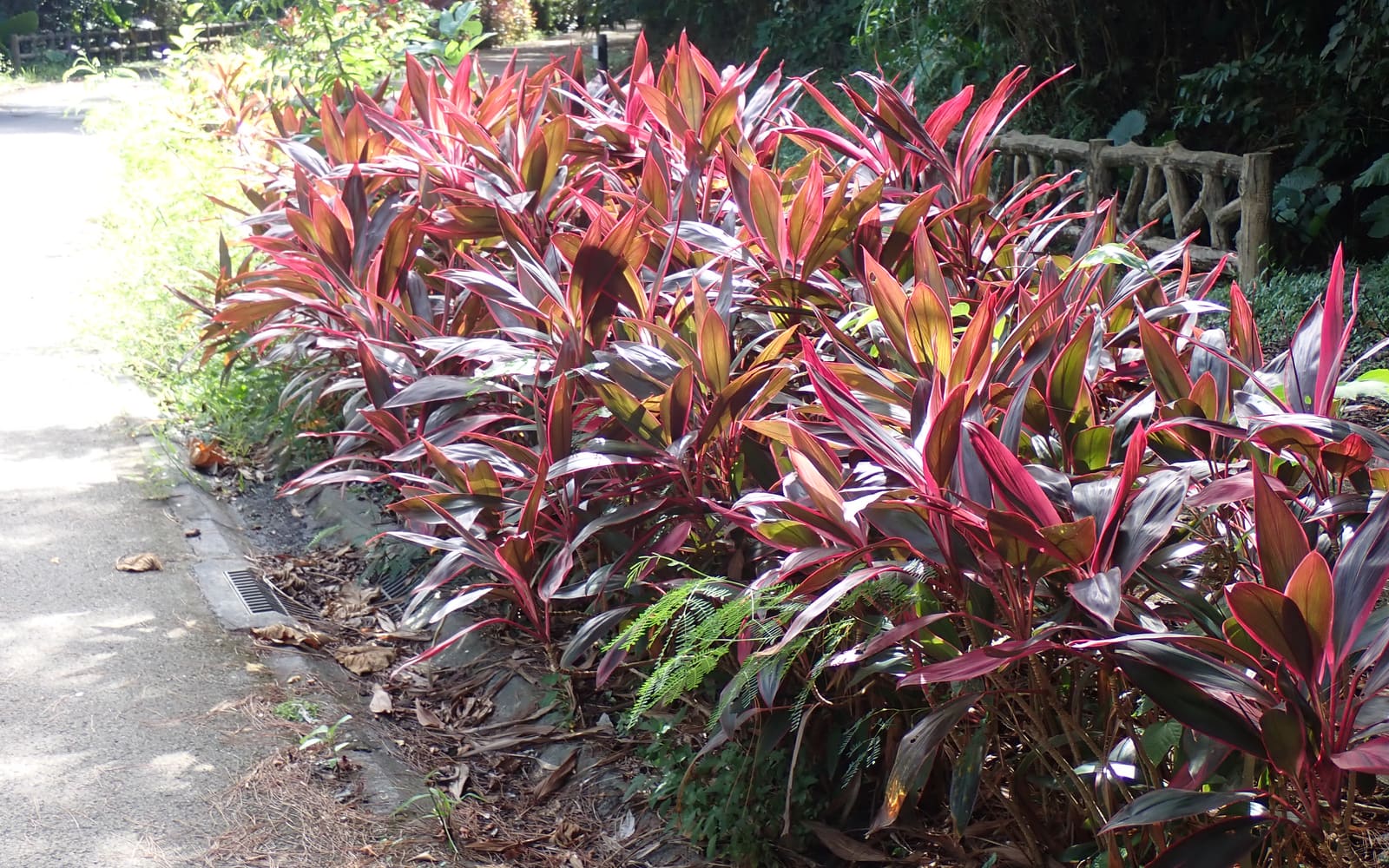
Photo by M108t on Wikimedia Commons, CC BY 4.0

A ti plant wants bright, indirect light to keep its red, pink or purple leaves vivid, soil that dries a little between waterings, and some humidity. Its leaf tips are touchy: fluoride in tap water, leaf shine and extra fertilizer all burn them. It stays outdoors all year only in frost-free places. The ASPCA lists it as toxic to cats and dogs.
Toxic to cats, dogs and horses · Mild
Vomiting (sometimes with blood), drooling, loss of appetite, depression; dilated pupils in cats. Saponins. The ASPCA lists cats and dogs; NC State also tags horses. Children: low severity. NC State rates it low severity: it can upset the stomach if eaten, and the sap can irritate skin.
Pet poison line: ASPCA (888) 426-4435
Good for: bright rooms that need color, tropical borders in frost-free gardens, patio pots · Think twice if: pets or young children chew plants, your tap water has fluoride and rain or filtered water is hard to get, your only spot is dim.
Needs at a glance
- Light3 of 4 · Bright indirectBright light keeps the colors strong; outdoors, sun to shade
- Water2 of 3 · When the surface starts to dryWater regularly; less from late fall to late winter
- Humidity2 of 3 · Above averageA humidifier helps in dry rooms
- Soil when pottedRich, well-drained potting mixLoamy or peat-based; pH 6 to 6.5 limits fluoride burn
Indoors: best at 65 to 95°F (18 to 35°C). Keep it above 50°F (10°C) and away from drafts and heat vents.
How the rating adds up
0 = easiest · 1 = moderate · 2 = hardest
- Missed waterings1 of 2 · ModerateWater regularly; let the surface dry a little between
- Light flexibility1 of 2 · ModerateBright light indoors keeps the colors; dim rooms dull them
- Humidity1 of 2 · ModerateLikes humid air; dry air browns the leaf tips
- Pests and disease1 of 2 · ModerateMites, mealybugs and scale; leaf spots in soggy soil
- Sensitivity to change2 of 2 · HardestFluoride in tap water, leaf shine and extra fertilizer burn the tips
Growing outdoors
All year: USDA zones 10 to 12, where the coldest winter nights average 30°F (−1°C) or warmer.
Elsewhere: summer outside in part shade; move it into sun gradually. Bring it in before nights drop below 50°F (10°C).
- Borders, hedges and mass plantings
- Accent near a patio or entry
- Containers you can move under cover
Sources: NC State, UF/IFAS, UF/IFAS Extension, Nebraska Extension, Penn State, ASPCA, ASPCA plant list, USDA zone map, FISC, Hawaii noxious weed list, Hawaii weed risk assessment, Rojas-Sandoval and Acevedo-Rodríguez, TexasInvasives.org, Cal-IPC, Queensland Government and GISD. Full list below.
Verified · How we rate plants
Is a ti plant poisonous to cats and dogs?
Yes. The ASPCA lists the ti plant (under its old name, Cordyline terminalis) as toxic to cats and dogs, and NC State adds horses. It contains saponins, which can cause vomiting (sometimes with blood), drooling, loss of appetite and depression, plus dilated pupils in cats. For people, NC State rates it low severity: eating it can upset the stomach, and the sap can irritate skin, so gloves help when you prune. If a pet eats some, call your vet or the ASPCA Animal Poison Control Center at (888) 426-4435. If a child eats some, call Poison Help at 1-800-222-1222.
Ti plant, good luck plant or lucky bamboo: which is which?
NC State, the RHS and the ASPCA all call the ti plant a "good luck plant", but the ASPCA’s separate Good Luck Plant entry is Oxalis, a shamrock. Lucky bamboo is a dracaena, Dracaena sanderiana, with its own card. Ti also gets mixed up with dracaenas in general, NC State says. To tell them apart, look for a grooved leaf stalk (dracaena leaves have none) and white roots (dracaena roots are orange or yellow). Cabbage palm and palm lily usually mean Cordyline australis, a different cordyline. Tags that say Cordyline terminalis or Dracaena terminalis mean the ti plant.
How often should I water a ti plant?
Water regularly, and let the surface dry a little before the next drink, NC State says. Push a finger an inch or two into the soil to check, as Nebraska Extension suggests. UF/IFAS warns that soggy soil leads to disease, so empty the saucer. Water less from late fall to late winter, when it grows slowly. UF/IFAS rates its drought tolerance as moderate, so it forgives a short miss, but long dry spells brown the leaves.
How much light does a ti plant need, and why is it losing its color?
Bright light is the key to color. NC State says it needs bright, indirect light to keep its bright leaves, and Nebraska Extension puts it among plants that want bright light or a few hours of sun. UF/IFAS research found low light makes the pink edges and highlights fade, and so do hot summer nights and heavy feeding. Color is best in the cooler months, November through May in Florida. Outdoors it takes sun to shade, but move it into sun slowly or the leaves scorch.
Why are the tips of my ti plant turning brown?
Fluoride is a common cause. UF/IFAS and Penn State both say ti plants burn at the tips and edges when water holds more than 0.25 ppm fluoride, and the UF/IFAS Charlotte County office calls it one of the most common problems. Nebraska Extension suggests rain water for cordylines. Keeping the potting mix at pH 6 to 6.5 and skipping perlite and superphosphate fertilizer also helps, Penn State says. Dry air browns tips too, NC State notes, and leaf shine or fertilizer that collects in the center can kill the newest leaves.
UF/IFAS, Penn State, UF/IFAS Extension, Nebraska Extension, NC State
What kinds of ti plant are there?
Dozens, all one species. NC State lists ‘Black Magic’ (purple-black), ‘Ruby’ (deep red), ‘Florida Red’, ‘Pink Passion’, ‘Candy Cane’ and more. UF/IFAS names ‘Baby Doll’, small with maroon leaves edged in pink, ‘Firebrand’ with big burgundy leaves, ‘Kiwi’ with yellow and ivory stripes, and ‘Tricolor’ in green, pink and white. Plants grown from seed vary from green to deep maroon, UF/IFAS notes. Most of the red ones you see in stores are ti plants.
Why is the ti plant important in Hawaii?
In Hawaii it is kī, a plant Polynesian voyagers brought with them. The Bishop Museum and NTBG describe its leaves wrapping food for the imu (earth oven) and for laulau, and serving as plates, thatch, rain capes, sandals and hula skirts; they are also braided into lei. NTBG notes it is held sacred to Lono and to Laka, goddess of hula, and that many people plant it around homes for good luck. Ti leaves are still used in blessings. This is living culture to learn about and respect.
Can a ti plant grow outdoors?
Yes, all year in USDA zones 10 to 12, NC State says, where winter nights stay above about 30°F (−1°C). UF/IFAS lists zone 9b too, but its Charlotte County office suggests keeping it in pots there so you can move it under cover. NC State says it is damaged below 50°F (10°C), so in colder places bring a potted one in before nights reach 50°F. Outdoors it grows 9 to 15 feet tall and works as a border, hedge or patio accent. No official invasive list names it. It has naturalized in Hawaii, and Hawaii’s weed risk assessment rates it low risk.
NC State, USDA zone map, UF/IFAS, UF/IFAS Extension, Hawaii weed risk assessment, FISC, Hawaii noxious weed list, GISD
How do I propagate a ti plant?
It roots easily. Take a tip cutting, or cut a bare cane into pieces and lay them on their side in a moist mix of peat moss and sand; new shoots come from the buds, UF/IFAS says. Garden centers sell these cane pieces as "ti logs", NC State notes. You can also divide a clump, since it spreads from underground stems. Keep cuttings moist and humid until they root, because fresh cuttings lose their leaf tips easily.
How Grove helps
Grove sets a watering check for when the surface starts to dry, so the ti gets a drink before it dries out. You can add a monthly brown-tip check and a reminder to fill the rain water jug as tasks you can assign, so whoever waters that week uses the right water.
Sources
- NC State Extension Gardener Plant Toolbox: Cordyline fruticosa
- UF/IFAS EDIS FPS141: Cordyline fruticosa, Ti Plant (rev. 2026)
- UF/IFAS Charlotte County Extension: I like your ti! (R. Mitchell, 2019)
- Nebraska Extension NebGuide G2205: Guide to Growing Houseplants
- UF/IFAS CFREC-Apopka Foliage Plant Research Note RH-91-34: Cordyline, Ti Plant (Henley, Osborne and Chase; archived copy)
- Penn State Extension: Cordyline (Ti Plant) Diseases (G. W. Moorman, 2025)
- ASPCA Animal Poison Control: Ti-Plant (Cordyline terminalis)
- ASPCA Animal Poison Control: Toxic and Non-Toxic Plants
- USDA ARS Plant Hardiness Zone Map (2023)
- Florida Invasive Species Council: Plant List, Category I and II and Watch List (April 2026)
- Hawaii Administrative Rules 4-68: plant species designated as noxious weeds (Hawaii Department of Agriculture)
- Hawaii-Pacific Weed Risk Assessment (Plant Pono): Cordyline fruticosa, low risk, score 4 (2018)
- J. Rojas-Sandoval and P. Acevedo-Rodríguez (2015), Naturalization and invasion of alien plants in Puerto Rico and the Virgin Islands, Biological Invasions 17 (supplementary list)
- TexasInvasives.org Invasives Database: plant list (no Cordyline)
- California Invasive Plant Council (Cal-IPC): plant search, "cordyline" (only C. australis, removed 2019)
- Business Queensland: Restricted invasive plants (Biosecurity Act 2014)
- IUCN Global Invasive Species Database: Cordyline fruticosa (no entry)
- RHS Plants: Cordyline fruticosa (good-luck plant)
- Hawaii DLNR Division of Forestry and Wildlife: Kī
- Kew WCVP data release (2026-06-04 file), plant_name_id 303171: Cordyline fruticosa
- National Tropical Botanical Garden, Tropical Plant Database: Cordyline fruticosa
- Bishop Museum Ethnobotany Database: kī (Cordyline fruticosa)
- ASPCA Animal Poison Control: Good Luck Plant (Oxalis)
- NC State Extension Gardener Plant Toolbox: Dracaena sanderiana
- ASPCA Animal Poison Control: Dracaena
- ASPCA Animal Poison Control: Palm Lily (Cordyline australis)