Plant care card
Zygopetalum
Zygopetalum · Orquídea zygopetalum
Also called zygo
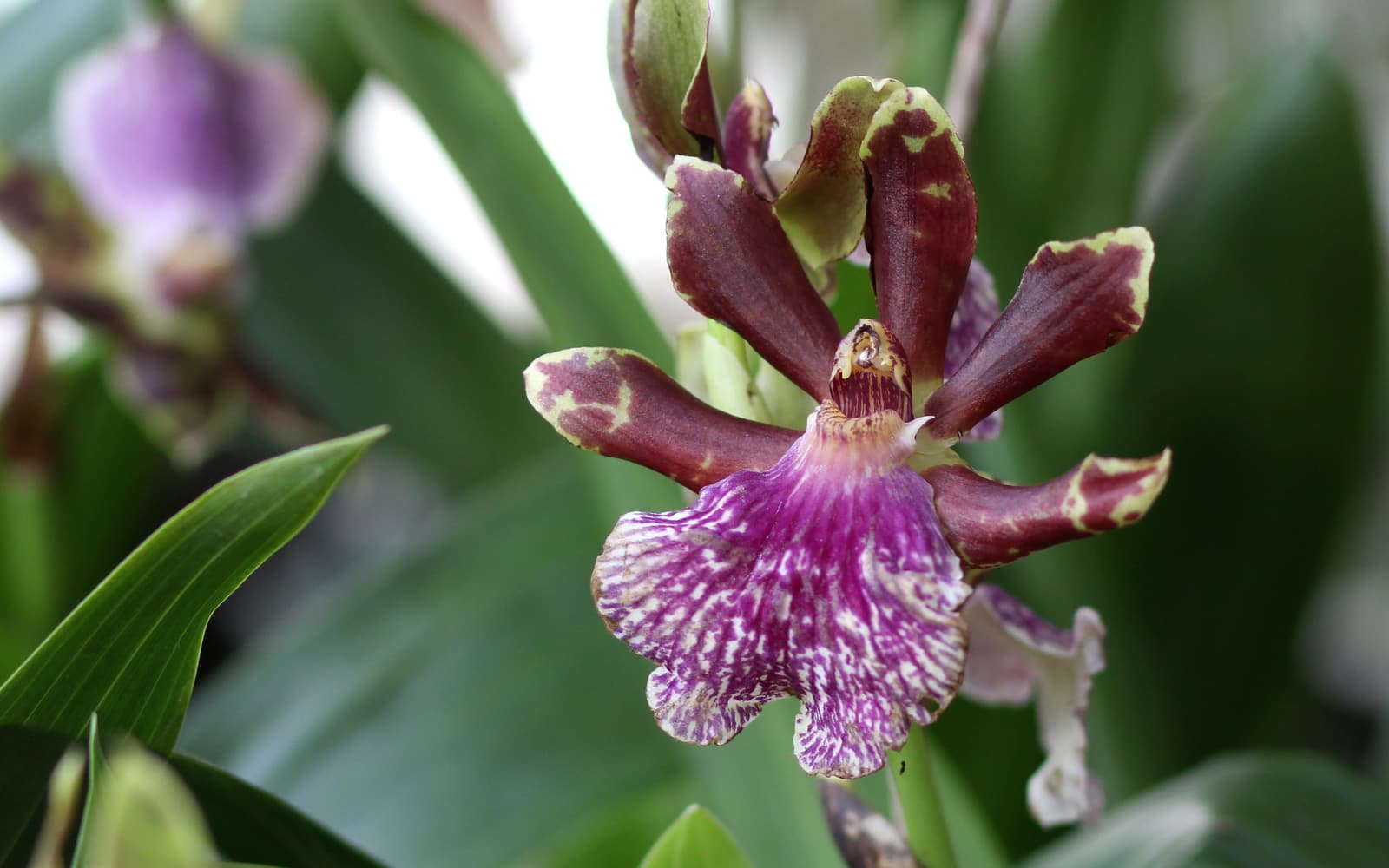
Photo by Maja Dumat on Wikimedia Commons, CC BY 2.0

Zygopetalums are grown for their scent, which the RHS compares to a refined hyacinth. Care is simple once you know they like it a bit damp and a bit cool. Keep the mix slightly moist all year, give bright light without hot sun, and let nights cool to about 50 to 60°F (10 to 16°C) so it flowers.
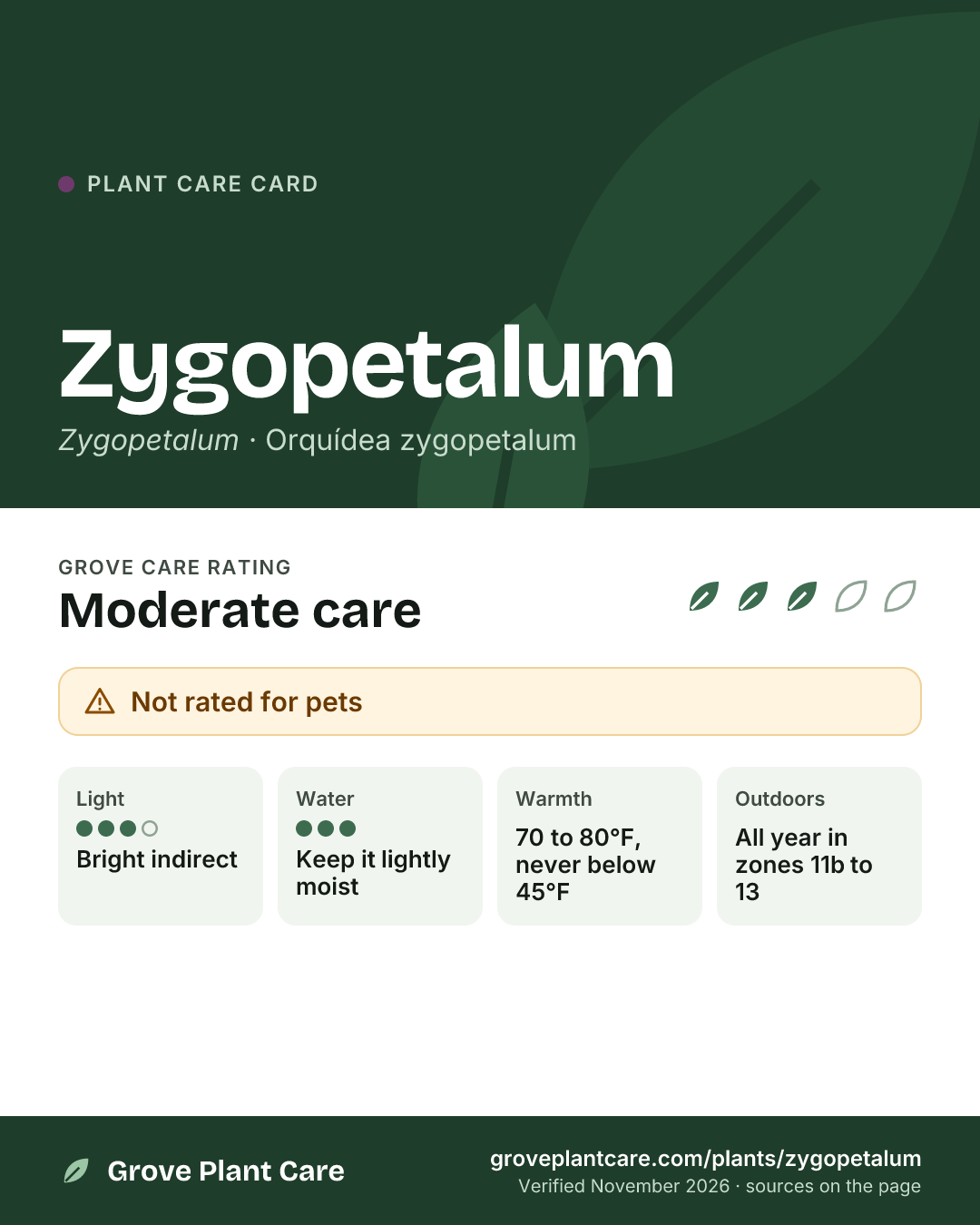
Not rated for pets
Neither the ASPCA nor NC State rates Zygopetalum. We found no source that lists it as toxic. No trusted source rates it, so keep it out of reach of pets that chew plants until one does. Children: No poison information found; NC State gives no toxicity rating.
Pet poison line: ASPCA (888) 426-4435
Good for: a cool, bright room, people who like to water often, anyone who wants a fragrant orchid · Think twice if: your home stays warm at night all year, you often forget to water, pets chew your plants.
Needs at a glance
- Light3 of 4 · Bright indirectAn east or west window, out of hot midday sun
- Water3 of 3 · Keep lightly moistNever let the mix dry out; water a little less in winter
- Humidity2 of 3 · Above average40 to 75%, with air moving around the leaves
- Soil when pottedOrchid mix that holds waterCoconut husk with perlite, or a moisture-holding orchid mix that still drains
Indoors: best at 70 to 80°F (21 to 27°C). Keep it above 45°F (7°C) and away from drafts and heat vents.
How the rating adds up
0 = easiest · 1 = moderate · 2 = hardest
- Missed waterings2 of 2 · HardestKeep the mix slightly moist all year
- Light flexibility1 of 2 · ModerateBright, diffuse light; hot direct sun is too much
- Humidity1 of 2 · ModeratePrefers 40 to 75% humidity with moving air
- Pests and disease1 of 2 · ModerateAphids, spider mites, mealybugs; black spots on old leaves
- Sensitivity to change0 of 2 · EasiestNo source flags moves, drafts or repotting as a problem
Growing outdoors
All year: USDA zones 11b to 13, where the coldest winter nights average 45°F (7°C) or warmer.
Elsewhere: summer outside in partial shade. Bring it in when nights reach 45 to 50°F (7 to 10°C).
- Containers
- Patio pots in summer
Sources: NC State, American Orchid Society, RHS, ASPCA plant list, Chicago Botanic Garden and USDA zone map. Full list below.
Verified · How we rate plants
How often should I water a zygopetalum?
Often enough that the mix never dries out. The American Orchid Society says to keep it slightly moist at all times and to water steadily all year, and NC State agrees. Ease off a little in winter, which also helps prevent black spots on the leaves. The RHS is the exception: it says to water when the mix is nearly dry and to let it dry between waterings in winter. Whichever you follow, don’t let it get soggy: NC State lists root rot from overwatering among its common problems.
How much light does a zygopetalum need?
Bright, diffuse light. The RHS suggests an east or west window and says to keep it out of direct sun, and the American Orchid Society asks for bright light, a little less than a cymbidium. NC State calls it a partial-shade plant. Chicago Botanic Garden’s plant finder lists full sun for one hybrid, but every other source we checked says to spare it hot direct sun.
RHS, American Orchid Society, NC State, Chicago Botanic Garden
What does a zygopetalum smell like?
Strong and sweet. The RHS describes it as a refined hyacinth with a slight peppery edge, and NYBG also lists hyacinth. The American Orchid Society calls the flowers very fragrant, and NC State and Chicago Botanic Garden agree. NYBG suggests zygopetalums for people who like strong scents.
RHS, NYBG, American Orchid Society, NC State, Chicago Botanic Garden
Why does my zygopetalum have black spots on its leaves?
Black spots on older leaves are common in zygopetalums. The American Orchid Society says they aren’t infectious, don’t spread and don’t weaken the plant. NC State links leaf spot to poor airflow. Both point to the same fix: give it more moving air and water a little less often in winter.
How do I get a zygopetalum to bloom again?
Give it cool nights. NC State says nights of about 50 to 60°F (10 to 16°C) help it flower, and the RHS gives 10 to 15°C (50 to 59°F). The American Orchid Society lists winter nights as low as 45°F (7°C). A cool, bright room suits it, and the RHS calls it great for a cool bathroom. Bloom time varies by plant: sources list spring, fall and winter, and the RHS says zygos flower all year round.
NC State, RHS, American Orchid Society, Royal Botanic Gardens Victoria
When should I repot a zygopetalum?
When it outgrows its pot or the mix breaks down. The American Orchid Society says early spring, as new roots and growth begin; the RHS says after flowering, once it’s pot-bound. Use a mix that holds some water, such as coconut husk with perlite, in a pot that drains. A clay pot keeps the roots cooler in a warm summer. You can divide it at the same time.
Is a zygopetalum safe for cats and dogs?
We don’t know yet. The ASPCA doesn’t list Zygopetalum, NC State gives it no toxicity rating, and we found no trusted source that calls it toxic. Until one rates it, keep it where pets that chew plants can’t reach it.
Can a zygopetalum live outdoors?
In summer, yes, in partial shade: the RHS rates it a plant that can go outside in summer, and the American Orchid Society says mild climates suit it outdoors as long as summers aren’t hot and it never freezes. Bring it in before nights drop to about 45 to 50°F (7 to 10°C). All year, sources disagree: NC State lists USDA zones 9 to 10 and Chicago Botanic Garden lists 10 to 12, but zones 9 and 10 get winter nights well below 45°F (7°C). Only zones 11b to 13 stay above 45°F, so those are the zones on the card.
RHS, American Orchid Society, NC State, Chicago Botanic Garden, USDA zone map
How Grove helps
Grove schedules a moisture check instead of a fixed pour, so the mix stays slightly damp without going soggy. In fall, add a reminder to move it somewhere cooler at night, and assign it to whoever is home.
Sources
- NC State Extension Gardener Plant Toolbox: Zygopetalum
- American Orchid Society: Zygopetalum culture sheet
- American Orchid Society: Zygopetalum (genus page)
- Royal Horticultural Society: Top tips for growing orchids at home
- Royal Horticultural Society: Zygopetalum James Strauss gx Scentsation plant details
- ASPCA Animal Poison Control: Toxic and Non-Toxic Plants
- Chicago Botanic Garden Plant Finder: Zygopetalum Advance Australia HOF
- USDA ARS Plant Hardiness Zone Map (2023)
- Royal Botanic Gardens Victoria, HortFlora: Zygopetalum mackayii
- Kew Plants of the World Online: Zygopetalum
- New York Botanical Garden LibGuides: Fragrant Orchids
- Flora e Funga do Brasil (Jardim Botânico do Rio de Janeiro): Zygopetalum
- Royal Botanic Gardens Victoria, HortFlora: Zygopetalum
- Kew: World Checklist of Vascular Plants (June 2026 release), the data behind Plants of the World Online