Winter houseplant care in the desert Southwest and Mountain West
From Phoenix and Las Vegas to Denver and Salt Lake City, winter in the dry West means very dry indoor air, more winter sun than most of the country and, in the mountains, real cold outside the glass. This page covers what is different about caring for houseplants here. For the basics that apply everywhere, start with our winter houseplant care guide.
What makes winter different here?
Humidity is the biggest difference. Colorado State University (CSU) Extension's PlantTalk Colorado fact sheet 1317 says heating systems "circulate dry, warm air throughout the house," often creating "an environment that has less than 10 percent humidity, well below the 70 to 90 percent relative humidity levels found in the native climates of most tropical plants."
Light is the second difference. On December 21, Phoenix gets about 9 hours 56 minutes of daylight, Albuquerque 9 hours 47 minutes, Las Vegas 9 hours 42 minutes, Denver 9 hours 21 minutes and Salt Lake City 9 hours 15 minutes, based on the formula behind the National Oceanic and Atmospheric Administration (NOAA) Solar Calculator. Seattle, for comparison, gets about 8 hours 25 minutes.
Plants still slow down in winter. The University of Arizona Cooperative Extension guide to indoor plant selection and care notes that "Many interior plants that are not given artificial light go into a resting stage during the short cool days of winter. During this season frequency of watering should be reduced." Let the soil tell you when, and follow our guide on how to tell if your plant needs water. Grove's watering task builds on how you grow the plant and asks whether the plant needs water today, and our overwatering page explains why that check matters in winter.
How dry does the air get, and what helps?
The Arizona guide explains what dry air does to tropical plants: "In dry air, the leaves of these plants turn yellow or show brown tips and margins. Some fail to flower while others produce flower buds that shrivel and drop suddenly from the plant." It adds that in a moderate humidity range of 20 to 40%, "it is possible to grow a variety of flowering and foliage plants." A hygrometer shows where your home sits.
What helps, according to these sources:
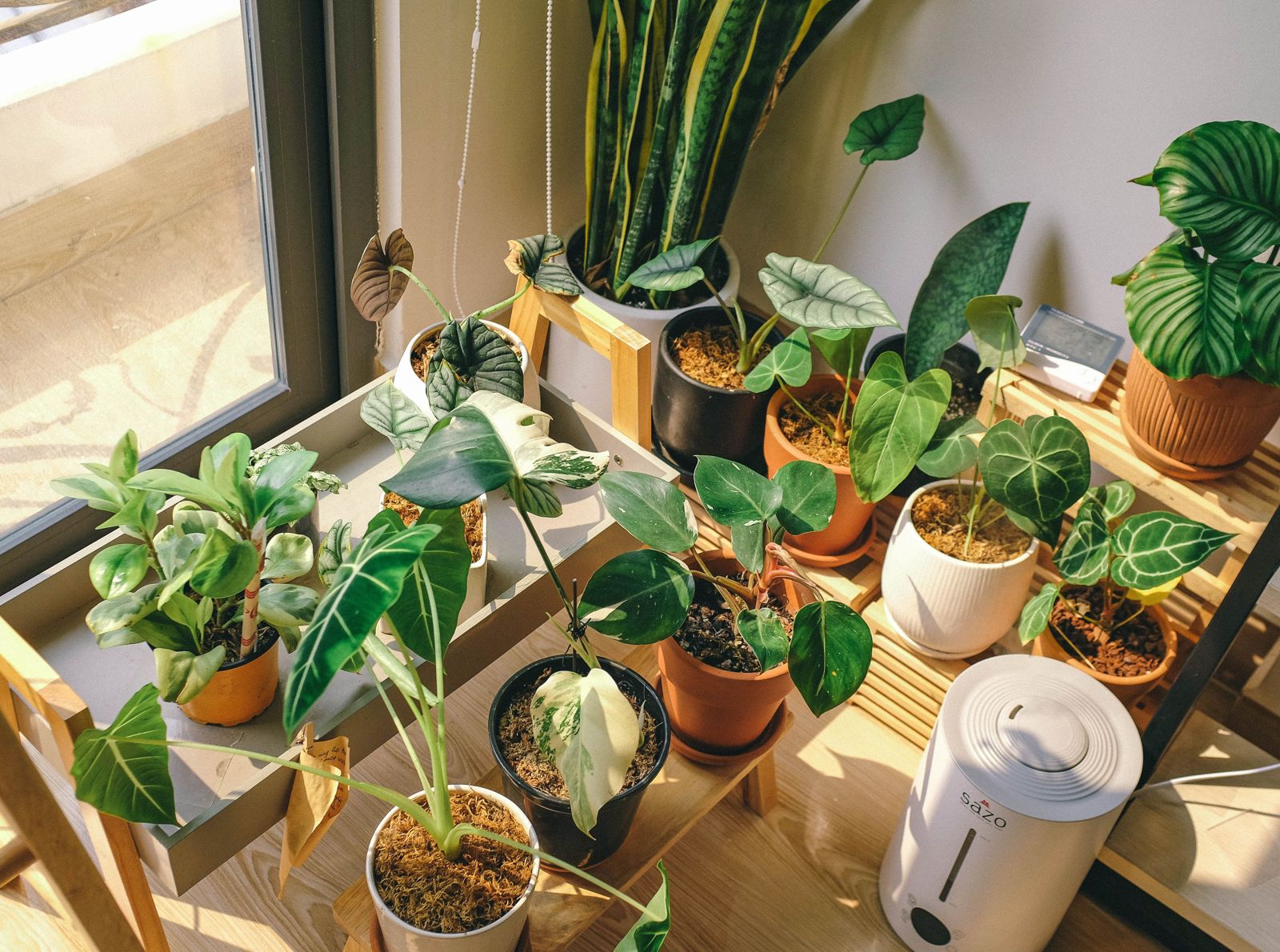
- Group plants together. Arizona calls this "One of the simplest ways to increase the humidity around plants," because water evaporating from leaves and soil creates "a humid microclimate"
- Use a pebble tray. CSU's PlantTalk describes "a tray filled with gravel and water," with pot bottoms standing above the water "so the soil will not become water-logged and cause root damage"
- Run a humidifier. Arizona lists "Cool mist vaporizers or room humidifiers" as "an effective means of adding moisture to the air"
- Use naturally humid rooms. Arizona suggests growing sensitive plants in "the kitchen, bathroom or laundry room," and notes that "Many small indoor plant species thrive in the humid environment of a terrarium"
Misting is a weak fix. CSU's PlantTalk says misting "must be done frequently to be effective, and it may promote some foliar diseases." A CSU Extension CO-Horts blog post by Sarah Schweig of Broomfield County Extension agrees: "Unless done very frequently, misting plants has little effect on relative humidity and may increase the risk of foliar diseases."
One desert detail: Arizona notes that buildings cooled by evaporative coolers get "higher humidity and significantly better performance of interior plants from June into September."
How do I use the bright winter sun?
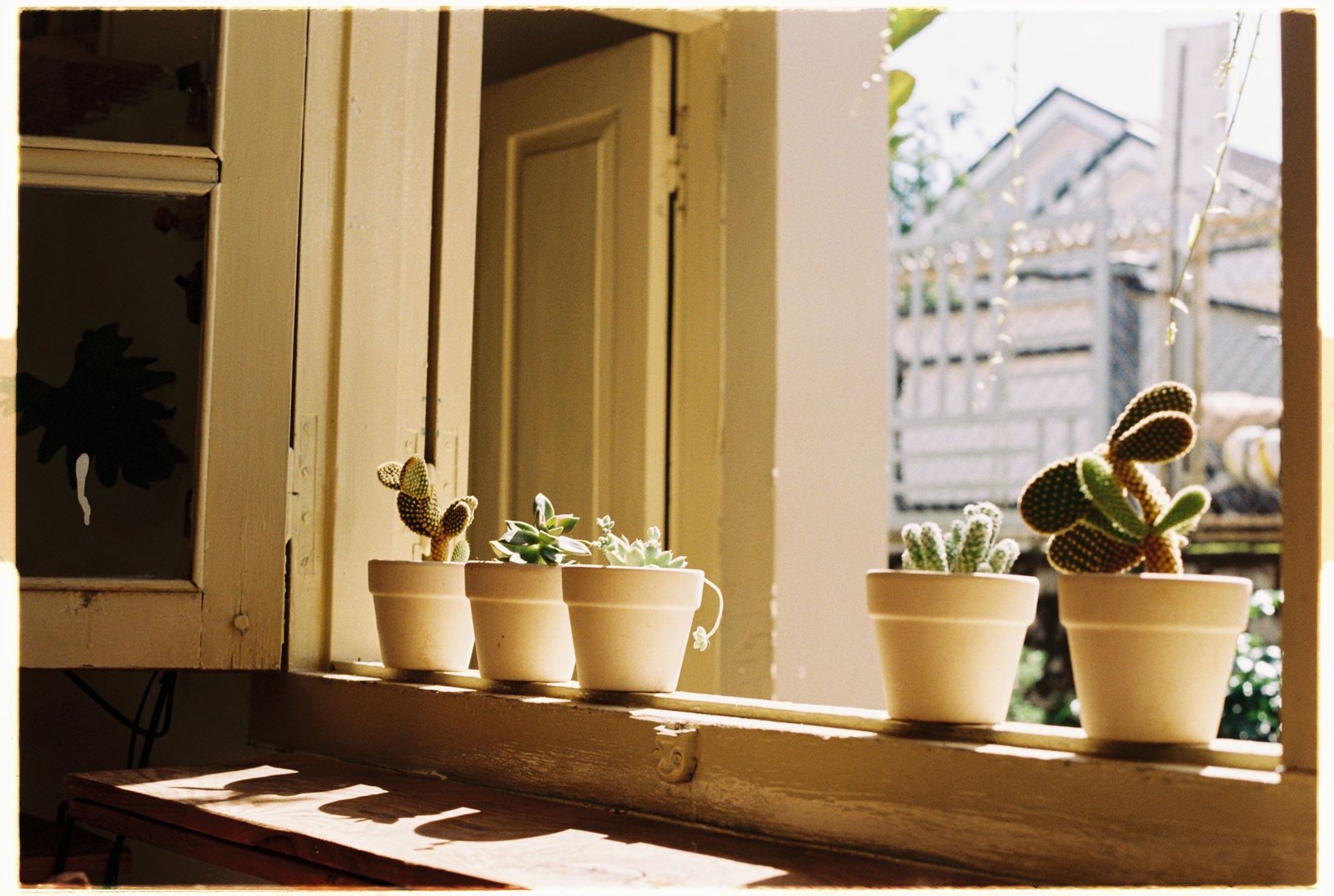
The Arizona guide explains that in winter "the sun's path is lower and farther to the south," so most plants get fewer hours of weaker light. "However, plants growing close to an unshaded south window may receive more direct sunlight at this time of year because of the low sun angle."
That low angle is the Dry West winter story: cacti and succulents can sit close to an unshaded south window, while thin-leaved tropical plants need shade, a curtain or a little distance from the hottest glass. Arizona advises protecting a plant near a window "from heat and intense sunlight during the day and from cold, drafty conditions at night." For general winter light tips that apply anywhere, see our winter care hub.
What about heating vents, drafts and cold windows?
Arizona is direct: "Never place plants near heat registers or fireplaces." It also warns that "Sudden temperature changes caused by drafts can be harmful to interior plants placed next to doors in winter."
The CO-Horts post adds that plants should not sit "near heating vents or too close to drafty windows or doors," and that the stress of "rapid temperature fluctuations" makes plants "more susceptible to pests and diseases." Arizona notes that daytime temperatures of 70 to 80°F and nighttime temperatures of 60 to 70°F "are satisfactory for most species." For the shared playbook on vents, drafts and cold glass, see our winter care hub.
Is my water part of the problem?
A Utah State University (USU) Extension article by JayDee Gunnell says: "Water that is run through a water softener is not recommended for watering house plants. Soluble salts may build up in the potting media, contributing to poor growth and possible toxicity." It adds that "A white-crusted appearance on the surface may indicate high salt levels," and the remedy is "an occasional deep rinsing with non-softened water."
USU also notes that "Tap or well water is usually satisfactory for watering house plants." For more on tap water and brown tips, see our guide to brown leaf tips and crispy edges.
Which plants cope best here, and which struggle?
| Plant | Why it copes or struggles | Source |
|---|---|---|
| Cacti and other succulents | "Perfectly at home" at 5 to 15% humidity | University of Arizona |
| Cacti and succulents | "Adapted to dry conditions," so "great candidates for houseplants in Colorado" | CSU CO-Horts |
| Tropical foliage plants | Leaves "turn yellow or show brown tips and margins" in dry air | University of Arizona |
| Most tropical houseplants | Native humidity of 70 to 90%, compared with under 10% in heated homes | CSU PlantTalk |
The second quote comes from a CSU CO-Horts post by Andie Wommack, which also notes that "homes in Colorado are much less humid than the tropics where many houseplants come from."
Which winter pests should I watch for?
The CO-Horts winter post notes that "the especially dry environment near a heating vent, for example, is optimal for some common houseplant pests like spider mites." Check the undersides of leaves for fine webbing and pale speckles.
For natural treatments, start with strong water rinses and insecticidal soap or horticultural oil. For chemical options, use only products labeled for houseplants and follow the label. Our spider mites and thrips guide covers both in full.
Dry West winter FAQ
Should I water more often because the air is so dry?
Dry air speeds water loss, but winter rest slows growth. USU notes that plants "placed closer to heater vents also tend to dry out more quickly." Check the soil each time before you water.
Is a humidifier worth it here?
For tropical plants, yes. Arizona lists room humidifiers as "an effective means of adding moisture to the air," and CSU's PlantTalk recommends "humidification devices around the tropical plants."
Can I use water from my softener?
USU does not recommend it, because salts can build up in the potting mix. Use unsoftened tap water instead.
Sources
- Indoor Plant Selection and Care : University of Arizona Cooperative Extension
- 1317, Houseplants: Temperature and Humidity : PlantTalk Colorado, Colorado State University Extension
- Finding Your Houseplants a Winter Home and My Houseplant is Dying! : CO-Horts blog, Colorado State University Extension
- Help for Houseplants : Utah State University Extension
- NOAA Solar Calculator : National Oceanic and Atmospheric Administration Global Monitoring Laboratory