Plant care card
Calathea and prayer plants
Goeppertia (formerly Calathea) and Maranta · Calathea
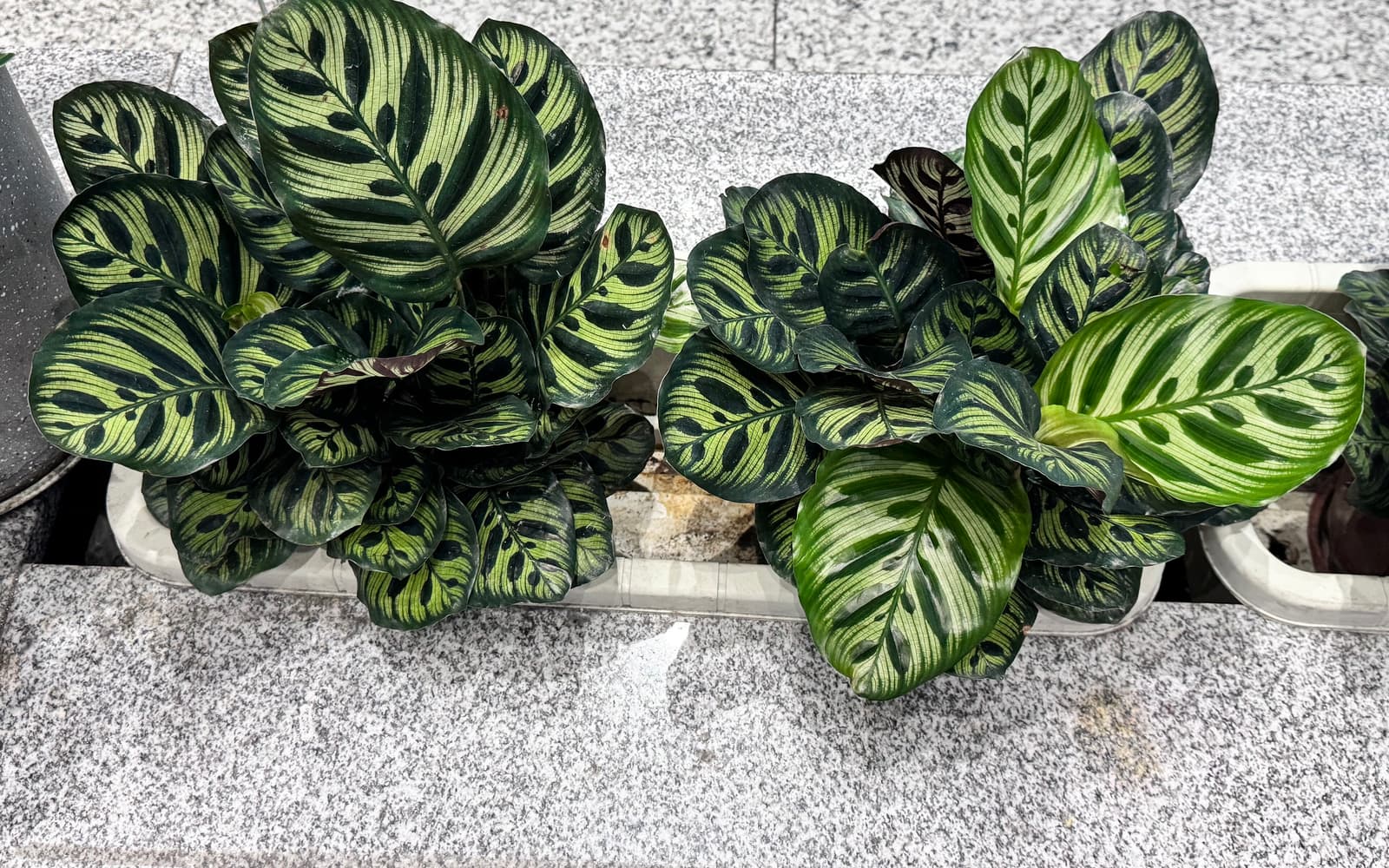
Also called prayer plant, rose-painted calathea or rabbit tracks
Photo by JULIANISME on Wikimedia Commons, CC0 1.0

Calatheas and prayer plants want what a rainforest floor gives them: steady moisture, humid air, warmth and bright light with no direct sun. Keep the soil evenly moist in spring and summer, aim for 60% humidity, and use rain or distilled water if your leaf tips brown. They are fussier than most houseplants, which is why NC State rates the group high maintenance. Most plants sold as calathea are now called Goeppertia.
Non-toxic to cats, dogs and horses
No signs of poisoning listed. Calathea only: maranta is not rated (the ASPCA’s prayer plant entry is Calathea insignis). Any plant can still upset a pet’s stomach if it eats enough. Children: NC State lists it as non-toxic to people; one species page says the sap can irritate skin.
Pet poison line: ASPCA (888) 426-4435
Good for: a humid bathroom or kitchen with bright, indirect light, homes with cats and dogs, people who like checking on their plants · Think twice if: your home air gets very dry in winter, you won’t use rain, distilled or rested water, you often forget to water.
Needs at a glance
- Light3 of 4 · Bright indirectBright to medium light with no direct sun on the leaves
- Water3 of 3 · Keep lightly moistEvenly moist in spring and summer; let the surface dry a little in winter
- Humidity3 of 3 · High60% or more: a humidifier, a pebble tray or a bright bathroom
- Soil when pottedMoist but free-draining mixPeat-free houseplant mix; add perlite or grit so it drains
Indoors: best at 65 to 75°F (18 to 24°C). Keep it above 60°F (16°C) and away from drafts and heat vents.
How the rating adds up
0 = easiest · 1 = moderate · 2 = hardest
- Missed waterings2 of 2 · HardestKeep evenly moist from spring to fall; edges brown and curl when dry
- Light flexibility1 of 2 · ModerateMedium to bright indirect light; direct sun scorches and fades the leaves
- Humidity2 of 2 · HardestWants 60% humidity or more; dry air browns the edges
- Pests and disease1 of 2 · ModerateSpider mites, mealybugs and scale now and then; root rot if soggy
- Sensitivity to change2 of 2 · HardestFluoride and chlorine in tap water, drafts and sudden swings
Growing outdoors
All year: USDA zones 11 to 12, where the coldest winter nights average 40°F (4°C) or warmer.
Elsewhere: summer outside in shade, with no direct sun. Bring it in before nights drop below 60°F (16°C).
- Houseplant
- Container plant
- Hanging basket (prayer plant)
Sources: NC State, RHS, Illinois Extension, Iowa State, ASPCA and USDA zone map. Full list below.
Verified · How we rate plants
How often should I water a calathea or prayer plant?
Often enough that the soil stays evenly moist from spring to fall. The RHS keeps the compost evenly moist in spring and summer, then lets the surface dry before watering again in autumn and winter, without ever letting it dry out completely. NC State and Illinois Extension say the same for the prayer plant. Moist never means soggy: NC State warns that wet soil rots the roots, and Illinois says to keep water off the crowns, where stems rot easily. Tip out any water left in the saucer.
How much light does a calathea need?
Bright, indirect light, with no direct sun on the leaves. NC State and the RHS both warn that direct sun scorches the leaves and fades the patterns. The RHS suggests a north or east window in summer and a south windowsill in winter, when the sun is weaker. Prayer plants put up with low to medium light, says NC State, though too little light fades leaf color and the RHS says it weakens growth, especially in Goeppertia.
Why are my calathea leaves crispy, brown or curling?
Dry air is the usual reason. The RHS says brown leaf edges usually mean low humidity, and Iowa State calls low humidity the most likely cause of brown tips. NC State adds fluoride in tap water as a cause of brown tips, and says leaves curl when the air or the soil is too dry. Raise the humidity to 60% or more with a humidifier or a tray of wet pebbles, keep the soil evenly moist, and look at your water next. Speckled, yellowing leaves with fine webbing point to spider mites instead (RHS).
Does tap water matter for calatheas?
It can, and our sources give two answers. NC State says to skip tap water and use distilled or rain water, because fluoride browns the leaf tips. The RHS prefers rainwater too, and is fine with tap water left to stand for 24 hours so the chlorine can escape. The RHS gives that tip for chlorine and doesn’t mention fluoride. Iowa State names both calathea and prayer plant as sensitive to chemicals in water. If your tips keep browning with good humidity, switch to rain or distilled water.
Why do calathea and prayer plant leaves move at night?
They are folding up for the night, and it is normal. NC State calls it a nyctinastic movement: the leaves fold in the evening and open again in the morning as light and temperature change. On a prayer plant the leaves lie flat by day and rise upright at night, like hands held together in prayer, which gave it its name (NC State). The RHS and Illinois Extension describe the same night folding. Not every one does it: NC State says the medallion calathea (Goeppertia veitchiana) keeps its leaves open.
Is a calathea the same as a prayer plant? What is Goeppertia?
They are close cousins in the arrowroot group, Marantaceae. The prayer plant is Maranta leuconeura, a low, spreading plant 6 to 12 inches tall that suits a hanging basket (NC State). Calatheas grow as upright clumps, 1 to 3 feet tall. Most calatheas also have a new name. A 2012 DNA study by Borchsenius, Suárez and Prince found that Calathea was really two separate groups, and revived the name Goeppertia for one of them. Kew’s checklist now accepts 246 Goeppertia species, 241 of them once called Calathea, while 59 species stay in Calathea. Orbifolia, makoyana, ornata, roseopicta and zebrina are all Goeppertia now. The RHS and NC State use the new name and say labels will say calathea for a while yet.
How do I repot or divide a calathea?
Every few years, in spring or summer, once the clump fills its pot. The RHS moves it up one or two pot sizes into a peat-free houseplant mix with a little grit, keeping the top of the root ball just below the surface. To make more plants, divide the clump in spring into pieces with several leaves each, then keep them warm, humid and moist until they grow (RHS). NC State lists division as the way to propagate calatheas and prayer plants alike.
Are calatheas and prayer plants safe for cats and dogs?
Calathea, yes: the ASPCA lists calathea as non-toxic to cats, dogs and horses, and NC State tags its calathea pages non-toxic for cats and dogs. Maranta isn’t rated. The ASPCA’s prayer plant entry, which also names maranta, is filed under a calathea (Calathea insignis), and it has no entry for Maranta leuconeura, so we can’t call maranta pet safe yet. Any plant can still upset a pet’s stomach if it eats enough, and NC State notes the sap of one species can irritate skin, so gloves help when you divide one.
Can calatheas grow outdoors?
Only in warm, frost-free places, or for a summer in the shade. NC State lists USDA zones 11 to 12 for calatheas and zone 11 for the prayer plant, where the coldest nights stay at 40°F (4°C) or warmer. The RHS keeps calatheas at 16°C (61°F) or more and rates the prayer plant fine outside only in summer. Give it full shade outside, keep it moist, and bring it in before nights fall below 60°F (16°C).
How Grove helps
Grove schedules a soil check so the pot stays evenly moist without turning soggy. You can add filling the humidifier or the pebble tray as tasks you can assign, so the air stays humid even when someone else is caring for the plants that week.
Sources
- NC State Extension Gardener Plant Toolbox: Goeppertia (genus)
- NC State Extension Gardener Plant Toolbox: Maranta leuconeura
- RHS: How to grow calatheas
- University of Illinois Extension: Prayer plant
- Iowa State University Extension: Why does my houseplant have brown leaf tips and edges?
- NC State Extension Gardener Plant Toolbox: Goeppertia orbifolia (formerly Calathea orbifolia)
- NC State Extension Gardener Plant Toolbox: Goeppertia roseopicta
- ASPCA Animal Poison Control: Calathea
- ASPCA Animal Poison Control: Prayer Plant
- NC State Extension Gardener Plant Toolbox: Goeppertia kegeljanii
- RHS plant entry: Goeppertia ornata
- USDA ARS Plant Hardiness Zone Map (2023)
- RHS plant entry: Maranta leuconeura
- Kew Plants of the World Online: Goeppertia
- Kew Plants of the World Online: Maranta leuconeura
- Kew: World Checklist of Vascular Plants (June 2026 release), the data behind Plants of the World Online
- NC State Extension Gardener Plant Toolbox: Goeppertia veitchiana
- Borchsenius, Suárez Suárez and Prince (2012): Molecular phylogeny and redefined generic limits of Calathea (Marantaceae), Systematic Botany 37(3)
- Kew Plants of the World Online: Calathea