Plant care card
Cyclamen
Cyclamen persicum · Ciclamen
Also called florist's cyclamen or Persian cyclamen
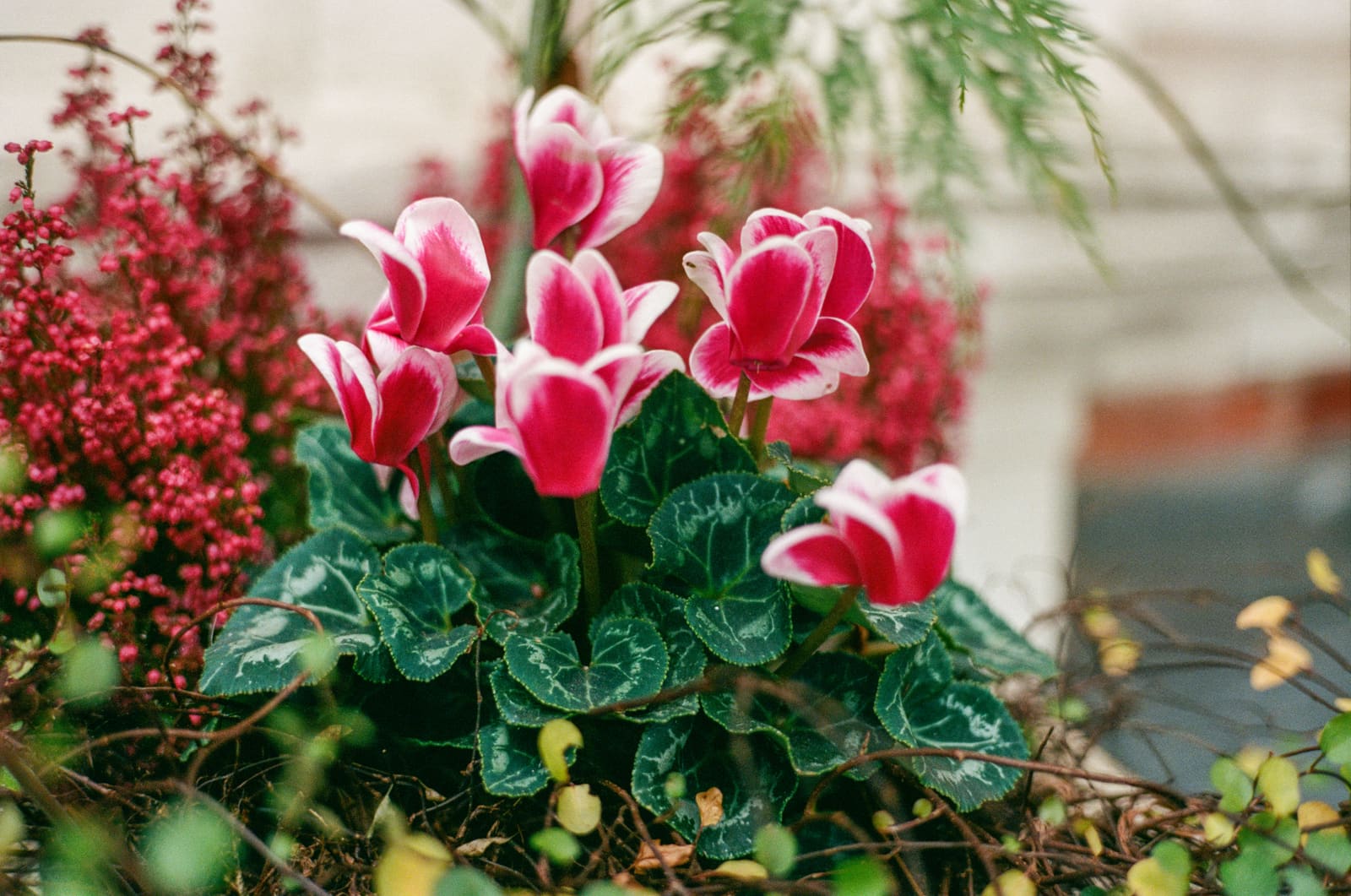
Photo by Lex Brogan on Unsplash
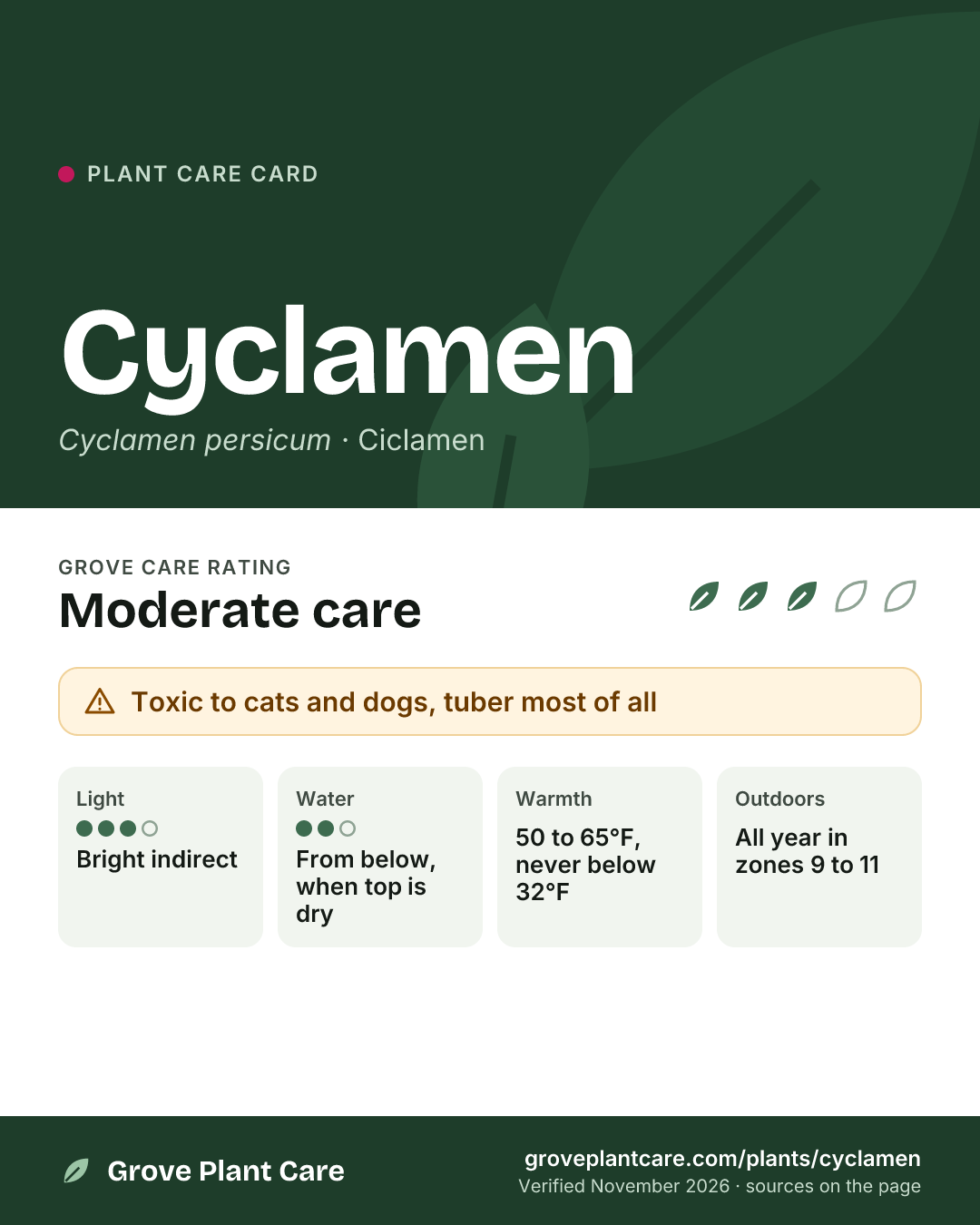
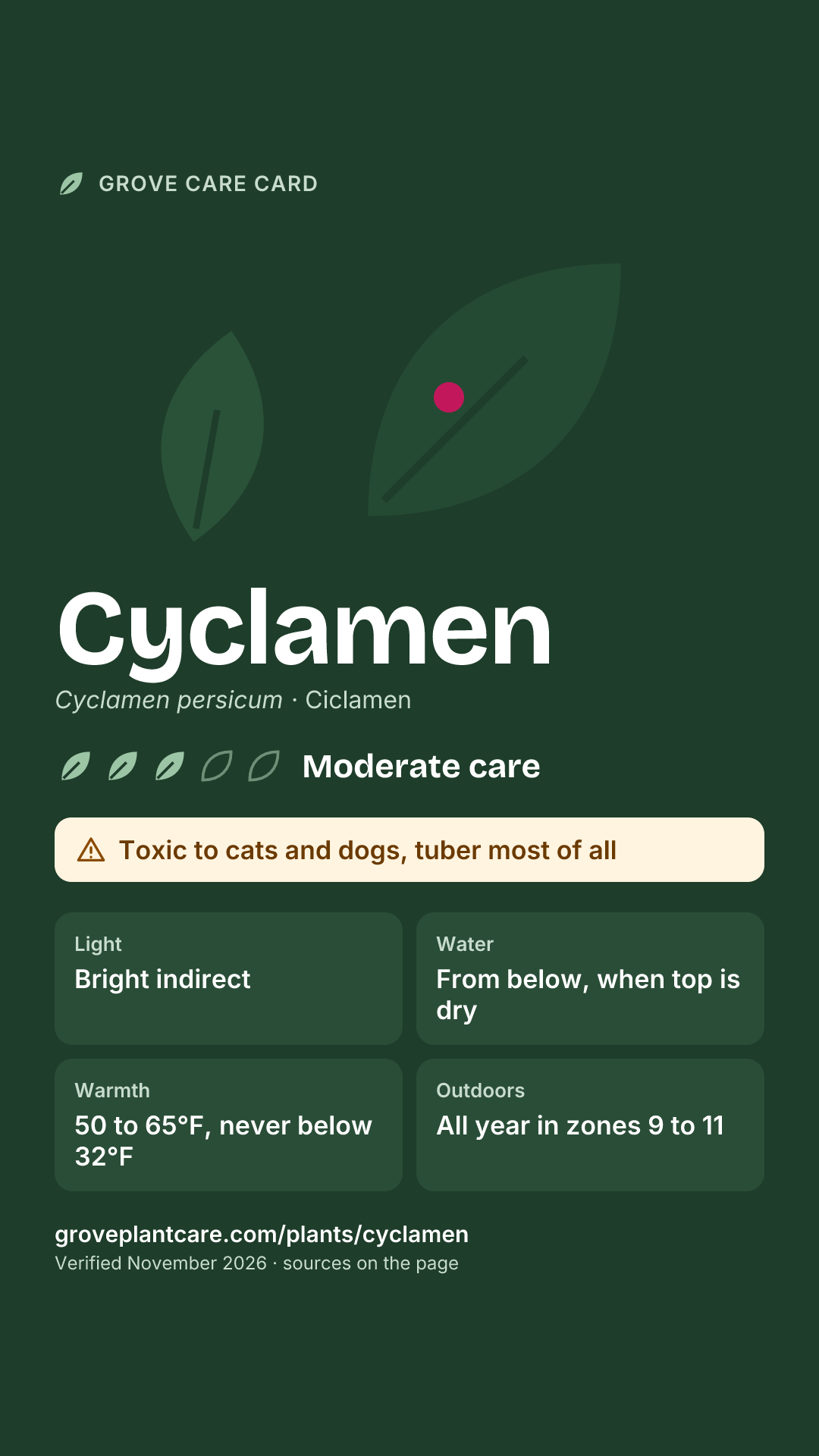
A cyclamen can bloom for months in a cool, bright spot. Give it bright, indirect light and nights near 50°F, and water from below when the top of the soil feels dry, keeping water off the crown. Warm rooms are its biggest enemy. In late spring it rests: the leaves yellow and fall, and with a careful summer rest it can bloom again the next winter.
Toxic to cats, dogs and horses · Moderate
Drooling, vomiting and diarrhea; eating a lot of tuber can upset the heart rhythm and cause seizures. The tuber, the round base at the soil line, is the most dangerous part. NC State rates the poison severity as low; the ASPCA lists heart rhythm problems, seizures and death after a lot of tuber. Children: moderate severity. The tuber is the most toxic part: eating raw tuber can cause severe diarrhea, and handling the plant can irritate skin.
Pet poison line: ASPCA (888) 426-4435
Good for: winter color in a cool, bright room, holiday and Valentine's Day gifts · Think twice if: pets or small children chew plants, your home runs warm in winter.
Needs at a glance
- Light3 of 4 · Bright indirectAn east window; a south one in the darkest winter weeks
- Water2 of 3 · Let the top dryThen water from below or at the edge of the pot
- Humidity2 of 3 · Above averageOver 50%; a tray of wet pebbles helps
- Soil when pottedWell-drained potting mixWith the top half of the tuber above the soil
Indoors: best at 50 to 65°F (10 to 18°C). Keep it above 32°F (0°C) and away from drafts and heat vents.
How the rating adds up
0 = easiest · 1 = moderate · 2 = hardest
- Missed waterings1 of 2 · ModerateWilts and yellows if dry; the tuber rots if soggy
- Light flexibility1 of 2 · ModerateNeeds bright, indirect light
- Humidity1 of 2 · ModeratePrefers humidity above 50%
- Pests and disease1 of 2 · ModerateMites and aphids; tuber rot if overwatered
- Sensitivity to change2 of 2 · HardestWarm rooms and heat vents yellow leaves and kill buds
Growing outdoors
All year: USDA zones 9 to 11, where the coldest winter nights average 20°F (−7°C) or warmer.
Elsewhere: summer outside in light shade, kept dry while it rests. Bring it in before nights drop below 32°F (0°C).
- Containers
- Patios
- Deer resistant
Sources: NC State, Missouri Extension, UGA, UNH, Clemson, Wisconsin, NYBG, Iowa State, ASPCA, USDA zone map and USDA PLANTS. Full list below.
Verified · How we rate plants
Is cyclamen poisonous to cats, dogs and children?
Yes. The ASPCA lists cyclamen as toxic to cats, dogs and horses. Chewing it usually causes drooling, vomiting and diarrhea. The tuber, the round base at the soil line, is the most dangerous part: after a pet eats a lot of tuber, the ASPCA lists heart rhythm problems, seizures and even death. In people, NC State Extension notes vomiting and diarrhea, and University of Missouri Extension warns that a large amount of raw tuber can cause violent diarrhea and convulsions. Handling the plant can irritate sensitive skin. Keep it out of reach, and if you store a resting tuber out of its pot over summer, keep that out of reach too. If a pet eats some and seems unwell, call your vet or the ASPCA Animal Poison Control Center at (888) 426-4435.
How do I water a cyclamen?
From below. When the surface of the soil feels dry, set the pot in a shallow bowl of room-temperature water for 10 to 15 minutes, then lift it out and let it drain. You can also pour water slowly around the edge of the pot. Either way, keep water off the crown, the spot where the leaves and flowers come out of the tuber, because a wet crown rots. Never leave the pot sitting in water. Soft, drooping leaves mean it's thirsty, and letting it wilt yellows the leaves and can make the buds collapse.
NYBG, Wisconsin, Clemson, NC State, Iowa State, UNH, Missouri Extension
How much light does a cyclamen need?
Bright, indirect light. An east window works well. In the darkest weeks of a northern winter, a south window may be better. In low light the plant gets weak, the flowers are smaller and the leaves turn pale, and low light is the main reason cyclamen fail to bloom again indoors.
What temperature does a cyclamen like?
Cool. Days of 60 to 65°F (16 to 18°C) and nights near 50°F (10°C) keep the flowers coming longest. Above 70°F (21°C), buds stop developing, and heat makes young buds drop. Keep it away from heat vents, radiators and warm drafts. It can't take frost, so bring it inside before any frosty night. Below 50°F it stops setting new buds.
Clemson, UNH, Wisconsin, Missouri Extension, NYBG, UGA, NC State
Why are my cyclamen leaves turning yellow?
In winter, the usual causes are a room that's too warm, dry air, too little light, or watering trouble, either too much or too little. Too little water is often the first thing to check: yellow leaves can be the first sign. Move it somewhere cooler and brighter, and water from below when the top dries. In late spring, yellow leaves are normal: the plant is going into its summer rest. If young leaves come in stunted or curled, look for cyclamen mites. They're very hard to control, and experts suggest throwing out an infested plant.
Is my cyclamen dead or dormant?
If it's late spring and the leaves are yellowing after the flowers finish, it's most likely going dormant. Cyclamen come from the Mediterranean, where they grow in fall, bloom in winter and rest through the hot summer. Many people throw the plant out at this point, but you don't have to. Water less and less as the leaves yellow, remove them once they're dry, and keep the pot in a cool, shady spot for about 6 to 8 weeks. Most sources say to keep it dry while it rests; Clemson suggests keeping the soil from drying out completely.
NC State, Wisconsin, Missouri Extension, Iowa State, NYBG, UGA, Clemson
Will my cyclamen bloom again?
It can, though Iowa State, Wisconsin and NYBG all call it difficult. After the summer rest, start watering again in late summer. Missouri Extension says by midsummer; Clemson waits until new leaves appear, around mid-September. If you repot, set the tuber with its top half above the soil. Once leaves appear, give it your brightest window, feed it every 2 weeks with a food for blooming plants, and keep nights near 50°F (10°C) and days at 60 to 65°F (16 to 18°C). With enough light and cool air, it should bloom again by midwinter.
Iowa State, Wisconsin, NYBG, Missouri Extension, Clemson, UNH
Can cyclamen grow outdoors?
Florist's cyclamen is tender. NC State lists it for USDA zones 9 to 11, where the coldest winter nights average 20°F (−7°C) or warmer, in containers and on patios, and deer tend to leave it alone. Elsewhere, it can spend its summer rest outside in light shade, kept dry while it has no leaves. Bring it in before the first frost in fall.
NC State, USDA zone map, Wisconsin, Missouri Extension, NYBG
How long does a cyclamen bloom?
With good care, 2 to 4 months, according to UGA, NC State and NYBG; Clemson says about 4 weeks. Cool temperatures make each flower last longer. To keep new buds coming, pull each faded flower's stem all the way off at the base. When you buy one, pick a plant with lots of buds and healthy leaves, and skip any with yellow leaves or brown leaf edges, which can mean root trouble. Growing new plants is slow: fresh seed takes a while to sprout, and cutting up the tuber usually makes it rot.
How Grove helps
Grove sets a watering check based on how dry the soil is, so nobody waters a pot that's still wet. In late spring, you can add a reminder for its summer rest and a late-summer task to start watering again, and assign each one to whoever will be home.
Sources
- NC State Extension Gardener Plant Toolbox: Cyclamen persicum
- University of Missouri Extension, Missouri Environment and Garden: Cyclamen, Hearts and Flowers (2011, revised 2012)
- UGA Extension Circular 951: Care of Holiday and Gift Plants (2026)
- UNH Extension: Care of Flowering Gift Plants in the Home
- Clemson HGIC: Cyclamen (revised 2023)
- UW-Madison Extension: Cyclamen (updated 2025)
- New York Botanical Garden, Mertz Library: Cyclamen (Cyclamen persicum) Houseplant Care (2026)
- Iowa State Extension: All About Cyclamen (2022)
- ASPCA Animal Poison Control: Cyclamen
- USDA ARS Plant Hardiness Zone Map (2023)
- USDA PLANTS Database: Cyclamen persicum (CYPE10)
- New York Botanical Garden Plant Information: How do I care for my cyclamen plant? (2024)