Plant care card
Fiddle-leaf philodendron
Philodendron bipennifolium · Filodendro violín
Also called horsehead philodendron or violin philodendron
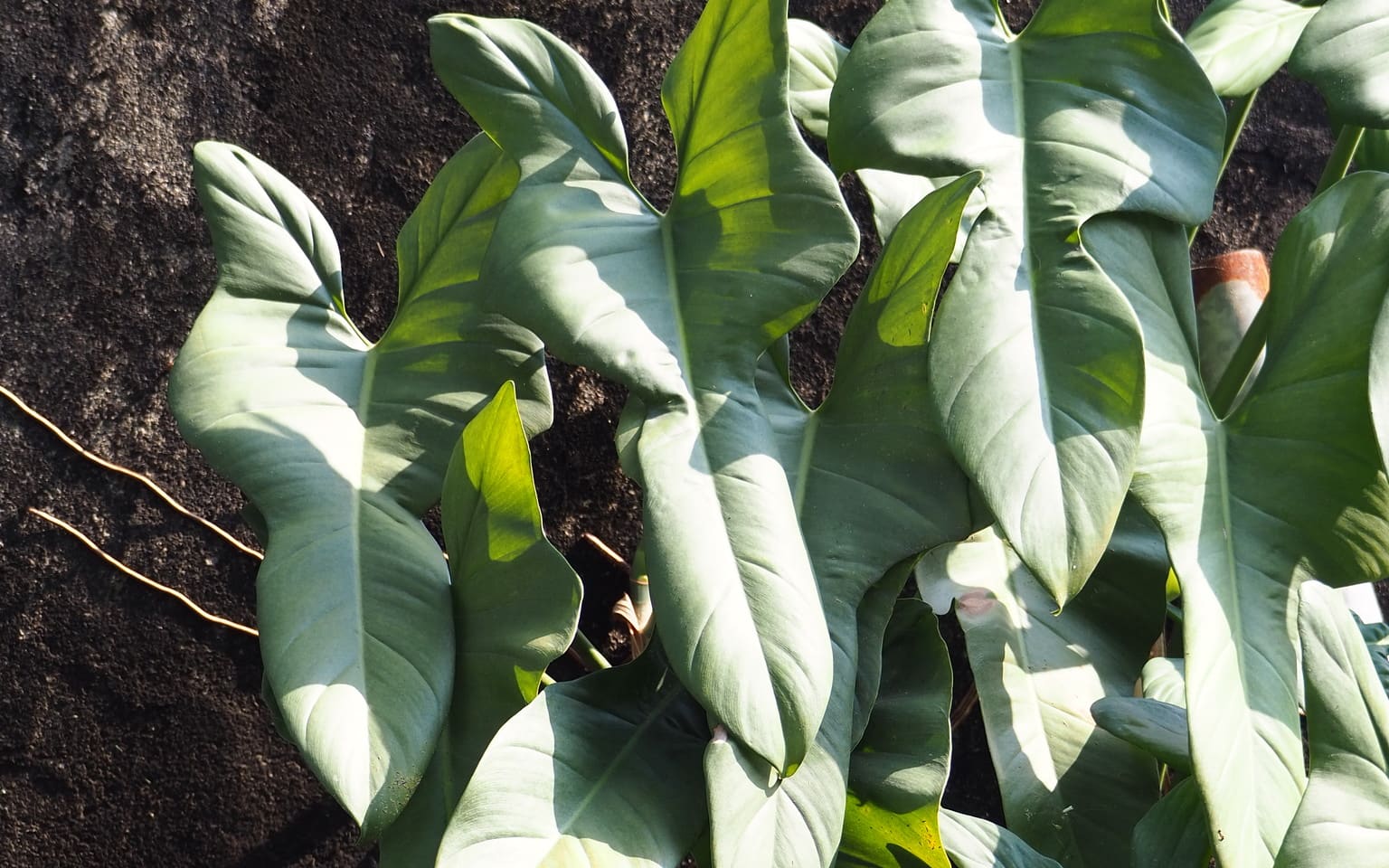
Photo by leaf0605 on iNaturalist, CC0 1.0
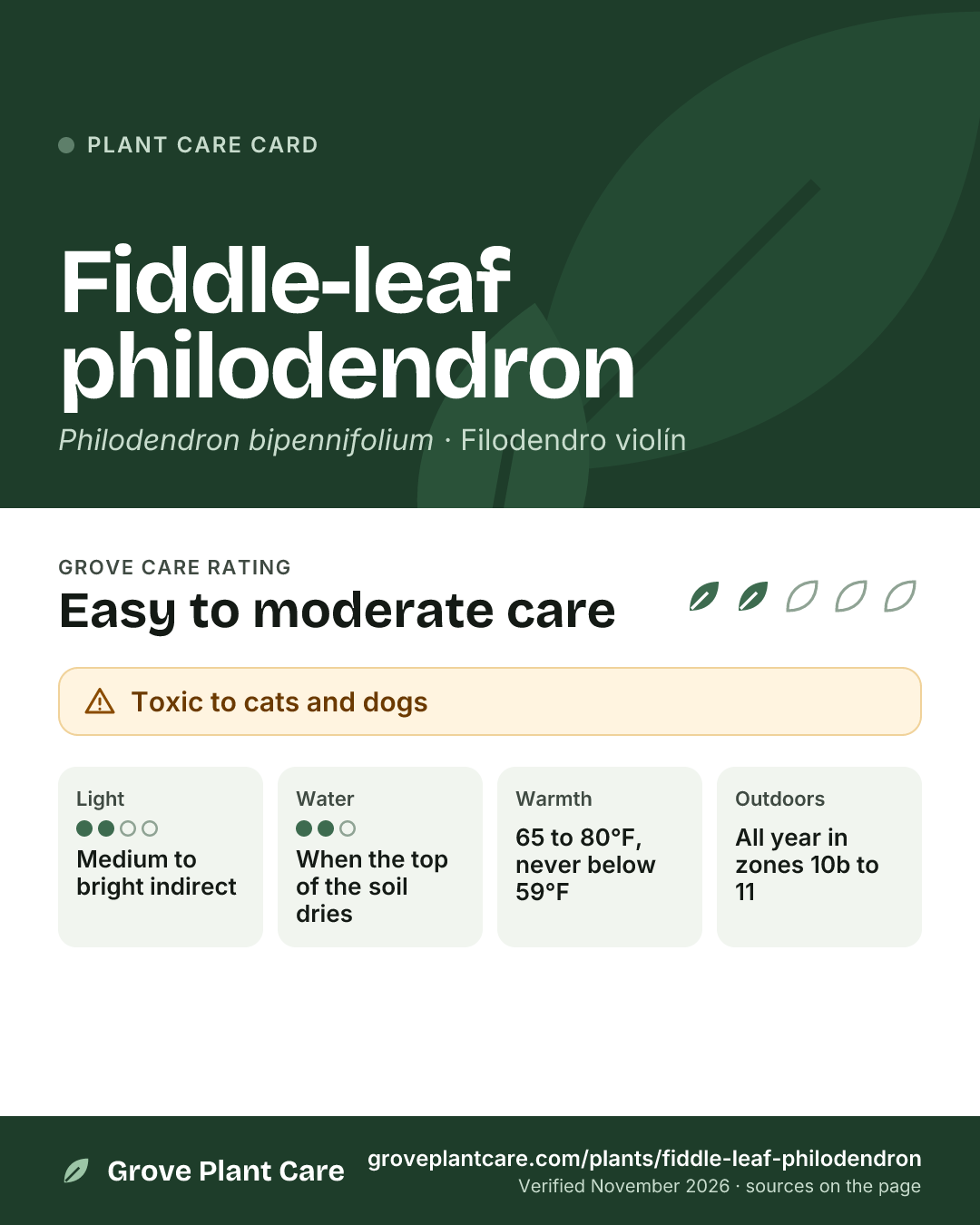
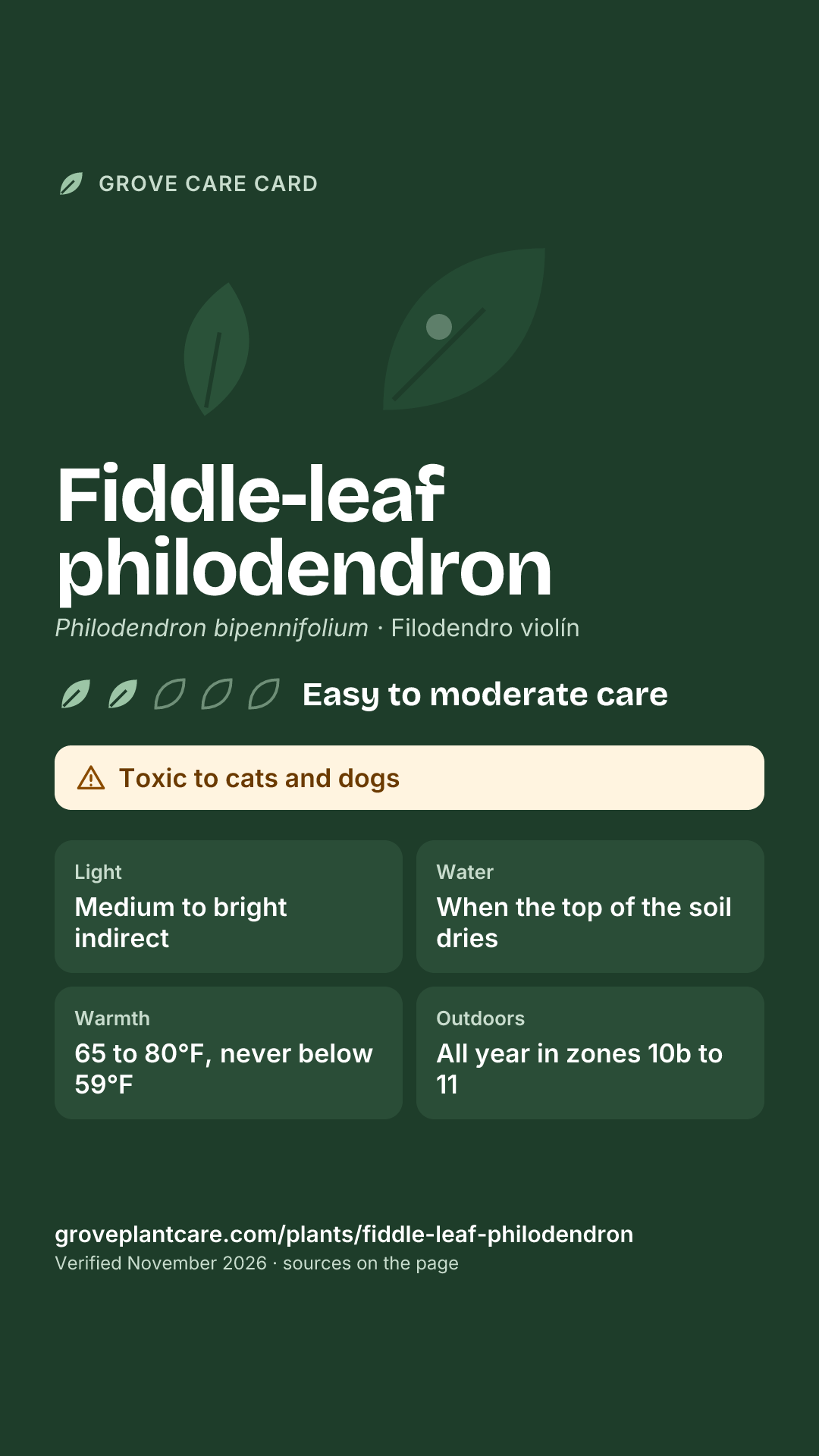
The fiddle-leaf philodendron is a climbing philodendron with lobed leaves shaped like a violin or a horse's head. Give it bright, indirect light (it copes with less), water when the top of the soil dries, keep it warm and away from drafts, and give it a moss pole to climb. It's toxic to cats and dogs. And despite the name, it isn't related to the fiddle-leaf fig.
Toxic to cats and dogs · Mild
Mouth burning and irritation, drooling, vomiting and trouble swallowing. Its sap holds needle-like calcium oxalate crystals. Children: low severity. NC State rates philodendrons low severity; chewing causes mouth pain and swelling, and the sap irritates skin.
Pet poison line: ASPCA (888) 426-4435
Good for: rooms without direct sun, a moss pole in a bright corner, big, unusual leaves · Think twice if: pets or small children chew plants, your home runs cold or drafty in winter.
Needs at a glance
- Light2 of 4 · Medium to bright indirectCopes with low light; keep it out of direct sun
- Water2 of 3 · Let the top dryThen water well; never let it sit in water
- Humidity2 of 3 · Above averagePrefers humid air but adapts to most homes
- Soil when pottedLoose, well-drained potting mixRich in organic matter and slightly acidic
Indoors: best at 65 to 80°F (18 to 27°C). Keep it above 59°F (15°C) and away from drafts and heat vents.
How the rating adds up
0 = easiest · 1 = moderate · 2 = hardest
- Missed waterings1 of 2 · ModerateWater when the top of the soil dries; never soggy
- Light flexibility0 of 2 · EasiestCopes with low light; grows best in bright indirect light
- Humidity1 of 2 · ModeratePrefers humid air but adapts to most homes
- Pests and disease1 of 2 · ModerateMites, scale, mealybugs, thrips; root rot if overwatered
- Sensitivity to change1 of 2 · ModerateCold and drafts bother it
Growing outdoors
All year: USDA zones 10b to 11, where the coldest winter nights average 35°F (2°C) or warmer.
Elsewhere: summer outside in shade or bright shade; direct sun scorches the leaves. Bring it in when nights reach 60 to 65°F (16 to 18°C).
- Containers
- On a moss pole or totem
Sources: NC State, Iowa State, RHS, Clemson, UConn, UF/IFAS, ASPCA, USDA zone map, FISC and GISD. Full list below.
Verified · How we rate plants
Is a fiddle-leaf philodendron the same as a fiddle-leaf fig?
No. The fiddle-leaf philodendron (Philodendron bipennifolium) is a climbing aroid vine, with lobed leaves the RHS and the ASPCA also call horsehead or violin shaped. The fiddle-leaf fig (Ficus lyrata) is a fig tree, with stiff, wavy, rounded leaves; it has its own card. You may also see this plant labeled Philodendron panduriforme. Iowa State and Clemson use that name for the fiddle-leaf philodendron, but Kew's World Checklist counts P. panduriforme as a separate wild species, so this card uses P. bipennifolium.
Is a fiddle-leaf philodendron toxic to cats and dogs?
Yes. The ASPCA lists it (as horsehead philodendron) as toxic to cats and dogs. Its sap holds insoluble calcium oxalate crystals, which burn and irritate the mouth, tongue and lips and cause drooling, vomiting and trouble swallowing. NC State rates philodendrons low severity, and the sap can irritate skin, so wear gloves when you prune. Keep it out of reach of pets and small children. If a pet chews it, call your vet or the ASPCA Animal Poison Control Center at (888) 426-4435. If a child eats some, call Poison Help at 1-800-222-1222.
How much light does a fiddle-leaf philodendron need?
Bright, indirect light is best, but it puts up with less. Clemson says most philodendrons tolerate low light, and UF/IFAS says this one grows in bright light or deep shade. The RHS warns that too little light makes the stems stretch, with fewer and smaller leaves. Keep it out of direct sun, which scorches and yellows the leaves.
How often should I water a fiddle-leaf philodendron?
Water when the top of the soil feels dry, then let the extra drain away and empty the saucer. Iowa State and Clemson say to keep it evenly moist but never wet. It doesn't like to dry out completely, and soggy soil leads to root rot. The RHS suggests room-temperature water, and rainwater or filtered water if your tap water is hard.
Does a fiddle-leaf philodendron need a moss pole?
Yes, if you want it to grow upright. It is a climber, and the RHS says climbing philodendrons need a support such as a moss pole, kept moist so the aerial roots grow into it. UF/IFAS notes it is often grown on a totem. Iowa State suggests guiding the aerial roots toward the pole or into the soil; you can also trim aerial roots near the stem without harming the plant. Use a heavy pot so the plant doesn't tip.
What temperature and humidity does it like?
Warm rooms: Iowa State gives 65 to 80°F (18 to 27°C), and NC State up to 85°F (29°C). The RHS sets the minimum at 59°F (15°C), and UConn says 65°F (18°C), so keep it well above that in winter and away from cold drafts and hot radiators. It prefers humid air, which helps the leaves grow larger, but adapts to most homes. In very dry rooms, NC State suggests a humidifier or a tray of wet pebbles.
Why are my fiddle-leaf philodendron leaves turning yellow?
Too much water is the most common reason. Soggy soil rots the roots, and the RHS says yellow leaves and collapse follow. Clemson adds too little water, too little light and too much fertilizer as common problems. Check under the leaves for mites, scale, mealybugs and thrips. UF/IFAS lists bacterial soft rot and leaf spots too; NC State says good air flow and dry leaves help prevent spots.
Can a fiddle-leaf philodendron grow outdoors?
All year only where it never gets cold: UF/IFAS lists USDA zones 10b to 11, where the coldest winter nights average about 35°F (2°C). Elsewhere it can spend summer outside in shade or bright shade, out of direct sun. Bring it in before nights drop to 60 to 65°F (16 to 18°C). It is not on the Florida Invasive Species Council list or in the Global Invasive Species Database.
How do I propagate a fiddle-leaf philodendron?
Take a stem cutting 3 to 6 inches long (the RHS says about 4 inches) between spring and late summer, cut just below a leaf joint, and pull off the lowest leaves. Root it in water, changing the water often, or in moist perlite or potting mix; Iowa State says rooting hormone speeds it up. Pot it in regular mix once the roots are a few inches long. Air layering works too, and is a way to shorten a leggy plant.
How Grove helps
Grove sets a watering check based on how dry the soil is, so the fiddle-leaf philodendron gets water once the top has dried. You can add misting the moss pole or turning the pot as tasks you can assign, so whoever is home takes care of it.
Sources
- NC State Extension Gardener Plant Toolbox: Philodendron (genus)
- Iowa State University Extension and Outreach: Growing Philodendrons at Home
- Royal Horticultural Society: Philodendron growing guide
- Clemson Cooperative Extension HGIC 1509: Philodendron
- UConn Home and Garden Education Center: Philodendron
- UF/IFAS EDIS FP470: Philodendron bipennifolium, Horsehead Philodendron (Gilman, Klein and Hansen)
- ASPCA Animal Poison Control: Horsehead Philodendron (Philodendron bipennifolium)
- USDA ARS Plant Hardiness Zone Map (2023)
- Florida Invasive Species Council: Plant List, Category I and II (April 2026; no Philodendron listed)
- Global Invasive Species Database: Philodendron bipennifolium (no record)
- Royal Horticultural Society: Philodendron bipennifolium
- Kew WCVP data release (2026-06-04 file), plant_name_id 151443: Philodendron bipennifolium
- Kew WCVP data release (2026-06-04 file), plant_name_id 151814: Philodendron panduriforme (a separate accepted species)
- NC State Extension Gardener Plant Toolbox: Ficus lyrata
- Royal Horticultural Society: Ficus lyrata
- UF/IFAS Gardening Solutions: Philodendrons