Plant care card
Philodendron
Philodendron · Filodendro
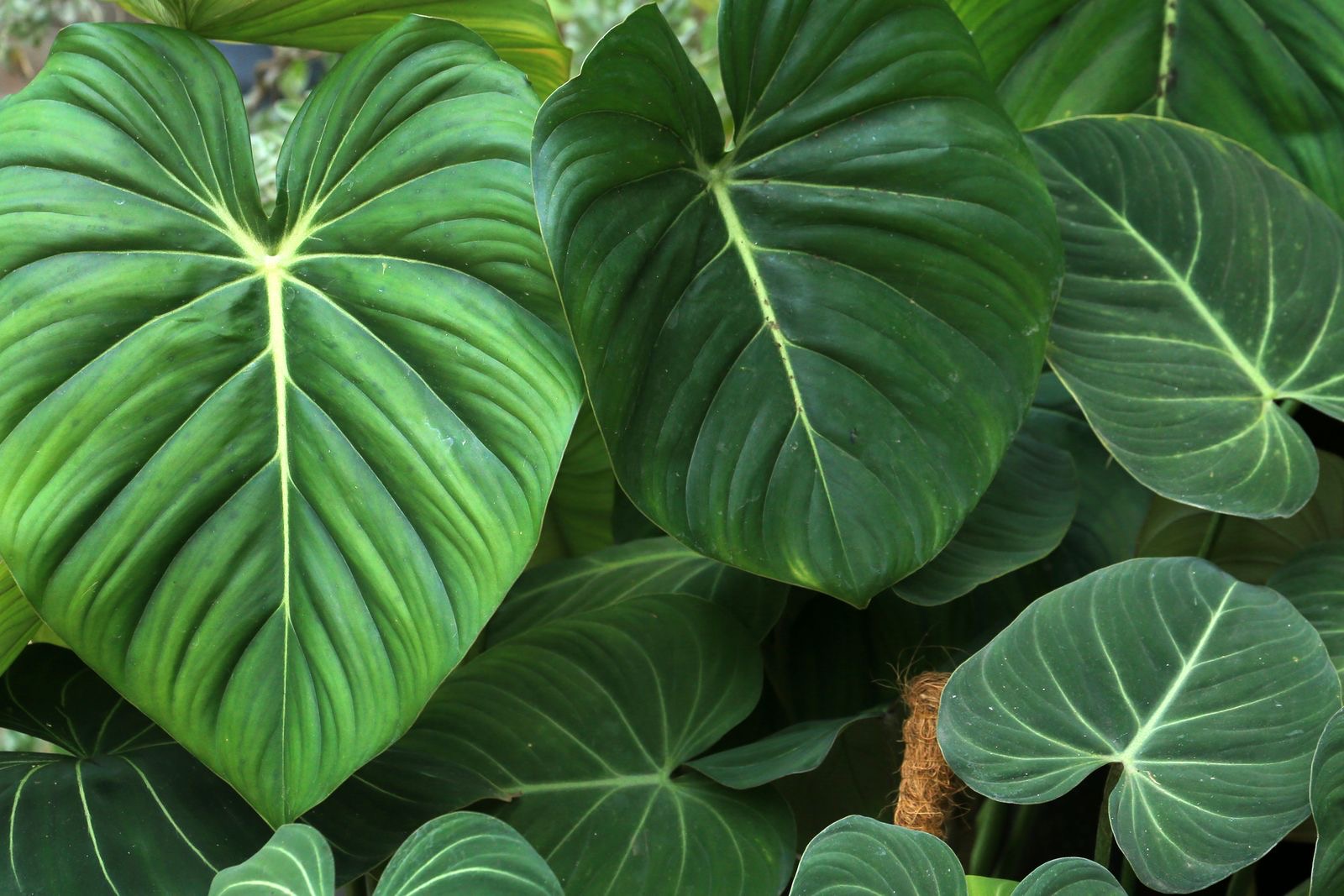
Photo by Jeffry Surianto on Pexels
Philodendrons are tropical aroids that grow in two ways: climbing vines like heartleaf, and self-heading plants like the tree philodendron that grow from a base. Most like bright, indirect light, soil that stays evenly moist without turning soggy, and warm rooms away from cold drafts. Average home humidity is fine. Every kind is toxic to cats and dogs if chewed.
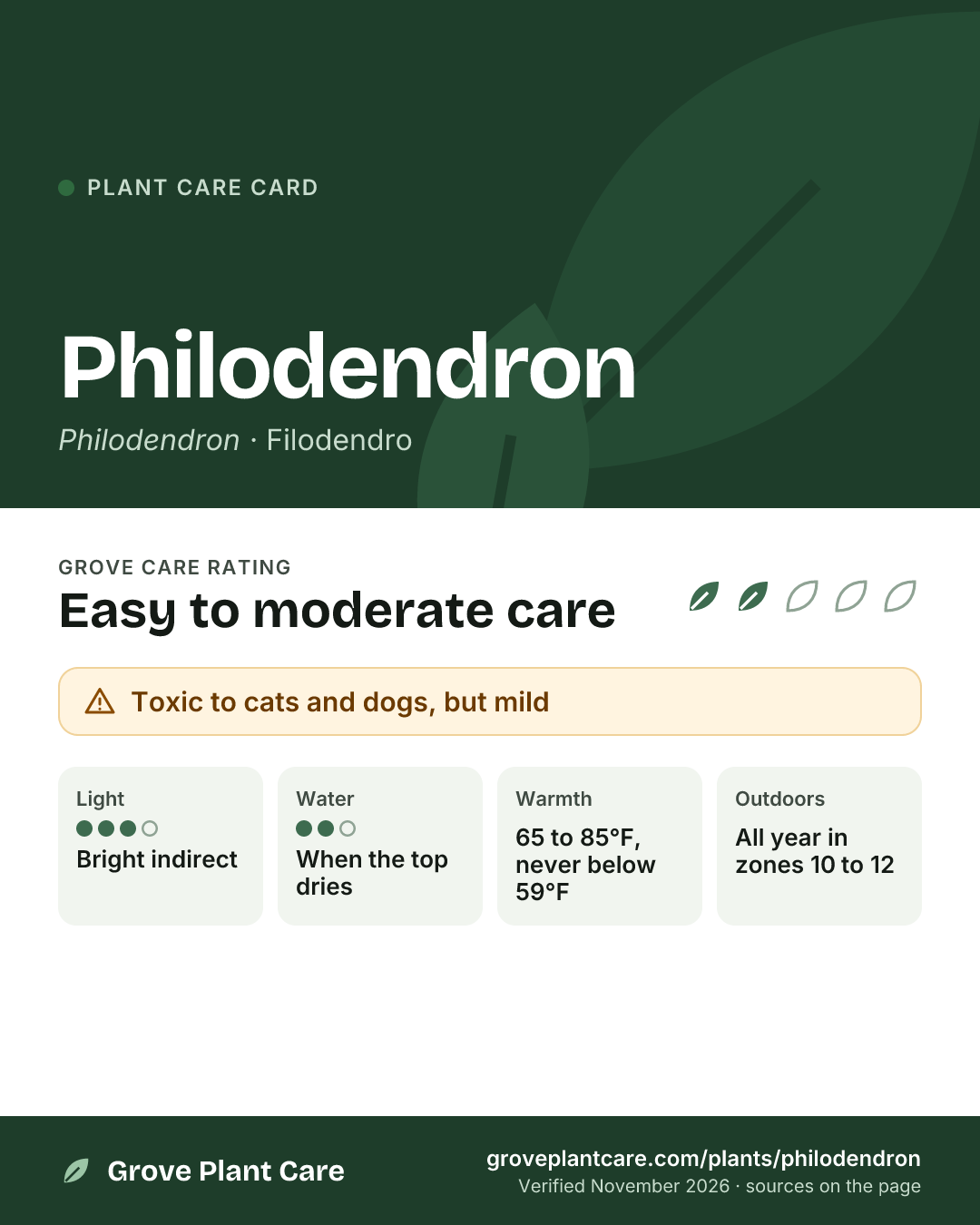
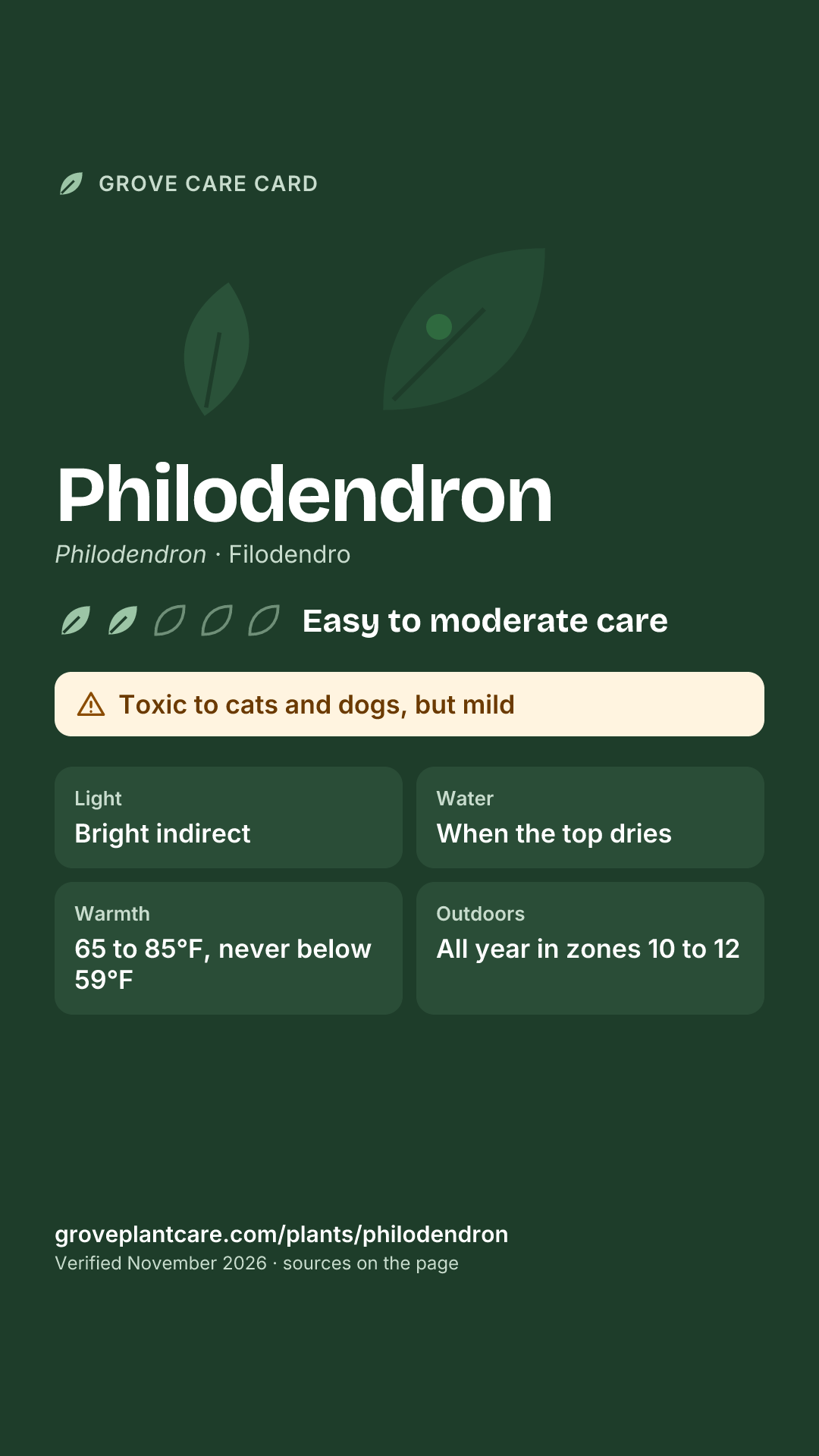
Toxic to cats, dogs and horses · Mild
Mouth pain and swelling, drooling, vomiting and trouble swallowing. NC State rates the severity as low; the sap can irritate skin. Children: low severity. Chewing burns and swells the mouth, and the sap can irritate skin.
Pet poison line: ASPCA (888) 426-4435
Good for: first houseplants, hanging baskets, poles or a spot on the floor, rooms with medium light (heartleaf types) · Think twice if: pets or small children chew plants, your only spot is cold or drafty.
Needs at a glance
- Light3 of 4 · Bright indirectHeartleaf types cope with low light; colorful ones need more
- Water2 of 3 · Water when the top driesEvenly moist, never soggy; less in winter
- Humidity1 of 3 · AverageHome air is fine; more humidity means bigger leaves
- Soil when pottedRich, well-drained mixLoose and peaty, slightly acidic
Indoors: best at 65 to 85°F (18 to 29°C). Keep it above 59°F (15°C) and away from drafts and heat vents.
How the rating adds up
0 = easiest · 1 = moderate · 2 = hardest
- Missed waterings1 of 2 · ModerateLikes evenly moist soil; water when the top dries
- Light flexibility1 of 2 · ModerateBright indirect light; heartleaf types cope with low light
- Humidity0 of 2 · EasiestPrefers humid air but adapts to an average home
- Pests and disease1 of 2 · ModerateMealybugs, scale, spider mites; root rot if kept wet
- Sensitivity to change1 of 2 · ModerateVery sensitive to cold drafts; prefers room-temperature water
Growing outdoors
All year: USDA zones 10 to 12, where the coldest winter nights average 30°F (−1°C) or warmer.
Elsewhere: summer outside in shade or filtered light, out of direct sun. Bring it in before nights drop below 60°F (16°C).
- Containers and hanging baskets
- Foundation plantings in frost-free climates
Sources: NC State, Clemson, Iowa State, RHS, UConn, UF/IFAS, ASPCA, ASPCA plant list, USDA, FISC and UF/IFAS Assessment. Full list below.
Verified · How we rate plants
Start with your question
- What types of philodendron are there?Types
- Philodendron vs pothos: what is the difference?Philodendron vs pothos
- Is a philodendron toxic to cats?On this page
- Does a philodendron need a pole to climb?Climbing and support
- How do I propagate a philodendron?Propagating
- How do I care for a velvet philodendron?Velvet philodendrons
How often should I water a philodendron?
Water when the top of the soil has dried, then water until it drains and empty the saucer. Clemson, Iowa State and UConn all say to keep the soil evenly moist and never soggy, and the RHS waters once the surface has dried. Soggy soil and standing water rot the roots. In winter the plant grows slowly, so it needs less, NC State notes.
How much light does a philodendron need?
Bright, indirect light suits most of them, and direct sun can scorch the leaves. Clemson and Iowa State say heartleaf types cope with very low light, while tree types and colorful hybrids such as 'Prince of Orange' need medium to bright light to keep growing and hold their color. With too little light, the RHS says, stems stretch and new leaves come in fewer and smaller.
What types of philodendron are there?
Kew counts more than 600 species. Houseplants fall into two groups: climbing kinds such as heartleaf, which cling to a support with aerial roots, and self-heading kinds such as the tree philodendron, which grow upright from a short stem.
Does a philodendron need a pole to climb?
Climbing kinds do best with one: they hold on with aerial roots, and the RHS suggests a moss pole kept moist. Self-heading kinds need no pole, only space and a heavy pot.
Philodendron vs pothos: how do I tell them apart?
A pothos leaf stalk has a groove, and a philodendron stalk is smooth. A new philodendron leaf comes out in a thin sheath that dries and falls off, and a new pothos leaf has none.
Why are my philodendron leaves turning yellow?
Check the water first. Clemson says yellow lower leaves usually mean too much water or too little light, and UConn and the RHS add that soggy soil rots the roots, so leaves yellow and drop. Cold can do it too: UF/IFAS found that a few hours at 33 to 40°F (1 to 4°C) yellows the lower leaves. Brown, curled leaf tips point to too much fertilizer. An old leaf yellowing now and then is normal.
How do I propagate a philodendron?
Take a stem cutting with at least one node and root it in water or moist mix; the RHS says roots form in a couple of weeks. Self-heading kinds root from a piece with two nodes, an offset or air layering.
Is a philodendron toxic to cats and dogs?
Yes. The ASPCA lists heartleaf philodendron and lacy tree philodendron as toxic to cats, dogs and horses, and NC State, Clemson and Iowa State say every part of every philodendron holds calcium oxalate crystals. Chewing causes mouth pain and swelling, drooling, vomiting and trouble swallowing, and the sap can irritate skin. NC State rates the severity as low. Treat every kind as toxic, including rare ones no list covers. If a pet chewed one and seems unwell, call your vet or the ASPCA Animal Poison Control Center at (888) 426-4435. If a child ate some, call Poison Help at 1-800-222-1222.
What is a velvet philodendron?
The name covers more than one plant. 'Micans' is a small trailing form of heartleaf, while the black-gold philodendron (Philodendron melanochrysum) and Philodendron gloriosum are bigger velvet-leaf species from Colombia.
My philodendron doesn't have its own card. How do I care for it?
Start with this card, then match the plant's habit. A climber wants a pole and the care above; a self-heading kind wants room to spread and a heavy pot. Kew counts more than 600 species, so many rare ones have no care page anywhere. One example is Philodendron tortum, a climbing species from northern Brazil to Bolivia. The RHS notes it is sometimes sold as Philodendron bipinnatifidum 'Tortum', though that name belongs to the tree philodendron. Give it bright indirect light, evenly moist soil and something to climb. Another is the Burle Marx philodendron (Philodendron burle-marxii), a compact climber from Colombia, Ecuador and northern Brazil. The RHS says it stays around 4 ft (1.2 m), wants bright, diffused light and at least 59°F (15°C), and should dry on the surface between waterings.
Can a philodendron grow outdoors?
Yes, all year in USDA zones 10 to 12, where the coldest winter nights average 30°F (−1°C) or warmer, and NC State says tree philodendron grows from zone 9a. Elsewhere it can spend summer outside in shade or filtered light. Move it out once nights stay above 60°F (16°C), as Clemson suggests, start it in deep shade, and bring it back in before nights fall below that. The RHS gives 59°F (15°C) as its minimum and UConn 65°F (18°C). No official invasive list names a philodendron, and UF/IFAS finds heartleaf is not a problem species in Florida.
NC State, USDA, Clemson, RHS, UConn, FISC, UF/IFAS Assessment
How Grove helps
Grove turns watering into a check of the soil, so a philodendron gets water once the top has dried. You can add misting the moss pole or turning the pot as a repeating task and assign it to anyone who helps with the plants. If you're unsure which philodendron you have, a photo gives you a best guess that you can correct.
Sources
- NC State Extension Gardener Plant Toolbox: Philodendron (genus)
- Clemson Cooperative Extension HGIC 1509: Philodendron
- Iowa State University Extension: Growing Philodendrons at Home (A. Steil, reviewed January 2025)
- Royal Horticultural Society: How to grow philodendrons
- UConn Home & Garden Education Center: Philodendron (from Penn State NE-53)
- UF/IFAS EDIS ENH893: Cultural Guidelines for Commercial Production of Interiorscape Philodendron (McConnell, Chen, Henny and Everitt; 2003, reviewed 2024)
- ASPCA Animal Poison Control: Heartleaf Philodendron
- ASPCA Animal Poison Control: Lacy Tree Philodendron (Philodendron selloum)
- ASPCA Animal Poison Control: Toxic and Non-Toxic Plants
- NC State Extension Gardener Plant Toolbox: Philodendron hederaceum
- USDA ARS Plant Hardiness Zone Map (2023)
- Clemson Cooperative Extension HGIC: Moving Plants Indoors and Outdoors
- Florida Invasive Species Council: Plant List, Categories I and II and Watch List (April 2026)
- UF/IFAS Assessment of Non-Native Plants: Philodendron hederaceum var. hederaceum
- Kew WCVP data release (2026-06-04 file), plant_name_id 151375: genus Philodendron (species counts from its names and distribution files)
- Clemson Cooperative Extension HGIC: How to Grow Pothos Indoors
- Penn State Extension: Pothos as a Houseplant
- NC State Extension Gardener Plant Toolbox: Epipremnum aureum
- Kew WCVP data release (2026-06-04 file), plant_name_id 151761: Philodendron melanochrysum
- Royal Horticultural Society plant record: Philodendron melanochrysum (black-gold philodendron)
- Kew WCVP data release (2026-06-04 file), plant_name_id 151616: Philodendron gloriosum
- Kew WCVP data release (2026-06-04 file), plant_name_id 151998: Philodendron tortum
- Royal Horticultural Society plant record: Philodendron tortum (synonym P. bipinnatifidum Tortum)
- Kew WCVP data release (2026-06-04 file), plant_name_id 151466: Philodendron burle-marxii
- Royal Horticultural Society plant record: Philodendron burle-marxii