Philodendron vs pothos: the two-minute check
Heartleaf philodendron and pothos both trail from shelves with heart-shaped leaves, and even plant shops mix them up. Two clues settle it: the groove in the leaf stalk and the sheath on a new leaf. The care is close, with a few differences in light and water worth knowing.
What is the difference between a philodendron and a pothos?
Read moreShow less
Clemson Cooperative Extension puts philodendrons, pothos and monsteras among the aroids (Araceae). Kew's checklist places pothos in the genus Epipremnum, native to the island of Mo'orea in French Polynesia, and philodendrons in their own genus, native from Mexico to tropical South America.
The mix-ups happen with the trailing kinds. The NC State Extension Gardener Plant Toolbox lists pothos as the first plant people confuse with heartleaf philodendron, and its pothos page returns the favor. Both have heart-shaped leaves, both trail or climb, and both root easily from cuttings. Self-heading philodendrons, like the tree philodendron, look nothing like a pothos. The philodendron types guide shows those.
How do I check whether my plant is a pothos or a philodendron?
Pick a healthy stem in good light and work through these steps:
- Find a leaf stalk (petiole), the thin stem between a leaf and the vine.
- Look along the top of the stalk, especially where it wraps around the vine. A groove or channel along it means pothos; a smooth, rounded stalk means philodendron.
- Find the newest leaf at the tip of a vine, still rolled or just opening.
- Check its base for a thin, papery sheath. A sheath that dries, browns and falls away means philodendron; a leaf that unrolls with no sheath means pothos.
- Feel a mature leaf. Thinner and softer points to philodendron; thicker, glossier and folded along the midrib points to pothos.
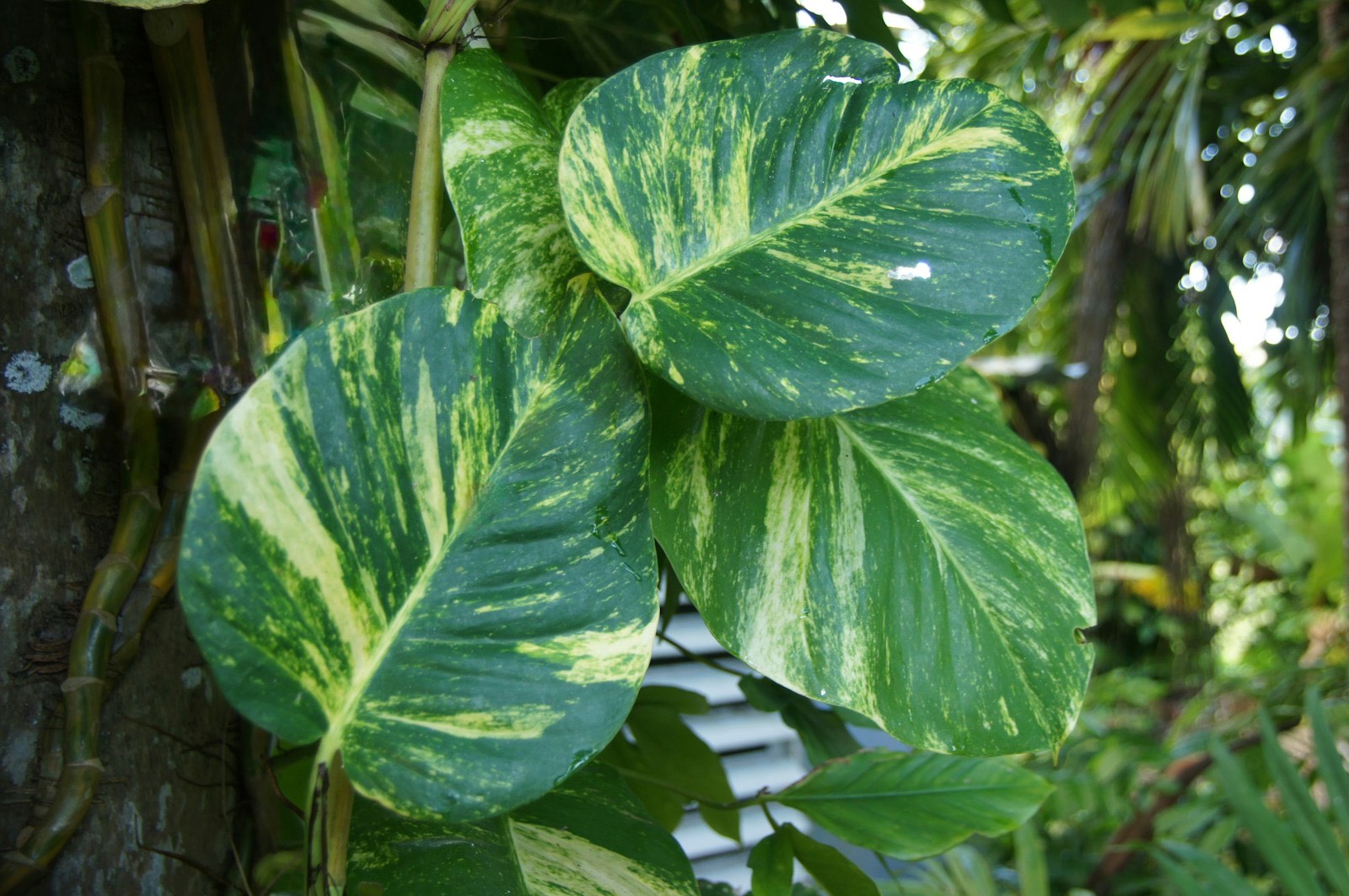
- Look for flecks. Fine gold, white or yellow dots and streaks are typical of pothos, though some pothos cultivars are solid green.
The groove comes from Clemson, Penn State Extension and NC State, which describes the heartleaf stalk as smooth and not grooved. The sheath comes from Clemson and Penn State, which call it a cataphyll. NC State adds that heartleaf's new leaves come out bronze and turn green quickly. Texture and flecks come from Clemson's pothos factsheet and its philodendron factsheet.
Is it a Neon pothos or a Lemon Lime philodendron?
Read moreShow less
Clemson describes 'Neon' pothos as bright lime green with slender leaves, fast and hardy. NC State lists 'Lemon Lime' as a heartleaf philodendron cultivar with bright yellow to chartreuse leaves. To add to the fun, a 2010 US plant patent gives the name 'Lemon Lime' to an upright philodendron, too. If your 'Lemon Lime' stands up on its own instead of trailing, it's that one.
'Brasil' is another heartleaf cultivar (NC State). The UConn Home and Garden Education Center describes its yellow band down the middle of each leaf. Golden pothos has yellow too, in streaks and flecks across the leaf, Clemson says. Colors overlap, so trust the stalk and the sheath over the color.
Do pothos and philodendron need different care?
| Pothos | Heartleaf philodendron | |
|---|---|---|
| Light | Bright indirect light; tolerates less, but variegation fades (Clemson, Penn State) | Tolerates very low light (Clemson, Iowa State) |
| Water | Water when the soil is dry; handles dryness better than soggy soil (Penn State, Clemson) | Keep evenly moist, never soggy; water when the top dries (Clemson, Iowa State) |
| Warmth | Nights 60 to 70°F, days 70 to 85°F (Clemson) | Nights 65 to 75°F, days 70 to 85°F (Clemson) |
| Humidity | Prefers 50 to 70% but tolerates less (Clemson) | Tolerates household humidity (Clemson, NC State) |
| Growing | Baskets, containers or a totem pole (Clemson) | Baskets, or a bark or moss-covered board or totem (Clemson) |
Clemson's philodendron factsheet sums it up: pothos need brighter light and warmer temperatures than philodendron. Penn State calls pothos forgiving for busy growers because it copes with dryness better than with extra water. Cuttings work the same way for both: a piece of stem with a node roots in water or moist mix.
For full care, see the pothos care card and the heartleaf philodendron care card.
Which is easier to grow, pothos or philodendron?
Read moreShow less
On our care cards, pothos rates Easy, and the philodendron card, which covers the whole genus, rates Easy to moderate. The difference comes mostly from water: pothos tolerates drying out, and philodendrons prefer soil that stays evenly moist. If your spot is dim, heartleaf philodendron handles very low light, Clemson says, while pothos holds its color better in brighter light.
Choose by your habits. Forget to water? Pothos. Only a dim corner? Heartleaf philodendron.
Are pothos and philodendron toxic to cats and dogs?
The ASPCA lists golden pothos as toxic to dogs and cats, and heartleaf philodendron as toxic to dogs, cats and horses. Both contain insoluble calcium oxalates, which cause mouth pain and swelling, drooling, vomiting and trouble swallowing. NC State rates the severity as medium for pothos and low for heartleaf philodendron, and the sap of both can irritate skin.
Hang them out of reach or keep them in a room pets don't use. If a pet chewed one and seems unwell, call your vet or the ASPCA Animal Poison Control Center at (888) 426-4435. If a child ate some, call Poison Help at 1-800-222-1222.
Where does monstera fit in?
Read moreShow less
Clemson explains that monsteras are close relatives of philodendrons that belong to their own genus, even though shops sell them as split-leaf philodendron. Young monstera leaves start small and round and develop holes and deep cuts as the plant matures in good light. See the monstera care card for more.
Sources
- Philodendron (HGIC 1509) and How to Grow Pothos Indoors (HGIC 1568) : Clemson Cooperative Extension Home and Garden Information Center
- Pothos as a Houseplant : Penn State Extension
- Philodendron hederaceum, Epipremnum aureum and Philodendron : North Carolina State Extension Gardener Plant Toolbox
- Growing Philodendrons at Home : Iowa State University Extension and Outreach
- Philodendron : UConn Home and Garden Education Center
- Epipremnum aureum and Philodendron : World Checklist of Vascular Plants data release (2026-06-04), Royal Botanic Gardens, Kew
- US Plant Patent PP20,757: Philodendron plant named 'Lemon Lime' : United States Patent and Trademark Office (2010)
- Golden Pothos and Heartleaf Philodendron : American Society for the Prevention of Cruelty to Animals