Velvet philodendron care: Micans, gloriosum and melanochrysum
"Velvet philodendron" can mean three different plants: 'Micans', the small velvet form of heartleaf philodendron, and two larger species sold for their velvety leaves, P. melanochrysum and P. gloriosum. All three like bright, indirect light, evenly moist soil that never stays soggy, warmth above 59°F (15°C) and more humidity than most homes have. The black-gold P. melanochrysum is the fussiest about humid air.
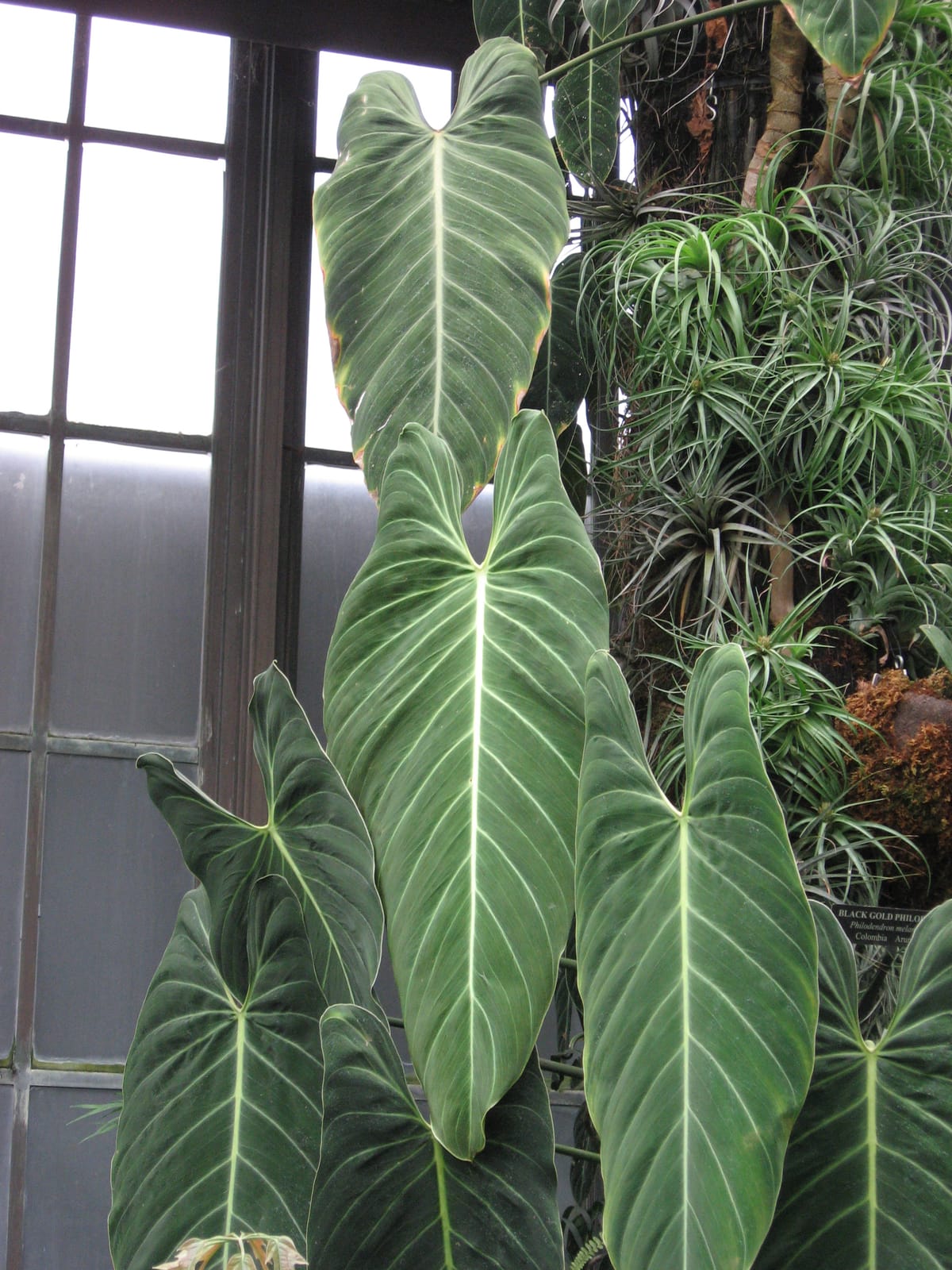
Which plant is a velvet philodendron?
| Plant | What it is | Leaves | Sources |
|---|---|---|---|
| 'Micans', velvet philodendron | A form of heartleaf philodendron, P. hederaceum; P. micans is now an old name for it | Small, heart-shaped, velvety bronze-green on top, reddish or copper underneath | Clemson, UF/IFAS, RHS, Kew WCVP |
| Black-gold or velour philodendron (P. melanochrysum) | A species from Colombia and Panama | Velvety, dark green with a coppery sheen and pale veins, about 10 to 30 inches (25 to 75 cm) long | RHS, Clemson |
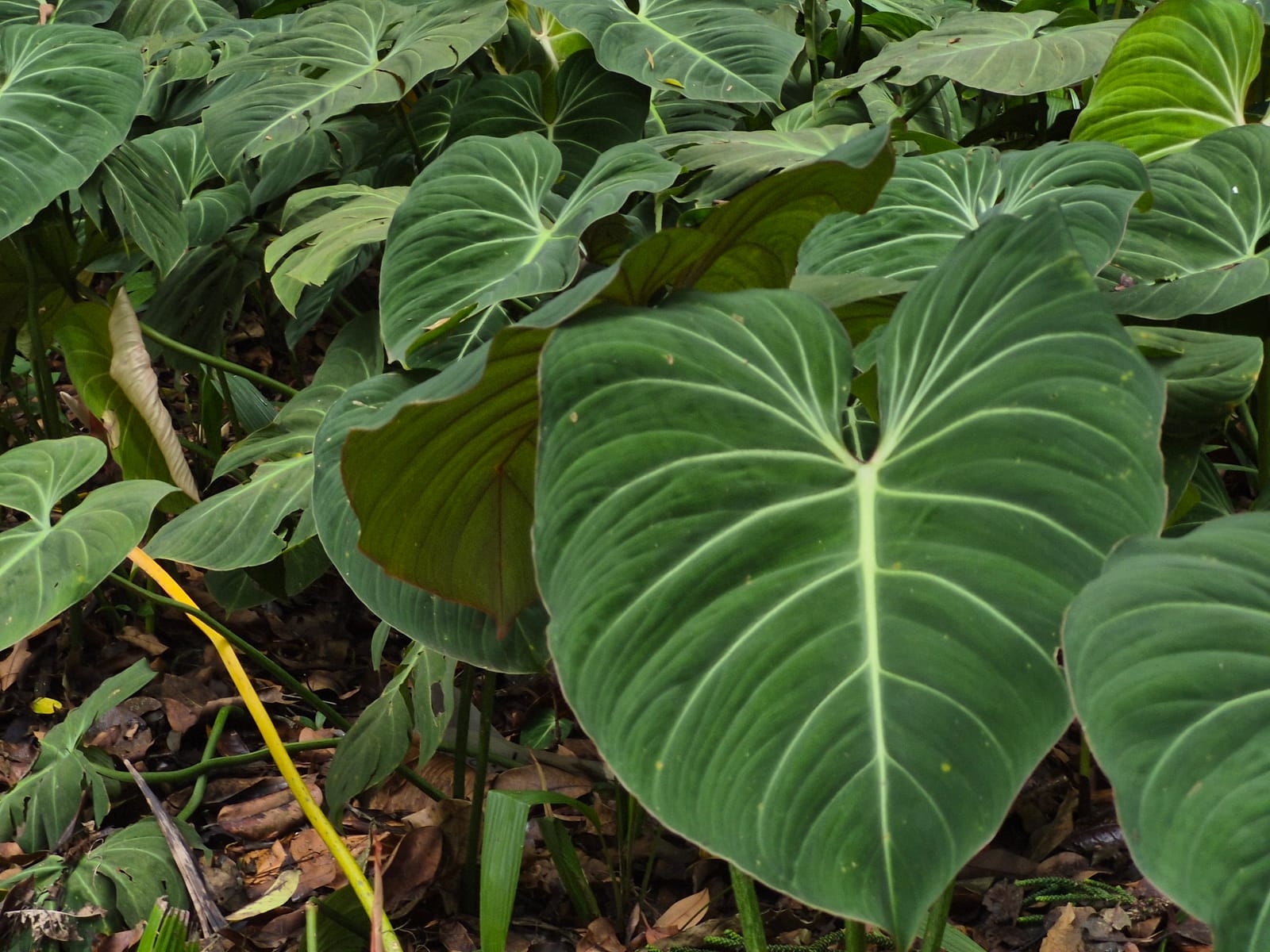
| P. gloriosum | A species from Colombia | Sold for its velvety leaves; we found no extension or botanical garden description | Kew WCVP (native range) |
So the 'Micans' on your shelf is a heartleaf in a velvet coat. Clemson calls it Philodendron scandens f. micans, and Kew's checklist now files both P. micans and P. scandens under P. hederaceum var. hederaceum. UF/IFAS Extension says 'Micans' is the juvenile form of heartleaf and handles less environmental stress than the plain green plant. Expect it to be a bit less forgiving than a regular heartleaf.
The big velvet species are a different job. The RHS describes P. melanochrysum as a slow-growing climber that takes 5 to 10 years to mature, and Clemson Extension says its leaves can reach 3 feet (90 cm). P. gloriosum is sold and searched as a velvet philodendron, but we found no extension service or botanical garden care page for it, so its care below borrows from the genus and its velvet cousins. Our philodendron care card covers both species.
How much humidity does a velvet philodendron need?
Read moreShow less
The RHS calls high humidity, ideally 60 to 80 percent, crucial for P. melanochrysum. That number comes from that one RHS page, and it's the only humidity figure any of our sources gives for a velvet philodendron.
For philodendrons as a group, sources are gentler. NC State Extension says they prefer high humidity but usually adapt to a home's air, Iowa State says they grow best in high humidity but tolerate dry winter air, and the University of Missouri says winter indoor air can be drier than a desert. UConn adds that higher humidity encourages larger leaves.
Ways to raise it, from our sources:
- A humidifier (NC State, University of Missouri, RHS).
- A tray of damp pebbles under the pot (RHS, NC State, UConn).
- Grouping plants together (UConn).
- A steamy bathroom with good light (RHS).
- Misting: the RHS suggests regular misting, and NC State says misting helps heartleaf. No source we found tested whether misting marks velvet leaves.
Our brown leaves guide explains how dry air shows up on leaves.
How much light does a velvet philodendron need?
Read moreShow less
The RHS says P. melanochrysum likes bright, indirect light, that strong direct sun can scorch its leaves, and that too little light dulls them. It suggests an east- or west-facing window with filtered light. For the whole genus, NC State and the RHS both say to avoid direct sun, which can scorch leaves, and the RHS says low light makes plants leggy with fewer, smaller leaves.
Plain heartleaf is famous for tolerating dim rooms. Clemson says it grows in very low light. 'Micans' is the same species but, as UF/IFAS notes, handles stress less well, so a bright spot is the safer bet. Our indoor light guide shows how to judge a window.
How should I water a velvet philodendron?
Read moreShow less
The sources agree on the pattern. Clemson says to keep philodendron soil evenly moist but not soggy and never let the plant stand in water. The RHS says to water when the top of the mix has dried and warns that soggy mix rots the roots. For P. melanochrysum, the RHS suggests watering when the top 2 to 3 inches (5 to 8 cm) are dry and says it doesn't like being waterlogged. The RHS plant pages for both heartleaf and P. melanochrysum say to water less in cool conditions.
The RHS also suggests room-temperature water, and rainwater or filtered water where tap water is hard. If the base of the plant goes soft, our root rot guide walks through what to check.
What temperature does a velvet philodendron need?
Read moreShow less
The RHS says philodendrons should stay above 15°C (59°F) and keeps P. melanochrysum between 18 and 27°C (64 and 81°F), warning that cold below 15°C damages it. UConn sets a minimum of 65°F (18°C), and NC State gives 65 to 85°F (18 to 29°C) as ideal and calls philodendrons very sensitive to cold. UF/IFAS says a few hours at 33 to 40°F (1 to 4°C) yellows the lower leaves. Keep velvet plants away from cold windows in winter, drafts and hot radiators, which the RHS also warns about.
Why are my velvet philodendron's leaves brown, curled or damaged?
UF/IFAS lists leaf symptoms of philodendrons and their causes, and the other sources add a few:
| What you see | Likely cause | What to try | Source |
|---|---|---|---|
| Patches along the leaf edges die | Too little water combined with high light | Keep the soil evenly moist; move it out of strong light | UF/IFAS |
| Bronzed leaf edges | Light or temperature too high | Move it to softer light and a cooler spot | UF/IFAS |
| Burned patches in the middle or tips of leaves | Sunburn | Keep it out of direct sun | UF/IFAS; RHS |
| Tips curl and turn brown | Too much fertilizer | Feed less | Clemson |
| Lower leaves yellow and growing tips die | Too little light or too much water | More light; let the top of the mix dry before watering | Clemson |
| Lower leaves yellow after a cold night | A few hours near freezing | Move it away from cold glass | UF/IFAS |
| Pale speckles, fine webbing or tiny insects | Spider mites or thrips | See our pests guide below | NC State; RHS |
People often search why 'Micans' leaves curl. None of our sources names a cause specific to 'Micans'. Clemson's link between too much fertilizer and curled, browned tips is the closest match, so check feeding, light and soil moisture first.
For pests, our spider mites and thrips guide shows what to look for. For P. melanochrysum, the RHS suggests removing yellow or damaged leaves.
Does a velvet philodendron need a moss pole?
Read moreShow less
The RHS lists P. melanochrysum as a climber, and Clemson says the velour philodendron's leaves don't reach full size unless it's trained upward for several years. UF/IFAS describes 'Micans' as a thin-stemmed vine, and NC State says heartleaf climbs or trails if given support, so a small pole or a hanging pot both work.
For P. gloriosum, Kew's checklist files it under climbers, while a botanical description we could only read in a search result describes a creeping stem. Our climbing and support guide explains how to set up a pole and what to do when sources disagree.
How do I clean velvet leaves?
Read moreShow less
The RHS suggests wiping philodendron leaves now and then to remove dust, but it doesn't mention velvet ones. For fuzzy leaves, Clemson and NC State suggest a soft brush instead of a wet cloth. No source says whether velvet philodendron leaves count as fuzzy or tested either method on them, so start with the gentler brush. Our leaf cleaning guide shows how.
Are velvet philodendrons safe for pets?
The ASPCA lists heartleaf philodendron as toxic to cats, dogs and horses: its calcium oxalate crystals cause mouth pain and swelling, drooling, vomiting and trouble swallowing. The RHS says P. melanochrysum is harmful if eaten, irritates skin and eyes, and is harmful to pets. Clemson says all parts of philodendrons are toxic if eaten. Wear gloves when you trim them.
Our philodendron care card has the full safety details. If you think a pet chewed some, call your vet or the ASPCA Animal Poison Control Center at (888) 426-4435 (a fee may apply).
Sources
- Philodendron (HGIC 1509) : Clemson Cooperative Extension (revised January 2016)
- Cultural Guidelines for Commercial Production of Interiorscape Philodendron (ENH893) : UF/IFAS Extension (reviewed October 2024)
- Philodendron melanochrysum : Royal Horticultural Society
- Care tips for thirsty houseplants (RHS Urban Show 2024) : Royal Horticultural Society
- How to grow philodendrons : Royal Horticultural Society
- Philodendron hederaceum var. hederaceum : Royal Horticultural Society
- Philodendron : NC State Extension Gardener Plant Toolbox
- Philodendron hederaceum : NC State Extension Gardener Plant Toolbox
- Philodendron : UConn Home & Garden Education Center
- Growing Philodendrons at Home : Iowa State University Extension and Outreach (last reviewed January 2025)
- Philodendrons as Interior Plants : University of Missouri (January 2014)
- World Checklist of Vascular Plants : Royal Botanic Gardens, Kew (data release, 2026-06-04 file)
- Heartleaf Philodendron : ASPCA Animal Poison Control