Plant care card
Lipstick palm
Cyrtostachys renda · Palma areca roja
Also called sealing wax palm or maharajah palm
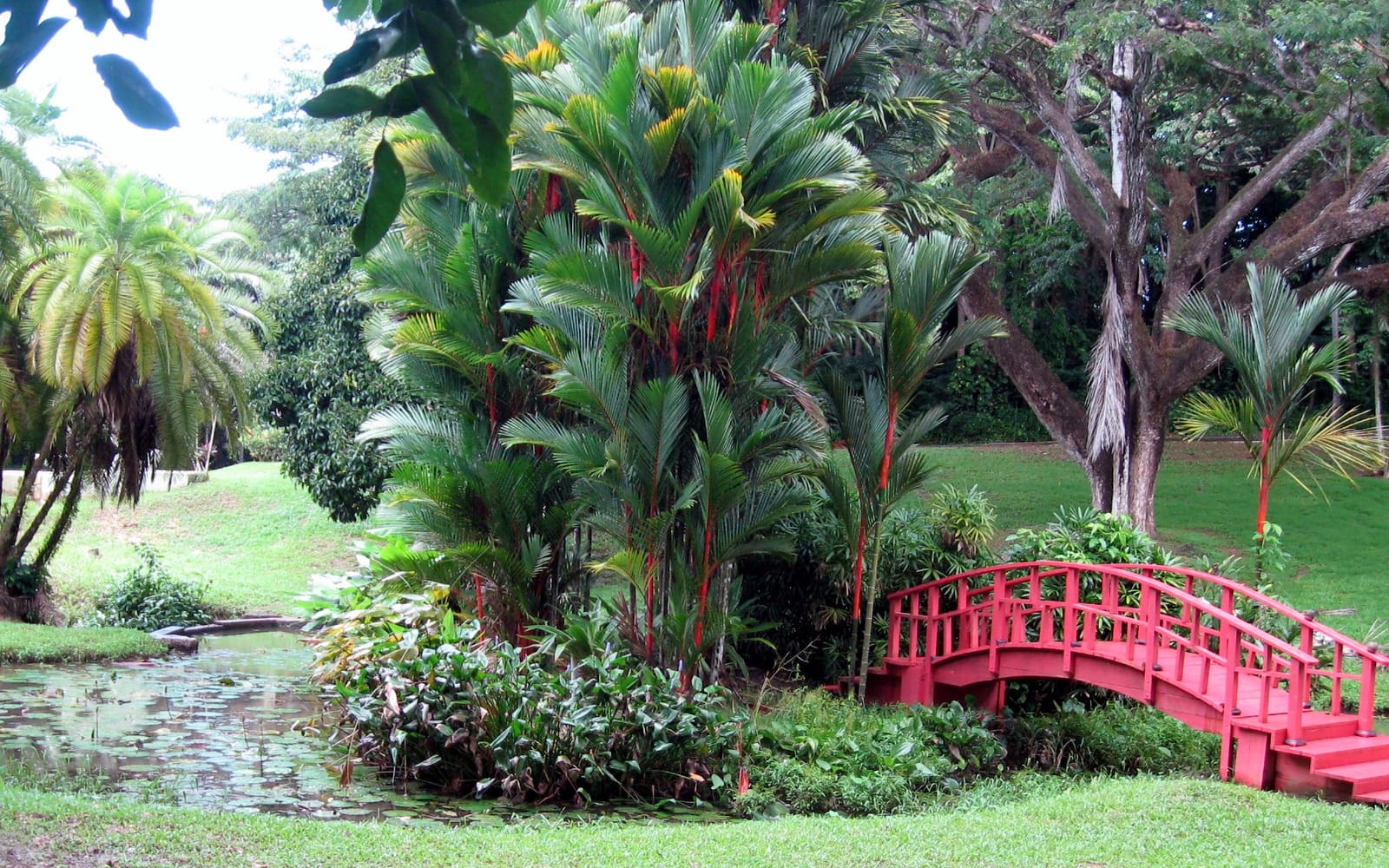
Photo by Alan Kotok on Wikimedia Commons, CC BY 2.0

The lipstick palm is a showstopper with scarlet stems, and it is hard to keep indoors. It comes from tropical peat swamps, so it wants soil that never dries out, humid air all year, bright light and steady warmth above about 59°F (15°C). NYBG suggests admiring it in a conservatory unless you live somewhere tropical. Neither the ASPCA nor NC State rates it for pets.
Not rated for pets
Neither the ASPCA nor NC State rates the lipstick palm. The lipstick plant on the ASPCA list (Aeschynanthus) is a different plant. No reputable source lists it as toxic, but none rates it for pets either. Children: No poisoning information found; Hawaii’s weed risk assessment notes no known toxicity.
Pet poison line: ASPCA (888) 426-4435
Good for: warm, humid greenhouses and conservatories, frost-free tropical gardens with wet ground, a bold red accent · Think twice if: your home has dry winter air, your rooms drop below about 59°F (15°C) at night, you want an easy palm for a living room.
Needs at a glance
- Light4 of 4 · Some direct sunYour brightest spot; outdoors, part shade to full sun
- Water3 of 3 · Keep lightly moistNever let it dry out; wet soil is fine
- Humidity3 of 3 · HighHumid air all year; run a humidifier indoors
- Soil when pottedRich, moisture-holding loamMoist but well drained in a pot; in the ground it copes with waterlogged soil
Indoors: best at 75 to 85°F (24 to 29°C). Keep it above 59°F (15°C) and away from drafts and heat vents.
How the rating adds up
0 = easiest · 1 = moderate · 2 = hardest
- Missed waterings2 of 2 · HardestA swamp palm: the soil should never dry out
- Light flexibility1 of 2 · ModeratePart shade to full sun; dim rooms won’t do
- Humidity2 of 2 · HardestNeeds humid air all year, like a tropical greenhouse
- Pests and disease1 of 2 · ModerateScale and spider mites can be a problem
- Sensitivity to change2 of 2 · HardestWants steady warmth; cool spells set it back
Growing outdoors
All year: USDA zones 11 to 12, where the coldest winter nights average 40°F (4°C) or warmer.
Elsewhere: summer outside in bright shade to part sun, sheltered from wind. Bring it in before nights drop below 59°F (15°C).
- Clumping accent palm in frost-free tropical gardens
- Pond edges and wet ground
- Warm greenhouse or conservatory specimen
Sources: Missouri Botanical Garden, NParks Singapore, NYBG, RHS, Hawaii weed risk assessment, Penn State, ASPCA plant list, ASPCA, Clemson, USDA zone map, FISC, Hawaii noxious weed list, Rojas-Sandoval and Acevedo-Rodríguez, TexasInvasives.org, Cal-IPC, Queensland Government and GISD. Full list below.
Verified · How we rate plants
Is a lipstick palm safe for cats and dogs?
Nobody has rated it. The lipstick palm is on neither ASPCA list, NC State has no page for it, and we found no reputable source that calls it toxic. Hawaii’s weed risk assessment notes no known toxicity, but that is a weed screen, so we can’t call it pet safe. Watch the name: the "lipstick plant" the ASPCA lists as non-toxic is Aeschynanthus, a trailing houseplant, which is a different plant. If your pet chews it and seems unwell, call your vet or the ASPCA Animal Poison Control Center at (888) 426-4435. If a child eats some and seems unwell, call Poison Help at 1-800-222-1222.
Lipstick palm, sealing wax palm or areca palm: which is which?
Lipstick palm and sealing wax palm are the same plant, Cyrtostachys renda; seed packets may still say Cyrtostachys lakka. The RHS also lists maharajah palm. The name comes from the red wax once used to seal letters, the Atlanta Botanical Garden explains. Among the palms people grow, look at the color of the stems. The lipstick palm forms clumps of slim stems with scarlet crownshafts and leaf stalks. The areca palm also clumps, but its stalks are yellow. The Christmas palm has one smooth gray trunk and a green crownshaft, and the majesty palm has a single trunk, often potted three together.
Kew, NYBG, RHS, Atlanta Botanical Garden, NParks Singapore, NC State
Can you grow a lipstick palm indoors?
You can try, but it is one of the hardest palms to keep inside. NYBG says it likes high humidity, constant temperatures in the mid 70s to 80s °F, and wet feet, and it won’t take drops below the 40s. Its advice is to admire it in a conservatory unless you live somewhere tropical. The RHS grows it in a warm greenhouse or indoors in bright light, and rates it for under glass all year above 15°C (59°F). Missouri Botanical Garden lists it as high maintenance. A sunroom or greenhouse with a humidifier gives it the best chance.
How often should I water a lipstick palm?
Often enough that the soil never dries out. In the wild it grows in peat swamps and along rivers, and NParks Singapore says it withers quickly when it runs short of water. It even copes with waterlogged ground, so it can grow at the edge of a pond. In a pot, use a rich, moisture-holding mix, water whenever the surface starts to lose its dampness, and keep the saucer from drying out for long. It is one of the few palms that doesn’t mind wet feet, NYBG notes.
How much light does a lipstick palm need?
Bright light. The RHS grows it in full sun or partial shade, and NParks lists semi-shade to full sun. NYBG explains it grows under taller trees in the wild, so it likes dappled light but handles full sun. Indoors, give it your brightest spot; a dim room makes an already fussy palm weaker.
What temperature and humidity does a lipstick palm need?
Warm and humid, all the time. NYBG puts its comfort zone in the mid 70s to 80s °F (about 24 to 29°C) with high humidity. The RHS minimum is 15°C (59°F), and Missouri Botanical Garden says it dislikes anything below 55°F (13°C). Keep it away from cold windows, doors and air conditioning drafts. Indoor air in winter is usually far too dry, so run a humidifier; general palm advice from Clemson is to add humidity whenever it drops below 50%. The RHS calls for moderate humidity, but the other sources ask for more.
NYBG, RHS, Missouri Botanical Garden, Clemson, Hawaii weed risk assessment
What pests attack a lipstick palm?
Scale insects and spider mites, the RHS says, and it is otherwise generally free of disease. Penn State notes spider mites are common on indoor palms, and they thrive in warm, dry rooms, which is one more reason to keep the air humid. Check under the fronds and along the red stalks every week, and rinse the leaves with a gentle spray of water to knock mites off.
Can a lipstick palm grow outdoors?
Only in truly tropical places. Missouri Botanical Garden lists USDA zones 11 to 12 and calls it a marginal survivor in zone 10, and NYBG says it won’t take drops below the 40s °F, about 40°F (4°C). There it forms clumps 30 to 50 feet tall, Hawaii’s weed risk assessment says, and it is happy beside ponds and in wet ground. Anywhere cooler, keep it in a pot and bring it in before nights fall to 59°F (15°C), the RHS minimum; outside, give it bright shade out of the wind. No official invasive list names it, and Hawaii’s weed risk assessment rates it low risk.
Missouri Botanical Garden, NYBG, USDA zone map, Hawaii weed risk assessment, NParks Singapore, RHS, FISC, Hawaii noxious weed list, GISD
How do I propagate a lipstick palm, and why is it so expensive?
Separate rooted suckers from the clump in spring, or sow seed, the RHS says. Seed is slow: NYBG notes it can take up to a year to sprout and is tricky to raise, which is why big plants cost so much. The palm also grows slowly and spreads by underground stems into a clump. When roots fill the pot, general palm advice from Clemson and Penn State is to move it up gently every 2 to 3 years, in spring or early summer.
How Grove helps
Grove sets frequent moisture checks for a palm that should never dry out, so it gets water before the soil dries. You can add a weekly humidity and pest check as tasks you can assign, so whoever is home that week checks the humidifier and looks under the fronds.
Sources
- Missouri Botanical Garden Plant Finder: Cyrtostachys renda (High maintenance, zones 11 to 12, per a search result; hand check pending)
- National Parks Board Singapore, Flora & Fauna Web: Cyrtostachys renda
- NYBG Plant Talk: A Festive Holiday Palm (sealing wax palm, 2013)
- RHS Plants: Cyrtostachys renda (lipstick palm)
- Hawaii-Pacific Weed Risk Assessment (Plant Pono): Cyrtostachys renda, low risk, score 1 (2005)
- Penn State Extension: Palms as Houseplants (M. L. Smith, 2023)
- ASPCA Animal Poison Control: Toxic and Non-Toxic Plants
- ASPCA Animal Poison Control: Lipstick Plant (Aeschynanthus humilis)
- Clemson Cooperative Extension HGIC 1508: Indoor Palms
- USDA ARS Plant Hardiness Zone Map (2023)
- Florida Invasive Species Council: Plant List, Category I and II and Watch List (April 2026)
- Hawaii Administrative Rules 4-68: plant species designated as noxious weeds (Hawaii Department of Agriculture)
- J. Rojas-Sandoval and P. Acevedo-Rodríguez (2015), Naturalization and invasion of alien plants in Puerto Rico and the Virgin Islands, Biological Invasions 17 (supplementary list)
- TexasInvasives.org Invasives Database: plant list (no Cyrtostachys)
- California Invasive Plant Council (Cal-IPC): plant search, "cyrtostachys" (no listing)
- Business Queensland: Restricted invasive plants (Biosecurity Act 2014)
- IUCN Global Invasive Species Database: Cyrtostachys renda (no entry)
- National Tropical Botanical Garden, Tropical Plant Database: Cyrtostachys renda
- Kew WCVP data release (2026-06-04 file), plant_name_id 54914: Cyrtostachys renda
- Atlanta Botanical Garden plant profile: Sealing Wax Palm
- NC State Extension Gardener Plant Toolbox: Chrysalidocarpus lutescens
- NC State Extension Gardener Plant Toolbox: Adonidia merrillii
- NC State Extension Gardener Plant Toolbox: Ravenea rivularis