Plant care card
Pansy orchid
Miltoniopsis · Miltoniopsis
Also called pansy-faced orchid or Miltonia (an old name still used in shops)
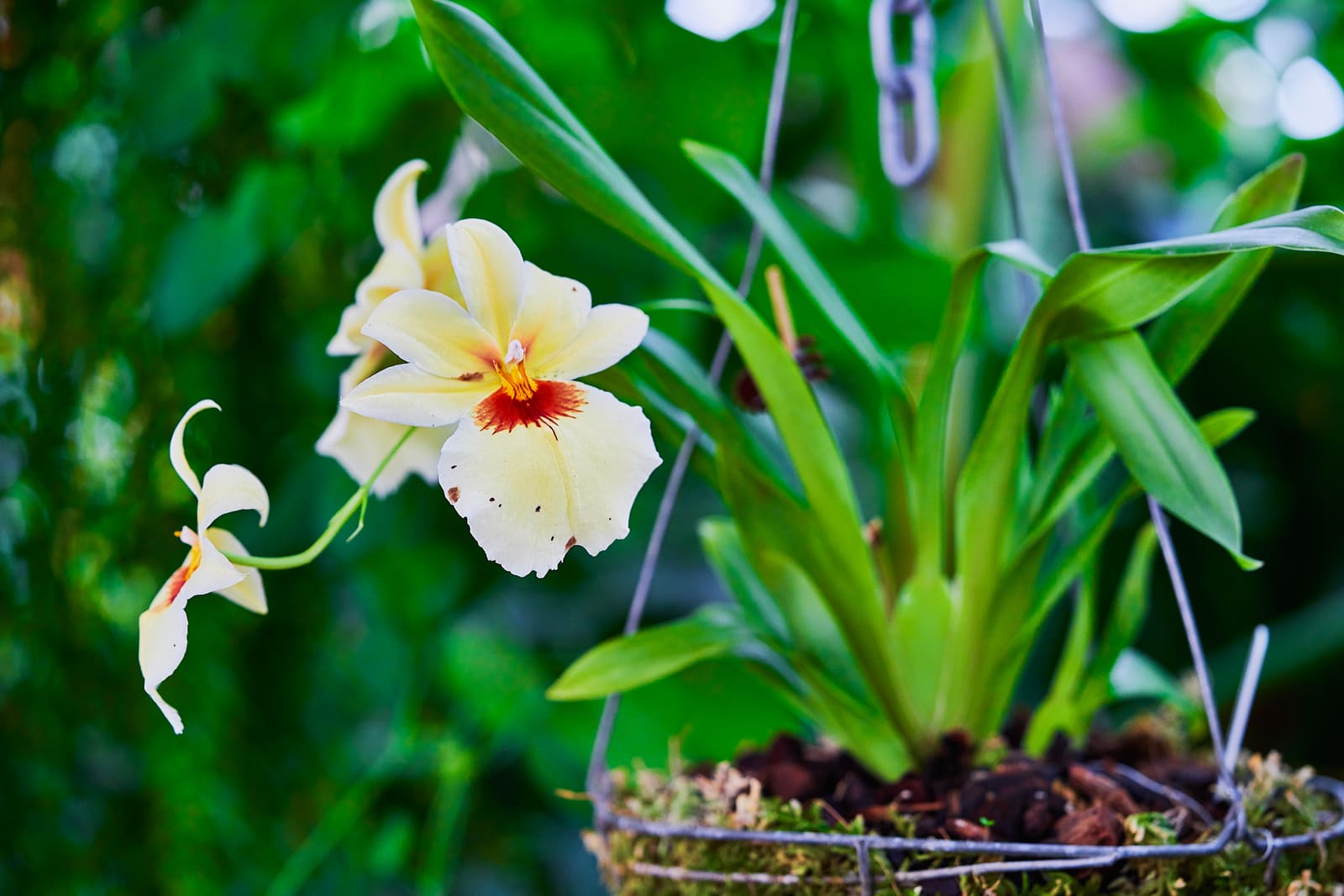
Photo by Geoff McKay on Wikimedia Commons, CC BY 2.0

The pansy orchid (Miltoniopsis) grows on trees in cool, misty mountain forests from Colombia to Bolivia, and it wants your home to feel a little like that. Keep the mix lightly moist all the time, give it soft, bright light and 60% humidity or more, and keep it under about 80°F (27°C). It's a challenging orchid mostly because it hates heat, hard water and drying out. Many are still sold as Miltonia, which is a different, warmer orchid from Brazil.
Not rated for pets
The ASPCA lists only Miltoniopsis roezlii (as Miltonia roezlii alba) as non-toxic to pets. It names cats, dogs and horses. That listing doesn’t cover the hybrids sold in stores. No trusted source rates the whole genus, so keep it away from pets that chew plants until one does. Children: No poison risk listed; NC State gives no poison information.
Pet poison line: ASPCA (888) 426-4435
Good for: a cool, bright east window, people who use rainwater or distilled water · Think twice if: your rooms run above 80°F in summer, all you have is hard tap water, your plants often go a week without water.
Needs at a glance
- Light3 of 4 · Bright, soft lightAn east window with morning sun, or a bright north window
- Water3 of 3 · Keep lightly moistLike a wrung-out sponge, never dry and never standing in water
- Humidity3 of 3 · High60 to 80%; a humidifier helps in heated rooms
- Soil when pottedFine orchid mixFine bark with sphagnum, in a small, snug pot
Indoors: best at 55 to 80°F (13 to 27°C). Keep it above 55°F (13°C) and away from drafts and heat vents.
How the rating adds up
0 = easiest · 1 = moderate · 2 = hardest
- Missed waterings2 of 2 · HardestNever let it dry out; dry spells pleat new leaves
- Light flexibility1 of 2 · ModerateSoft, bright light; hot sun burns the thin leaves
- Humidity2 of 2 · HardestWants 60 to 80% humidity
- Pests and disease1 of 2 · ModerateMealybugs, spider mites; rot in a soggy, stuffy pot
- Sensitivity to change2 of 2 · HardestHard water, heat and sudden swings brown tips or drop buds
Growing outdoors
All year: USDA zones 12b to 13, where the coldest winter nights average 55°F (13°C) or warmer.
Elsewhere: summer outside in shade, only while days stay under 80°F (27°C). Bring it in before nights drop below 55°F (13°C).
- Pots
- Hanging baskets
- Houseplant
Sources: NC State, American Orchid Society, Arkansas, Orchid Society of Great Britain, NYBG, ASPCA, Kew and ASPCA plant list. Full list below.
Verified · How we rate plants
Is it a Miltonia or a Miltoniopsis?
If the flower looks like a flat, round pansy face, it's almost certainly a Miltoniopsis or a hybrid of one, even when the tag says Miltonia. These cool-growing orchids from the Andes and Central America were first filed under Miltonia. The name Miltoniopsis, meaning Miltonia-like, dates from 1889, but it only came into general use in the 1970s, and many growers and shops kept the old name. True Miltonia is a separate group of about 20 species from Brazil to northeastern Argentina, with pointier petals. The difference matters for care: Miltonia likes it warmer, takes more light and tolerates tap water and some drying, while Miltoniopsis wants cool nights, soft light, steady moisture and pure water. Many hybrids mix the two, so the grower's label is worth checking.
How often should I water a pansy orchid?
Often enough that the mix never dries out. Keep it about as damp as a wrung-out sponge, and water again when the surface just starts to feel dry. Run water through and let it drain: the University of Arkansas and the Orchid Society of Great Britain say never leave it standing in water. (The American Orchid Society allows a shallow water tray, but only for plants potted in tree fern fiber.) Use lukewarm rainwater, distilled or reverse-osmosis water if you can, because the roots are sensitive to salts and minerals. New leaves that come out pleated, like an accordion, mean it went too dry or the air was too dry while they grew.
American Orchid Society, NYBG, Arkansas, Orchid Society of Great Britain, NC State
How warm or cool should it be?
Days around 70 to 80°F (21 to 27°C) and nights around 55 to 65°F (13 to 18°C), according to NYBG and NC State. Keep it above 55°F (13°C) in winter. Heat is the bigger problem: NC State and NYBG say it sulks and may not flower above about 80°F (27°C). The Orchid Society of Great Britain says to avoid long spells above about 75°F (24°C), and the American Orchid Society says days up to 85°F (29°C) are fine if the plant stays moist. In a hot summer, move it to your coolest bright room.
NYBG, NC State, Arkansas, Orchid Society of Great Britain, American Orchid Society
Why won't it flower, or why do the buds fall off?
Heat is the usual reason it won't flower: NC State says too much warmth suppresses blooms, and NYBG says it may skip flowering above about 80°F (27°C). Buds that yellow and drop usually follow a sudden change in temperature or watering, or dry air. The best flowers form in the cool part of the year, and most bloom in spring, sometimes again in early fall. One more warning from the American Orchid Society: a plant without healthy roots can die if you let it flower, so a weak plant is better off with the spike removed.
NC State, NYBG, American Orchid Society, Orchid Society of Great Britain, Arkansas
How long do the flowers last?
Sources differ. NYBG says each flowering lasts about 3 to 4 weeks, and the University of Arkansas says the plants stay in bloom for 6 to 8 weeks. Leave them on the plant: NYBG says cut stems from Miltoniopsis hybrids wilt quickly.
Why are the leaf tips turning brown or black?
Usually salts. Minerals from hard tap water or too much fertilizer build up in the mix and burn the tips. Switch to rainwater, distilled or reverse-osmosis water, feed at a quarter to half strength, and flush the pot with plain pure water now and then.
NC State, American Orchid Society, Orchid Society of Great Britain, NYBG
When should I repot a pansy orchid?
Every one to two years, when new growth starts and before the fine mix breaks down. NC State warns that bark breaks down quickly in the damp conditions this plant likes, so repot at the first sign of mushy mix. Use a fine orchid mix and a small, squat pot that holds the roots snugly. Sources give different seasons: the American Orchid Society says spring, the University of Arkansas says after blooming, and NYBG says late summer when new shoots are a few inches tall. They all agree on doing it when new roots are about to grow, and not moving it into a much bigger pot.
NYBG, Orchid Society of Great Britain, NC State, American Orchid Society, Arkansas
Is a pansy orchid safe for cats and dogs?
We can't say for the genus yet. The ASPCA lists one pansy orchid as non-toxic to cats, dogs and horses: Miltonia roezlii alba, which Kew and NC State now call Miltoniopsis roezlii. That listing doesn't cover the hybrids sold in stores, and no trusted source rates the whole genus. We found no reputable source that lists any Miltoniopsis as toxic, either. Until one rates it, keep it away from pets that chew plants.
Can a pansy orchid live outdoors?
Only in a few places, and heat matters more than cold. Keep it above 55°F (13°C), which in the US means zones 12b and 13, but no source we checked recommends any zone, and many warm places are too hot for it. NC State says not to put it outside in summer if days go above 80°F (27°C). Where summers stay mild, it can spend them outside in shade and come back in before nights drop below 55°F (13°C).
How Grove helps
Grove reminds you to check the pot often, so the mix never dries out, and you can add a monthly flush with pure water. In summer, add a task to move it somewhere cooler and assign it to whoever is home.
Sources
- NC State Extension Gardener Plant Toolbox: Miltoniopsis roezlii
- American Orchid Society: Miltoniopsis culture sheet
- University of Arkansas Cooperative Extension, Plant of the Week: Miltoniopsis, Pansy Faced Orchid (2017)
- Orchid Society of Great Britain: Miltoniopsis orchid care guide
- New York Botanical Garden, Mertz Library: Miltonia and Miltoniopsis (pansy orchid) research guide
- American Orchid Society Bulletin (May 1980), Ned Nash: Miltoniopsis culture
- ASPCA Animal Poison Control: Pansy orchid (Miltonia roezlii alba)
- Kew: World Checklist of Vascular Plants (June 2026 release), the data behind Plants of the World Online
- ASPCA Animal Poison Control: Toxic and Non-Toxic Plants
- New York Botanical Garden Plant Talk: The Magnetic Appeal of Pansy Orchids (2013)
- Kew Plants of the World Online: Miltoniopsis
- Kew Plants of the World Online: Miltonia
- American Orchid Society: Explore Miltoniopsis
- American Orchid Society: Miltonia culture sheet
- ColPlanta (Kew and Universidad Nacional de Colombia): Miltoniopsis