Plant care card
Masdevallia
Masdevallia · Masdevallia
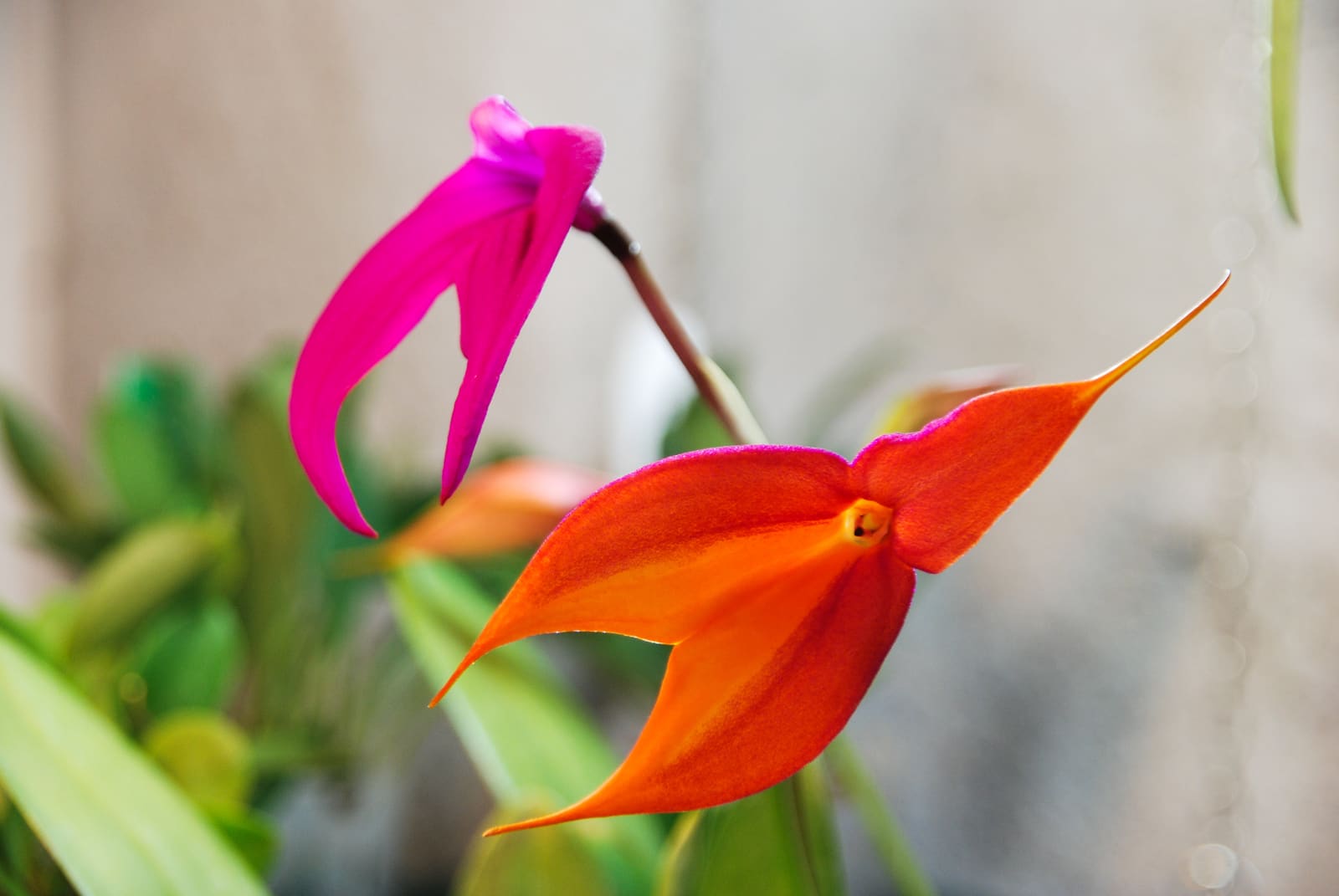
Also called tailed orchid or kite orchid
Photo by trixty on Wikimedia Commons, CC BY 2.0

Masdevallias are orchids for experienced growers. They come from cool, cloudy forests high in the Andes, so they want what that feels like: temperatures around 55 to 72°F (13 to 22°C), 60 to 90% humidity with moving air, a mix that never dries out, and rain or distilled water. Heat is the usual killer. The ASPCA lists the whole genus as non-toxic to cats, dogs and horses.
Non-toxic to cats, dogs and horses
No signs of poisoning listed. Any plant can still upset a pet’s stomach if it eats enough. Children: No poison risk listed.
Pet poison line: ASPCA (888) 426-4435
Good for: experienced growers with a cool, humid spot, growing under lights, homes with cats and dogs · Think twice if: your home runs warm in summer, it would be your first orchid, all you have is hard tap water.
Needs at a glance
- Light3 of 4 · Bright, diffuse lightAn east or north window, or a grow light; no midday sun
- Water3 of 3 · Keep lightly moistEvenly moist all year, never soggy; rain or distilled water
- Humidity3 of 3 · High60 to 90%, with air moving gently around it
- Soil when pottedSphagnum moss or fine barkA small pot, with the rhizome sitting at the surface
Indoors: best at 55 to 72°F (13 to 22°C). Keep it above 50°F (10°C) and away from drafts and heat vents.
How the rating adds up
0 = easiest · 1 = moderate · 2 = hardest
- Missed waterings2 of 2 · HardestNo pseudobulbs to store water; drying out can kill it
- Light flexibility1 of 2 · ModerateBright, diffuse light; no hot midday sun
- Humidity2 of 2 · HardestNeeds 60 to 90% humidity and moving air
- Pests and disease1 of 2 · ModerateAphids, spider mites, mealybugs; leaf spot in still air
- Sensitivity to change2 of 2 · HardestHeat and salty tap water are the usual killers
Growing outdoors
All year: USDA zones 12 to 13, where the coldest winter nights average 50°F (10°C) or warmer.
Elsewhere: summer outside in shade, only where summer days stay under 75°F (24°C). Bring it in before nights drop below 50°F (10°C).
- Pots
- Hanging baskets for species with hanging flowers
- Mounts in a humid greenhouse
Sources: NC State, American Orchid Society, Orchid Society of Great Britain, Longwood Gardens, ASPCA, ASPCA plant list and Kew. Full list below.
Verified · How we rate plants
Why does a tropical orchid need a cool room?
Because it grows high up. Kew's checklist files almost all of the roughly 656 species under a wet tropical climate, and that's true as far as it goes: they're tropical and they're wet. The habitat sources add the part that matters for care. The American Orchid Society, NC State, Longwood Gardens and the Orchid Society of Great Britain all describe high mountain cloud forest, mostly in the Andes, where clouds keep the air cool and damp all year. Only a few species come from warm lowlands. So picture a cool, misty mountain morning when you choose its spot.
Kew, American Orchid Society, NC State, Longwood Gardens, Orchid Society of Great Britain
How warm or cool should a Masdevallia be?
Around 55 to 72°F (13 to 22°C), says the American Orchid Society; Longwood Gardens gives 50 to 75°F (10 to 24°C). Nights should be 9 to 18°F (5 to 10°C) cooler than days. The Orchid Society of Great Britain splits them into cool types, which like nights as low as 45°F (7°C), and intermediate types, which like nights of 50 to 59°F (10 to 15°C). The ceiling matters most: avoid long spells above about 75°F (24°C). The American Orchid Society says days up to 85°F (29°C) are tolerable only if nights cool down to room temperature or below.
American Orchid Society, Longwood Gardens, Orchid Society of Great Britain, NC State
How often should I water it, and with what?
Keep the mix evenly moist, letting only the surface dry slightly between waterings. Masdevallias have no pseudobulbs to store water, so a dry spell hits them fast. Water a little less often in fall and winter, but never let it dry out, and never leave it soggy. Use rainwater, distilled or reverse-osmosis water: many species are sensitive to salts, and black leaf tips are the sign that dissolved minerals are building up. Water the mix, keeping water out of the center of the new growth.
American Orchid Society, Orchid Society of Great Britain, NC State
How do I give it 60 to 90% humidity?
Most homes are far drier than that, especially with the heat on. The American Orchid Society says a pot set over a shallow tray of water lets it get by with lower room humidity. Moving air matters just as much: both the American Orchid Society and the Orchid Society of Great Britain say still, damp air brings leaf spot and other fungus, so keep air moving gently around it.
American Orchid Society, Orchid Society of Great Britain, NC State
Why is my Masdevallia dropping leaves or collapsing?
Almost always heat or drying out. NC State says a plant that gets too hot or too dry drops its leaves and collapses, and the Orchid Society of Great Britain calls heat stress the most common cause of decline. Check the roots too: a mix that stays soggy and airless can rot them. Move it somewhere cooler, keep the mix evenly moist, and make sure the pot drains.
NC State, Orchid Society of Great Britain, American Orchid Society
When does a Masdevallia flower?
It depends on the species. The Orchid Society of Great Britain says they can flower at any time of year, and the plant Longwood Gardens describes blooms several times a year, peaking in late spring. Leave old flower stems on until they turn yellow, because some flower again. Bright, diffuse light helps: the American Orchid Society says flowering suffers when light is too low, and grow lights work well. Species whose flowers hang down do best in a basket.
Orchid Society of Great Britain, Longwood Gardens, American Orchid Society, NC State
When should I repot it?
Every one to two years, when new growth starts and before the mix breaks down. The American Orchid Society says spring is usual, and any time works if it isn't in flower spike. Use sphagnum moss or a very fine bark mix in a small pot, firm it gently around the roots, and keep the rhizome at the surface so it doesn't rot. Until new roots grow, keep the mix slightly on the dry side and the air humid.
American Orchid Society, Orchid Society of Great Britain, NC State
Is a Masdevallia safe for cats and dogs?
Yes. The ASPCA lists the tailed orchid, Masdevallia, as non-toxic to cats, dogs and horses, and it rates the genus as a whole. NC State agrees. Any plant can still upset a pet's stomach if it eats enough, so keep a determined chewer away from the leaves.
Can a Masdevallia grow outdoors?
Rarely. It needs nights above about 50°F (10°C), which in the US means zones 12 and 13, but most warm places are far too hot for it in summer. NC State lists zones 8a to 10b, which doesn't match any temperature source we checked, and it also says the plant must be grown indoors in North Carolina. No source we found recommends a summer outside. If your summer days stay under about 75°F (24°C), it can sit in shade outside and come in before nights drop below 50°F (10°C).
Longwood Gardens, Orchid Society of Great Britain, NC State, American Orchid Society
How Grove helps
Grove keeps the watering checks coming so the moss never dries out, and you can add a reminder to refill the humidity tray. When a heat wave is coming, add a task to move it somewhere cooler and assign it to whoever is home.
Sources
- NC State Extension Gardener Plant Toolbox: Masdevallia
- American Orchid Society: Masdevallia culture sheet
- Orchid Society of Great Britain: Masdevallia orchid care guide
- Longwood Gardens: Our Award-Winning Orchid Collection (2018)
- ASPCA Animal Poison Control: Tailed orchid (Masdevallia spp.)
- ASPCA Animal Poison Control: Toxic and Non-Toxic Plants
- Kew: World Checklist of Vascular Plants (June 2026 release), the data behind Plants of the World Online
- Kew Plants of the World Online: Masdevallia
- American Orchid Society, Marguerite Webb: Pleurothallid Perfumes