Plant care card
Nerve plant
Fittonia albivenis (formerly Fittonia verschaffeltii) · Fitonia
Also called fittonia, mosaic plant, silver nerve or jewel plant
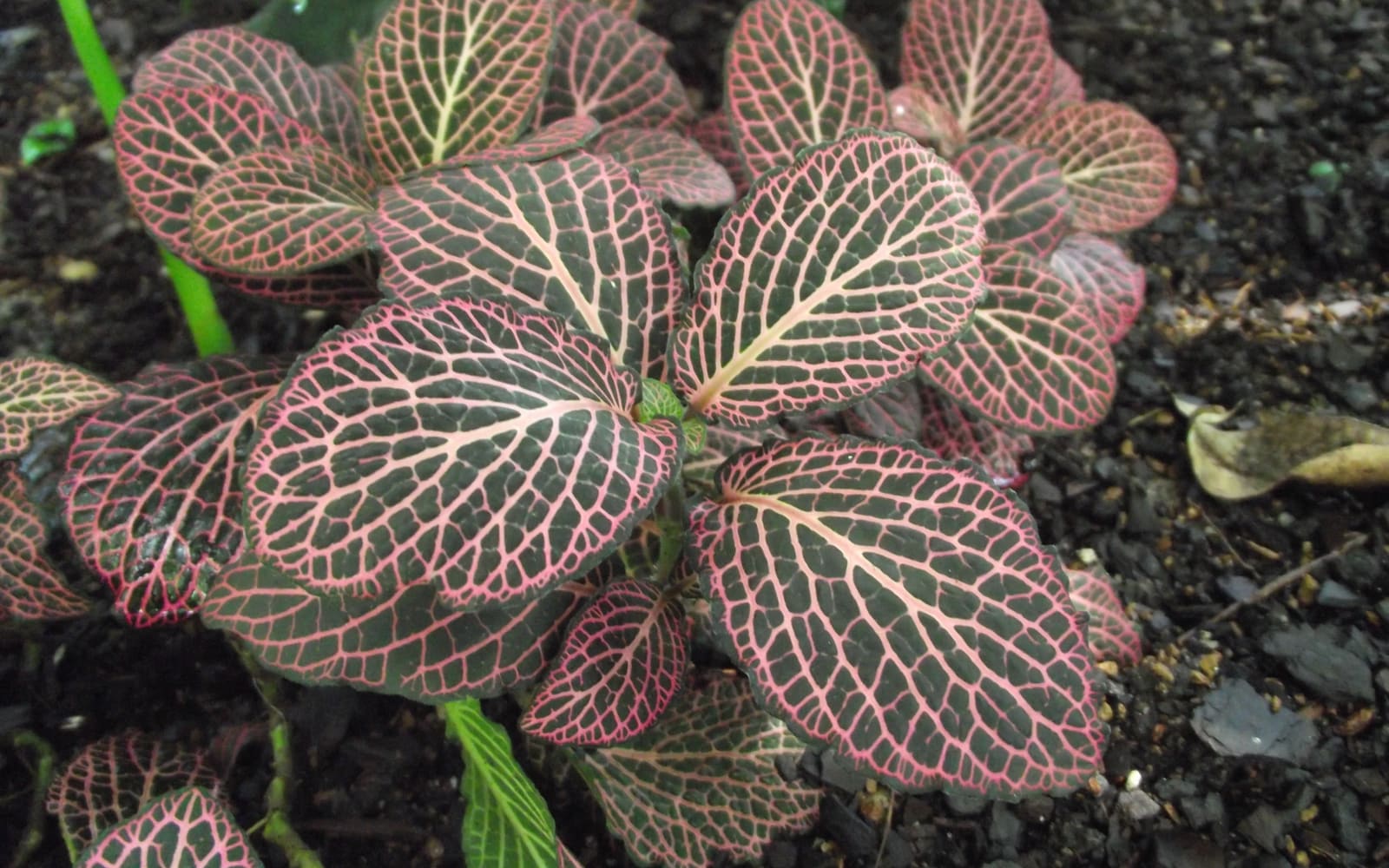
Photo by Stickpen on Wikimedia Commons, CC0 1.0

Nerve plant (Fittonia albivenis) is a low, creeping rainforest plant from South America, grown for leaves netted with white, pink or red veins. Keep the soil evenly moist, give it medium to bright light with no direct sun, and keep it warm and humid, above about 63°F and 50% humidity. It wilts flat when it dries out and usually stands back up after a drink. The ASPCA lists it as safe for cats, dogs and horses.
Non-toxic to cats, dogs and horses
No signs of poisoning listed. The ASPCA lists it as non-toxic to cats, dogs and horses, under its older name Fittonia verschaffeltii, and NC State agrees. Any plant can still upset a pet’s stomach if it eats enough. Children: No source we checked lists any risk to people.
Pet poison line: ASPCA (888) 426-4435
Good for: terrariums and bottle gardens, homes with cats and dogs, a desk or shelf in bright, indirect light · Think twice if: you often forget to water, your home air gets very dry in winter, the only free spot gets direct sun.
Needs at a glance
- Light2 of 4 · Medium to bright indirectBright to medium light, such as a north or east window, with no direct sun; it also grows under fluorescent lights
- Water3 of 3 · Keep lightly moistEvenly moist, never soggy; a little drier in winter, and less often in a closed terrarium
- Humidity3 of 3 · HighAbove 50%: a terrarium, a steamy bathroom or kitchen, or a tray of damp pebbles
- Soil when pottedMoisture-holding mix that still drainsPeat-free houseplant mix that holds moisture, in a small pot with drainage holes; the roots are shallow
Indoors: best at 63°F (17°C) or warmer. Keep it above 60°F (15°C) and away from drafts and heat vents.
How the rating adds up
0 = easiest · 1 = moderate · 2 = hardest
- Missed waterings2 of 2 · HardestKeep the soil evenly moist; it wilts flat when it dries out
- Light flexibility1 of 2 · ModerateMedium to bright light with no direct sun; too little light yellows the leaves
- Humidity1 of 2 · ModerateWants humid air, above 50%; dry air browns and crisps the leaves
- Pests and disease1 of 2 · ModerateMealybugs, spider mites and scale now and then; grey mould and root rot if kept too wet
- Sensitivity to change1 of 2 · ModerateDrafts, dry heat from radiators and direct sun make leaves shrivel and drop
Growing outdoors
All year: USDA zones 11 to 12, where the coldest winter nights average 40°F (4°C) or warmer.
Elsewhere: summer outside in shade or dappled shade. Bring it in when nights reach 62 to 65°F (17 to 18°C).
- Houseplant
- Terrarium plant
- Container or hanging basket
- Shady groundcover in zones 11 and 12
Sources: NC State, RHS, Nebraska Extension, ASPCA, ASPCA plant list, USDA zone map, FISC and GISD. Full list below.
Verified · How we rate plants
How often should I water a nerve plant?
Often enough that the soil stays evenly moist. NC State suggests about twice a week, the RHS says to water often to keep the mix moist, and Nebraska Extension keeps it uniformly moist without saturating it. In winter, the RHS keeps it barely moist. Moist never means soggy: NC State warns that overwatering causes root rot, and yellowing leaves can be a sign of it, so use a pot with drainage holes. In a closed terrarium the air stays humid and the soil dries slowly, so it needs water less often (RHS).
Why does my nerve plant keep wilting?
Almost always because it is thirsty. NC State says it wilts dramatically when dry and recovers after watering, and the RHS says drooping means it needs water and that it bounces back after a good soak, as long as it wasn’t left dry too long. Since the RHS warns that a plant left dry too long may stay limp, check the soil often instead of waiting for the flop. If it droops while the soil is wet, think roots: NC State links overwatering with root rot.
Does a nerve plant need high humidity or a terrarium?
It needs humid air, and a terrarium is one easy way to give it. Nebraska Extension rates its humidity need as high, above 50%, and names nerve plant as a houseplant that’s hard to grow because of its moisture and humidity needs. The RHS says that without moist air the leaves turn brown, and suggests a sealed terrarium, a steamy bathroom or kitchen, or a tray of damp gravel under the pot. NC State is milder and calls for medium humidity, but warns that very high humidity can make leaves wither and that dry air makes them shrivel. In a large sealed terrarium it needs little care (RHS).
How much light does a nerve plant need?
Medium to bright light, with no direct sun. NC State says it thrives in bright to medium indoor light and does well under fluorescent lights, and the RHS picks a bright north- or east-facing window. Both warn that direct sun scorches the leaves. Too little light shows up as yellow leaves, the RHS says. Nebraska Extension rates it a medium-light plant: well lit, but out of direct sun or a few feet from the window.
Why are my nerve plant leaves crispy, brown or yellow?
Brown, crispy leaves usually mean the air is too dry, the RHS says, and heat or direct sun can scorch them too. NC State adds that dry air, drafts and direct sun make the leaves shrivel and drop, so keep it away from radiators, heat vents and cold drafts (RHS). Yellow leaves usually mean too little light (RHS) or too much water (NC State). Fine webbing points to spider mites, and white, cottony bugs to mealybugs, which NC State and the RHS both list. Grey mould can show up in very humid, still air; remove the affected parts (RHS).
How do I propagate a nerve plant?
With tip cuttings, which root easily. The RHS takes stem tips about 2 inches (5 cm) long in spring or summer, cuts just below a pair of leaves, sets them in moist peat-free mix and keeps them humid in a propagator or a sealed bag until they root. NC State notes that the creeping stems root wherever they touch the soil, so you can also pin a stem down and cut it free later (the RHS calls this layering). A big clump can be split by hand into pieces with at least three stems each (RHS).
Does a nerve plant flower?
Rarely indoors. NC State says indoor plants usually don’t flower; when they do, the flowers are small, white and tubular, mostly hidden by bracts, in July and August. You can pinch the stem tips to keep it bushy (NC State). The RHS says no regular pruning is needed: just remove dead leaves and stems, and if the center of an old plant dies out, divide it and replant the healthy pieces.
Is a nerve plant safe for cats and dogs?
Yes. The ASPCA lists the nerve plant, under its older name Fittonia verschaffeltii, as non-toxic to cats, dogs and horses, and NC State tags it non-toxic for all three. Any plant can still upset a pet’s stomach if it eats enough.
Why are there pink, red and white nerve plants?
They are all one species, Fittonia albivenis, in different colors. The RHS sorts them into the Argyroneura Group, with white veins, and the Verschaffeltii Group, with pink veins on deep olive leaves, and lists cultivars such as Skeleton, White Anne and Forest Flame. Those groups were once sold as two species, Fittonia argyroneura and Fittonia verschaffeltii; Kew and NC State now treat both as Fittonia albivenis, and the ASPCA still uses the older name. The care is the same for every color. NC State says nerve plant is often confused with flame violet (Episcia cupreata) and with African violet.
Can a nerve plant grow outdoors?
Only in very warm places. NC State lists it as winter hardy in USDA zones 11 and 12, where winter nights stay at 40°F (4°C) or warmer, and uses it as a groundcover in shade. Elsewhere it can sit outside in summer in shade or dappled shade, out of direct sun. Bring it in before nights fall below 62 to 65°F (17 to 18°C), Nebraska Extension’s night minimum, since the RHS says it does best above 63°F (17°C).
How Grove helps
Grove schedules frequent soil checks so the pot stays evenly moist and the plant never has to wilt to ask for water. You can add refilling the pebble tray as a task you can assign, plus a reminder to bring it inside before cool nights if it spends the summer outdoors.
Sources
- NC State Extension Gardener Plant Toolbox: Fittonia albivenis
- RHS: How to grow fittonia
- RHS plant entry: Fittonia albivenis Argyroneura Group
- University of Nebraska-Lincoln Extension NebGuide G837: Guide to Selecting Houseplants (2007)
- RHS plant entry: Fittonia albivenis Verschaffeltii Group
- ASPCA Animal Poison Control: Nerve Plant
- ASPCA Animal Poison Control: Toxic and Non-Toxic Plants
- USDA ARS Plant Hardiness Zone Map (2023)
- Florida Invasive Species Council: Plant List, Category I and II and Watch List (April 2026)
- IUCN Global Invasive Species Database: Fittonia albivenis (no entry)
- Kew WCVP data release (2026-06-04 file), plant_name_id 2813190: Fittonia albivenis