Plant care card
Philodendron 'Brasil'
Philodendron hederaceum 'Brasil' · Filodendro Brasil
Also called Brasil philodendron, heartleaf philodendron 'Brazil' or Philodendron scandens 'Brasil'
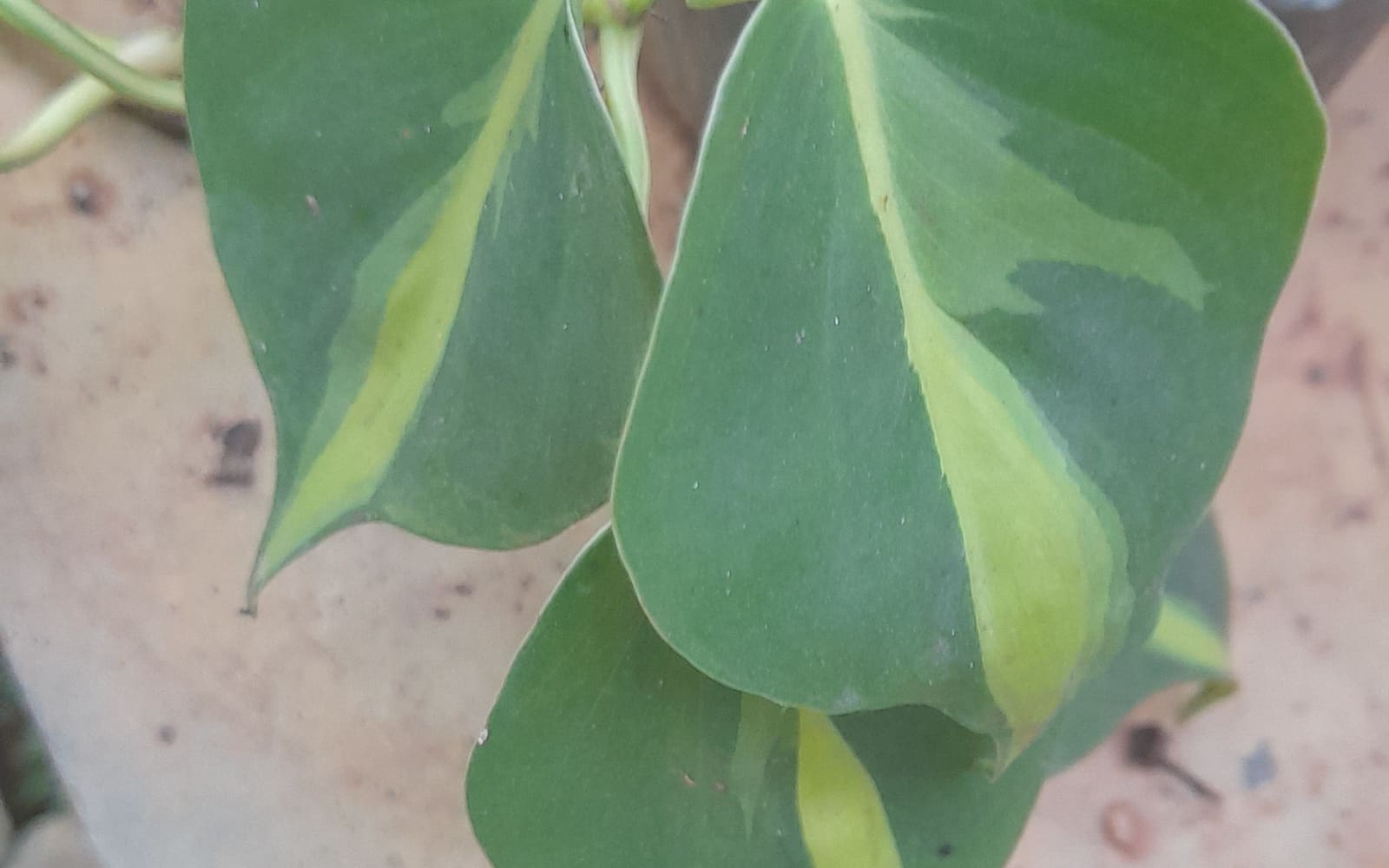
Photo by Yercaud-elango on Wikimedia Commons, CC BY 4.0

Philodendron 'Brasil' is a heartleaf philodendron with a lime-yellow stripe down each leaf, and it's just as easy to keep. Give it brighter light than a plain green heartleaf so the stripes stay bold, but keep it out of hot direct sun. Water when the top inch of soil is dry. Like every heartleaf, it's toxic to cats, dogs and horses if chewed.
Toxic to cats, dogs and horses · Mild
Mouth pain and swelling, drooling, vomiting and trouble swallowing. A heartleaf philodendron: its sap holds calcium oxalate crystals; NC State rates the severity as low. Children: low severity. NC State rates heartleaf low severity; chewing burns the mouth, and the sap can irritate skin and eyes.
Pet poison line: ASPCA (888) 426-4435
Good for: hanging baskets and shelves, bright rooms out of direct sun, a splash of color that stays easy · Think twice if: pets or small children chew plants, your only spot is a dim corner.
Needs at a glance
- Light3 of 4 · Bright indirectMedium light works; shade it from hot direct sun
- Water2 of 3 · Let the top inch dryKeep it lightly moist, never soggy; less in winter
- Humidity1 of 3 · AverageNormal home air is fine; the RHS suggests misting
- Soil when pottedAll-purpose potting mixMoist but well-drained, in a pot with drainage holes
Indoors: best at 65 to 80°F (18 to 27°C). Keep it above 59°F (15°C) and away from drafts and heat vents.
How the rating adds up
0 = easiest · 1 = moderate · 2 = hardest
- Missed waterings1 of 2 · ModerateLikes lightly moist soil; water when the top inch dries
- Light flexibility1 of 2 · ModerateMedium to bright indirect light keeps the stripes bright
- Humidity0 of 2 · EasiestHandles dry home air; the RHS suggests misting
- Pests and disease1 of 2 · ModerateScale and spider mites; root rot if kept wet
- Sensitivity to change0 of 2 · EasiestUConn calls it very hardy; keep it warm and out of drafts
Growing outdoors
All year: USDA zones 10b to 12, where the coldest winter nights average 35°F (2°C) or warmer.
Elsewhere: summer outside in bright shade; hot sun scorches it. Bring it in before nights drop below 60°F (16°C).
- Hanging baskets and shelves
- On a moss pole or trellis
Sources: NC State, Clemson, Iowa State, RHS, UF/IFAS, UConn, ASPCA, ASPCA plant list, USDA, FISC, UF/IFAS Assessment and Hawaii weed risk assessment. Full list below.
Verified · How we rate plants
What is a philodendron 'Brasil'?
It's a cultivar of heartleaf philodendron (Philodendron hederaceum). NC State describes its leaves as dark green with a center stripe of yellow to light green, and UConn notes that the amount of yellow changes from leaf to leaf. The RHS still lists it under its older name too, Philodendron scandens 'Brasil'. Everything that keeps a heartleaf healthy keeps a 'Brasil' healthy, with one difference: it needs more light to hold its color.
How much light does a philodendron 'Brasil' need?
Medium to bright indirect light. The RHS suggests bright, filtered light shaded from hot sun, and Iowa State says colorful-leaved philodendrons do best in moderate, indirect light rather than the deep shade a plain heartleaf puts up with. UF/IFAS adds that philodendron leaves hold their color and size better above a minimum light level. Keep it out of hot direct sun, which burns the leaves.
Why is my philodendron 'Brasil' turning all green?
Two things can cause it. Too little light makes colorful philodendrons fade, so move it to a brighter spot first. Some stems also revert: they start making plain green leaves. The RHS explains that green shoots grow faster than variegated ones and can take over, and it advises cutting reverted shoots back to a part of the stem that still has striped leaves. UConn notes that the amount of yellow naturally varies from leaf to leaf, so a few greener leaves are normal.
How often should I water a philodendron 'Brasil'?
When the top inch of soil feels dry. Keep it lightly moist and never soggy, as NC State and Clemson advise for heartleaf, and water less in winter. The RHS says to water moderately while it grows and sparingly the rest of the year. Never leave the pot standing in water, because soggy soil rots the roots.
Is philodendron 'Brasil' safe for cats?
No. The ASPCA lists heartleaf philodendron, the species 'Brasil' belongs to, as toxic to cats, dogs and horses. Its sap holds calcium oxalate crystals that cause mouth pain and swelling, drooling, vomiting and trouble swallowing. NC State rates the severity as low, and the RHS warns the sap can irritate skin and eyes. Hang it out of reach. If a pet chews it and seems unwell, call your vet or the ASPCA Animal Poison Control Center at (888) 426-4435. If a child eats some, call Poison Help at 1-800-222-1222.
Philodendron 'Brasil' vs pothos: how do I tell them apart?
Check the leaf stalk: smooth and round on a philodendron, grooved on a pothos. Each new philodendron leaf also unrolls from a thin sheath that dries and falls off, which pothos never has. Pothos leaves are thicker and glossier, and their color comes as flecks and streaks, while a 'Brasil' carries one bold stripe down the center.
Can I root philodendron 'Brasil' cuttings in water?
Yes. Cut a stem 3 to 6 inches long, pull off the lower leaves and stand it in water, changing the water often. Pot it in regular potting mix once the roots are a few inches long, as Iowa State suggests. Perlite or moist mix works too, and Clemson says cuttings root in any season.
Does a philodendron 'Brasil' need a moss pole?
No, but it can use one. Grown in a hanging basket, the RHS says, the long stems trail down shelves like a curtain. Given a moss pole or trellis, it climbs with its aerial roots, as Iowa State and Clemson describe for heartleaf. You can guide the aerial roots onto the pole, tuck them into the soil, or trim them off without harming the plant.
Why does my philodendron 'Brasil' have yellow leaves?
Yellow lower leaves usually mean too much water or too little light, as Clemson and UF/IFAS explain for heartleaf. Let the top inch dry between waterings, check that the pot drains, and move it nearer a window. A single old leaf yellowing now and then is normal. Brown, curled tips point to too much fertilizer, so feed only lightly while it grows.
How Grove helps
Grove turns watering into a quick check of the top inch of soil, so a 'Brasil' gets water when it's ready. You can add a monthly look for plain green stems as a repeating task and assign it to anyone who helps with the plants, so reverted shoots get trimmed before they take over.
Sources
- NC State Extension Gardener Plant Toolbox: Philodendron hederaceum
- Clemson Cooperative Extension HGIC 1509: Philodendron (rev. 2016)
- Iowa State University Extension, Yard and Garden: Growing Philodendrons at Home (A. Steil, reviewed 2025)
- Royal Horticultural Society: Philodendron hederaceum 'Brasil' (v)
- UF/IFAS EDIS ENH893: Cultural Guidelines for Commercial Production of Interiorscape Philodendron (McConnell, Chen, Henny and Everitt; reviewed 2024)
- UConn Home & Garden Education Center: I "Heart" Philodendrons (M. Lisy, 2026-03-28)
- ASPCA Animal Poison Control: Heartleaf Philodendron
- ASPCA Animal Poison Control: Toxic and Non-Toxic Plants
- UF/IFAS Gardening Solutions: Heartleaf Philodendron
- Royal Horticultural Society: Philodendron hederaceum var. hederaceum (heart-leaf philodendron), AGM
- USDA ARS Plant Hardiness Zone Map (2023)
- Florida Invasive Species Council: Plant List, Categories I and II (April 2026)
- UF/IFAS Assessment of Non-Native Plants: Philodendron hederaceum var. oxycardium and var. hederaceum
- Hawaii-Pacific Weed Risk Assessment (Plant Pono): Philodendron hederaceum, high risk, score 8 (2023)
- UConn Home & Garden Education Center: Philodendron (from Penn State NE-53)
- Kew WCVP data release (2026-06-04 file), plant_name_id 151646: Philodendron hederaceum
- Royal Horticultural Society: Reversion (variegated plants)
- Clemson Cooperative Extension HGIC: How to Grow Pothos Indoors