Plant care card
Stromanthe Triostar
Stromanthe thalia (formerly Stromanthe sanguinea) · Stromanthe Triostar
Also called Triostar, Tricolor or Tristar
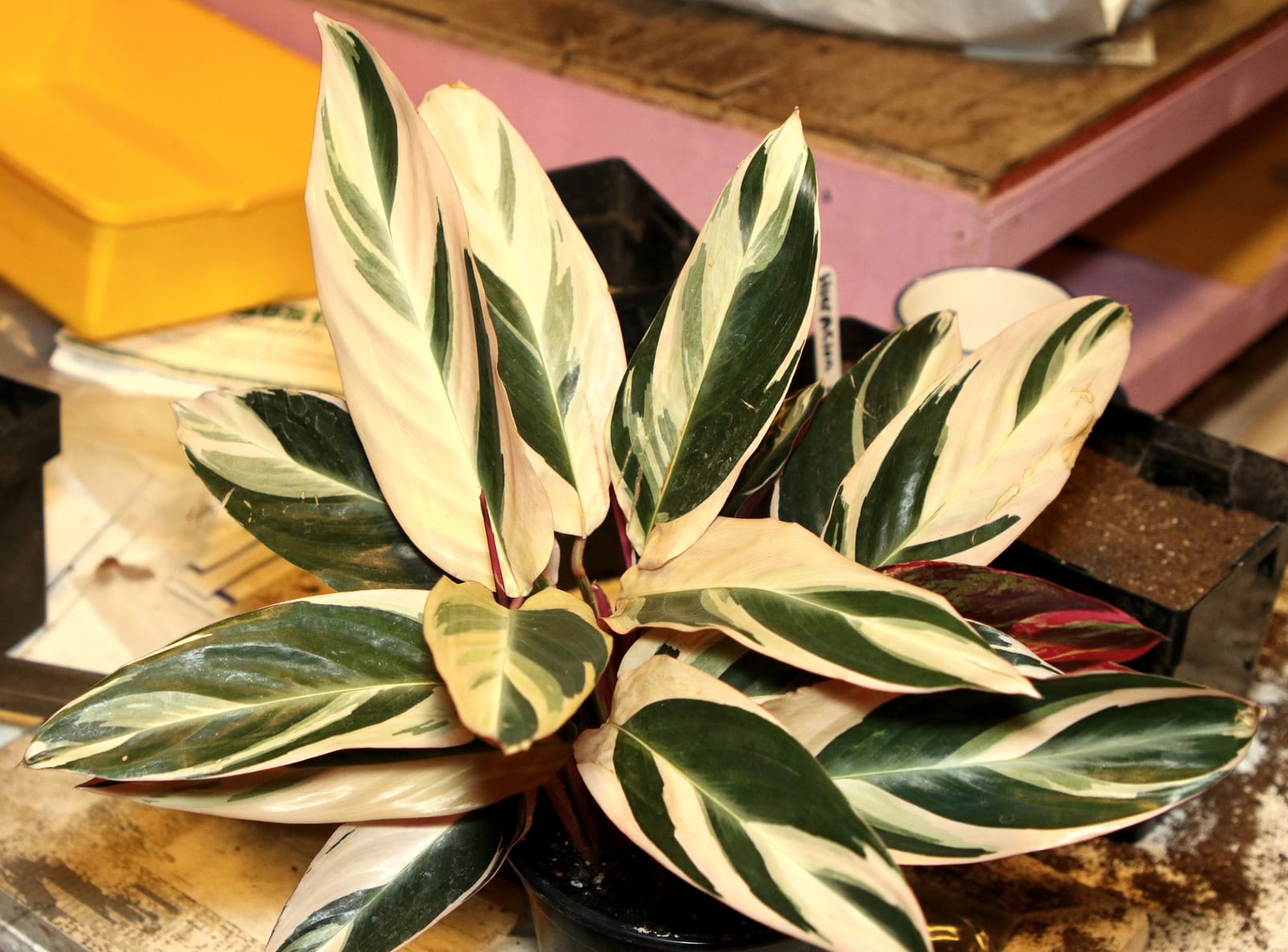
Photo by Hardyplants on Wikimedia Commons, CC0 1.0

Stromanthe Triostar is a rainforest plant from Brazil that wants steady moisture, humid air, warmth and bright light with no direct sun. Keep the soil evenly moist from spring to fall, aim for 60% humidity, and give it bright, filtered light so the pink and cream stay vivid. Dry winter air is its biggest problem in most homes. Stores often call it a calathea, and most labels say Stromanthe sanguinea; Kew’s accepted name is now Stromanthe thalia.
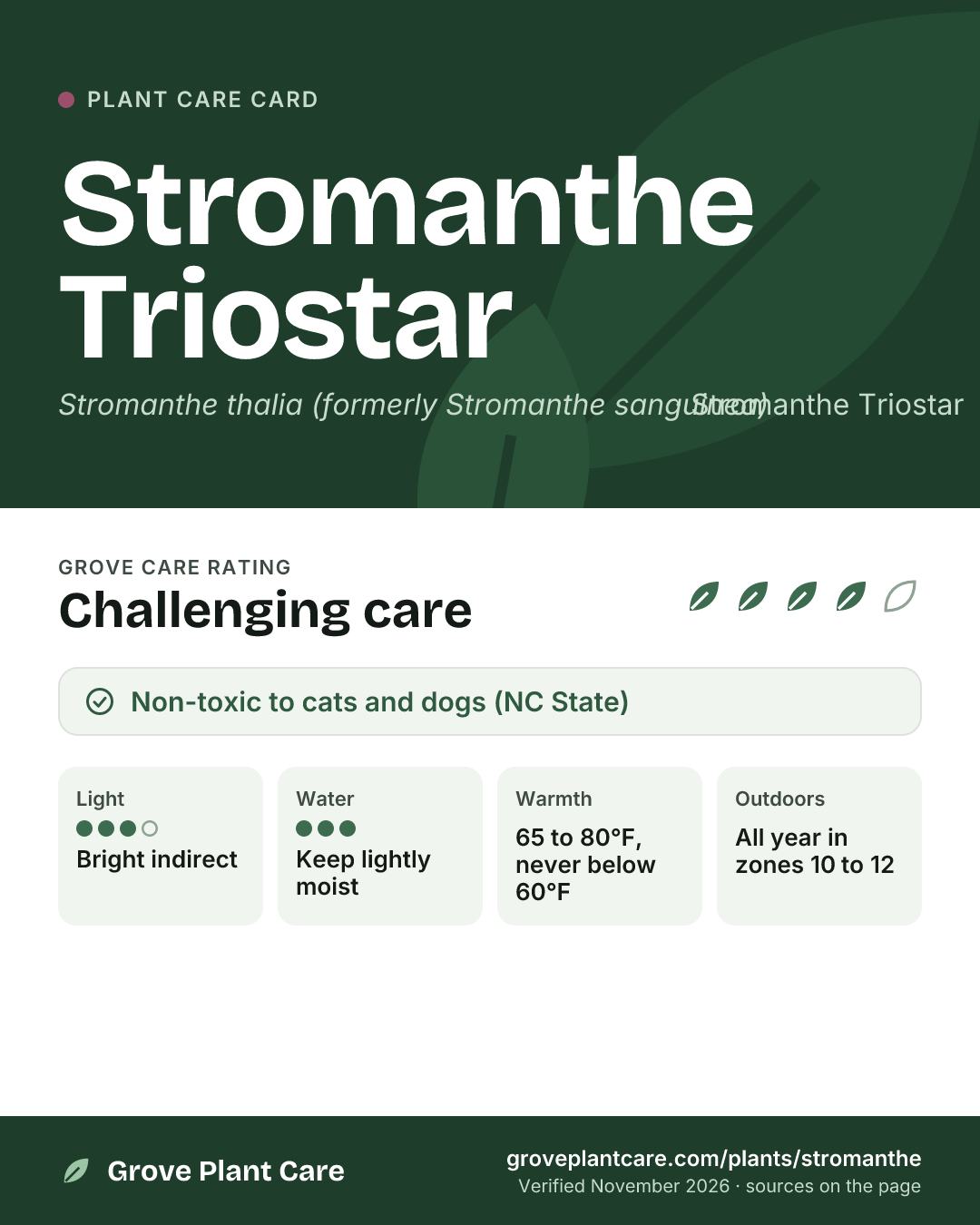
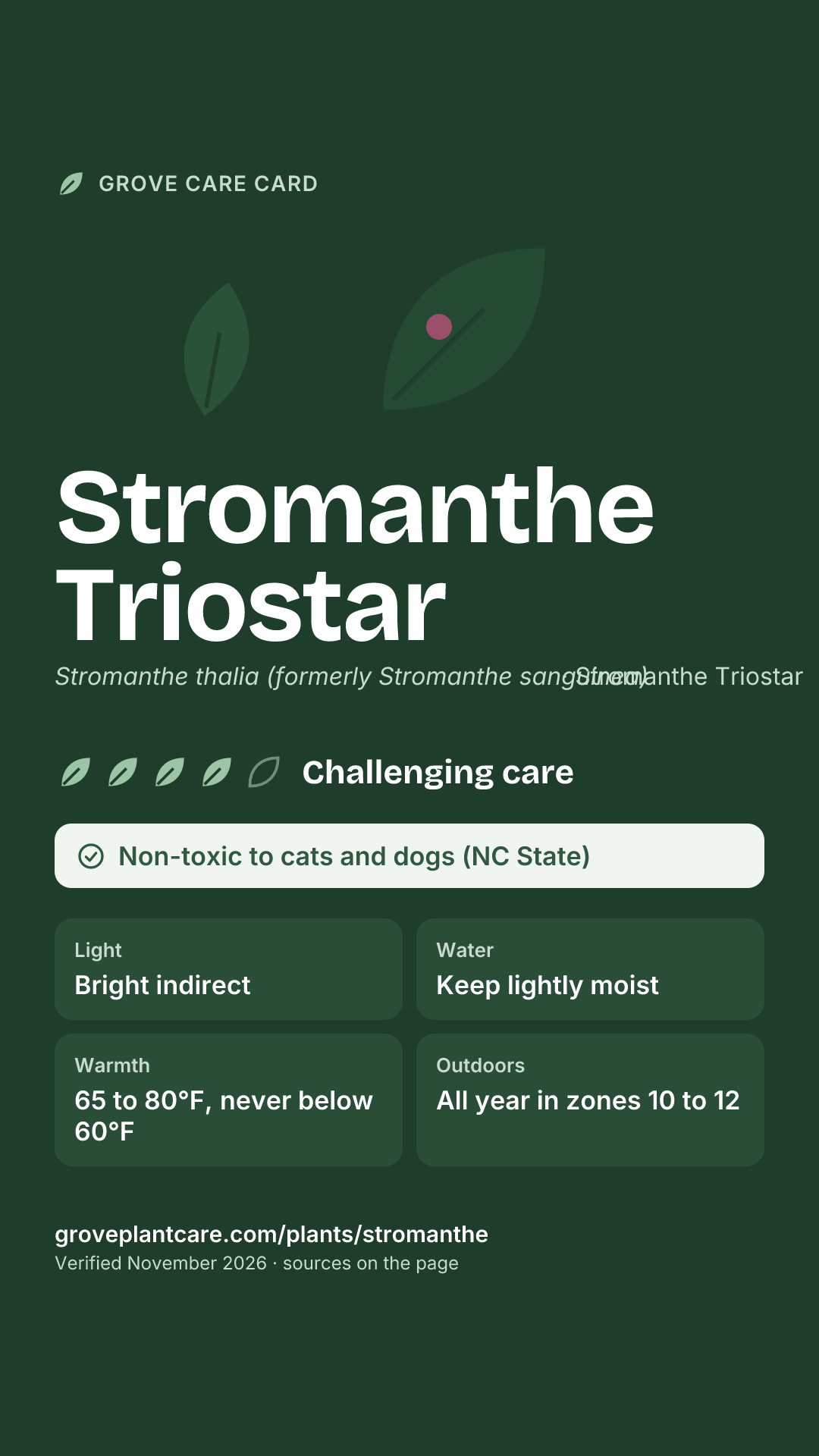
Non-toxic to cats and dogs (NC State)
No signs of poisoning listed. The ASPCA doesn’t list stromanthe. Cats Protection, a UK cat charity, lists it as safe for cats. Any plant can still upset a pet’s stomach if it eats enough. Children: No source we checked lists any risk to people.
Pet poison line: ASPCA (888) 426-4435
Good for: a humid bathroom or kitchen with bright, indirect light, homes with cats and dogs, people who want color from leaves instead of flowers · Think twice if: your home air gets very dry in winter, you often forget to water, the only free spot gets hot, direct sun.
Needs at a glance
- Light3 of 4 · Bright indirectBright, filtered light from an east or north window, with no direct sun on the leaves
- Water3 of 3 · Keep lightly moistEvenly moist in spring and summer; a little drier between waterings in winter
- Humidity3 of 3 · High60% or more: a humidifier, a pebble tray or a bright bathroom
- Soil when pottedRich, free-draining potting mixPeat-free houseplant mix high in organic matter, in a pot with drainage holes
Indoors: best at 65 to 80°F (18 to 27°C). Keep it above 60°F (16°C) and away from drafts and heat vents.
How the rating adds up
0 = easiest · 1 = moderate · 2 = hardest
- Missed waterings2 of 2 · HardestKeep evenly moist while it grows; NC State calls it intolerant of dry soil
- Light flexibility1 of 2 · ModerateBright, filtered light keeps the pink and cream; direct sun scorches the leaves
- Humidity2 of 2 · HardestWants high humidity, 60% or more; dry winter air dries the leaf edges
- Pests and disease1 of 2 · ModerateSpider mites, mealybugs and aphids now and then; rot if kept soggy
- Sensitivity to change1 of 2 · ModerateDrafts, cold and sudden swings; one RHS page adds fluoride in tap water
Growing outdoors
All year: USDA zones 10 to 12, where the coldest winter nights average 30°F (−1°C) or warmer.
Elsewhere: summer outside in shade or partial shade. Bring it in before nights drop below 60°F (16°C).
- Houseplant
- Patio container plant
- Summer annual in beds
- Garden perennial where frost-free
Sources: NC State, Wisconsin Extension, RHS, UF/IFAS, ASPCA plant list, Cats Protection, USDA zone map, FISC and Hawaii weed risk assessment. Full list below.
Verified · How we rate plants
How often should I water a stromanthe Triostar?
Often enough that the soil stays evenly moist while it grows. NC State calls it intolerant of dry soil, and Wisconsin Extension keeps it evenly moist in the growing season, then lets it dry a little more between waterings in the cooler, darker months. The RHS waters freely in growth and moderately in winter. Moist never means soggy: NC State warns that overwatering rots the roots and stems, so use a pot with drainage holes and empty the saucer. Our sources differ on how dry is too dry. UF/IFAS lets the soil dry between waterings, and one RHS page waters once the top few centimeters are dry, so check with a finger before you water.
How much light does a stromanthe need to stay pink?
Bright, filtered light, with no direct sun on the leaves. The RHS suggests an east or north window, and both the RHS and NC State warn that direct sun scorches the leaves. Color depends on light: Wisconsin Extension says bright light gives the best color, though the plant grows well in less, and the RHS says it puts up with dimmer spots but colors best with enough light. Outdoors, UF/IFAS picks a shady spot, because too much sun burns the leaves and leaves brown blotches.
Why are my stromanthe leaves curling, crispy or brown?
Start with the air. Wisconsin Extension says most home air in winter is too dry for it, and the leaves dry out from the edges. NC State, the RHS and UF/IFAS all say it needs high humidity, and the RHS aims for 60% or more with a humidifier or a pebble tray. Dry soil comes next, since NC State calls it intolerant of dry soil. Burned leaf tips can also come from tap water (next question). If the leaves only fold up in the evening, that is normal. Fine webbing and speckled leaves point to spider mites, which NC State and the RHS both name. Snip dried leaves off at the base with clean scissors (RHS, Wisconsin).
Does tap water hurt a stromanthe?
It can. The RHS houseplant profile says stromanthe is sensitive to fluoride and other chemicals in tap water, and suggests filtered, distilled or rain water to prevent burned leaf tips. That comes from one RHS page, so treat it as something to try: if the tips keep browning while the humidity is good, switch your water. The RHS calathea guide, which groups stromanthe with calatheas, also prefers rainwater and accepts tap water left to stand for 24 hours. That guide talks about lime and chlorine, and doesn’t mention fluoride.
Why do stromanthe leaves fold up at night?
It is normal. NC State says the leaves fold together at night like praying hands, and the RHS says this is why it is called a prayer plant. Wisconsin Extension explains how: a small joint at the top of each leaf stalk, the pulvinus, turns the leaf toward or away from the light. The leaves face east in the morning, stand more upright by midday and fold up at night, showing their pink to burgundy undersides.
Is a stromanthe a calathea or a maranta?
Neither, though all three are close cousins in the arrowroot group, Marantaceae (NC State). Stores often label it calathea Triostar, an old name the RHS still lists. The RHS calathea guide explains that plants once grouped as calatheas now sit in three genera: Ctenanthe, Goeppertia and Stromanthe. The prayer plant is Maranta leuconeura. Triostar is a cultivar of Stromanthe thalia, the name Kew accepts; NC State and Wisconsin Extension note it was formerly Stromanthe sanguinea, the name most labels still use. NC State says it is also sold as Tricolor or Tristar. One look-alike to know: Wisconsin and NC State warn it gets mixed up with Ctenanthe oppenheimiana Tricolor, which Wisconsin says has differently shaped and marked leaves, thinner leaf stalks and less cold tolerance.
How do I repot or divide a stromanthe?
Repot every 2 to 3 years in spring, or sooner once roots fill the pot, into a pot only a little bigger with drainage holes and a peat-free houseplant mix (RHS). NC State likes a rich, well-drained mix high in organic matter. To make more plants, divide the clump in spring before new growth starts, as NC State, Wisconsin Extension and the RHS all advise. No pruning is needed beyond removing brown or damaged leaves at the base (RHS).
Is stromanthe Triostar safe for cats and dogs?
NC State tags it pet friendly, and no source we checked lists it as toxic. The ASPCA has no entry for stromanthe, so the badge names NC State. Cats Protection, a UK cat charity, also lists stromanthe as safe for cats. The ASPCA lists its cousin calathea as non-toxic, but that is a different plant, so we don’t count it here. Any plant can still upset a pet’s stomach if it eats enough.
Can stromanthe grow outdoors?
Yes, in frost-free places or for a summer. NC State lists USDA zones 10 to 12, where the coldest nights stay at 30°F (−1°C) or warmer, and grows it in partial to dappled shade. UF/IFAS uses it in perennial beds in the warmer parts of Florida and as an annual in North Florida. Wisconsin Extension moves it outside after the last frost, gives it more light little by little, and brings it in before fall frost. It adds that most of its relatives suffer below 60°F, and that Triostar is less hardy than plain green forms. Bring it in before nights fall below 60°F (16°C).
How Grove helps
Grove schedules a soil check so the pot stays evenly moist without turning soggy. You can add filling the humidifier or the pebble tray as tasks you can assign, plus a reminder to bring it inside before cool fall nights if it spends the summer on the patio.
Sources
- NC State Extension Gardener Plant Toolbox: Stromanthe thalia (formerly Stromanthe sanguinea)
- UW-Madison Extension, Wisconsin Horticulture: Stromanthe thalia 'Tricolor'
- RHS plant entry: Stromanthe sanguinea 'Triostar'
- RHS Urban Show houseplant profiles: Thirsty houseplants (Stromanthe tricolor)
- UF/IFAS Gardening Solutions: Triostar Stromanthe
- RHS: How to grow calatheas
- ASPCA Animal Poison Control: Toxic and Non-Toxic Plants
- Cats Protection (UK): Cats and indoor plants
- USDA ARS Plant Hardiness Zone Map (2023)
- Florida Invasive Species Council: Plant List, Category I and II and Watch List (April 2026)
- Hawaii-Pacific Weed Risk Assessment (Plant Pono): Stromanthe thalia, low risk, score 2
- Kew WCVP data release (2026-06-04 file), plant_name_id 267367: Stromanthe thalia
- ASPCA Animal Poison Control: Calathea