How to pick a Christmas tree that lasts
A real Christmas tree lasts longest when it was fresh the day you bought it. So measure your room before you go, buy from a farm or a lot that keeps its trees shaded and watered, and give each tree a few quick freshness tests: a hand along a branch, a bounce on the ground, a look at the needles and the cut. Then get it home and into water fast. Every step below comes from university extension services, and there's a checklist to tick on your phone at the lot.
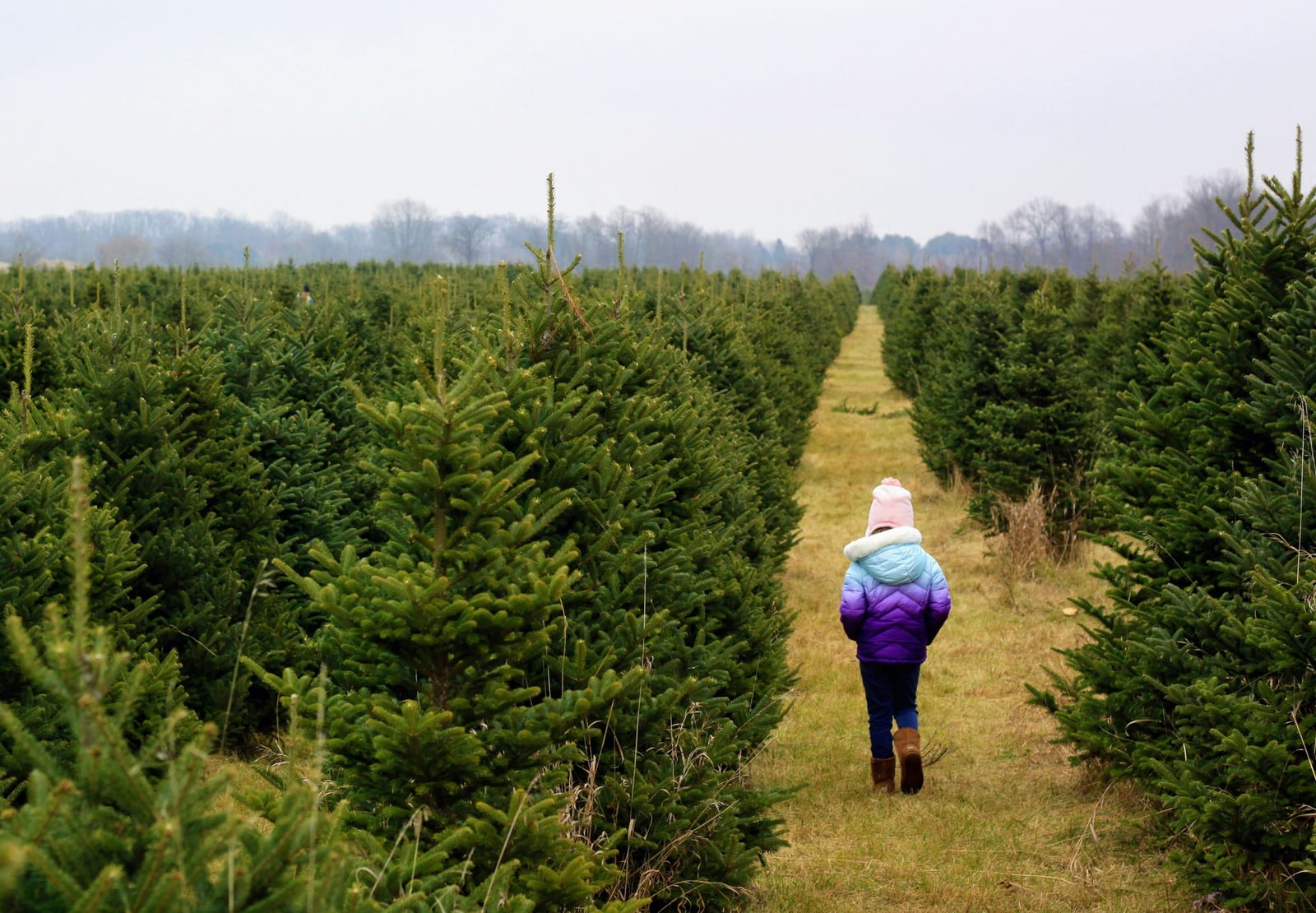
How do you pick a Christmas tree, step by step?
- Measure the ceiling height and the width of the spot. Plan a tree at least 1 foot (30 cm) shorter than the ceiling, counting the stand and the topper.
- Check your stand: the trunk has to fit the ring, and it should hold at least 1 gallon (3.8 liters) of water, about 1 quart per inch of trunk width.
- Pack a tape measure, gloves, rope or straps, and an old blanket to protect the car.
- Pick where to buy: a choose-and-cut farm for the freshest tree, or a lot that keeps its trees in shade and in water. Ask when the trees came in.
- Run the freshness tests: slide a branch through your hand, bounce the trunk on the ground, check that the needles aren't brittle, look at the color, smell a crushed needle and feel for sticky sap at the cut.
- Check the shape: a straight trunk, 6 to 8 inches (15 to 20 cm) of bare trunk for the stand, and the fullest side facing the room.
- Have it netted, cover it for the drive and tie it down well.
- At home, cut a fresh slice off the base and get it into water right away, or stand it in a bucket of water in a cool, shady spot until you set it up.
From there, our guide to keeping a real tree fresh takes over.
Tree shopping checklist
Tree shopping checklist
Open this on your phone at the farm or lot and tick as you go.
0 of 16 checked
Your ticks stay on this page only. Nothing is saved or sent.
What size Christmas tree should I get?
Read moreShow less
Trees look smaller standing in a field or a lot than they do in your living room, which is why Iowa State and Illinois Extension suggest bringing a tape measure. Clemson and the New York Botanical Garden both say to leave at least a foot of room under the ceiling. Utah State adds that the stand can add several inches, and Purdue reminds you to allow for the topper too. So for an 8 foot ceiling, look for a tree of about 7 feet or less including the stand.
Measure the width as well, and think about whether all sides will show or it will sit in a corner (NC State). Then check your stand: the trunk must fit the ring without shaving the bark off (Penn State), and the stand should hold at least a gallon of water, about a quart for every inch of trunk width (Penn State, Illinois).
Where should you buy a real Christmas tree?
Read moreShow less
Extension services from Penn State to Wisconsin and Wyoming agree that a tree you cut yourself at a local farm is the freshest you can get. Lot trees often travel: Iowa State says they may be cut and stored four or more weeks before reaching the lot, and Utah State says trees from out of state may be cut as early as September.
Questions to ask at a lot. NC State suggests asking when the trees were shipped and cut, and when the next delivery is due; Illinois suggests asking whether the trees came all at once or in several deliveries. Then check the trees anyway, NC State adds, because the tests tell you more than any answer.
Signs of a good lot. Trees standing in shade, in water or on wet ground or mulch hold their moisture better (NC State, Illinois). NC State says a tree in sun or wind without water can lose up to half its water in a day, which is why shade and shelter matter. Buy soon after the trees arrive, before they sit out for long (Illinois, New York Botanical Garden).
How do you tell if a Christmas tree is fresh?
Read moreShow less
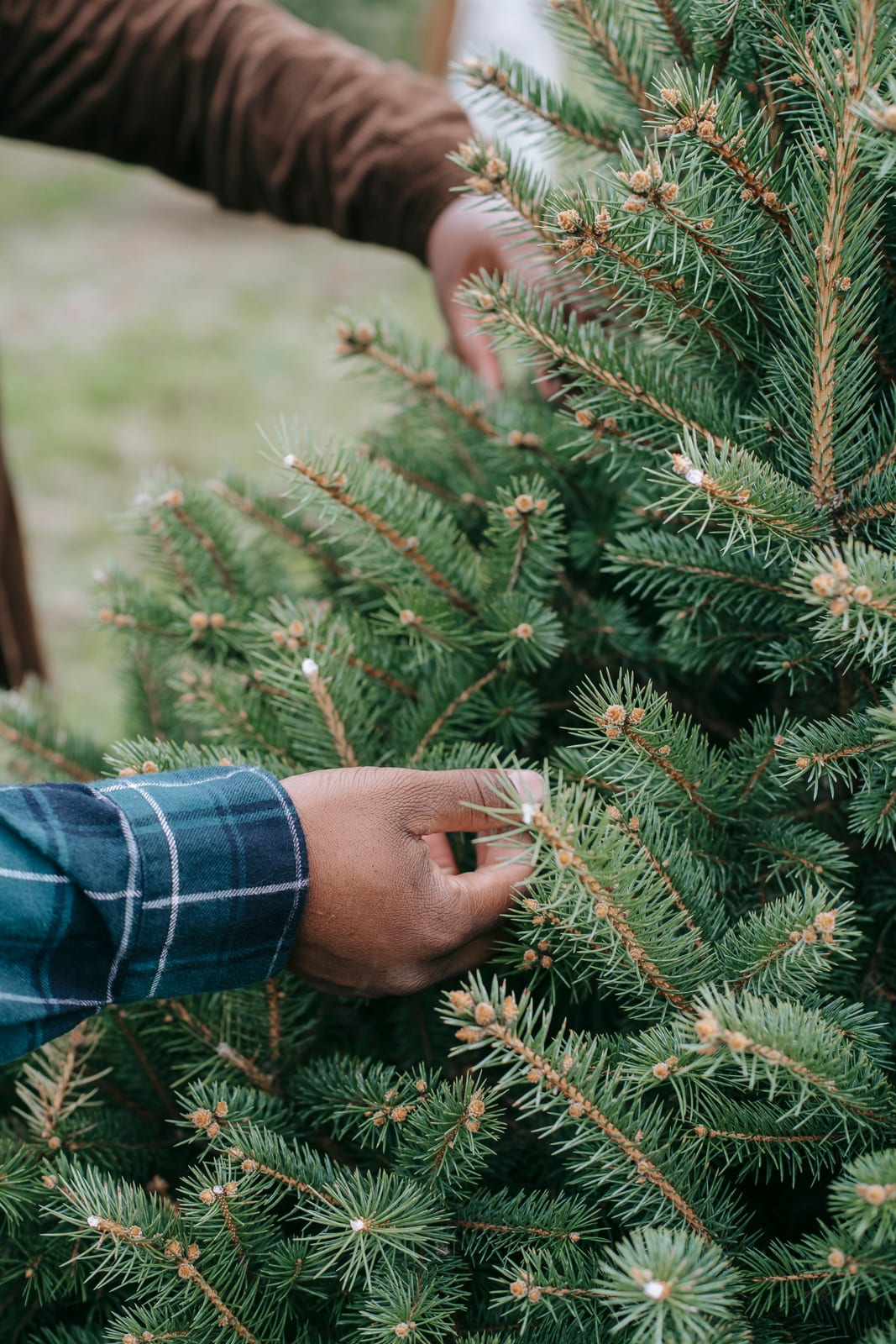
- The hand test. Hold a branch about 6 inches in from the tip and let it slide through your fingers. Very few green needles should come off (UGA Extension, Illinois, NC State).
- The bounce test. Lift the tree a few inches and drop the cut end on the ground. A few brown needles from inside the tree are normal. Green needles raining off the outside mean it's drying out (Iowa State, Penn State, Utah State).
- The needle test, by type. Bend a needle. Oklahoma State and Purdue say a fresh fir needle snaps cleanly, a bit like a carrot, while a fresh pine needle bends. Spruce needles are stiff even when fresh, NC State notes, so stiffness alone tells you little on a spruce. On any tree, needles that are brittle or crumble mean it's dry.
- Color and scent. Look for a rich, even color all around (blue-gray on a blue spruce), with no dull, grayish or yellowed patches (NC State, Wyoming). Crush a few needles: a weak scent can mean it was cut long ago (Purdue, Cornell), though some types smell more than others.
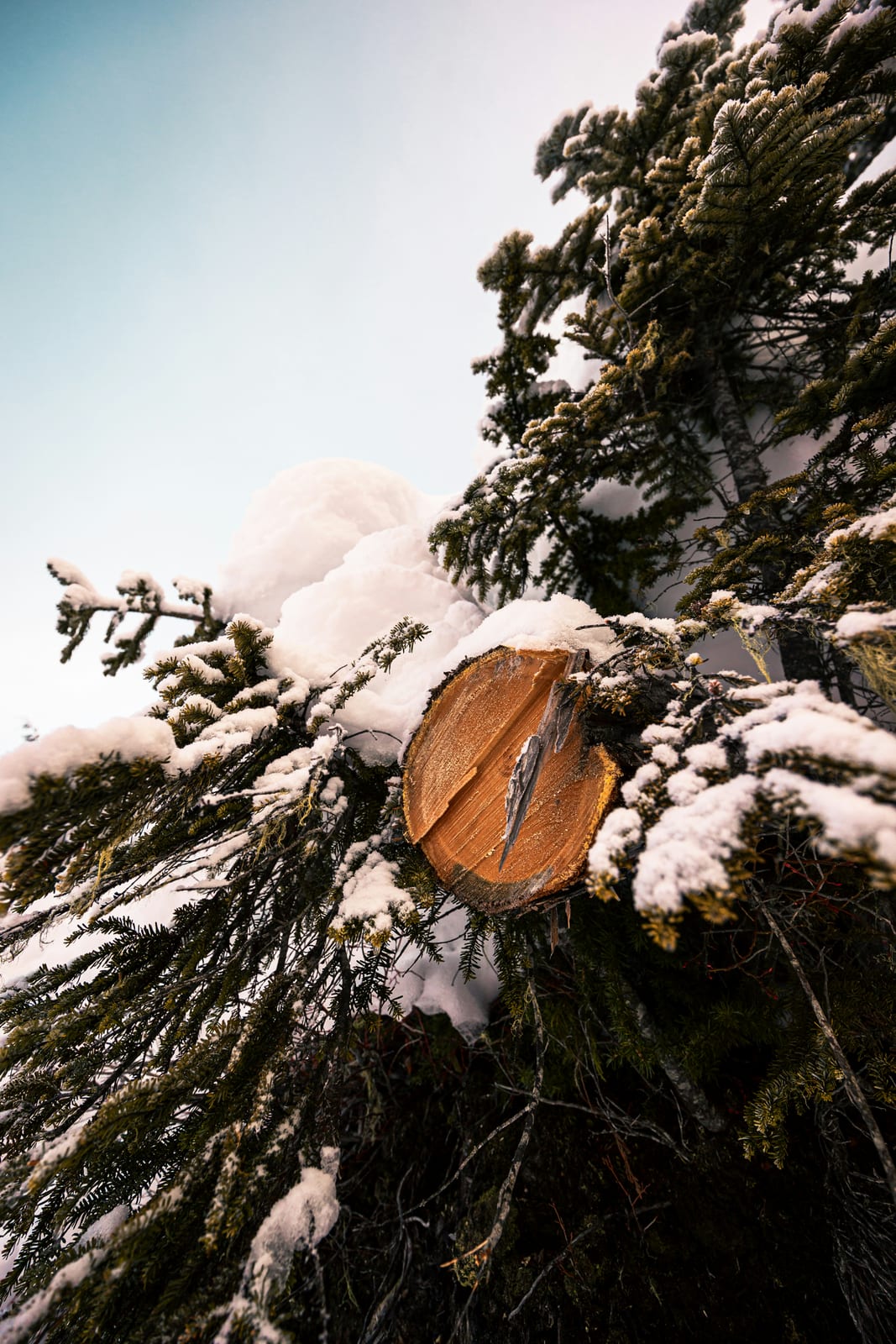
- The cut and the weight. A moist, sticky cut at the base is a good sign; hard, caked sap may not be (Wyoming, NC State). A fresh tree also feels heavy for its size (NC State, Penn State).
What shape should you look for?
Read moreShow less
Iowa State and Clemson put a straight trunk first; Illinois notes that pines often have a slight crook. Clemson and Illinois both want 6 to 8 inches of bare trunk to go into the stand. Pick the fullest side to face the room: Utah State suggests turning small flaws toward the wall, and NC State says a less perfect tree works fine in a corner, with a premium one saved for a spot where every side shows.
How do you get a Christmas tree home?
Read moreShow less
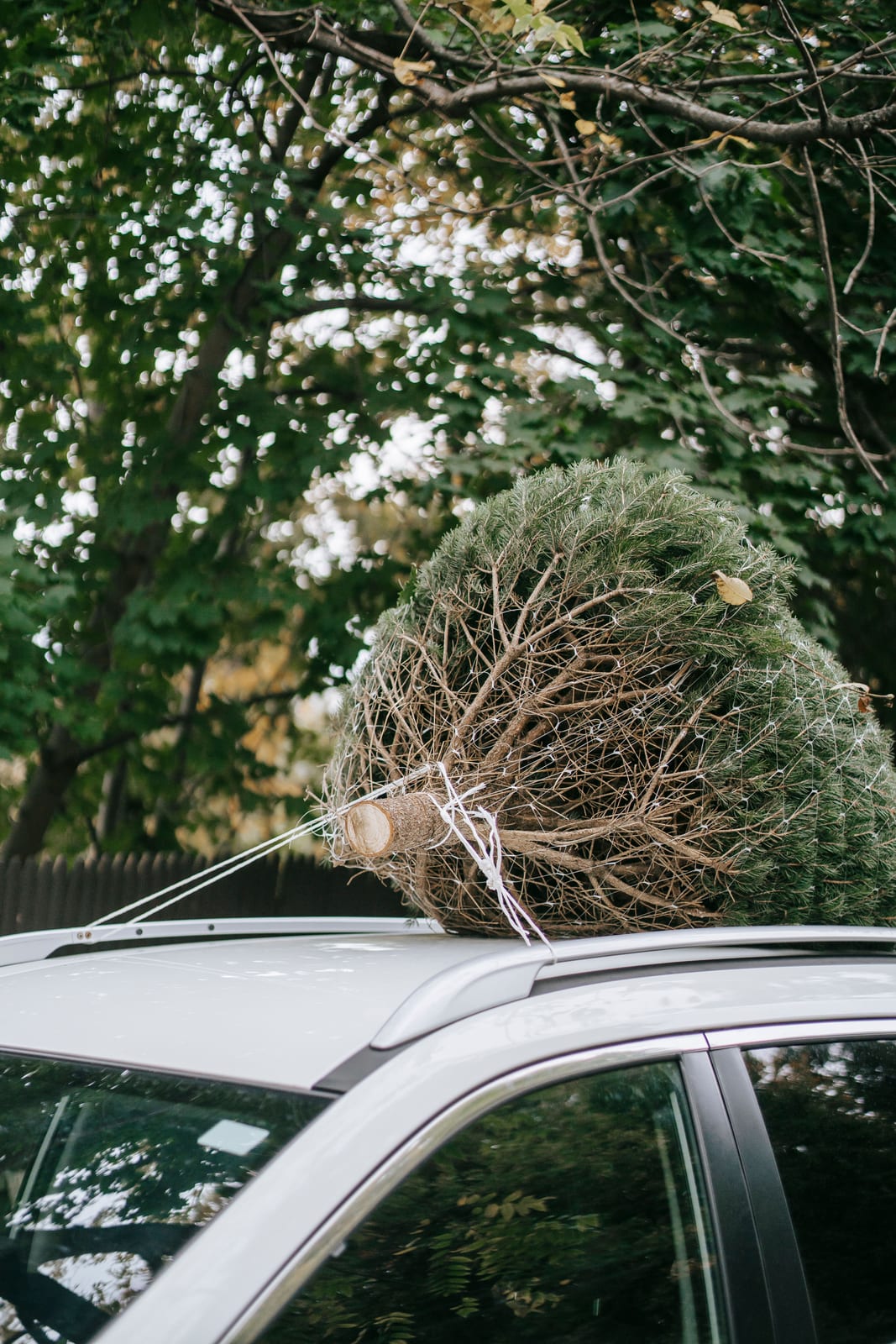
Ask the seller to net or bale it, and leave the netting on until it's standing indoors (Iowa State, Wisconsin). Illinois suggests covering it with a tarp or plastic so the wind doesn't dry it on the drive. Tie it down securely with rope or straps (Clemson, Purdue), with an old blanket under it to keep sap off the car.
At home, saw a straight slice off the bottom of the trunk. Sources range from 1/4 inch to 2 inches; most say about 1/2 to 1 inch, and our tree care guide has the detail. Then get it into water quickly, before the cut seals with sap. If you won't set it up today, stand it in a bucket of water somewhere cool, shady and out of the wind, such as an unheated garage (Penn State, Utah State).
Which type of tree should you pick?
Read moreShow less
Our Christmas tree types guide puts every type side by side, with filters for needles that last, scent, strong branches and soft needles, and a region filter for what's sold near you. Each of the most searched trees has its own page: Fraser fir, Douglas fir, noble fir, balsam fir, Colorado blue spruce and Canaan fir. Thinking about a tree you can plant afterward? See cut or potted.
Frequently asked questions (FAQ)
Should fir needles snap or bend?
Sources disagree on the general rule. NC State says very fresh needles snap and drying ones bend; Penn State, South Dakota State, Wyoming and the New York Botanical Garden say a fresh needle bends and one that snaps is dry. Oklahoma State and Purdue explain the split by type: fir needles snap when fresh, pine needles bend. Every source agrees that brittle, crumbling needles mean a dry tree, so lean on the hand and bounce tests.
Is a cut-your-own tree fresher than one from a lot?
Usually, yes. A tree cut at a local farm goes home the same day, while lot trees may have been cut weeks earlier. A well-kept lot tree can still be fresh: NC State says care after cutting matters more than the cut date, so run the same tests either way.
How long can a cut Christmas tree be out of water?
As short a time as you can manage. After a fresh cut, the Morton Arboretum and Ohio State say to get it into water within about an hour, and Wisconsin says within two hours. Penn State says a cut over several hours old may need recutting, and South Dakota State says six hours without water lets the cut seal. Our care guide covers what to do if it stops drinking.
Is it normal for brown needles to fall out?
Yes. Penn State, NC State and Utah State all say a few brown needles falling from inside the tree is normal. Green needles falling from the branch tips is the warning sign.
When is the best time to buy a real Christmas tree?
Soon after trees arrive at your lot, before they sit out for long; Illinois notes you'll also get the best selection. Penn State adds that trees harvested closer to Thanksgiving are the freshest, and that a tree set up very early is harder to keep fresh through December.
Sources
- Tips for Selection and Care of Cut Christmas Trees : Penn State Extension (updated September 2025)
- Selection and Care of Cut Christmas Trees : Penn State Extension (updated November 2026)
- Selection and Care of Christmas Trees : NC State Extension (revised February 2019)
- When Was Your Tree Cut? : NC State Extension Christmas Trees (updated December 2017)
- Selecting a Christmas Tree : Clemson Cooperative Extension, Home and Garden Information Center (revised November 2019)
- Christmas Tree Selection and Care : Utah State University Extension (November 2019)
- How can I determine the freshness of a cut Christmas tree? : Iowa State University Extension and Outreach (updated December 2024)
- Guide to Selection and Care of Christmas Trees : Iowa State University Extension and Outreach (reviewed December 2022)
- Selecting a Christmas Tree : University of Illinois Extension
- Caring For Live Christmas Trees : University of Illinois Extension
- Choosing the Right Christmas Tree : UW-Madison Extension (December 2024)
- Selection and Care of Christmas Trees, NREM-5055 : Oklahoma Cooperative Extension Service
- Christmas Tree Selection and Care, B-1187R : University of Wyoming Extension (revised April 2020)
- Picking Out a Holiday Tree : Purdue University Forestry and Natural Resources Extension (December 2017)
- Choosing the Perfect Christmas Tree : South Dakota State University Extension (updated December 2018)
- Selecting a live Christmas tree? Follow these tips from UGA Extension : University of Georgia CAES (November 2015)
- Buying a Live Christmas Tree this year! : Ohio State University Extension, Buckeye Yard and Garden onLine (November 2022)
- In choosing a tree this year, use your nose and buy local : Cornell University (November 2018)
- How should I pick a Christmas tree? : New York Botanical Garden, Plant Information Service
- Keep Your Holiday Tree Fresh and Festive : The Morton Arboretum