How to keep a real Christmas tree fresh and safe
A cut Christmas tree stays fresh, and looks alive longer, when it gets a fresh cut at the base, a stand that never runs dry and a cool spot away from heat. Plain water is all it needs. With that care, extension services say most trees stay fresh for about three to five weeks, and a well-watered tree is also a much safer one.
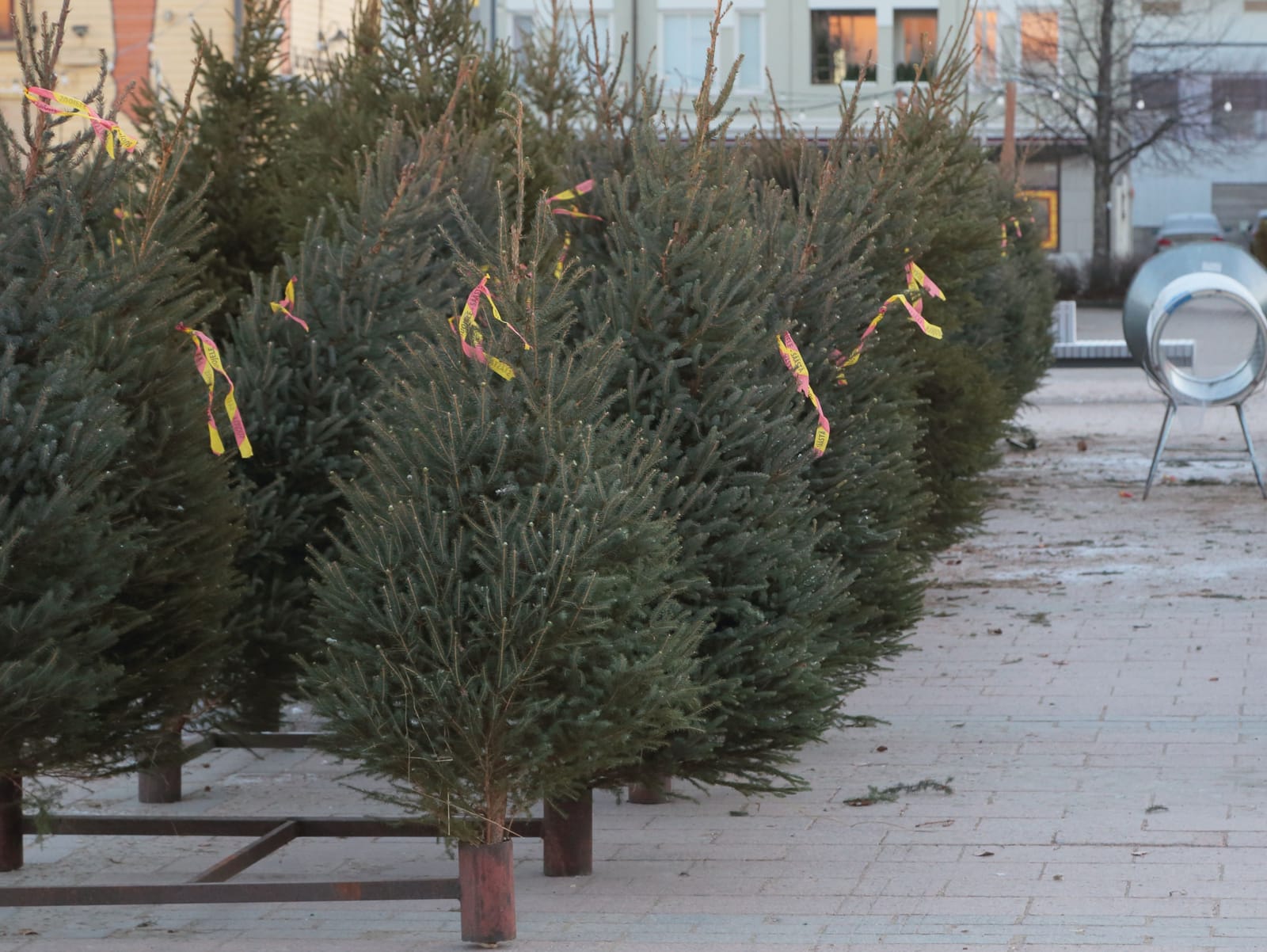
How do you keep a real Christmas tree fresh?
- If you can't set the tree up right away, stand it in a bucket of water in a cool, shaded, sheltered spot such as an unheated garage.
- Just before it goes in the stand, saw a straight disk off the bottom of the trunk, about 1/2 inch (1 cm) thick. Skip the angled or V-shaped cut, and don't whittle the bark to make it fit.
- Set it in a sturdy stand that holds about 1 quart of water per inch of trunk width (at least 1 gallon for most trees), and fill it right away.
- Place it away from fireplaces, space heaters, heat vents, radiators and sunny windows.
- Check the water every day, especially the first week, and keep the level above the base of the trunk.
- Use LED or other cool-running lights, and turn them off at night and when nobody is home.
- Feel the needles every few days. When they turn brittle, break easily or rain off in your hand, take the tree down.
Why the fresh cut matters. When a tree is cut, sap seals the wound and the trunk can't drink as well. Sawing off a thin disk opens fresh wood. Clemson Extension, NC State Extension and University of Illinois Extension all say about 1/2 inch. Sources differ on the size: Penn State Extension says a 1/4 inch disk is enough, and another Illinois Extension page and the RHS say about 1 inch (2.5 cm). What matters is opening fresh wood. Penn State says a tree cut within the last 12 hours doesn't need a new cut, and it found that drilling holes in the trunk doesn't help.
Why cool matters. Heat and dry indoor air pull water out of the needles faster than the trunk can replace it. Penn State and Illinois both say a cooler room slows drying. NC State notes that a cut tree left in sun or wind without water can lose up to half its water in a single day, which is why the bucket in the garage beats the porch.
How much water does a Christmas tree need?
Read moreShow less
Penn State and University of Illinois Extension both use the same rule: a stand that holds about 1 quart of water for every inch of trunk diameter, and at least a gallon for most trees. A 4-inch trunk, for example, wants a stand that holds about a gallon. Clemson and NC State say a fresh-cut tree can use more than a quart a day, and Utah State University Extension says a fresh tree can use a gallon or more a day.
The one rule every source agrees on: never let the water drop below the base of the trunk. If it does, Illinois Extension explains, resin seals the cut and the tree can't drink anymore, even after you refill. Penn State adds a sneaky detail: some stands still hold water after the level has fallen below the trunk, so look at the trunk, and don't trust the bowl. Water temperature doesn't matter, per Penn State.
Tip: Illinois Extension suggests a funnel with a 3 to 4 foot vinyl tube run down to the stand, so you can water without crawling under the branches.
What should you put in Christmas tree water?
Read moreShow less
This is the most argued-about question online, and the extension answer is the same everywhere. Penn State, Illinois, Clemson, NC State and NC State's Clay County Center all say research shows plain water keeps a tree fresh. NC State's tree specialists go further: preservatives, anti-transpirant sprays and home remedies aren't needed and can make needle drop worse. Penn State adds water-holding gels and "IV" watering gadgets to the list that don't work, and Illinois says gels can even cut water uptake.
So skip the sugar packet. Your tree's only request is that the bowl never runs dry.
How long do real Christmas trees last indoors?
Read moreShow less
The range comes straight from the sources: Illinois Extension's 2018 guide and NC State's Clay County Center say three to four weeks, the RHS says about four weeks, and another Illinois Extension page says a well-cared-for tree often lasts at least five weeks. Utah State simply says several weeks with daily water. That means a tree bought the weekend after Thanksgiving is pushing its limit by New Year's, and Penn State notes that putting a tree up early makes it harder to keep fresh.
Some trees hold their needles longer. Utah State says firs and pines generally hold them better than spruces, and Clemson rates Fraser fir, eastern white pine, Scotch pine and Virginia pine among the best.
How to tell it's drying out. Run your hand along a branch. Penn State and Illinois say that if the needles are brittle, snap easily or fall into your hand, the tree is dry and should go. NC State adds that fresh needles snap when bent, stale ones bend and dry ones break. A tree that hasn't been in water for a while may take a day or two to start drinking again, per NC State, so give a freshly cut tree that much time before you worry.
How do you keep a real tree safe from fire?
Christmas tree fires are rare. When they happen, they can do real damage. From 2016 to 2020, US fire departments responded to an average of 160 home fires a year that started with a Christmas tree, causing an average of 2 deaths, 11 injuries and $12 million in property damage a year, according to the National Fire Protection Association (NFPA). Electrical failures caused about a third of them (34 percent), and heat sources too close to the tree caused another fifth (20 percent). Three out of four happened in December or January, and the NFPA notes that the longer a tree stays up after Christmas, the more likely it is to dry out and catch fire.
Water is your best protection. NC State says a fresh, well-watered tree doesn't catch fire from a spark or a brief flame, and Penn State says watering does more for fire safety than flame-retardant sprays, which can damage needles and speed drying.
The U.S. Fire Administration adds:
- Keep the tree at least 3 feet from fireplaces, radiators, space heaters, candles and heat vents.
- Make sure it doesn't block a way out of the room.
- Check every light string before you hang it, and throw out any with frayed or pinched wires.
- Follow the label on how many strings you can connect.
- Take the tree down after Christmas or when it's dry.
NC State and Utah State add: switch to cool LED lights, turn them off at bedtime and when you leave, and never put candles on a tree.
What do you do with a real tree after Christmas?
Read moreShow less
Recycle it. Penn State, Illinois, Utah State and The Morton Arboretum all point to community pickup and drop-off programs that chip trees into mulch or compost, and some towns let residents take the mulch home. Check your city or waste hauler for dates. The Morton Arboretum says a tree still wearing decorations or a plastic bag goes to the landfill, and a flocked (white-sprayed) tree can't be recycled at all.
Use it in the garden.
- Mulch: cut the branches and lay them over perennial beds. Penn State suggests this for plants that dislike heavy mulch on their crowns, and the Morton Arboretum says boughs help insulate soil during winter warm spells.
- A bird shelter: stand or lay the tree in the yard until spring. Illinois Extension and Utah State suggest it, and Illinois adds bread and suet on the branches. Penn State suggests setting boughs near a bird feeder for ground-feeding birds.
- A fish habitat: Clemson Extension describes sinking weighted trees in recreational ponds, with the pond owner's permission and never in public lakes or stormwater ponds.
Don't burn it indoors. The Morton Arboretum warns that burning an evergreen in a fireplace or wood stove builds creosote that can start a chimney fire. Iowa State Extension agrees and adds a second reason: dry evergreen branches flare up so fast when they burn that they can start a house fire.
Frequently asked questions (FAQ)
Should I add sugar or aspirin to my Christmas tree water?
No. Extension services at Penn State, Illinois, Clemson and NC State all say plain water works best, and NC State found some additives make needles drop faster.
Why isn't my Christmas tree drinking water?
The cut has probably sealed with sap, often because the stand ran dry. If the tree isn't decorated yet, take it out and saw a fresh disk off the trunk. NC State says that on a decorated tree, drilling a few holes in the trunk below the waterline may help; Penn State found holes don't help a tree that's drinking normally. A tree that was dry or very cold can also take a day or two to start drinking.
Is the water in the tree stand safe for pets?
That one gets its own answer in our guide to holiday plants and pets, along with the needles.
Is a potted Christmas tree better than a cut one?
It depends on your yard, your climate and how much work you want. Our potted vs cut Christmas tree guide compares them side by side, and a houseplant tree like a Norfolk Island pine is its own option: see living Christmas trees. For gift ideas, start with our Christmas gift plants guide.
Sources
- Tips for Selection and Care of Cut Christmas Trees : Penn State Extension (updated September 2025)
- Caring for Live Christmas Trees : University of Illinois Extension
- Caring for Christmas Trees : University of Illinois Extension, Good Growing (December 2018)
- Selecting a Christmas Tree : Clemson Cooperative Extension, Home and Garden Information Center (revised November 2019)
- Selection and Care of Christmas Trees : NC State Extension (revised February 2019)
- When Was Your Tree Cut? : NC State Extension Christmas Trees (updated December 2017)
- Choosing and Caring for the Perfect Christmas Tree : N.C. Cooperative Extension, Clay County Center (November 2025)
- Christmas Tree Selection and Care : Utah State University Extension (November 2019)
- Christmas trees: types and care : Royal Horticultural Society
- How to dispose of your live Christmas tree : The Morton Arboretum
- After the holidays, can I burn my Christmas tree in the fireplace? : Iowa State University Extension and Outreach (updated December 2024)
- Repurposing Christmas Trees to Benefit Wildlife : Clemson Cooperative Extension (updated November 2023)
- Christmas Tree Fires : National Fire Protection Association, Richard Campbell (December 2022)
- Holiday Fire Safety : U.S. Fire Administration