Christmas plants other than poinsettia: 9 that last past New Year
Want a holiday plant that's still going strong in February? Give an amaryllis, a cyclamen, a kalanchoe, a moth orchid or a bowl of paperwhites for flowers, a bromeliad or an African violet for color that keeps coming, or a Norfolk Island pine or rosemary tree for a little living tree. Moth orchid flowers can last four months or more, and five of the nine are non-toxic to cats and dogs.
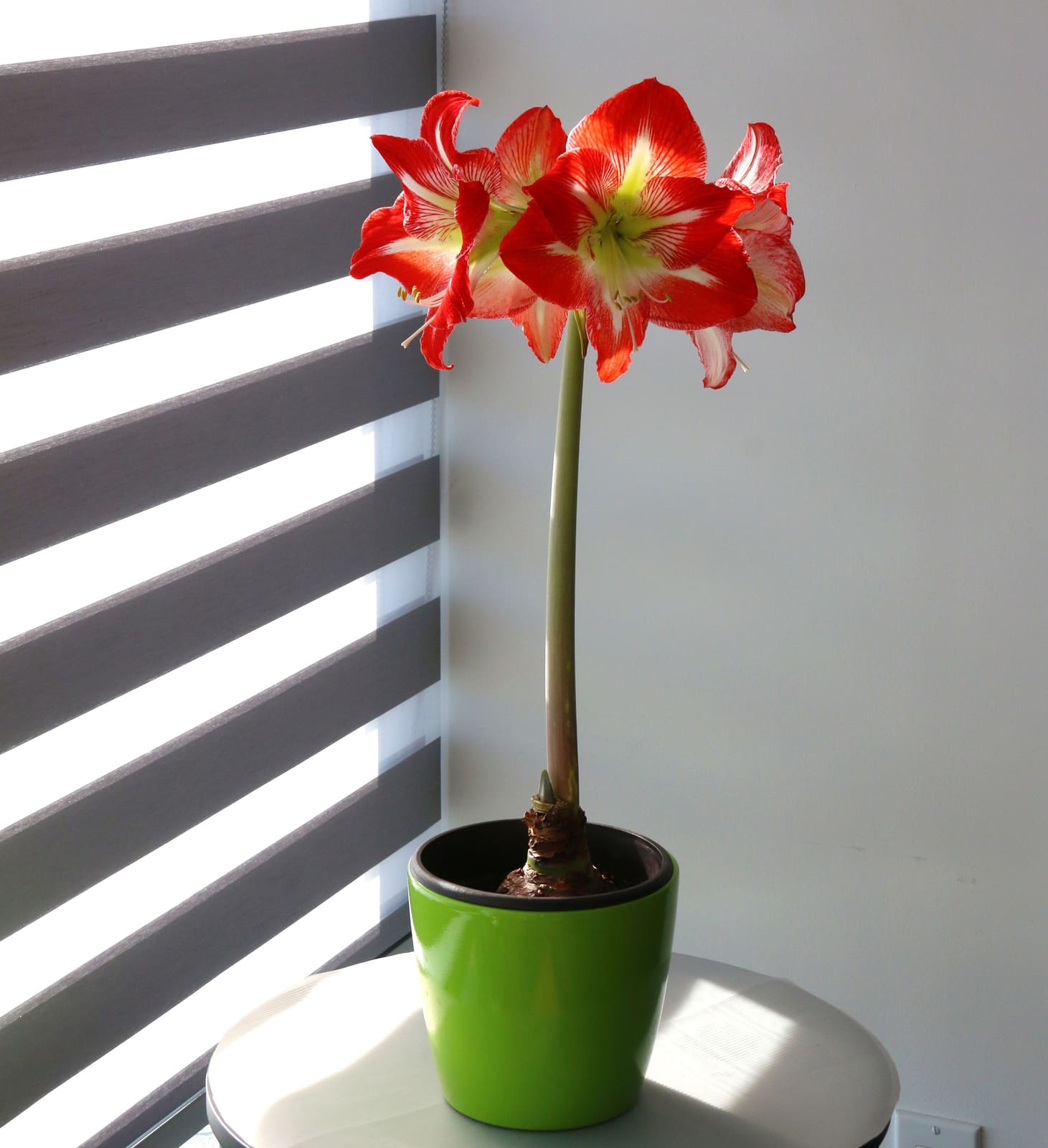
What can I give instead of a poinsettia?
NC State Extension in Union County suggests amaryllis, kalanchoe, cyclamen, orchids and Christmas cactus as holiday plants beyond the poinsettia. Here's how our nine picks compare, straight from their care cards:
| Plant | Why it lasts | Blooms again? | Pets | Care rating |
|---|---|---|---|---|
| Amaryllis | One bulb can bloom year after year | Yes, after a summer of growth and a cool rest | Toxic to cats, dogs and horses, moderate | Moderate |
| Cyclamen | Blooms 2 to 4 months with good care | Yes, after a summer rest; tricky | Toxic to cats, dogs and horses, moderate | Moderate |
| Kalanchoe | Flowers last for weeks; a forgiving succulent | Yes, after six weeks of long nights | Toxic to cats and dogs, moderate | Easy |
| Paperwhite | Plant a new bowl every two weeks for flowers into March | No; forced bulbs are tossed after blooming | Toxic to cats, dogs and horses, moderate | Moderate |
| Moth orchid | Flowers can last four months or more | Yes, with more light and cooler fall weeks | Non-toxic to cats, dogs and horses | Moderate |
| Bromeliad | Its colored star stays bright for months | No; it grows baby plants that carry on | Non-toxic to cats, dogs and horses | Easy to moderate |
| African violet | Can bloom almost all year | Yes, nearly nonstop in good light | Non-toxic to cats, dogs and horses | Moderate |
| Norfolk Island pine | An evergreen houseplant for years | No flowers; it's a conifer | Non-toxic to cats, dogs and horses | Easy to moderate |
| Rosemary tree | An evergreen herb you can cook with | Has small flowers; grown for its leaves | Non-toxic to cats, dogs and horses | Moderate |
The care rating comes from five factors each card scores from university and botanical garden sources. The classic you may be thinking of, the Christmas cactus, is a great pick too: it's non-toxic to cats and dogs and can live for decades.
Which Christmas flowers last the longest?
Read moreShow less
From longest to shortest, according to the sources on each card:
- Moth orchid. Flowers can last four months or more, say NC State and growers in the Royal Horticultural Society's trial. Keep it in bright, indirect light, out of hot midday sun.
- Bromeliad. The colorful star is made of bracts, special leaves around tiny flowers, and NC State says the display can last 2 to 4 months. Wisconsin Extension and Clemson say it lasts for months.
- Cyclamen. With good care it blooms for 2 to 4 months, say UGA, NC State and the New York Botanical Garden; Clemson says about 4 weeks. Cool rooms make the flowers last longer: it likes nights near 50°F (10°C), and warm rooms are its biggest enemy.
- African violet. Each cluster of flowers can last three to six weeks, says Clemson, and new ones keep coming: with enough light, Iowa State, NYBG, the RHS and Colorado State say it can bloom almost all year.
- Kalanchoe. The flowers last for weeks: about 4 by NC State's count, 6 to 8 by Arkansas Extension's. Cool nights make them last longer.
- Paperwhite. One bowl blooms about 4 to 6 weeks after planting and doesn't last long, so the trick is to keep planting: start a new bowl every 10 days to two weeks, and Clemson says plantings from mid-October can bloom from Thanksgiving into March. A cool spot out of direct sun keeps open flowers going longer.
- Amaryllis. Sources disagree on how long each flower lasts, so we don't give a number. What we can say: keeping it out of direct sun and away from heaters once it opens makes the flowers last longer, and the bulb itself can bloom again for years.
Want greenery that lasts all winter? A Norfolk Island pine or a rosemary tree makes a living Christmas tree. Our living Christmas trees guide covers both.
Which holiday plants bloom again next year?
Read moreShow less
Here's each plant's trick in two sentences. The care card has the full steps.
- Amaryllis. After it blooms, keep it growing in sun all summer so the leaves can refill the bulb, then give it a cool, dark rest of at least 8 to 10 weeks. Waxed bulbs are sold to bloom once, so treat a second bloom as a bonus. (Amaryllis care card)
- Cyclamen. In late spring the leaves yellow and it rests through summer, which can look like dying. Iowa State, Wisconsin and NYBG all call reblooming difficult, though with bright light and cool nights it can flower again by midwinter. (Cyclamen care card)
- Kalanchoe. Starting in early October, give it 14 hours of complete darkness every night for at least six weeks. Iowa State says it can be tricky, so enjoying it for one season is fine too. (Kalanchoe care card)
- Moth orchid. Give it more light and a few weeks of cooler temperatures in fall. If the old flower spike is still green, cutting it above a node can bring a side branch of flowers in about 8 to 12 weeks. (Orchid care card)
- Bromeliad. Each plant blooms only once, then slowly fades over a year or two while it grows baby plants, called pups. Keep caring for it, and the pups carry on. (Bromeliad care card)
- African violet. No trick needed beyond bright, filtered light: too little light is the usual reason it stops. Feed it lightly and keep it a little snug in its pot. (African violet care card)
- Paperwhite. It won't. Iowa State, Clemson, Colorado State and Missouri say to throw out forced bulbs after they bloom, because forcing uses up the bulb. Where winters stay mild, UC ANR says soil-grown bulbs can go in the garden. (Paperwhite care card)
- Christmas cactus. Long nights or cool nights in fall set its buds. Then leave it alone while they form. (Christmas cactus care card)
Which ones are safe for cats and dogs?
- Non-toxic: moth orchid (the ASPCA listing covers Phalaenopsis only, so check other orchids on their own), bromeliad (Guzmania, the one sold as a gift), African violet, Norfolk Island pine, rosemary and Christmas cactus. Any plant can still upset a pet's stomach if it eats a lot. For the Norfolk pine, a UC Master Gardeners column notes that some vets report stomach upset when pets chew the needles.
- Toxic: amaryllis, where the bulb is the most poisonous part; cyclamen, where the tuber at the soil line is the most dangerous part; kalanchoe, which contains heart toxins; and paperwhite, where the bulbs are the most poisonous part.
- And the poinsettia? The ASPCA lists it as toxic, with mild effects, and calls it generally over-rated in toxicity. The poinsettia care card has the details.
If a pet eats a toxic plant and seems unwell, call your vet or the ASPCA Animal Poison Control Center at (888) 426-4435 (a fee may apply). Our guide to Christmas plants and pets covers every holiday plant, including holly and mistletoe.
Which ones are easiest to keep?
Read moreShow less
Our care rating scores five things: missed waterings, light, humidity, pests and how the plant handles change. A kalanchoe scores low on almost all of them, which is why it's also on our list of easy plants to give as gifts. Each Moderate plant mostly asks for one thing done right: a cool room for the cyclamen, a sunny window for the rosemary, a summer of sun for the amaryllis, a sunny, cool window for paperwhites.
Whichever you give, send the care card along: text the link, or print the card's share image as a gift tag.
Frequently asked questions (FAQ)
Can a waxed amaryllis bloom again?
Sometimes. Waxed bulbs bloom on the food already stored inside, and the wax keeps them from taking in more, so Iowa State, Clemson, Illinois and NC State describe them as made to toss after flowering. If the bulb is still firm, you can peel off the wax and pot it, but success isn't guaranteed. See the amaryllis care card.
My cyclamen is turning yellow after the holidays. Is it dead?
If it's late spring and the flowers have finished, it's most likely going dormant. Cyclamen rest through summer, and many people throw them out at this point by mistake. Water less as the leaves yellow and keep the pot somewhere cool and shady. The cyclamen care card explains how to wake it up.
Is the colorful part of a bromeliad a flower?
Not quite. The bright star is a set of bracts, special leaves that hold the plant's tiny true flowers. The true flowers are small and short-lived, while the bracts keep their color for months. A poinsettia's red "petals" are bracts too.
What plants are associated with Christmas?
The poinsettia and the Christmas cactus are the classics. Amaryllis, cyclamen, kalanchoe and paperwhites are common holiday gifts, and the Norfolk Island pine and rosemary are sold as small living trees. Holly and mistletoe are holiday decorations, and our pets guide explains why to keep them out of reach.
What should I give someone who has never kept a plant?
Start with the Christmas gift plants guide, which matches plants to the person, or the easy gift plants list for someone who forgets to water.
Sources
- More Than Poinsettia: a Few Alternative Plants for the Holidays : N.C. Cooperative Extension, Union County Center
- Hippeastrum, Cyclamen persicum, Kalanchoe blossfeldiana, Phalaenopsis, Guzmania lingulata, Streptocarpus ionanthus, Araucaria heterophylla and Salvia rosmarinus : NC State Extension Gardener Plant Toolbox
- All About Amaryllis, All About Cyclamen, How do I care for kalanchoe?, How to Get Orchids to Rebloom and All About African Violets : Iowa State University Extension and Outreach
- Amaryllis, Cyclamen, Kalanchoe, Bromeliads and African Violet : Clemson Cooperative Extension, Home and Garden Information Center
- Amaryllis, Cyclamen and Bromeliads : University of Wisconsin-Madison Extension
- How to take care of amaryllis and get them to rebloom and Kalanchoe, a nontraditional holiday plant : University of Illinois Extension
- Amaryllis : UF/IFAS Extension
- Forcing Paperwhite Narcissus Bulbs : Iowa State University Extension and Outreach; Forcing Bulbs Indoors : Clemson Cooperative Extension; Paperwhite Narcissus : Colorado State University Extension; Paperwhites : University of Missouri; Forced bulb back to the garden : UC Agriculture and Natural Resources
- Care of Flowering Gift Plants in the Home : UNH Extension
- Care of Holiday and Gift Plants : University of Georgia Extension
- Cyclamen (Cyclamen persicum) Houseplant Care and African Violet : New York Botanical Garden
- Kalanchoe : University of Arkansas Cooperative Extension
- Care of Phalaenopsis Orchids : University of Maryland Extension
- Phalaenopsis trial results and How to grow African violets : Royal Horticultural Society
- African Violet : Colorado State University Extension
- Holiday Plants Toxic to Pets : UC Master Gardeners of Fresno County, UC Agriculture and Natural Resources
- Amaryllis, Cyclamen, Kalanchoe, Paperwhite, Phalaenopsis orchid, Orange Star, African Violet, Australian Pine, Rosemary, Christmas cactus and Poinsettia : ASPCA Animal Poison Control