Unique plant gifts people will remember
The plant gifts people remember are the ones grown in a surprising way: a plant sitting on a ball of moss, a real tree in a shallow pot, an orchid hanging on a slab of bark. For each one below, we say why it stands out, how much care it really asks and whether it's safe for pets. Several need more attention than a plant in a regular pot, so match the gift to the person.
What is an unusual plant to give?
University of Vermont Extension suggests looking for plants with an unusual growth habit, colorful leaves or striking flowers, and names the Chinese money plant (Pilea peperomioides) among its picks. Here's how our favorites compare:
| Gift | Why it's memorable | Care effort | Pets |
|---|---|---|---|
| Kokedama | A plant growing from a moss ball, no pot at all | Weigh the ball; it dries faster than a pot | Depends on the plant inside |
| First bonsai | A real tree kept small for years | The RHS rates bonsai moderate to difficult | Depends on the tree; ficus and jade are toxic |
| Mounted orchid or staghorn fern | Living wall art with the roots in view | Dries fast, so the water check comes up often | Moth orchid and common staghorn fern: non-toxic (ASPCA) |
| Plant in clay pebbles (LECA) | Roots you can see and one water line to check | You take over all the feeding | Depends on the plant |
| Rare-looking monstera | Leaves speckled with cream, or full of holes | Our monstera card rates Easy to moderate; variegated ones want more light | Toxic to cats and dogs |
| Pitcher plant (Nepenthes) | Hanging traps | NC State: medium maintenance | Non-toxic (NC State) |
| Wax plant (Hoya carnosa) | Clusters of waxy, star-shaped flowers | NC State: medium maintenance | Non-toxic (ASPCA) |
| Chinese money plant (Pilea peperomioides) | Round leaves that look like lily pads | NC State: low maintenance | Non-toxic (ASPCA, NC State) |
Is a kokedama a good gift?
Read moreShow less
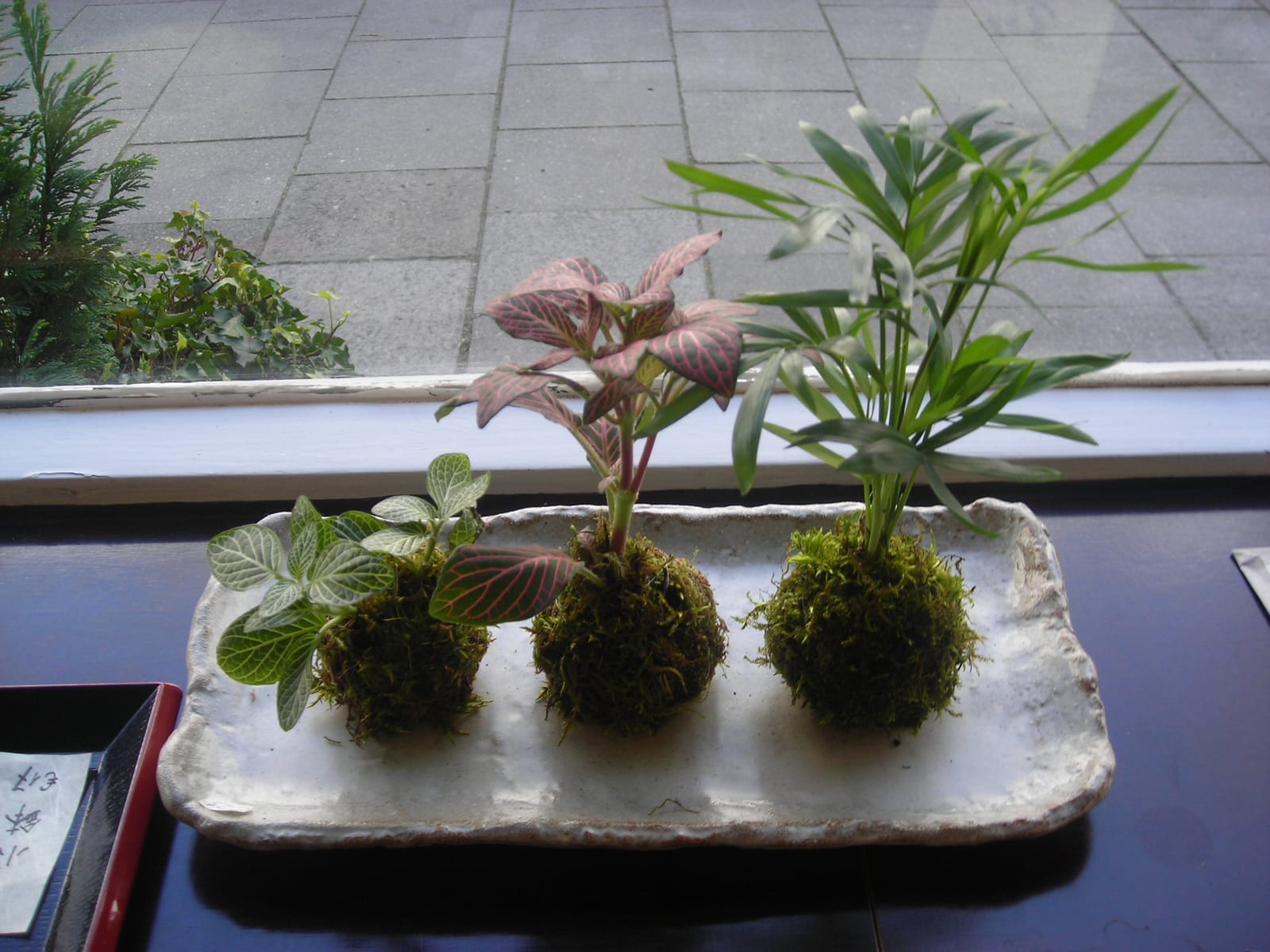
The RHS calls kokedama a type of Japanese hanging bonsai. With no pot, the moss ball is the container and the display at once: set it on a shallow dish or hang it in a window.
- Why it's memorable: it turns an ordinary houseplant into a small living sculpture.
- Care effort: lift the ball, and if it feels light, it's time to water. Illinois Extension soaks the ball in lukewarm water for 15 to 20 minutes, then lets it drain and drip dry.
- Good plants inside: Illinois Extension suggests ferns, philodendron, dracaena, spider plants and small orchids; succulents work too and need less water.
- Pets: it depends on the plant in the ball. The balls in our photo hold nerve plants and a parlor palm, and the ASPCA lists both as non-toxic to cats and dogs, as it does the Boston fern. Dracaena and pothos are toxic.
Our kokedama guide covers making, watering and refreshing a moss ball.
Is a bonsai a good gift for a beginner?
Read moreShow less
A bonsai is a real tree or shrub kept small in a shallow pot. Some last a very long time: Virginia Cooperative Extension points to the National Arboretum, where some bonsai on display are hundreds of years old. That's a gift with a story.
- Why it's memorable: a whole tree, in miniature, that can outlive the giver.
- Care effort: the RHS rates bonsai moderate to difficult and says they need attention all year. A shallow pot dries fast in warm, windy weather, yet Virginia Tech Extension warns that more bonsai die from overwatering than from drying out. The fix for both is a daily look and feel.
- Indoor or outdoor: Virginia Tech Extension says bonsai made from forest trees must live outdoors, with indoor visits of two or three hours, and that junipers and pines need full sun all day. For indoors, it lists tropical species such as ficus and jade, and the RHS adds Chinese elm, silver jade and olive.
- Pets: check the species. The ASPCA lists ficus (weeping fig) and jade plant as toxic to cats, dogs and horses.
Our first bonsai guide walks through choosing a tree for the space you have.
Who would love a mounted orchid or staghorn fern?
Read moreShow less
The American Orchid Society points out that many orchids grow on tree branches and mossy rocks in the wild. A mount brings that look indoors, like a living piece of wall art.
- Why it's memorable: the whole plant, roots and all, hangs on the wall.
- Care effort: orchid roots change color when they're soaked, so you can see when it's time. The AOS suggests watering twice, a few minutes apart. For a staghorn fern, UF/IFAS suggests waiting until it wilts slightly, and protecting most species from temperatures below 55°F (about 13°C). Our orchid care card rates a potted moth orchid Moderate; a mount needs water more often than a pot.
- Which plants: AOS author Katherine Weitz notes that species described as doing best mounted need to drain quickly, so look for those. UF/IFAS calls the staghorn ferns Platycerium bifurcatum and P. veitchii low maintenance.
- Pets: the ASPCA lists the moth orchid (Phalaenopsis) and the common staghorn fern (Platycerium bifurcatum) as non-toxic to cats, dogs and horses. Other orchids vary, so check the species.
Our mounted plants guide covers mounts, ties and watering.
Is a plant in clay pebbles (LECA) a good gift?
Read moreShow less
University of Minnesota Extension describes LECA as marble-sized clay pebbles with large spaces between them, which let air reach the roots, and notes that they can be reused.
- Why it's memorable: the roots are on show, and there's one water line to check.
- Care effort: feeding comes from the fertilizer you add to the water, and a flush with plain water now and then keeps salts from building up.
- Which plants: orchid growers have the most experience. In an American Orchid Society article, Katherine Weitz reports that paphiopedilums, phragmipediums and most cattleyas did well in pots with a little water at the bottom, while tolumnias did poorly. Trusted sources say much less about common houseplants, so start with one plant.
- Pets: it depends on the plant.
Our semi-hydroponics guide explains the setup and what to watch for.
Which rare-looking monsteras make good gifts?
Read moreShow less
- Thai Constellation (Monstera deliciosa 'Thai Constellation'): NC State calls it rare. Labs grow it from buds, so plants come out true to type. It wants brighter light than a green monstera and grows a little more slowly.
- Albo Variegata: big blocks of white, but its variegation is unstable, so a plant can push all-green or all-white growth.
- Monstera adansonii: smaller, thinner leaves full of holes; it can climb a pole or trail from a basket.
Our monstera care card rates the green Swiss cheese plant Easy to moderate. Buying a rare one? Buy from a reputable grower who shows you the exact plant, ask for the full botanical name and skip "variegated monstera seeds", since seeds don't carry variegation. Our monstera types guide covers every type, and why some cost so much.
Which unusual houseplants are easy to keep?
Read moreShow less
- Chinese money plant (Pilea peperomioides): round, glossy leaves held from the center, so NC State says they look like lily pads. Bright, indirect light and a moist but well-drained mix; it rots if overwatered. Low maintenance, and non-toxic to pets (ASPCA, NC State).
- Wax plant (Hoya carnosa): clusters of up to 30 star-shaped, fragrant flowers, though most plants don't bloom until they're 2 or 3 years old. Let the mix dry between waterings, and leave the flower spurs on, since they bloom again. Medium maintenance; the ASPCA lists wax plant as non-toxic.
- Pitcher plant (Nepenthes): hanging traps in green and red. NC State says to water with distilled water or rainwater and warns that pitchers won't form well in low humidity. Medium maintenance. It counts as safe for pets because NC State tags it non-toxic for cats and dogs, the ASPCA has no Nepenthes entry (its pitcher plant listing is a different plant), and we found no reputable source that lists it as toxic.
- Jade plant (Crassula ovata): a low-maintenance succulent for a bright spot, easy to share because it roots from a leaf cutting. The ASPCA lists it as toxic to cats, dogs and horses.
- String of pearls (Curio rowleyanus): trailing strings of pea-shaped leaves. Sources differ on how demanding it is: NC State rates it high maintenance and very particular about water and light, while the RHS calls it a low-maintenance succulent that copes with some neglect. Both agree that too much water is what kills it. NC State lists it as toxic to people and pets, and the ASPCA lists it as toxic too.
We don't have care cards for these yet, so the effort shown is NC State's maintenance rating. Our exotic houseplants guide has ten more unusual plants.
Which unusual plant gifts are safe for pets?
For a kokedama, a bonsai or a pebble pot, the pet answer depends on the plant, so check its botanical name on the ASPCA list. Our holiday plants and pets guide and pet-safe houseplants guide have more.
If a pet chews a plant and seems unwell, call your veterinarian. In the US you can also call the ASPCA Animal Poison Control Center at (888) 426-4435 (a consultation fee may apply).
Frequently asked questions (FAQ)
What do you give a plant lover who has everything?
A cutting from your own plants. University of Vermont Extension says most houseplants are easy to propagate at home, which makes a cutting a low-cost, personal gift. A plant grown in a new way, like a kokedama or a mount, is another good surprise.
Are unusual plants hard to care for?
Some are and some aren't. NC State rates the Chinese money plant and the jade plant low maintenance, while bonsai and mounted plants need frequent checks. If the person is new to plants, our easy gift plants guide is a better fit.
How do I keep a plant gift safe in the cold?
Wrap it up and keep the trip short. University of Vermont Extension says most houseplants come from the tropics and that long spells below 40°F (about 4°C) can damage them.
Where should I buy a rare plant?
From a reputable grower that shows you the exact plant and its full botanical name. Choose nursery-grown or lab-grown plants: wild plants belong in their forests.
Sources
- Five tips for gifting live indoor plants : Debra Heleba, University of Vermont Extension (2024)
- Give houseplants new life with DIY kokedama moss balls : University of Illinois Extension (2022)
- Bonsai: growing miniature trees : Royal Horticultural Society
- The Art of Bonsai : Virginia Cooperative Extension, Virginia Tech
- Lending Support: Mounting Orchids (PDF), Watering: Techniques for Success and A New Way to Grow Orchids : American Orchid Society
- Staghorn Ferns : UF/IFAS Gardening Solutions
- Small-scale hydroponics : University of Minnesota Extension
- NC State Extension Gardener Plant Toolbox: Pilea peperomioides, Hoya carnosa, Nepenthes, Crassula ovata, Curio rowleyanus, Monstera deliciosa
- How to grow string of beads : Royal Horticultural Society
- ASPCA Animal Poison Control: Phalaenopsis orchid, Common staghorn fern, Wax plant, Nerve plant, Parlor palm, Boston fern, Weeping fig, Jade plant and Swiss cheese plant
- Are succulents safe to have around pets? : ASPCA (2021)
- Our guides, each with its own sources: kokedama, first bonsai, mounted plants, semi-hydroponics, exotic houseplants, monstera types