Christmas cookie gift ideas with a plant: rosemary cookies and a rosemary tree
Bake a tin of rosemary sugar cookies and give them with a small rosemary tree: the cookies get eaten this week, and the herb keeps growing for the next batch. Pair food only with plants that are edible and safe for cats and dogs, like rosemary, and pack the cookies and the plant in separate containers so soil never touches food.
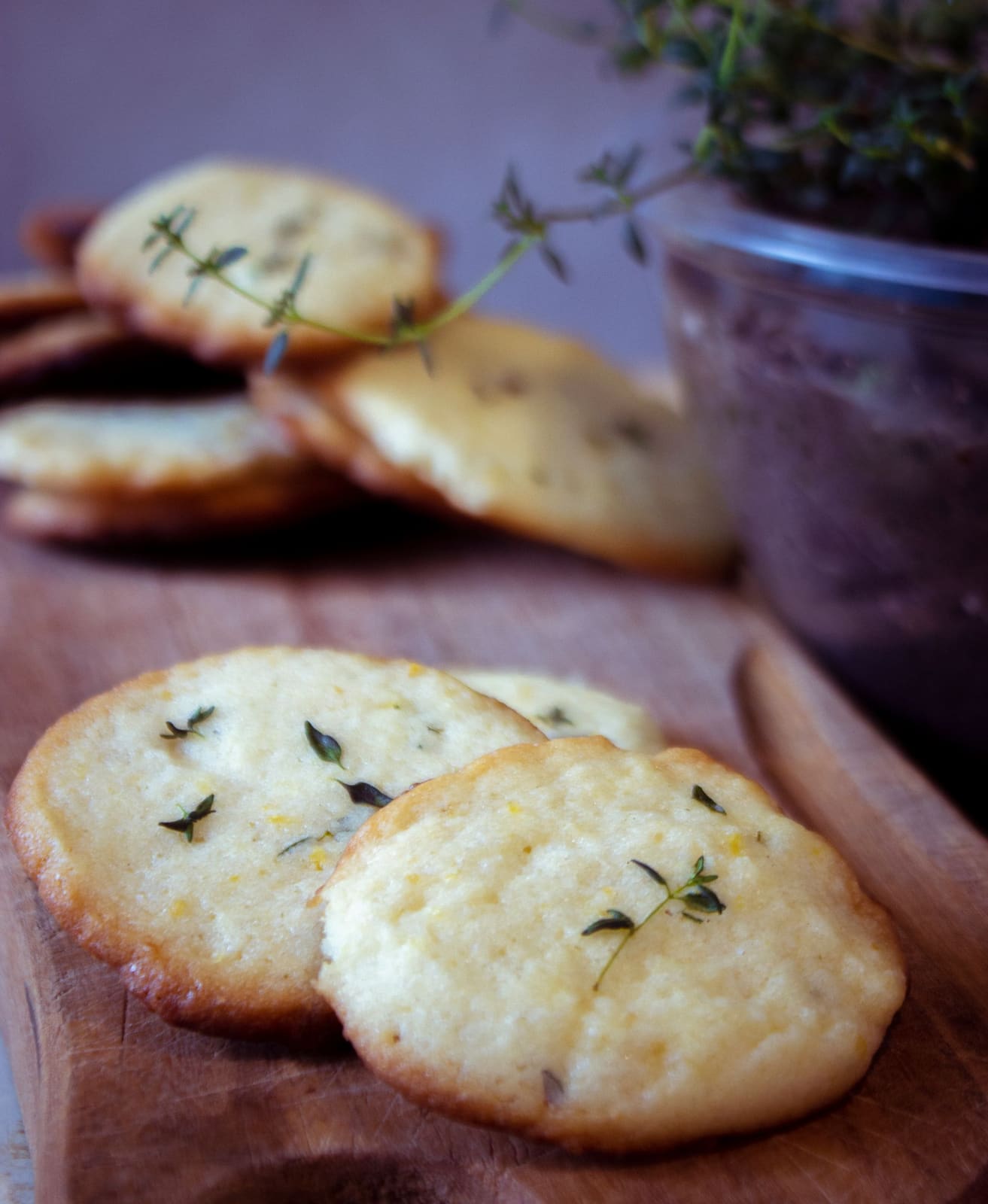
What cookies make good Christmas gifts?
Penn State Extension's food safety team points out that cookies are an easy food gift because they don't need the fridge, so they travel and keep better than anything perishable.
The fun part is matching the cookie to a living herb the person can keep:
| Cookie | Plant to give with it | Why it matches |
|---|---|---|
| Rosemary sugar cookies (recipe below) | A rosemary tree | Rosemary is often sold at the holidays as a trimmed, decorated topiary, says UW-Madison Extension, and it flavors the cookies |
| Thyme or lemon-thyme cookies | A pot of thyme | NC State Extension calls thyme a culinary herb used fresh or dried |
| Cookies with a cup of herbal tea | A pot of lemon balm | NC State says its leaves and flowers can be used for tea |
All three plants are edible and listed by the ASPCA as non-toxic to cats and dogs.
How do you make rosemary sugar cookies?
This version keeps Taste of Home's ingredients and leaves out the small star cookies and frosting, so it's quicker. Bake with rosemary sold for cooking. If you'd like to snip the gift tree itself, ask the seller first whether it was grown as a kitchen herb, since plants grown only for decoration may have been treated differently, notes the UMass Amherst greenhouse program.
Ingredients
- 1/2 cup (1 stick, 113 g) butter, softened
- 1/2 cup (100 g) sugar
- 1 large egg, at room temperature
- 1 teaspoon (5 mL) vanilla extract
- 1 3/4 cups (220 g) all-purpose flour
- 2 tablespoons (30 mL) minced fresh rosemary
- 1 tablespoon (15 mL) grated lemon zest
- 1/2 teaspoon (2.5 mL) salt
- Coarse sugar for sprinkling (optional)
Steps
- Heat the oven to 350°F (175°C).
- Beat the soft butter with the sugar until pale and fluffy, then beat in the egg and the vanilla.
- In a second bowl, whisk the flour, rosemary, lemon zest and salt together, then mix them into the butter until a soft dough forms.
- Dust the counter with a little flour and roll the dough about 1/8 inch (3 mm) thick.
- Cut out trees with a 3-inch (7.5 cm) tree-shaped cutter and set them 1 inch (2.5 cm) apart on ungreased baking sheets. Sprinkle with coarse sugar if you like.
- Bake for 10 to 12 minutes, until the edges turn golden brown.
- Let the cookies cool completely on a wire rack before you pack them.
Metric amounts use USDA FoodData Central weights (1 cup of all-purpose flour is about 125 g, sugar 200 g, butter 227 g), rounded.
Which plants are safe to give with food?
A plant that comes with food sends a message: you can eat this. So the plant has to be safe to eat for people and safe around pets too:
- Rosemary, thyme, basil and lemon balm are culinary herbs (NC State Extension) and non-toxic to cats and dogs (ASPCA).
- Mint is edible for people, yet the ASPCA lists it as toxic to cats and dogs, so we leave it off this list.
- Holly and mistletoe berries are poisonous, says NC State Extension, which warns that English holly berries are a particular risk to children. Keep both out of cookie tins and off plates, even as a garnish.
- Poinsettia, amaryllis, cyclamen and kalanchoe are lovely gifts on their own, and the ASPCA lists all four as toxic to cats and dogs. Give them separately, never as food decoration.
If a pet chews on a plant and seems unwell, call your vet. In the US, you can also call the ASPCA Animal Poison Control Center at (888) 426-4435 (a fee may apply). If a person may have swallowed something poisonous, call Poison Help at 1-800-222-1222 in the US. Our Christmas plants and pets guide covers every holiday plant in detail.
How do you pack a cookie tin with a plant?
Read moreShow less
- Cookies in their own tin. The University of Maine Extension suggests reusable containers, like a rust-free tin with a snug cover.
- The plant in its own pot. Set it in a saucer or a small box so soil and water stay put, and keep it next to the tin, never inside it.
- Clean hands. Potting mix can carry bacteria, so NSW Health in Australia advises washing your hands with soap after handling it and before eating, even if you wore gloves. Pack the cookies first, then the plant.
- A label. List the ingredients so anyone with a food allergy can check, as Maine and Penn State Extension both advise, and add how to store the cookies. Penn State notes that allergens can sneak in from snacks eaten while baking.
- A care card for the plant. Text the recipient the rosemary care card or print its share image as the tin's gift tag.
Carrying it all to a party in the cold? Wrap the plant fully and keep it out of a cold trunk; our Christmas party gift guide has the steps.
Frequently asked questions (FAQ)
Can I eat the rosemary from a rosemary Christmas tree?
Rosemary itself is a culinary herb. If the tree came from a garden shop as decoration, ask whether it was grown as a kitchen herb before you snip it for food, and bake with rosemary sold for cooking until you know.
How long do homemade sugar cookies keep in a tin?
It depends on the recipe and your kitchen, so tell the person when you baked them and how to store them. Penn State Extension suggests including storage instructions with any homemade food gift.
Is a rosemary plant safe for cats and dogs?
Yes. The ASPCA lists rosemary as non-toxic to cats, dogs and horses. As with any plant, a pet that eats a lot of it may get an upset stomach.
Sources
- Lemon-Rosemary Cutout Trees : Sarah Reynolds, Taste of Home (recipe adapted)
- FoodData Central : USDA Agricultural Research Service (portion weights for flour, sugar and butter)
- Giving gifts of food this holiday season? Chew on these food safety tips : Penn State College of Agricultural Sciences
- Gifts from the Kitchen : University of Maine Cooperative Extension
- Stay safe from Legionnaires' disease when gardening : NSW Health
- Holiday Rosemary : UW-Madison Extension Kenosha County
- Rosemary container production for December market : UMass Amherst Greenhouse Crops and Floriculture
- Thymus vulgaris, Ocimum basilicum, Melissa officinalis, Ilex aquifolium and Phoradendron leucarpum : NC State Extension Gardener Plant Toolbox
- Rosemary, Thyme, Basil, Lemon Balm and Mint : ASPCA Animal Poison Control
- Nochebuena y Navidad : Aída Martínez Carreño, Alma Mater, Universidad de Antioquia (in Spanish)