Canaan fir Christmas tree: pros and cons
A Canaan fir looks a lot like a Fraser fir: soft, dark green needles with silvery undersides on a tidy, dense pyramid. Extension services rate its needle holding excellent as long as it stays watered. Growers like it because it handles wetter ground than Fraser, so it's planted where Fraser struggles.
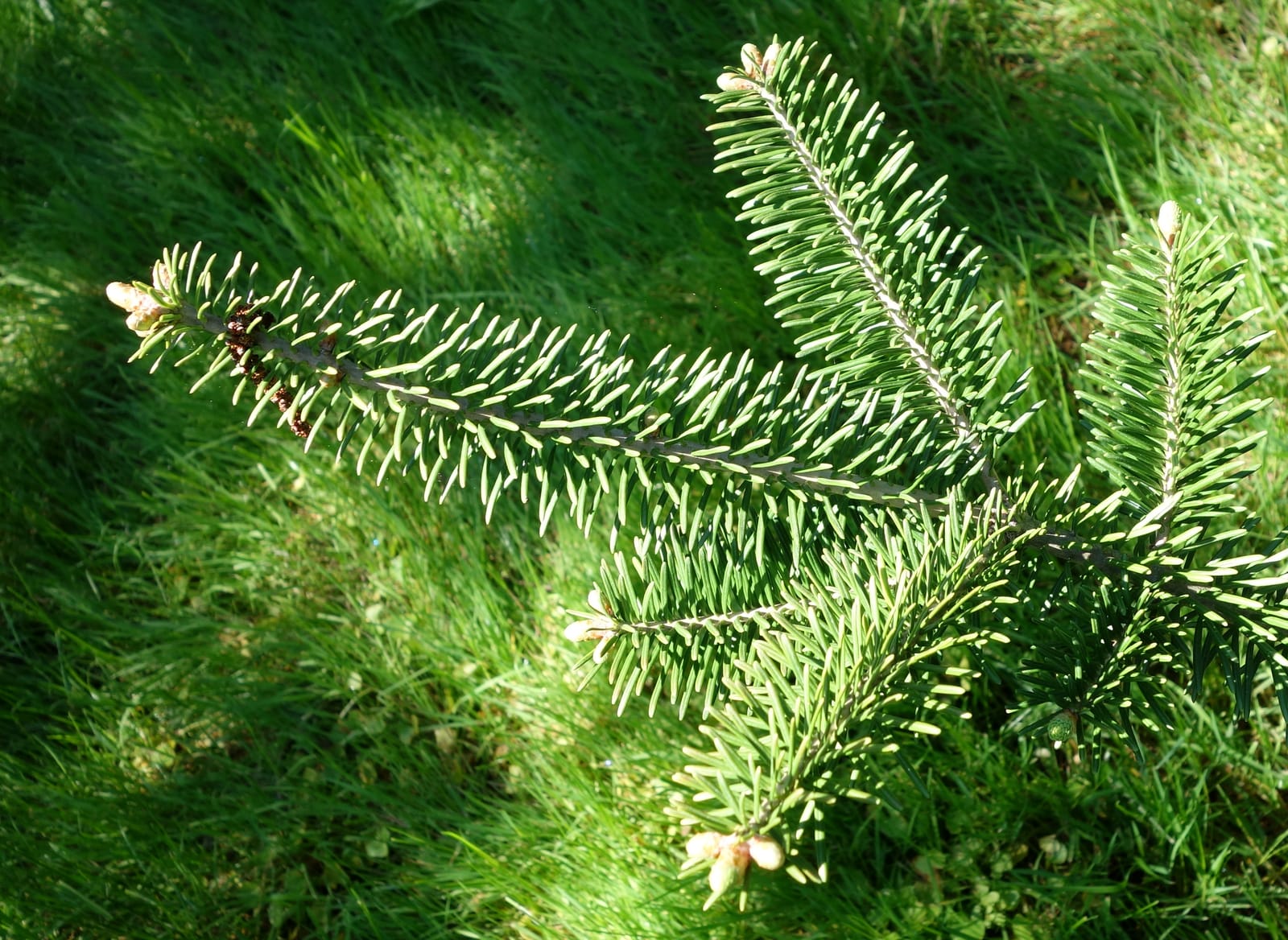
Tree card
Canaan fir · Abies balsamea var. phanerolepis
Also called: West Virginia balsam fir, bracted balsam fir
Native to: High mountains of West Virginia and Virginia
- Needle retentionExcellent
- FragranceLight to strong (sources disagree)
- BranchesMedium to stiff (sources disagree)
- NeedlesSoft
Color: Dark green, silvery underneath · Shape: Uniform, dense pyramid
Grown in: The Midwest and Northeast, where soil is too wet for Fraser fir
Keeping it fresh: Drinks a lot of water at first; holds its needles very well if kept watered.
Sources: canr.msu.edu · extension.psu.edu · yardandgarden.extension.iastate.edu · hort.extension.wisc.edu · plants.ces.ncsu.edu
What is a Canaan fir Christmas tree?
Read moreShow less
Canaan fir grows wild in the high mountains of West Virginia and Virginia, per NC State Extension's Plant Toolbox and Michigan State University's species guide. It also goes by West Virginia balsam fir and bracted balsam fir.
Botanists name it Abies balsamea var. phanerolepis: Kew's Plants of the World Online accepts it as a variety of balsam fir, first described in 1909 and native to the Appalachian Mountains. The USDA PLANTS Database and NC State list it as a variety of balsam fir, Abies balsamea var. phanerolepis, and Michigan State calls it a variety of bracted balsam fir. It's a true fir (genus Abies), with the soft needles that come with it.
What are the pros and cons of a Canaan fir?
Read moreShow less
Pros
- Holds its needles. Penn State Extension says it holds needles exceptionally well if kept watered, and Iowa State Extension rates it excellent.
- Soft needles, per Penn State, University of Wisconsin Extension and NC State.
- Good looks. Dark green on top and silvery below (Penn State, Iowa State, Wisconsin, NC State), in a uniform pyramid (Penn State) that NC State describes as a densely branched cone.
Cons and question marks
- Thirsty at first. Penn State says Canaan and Fraser fir can take up even more water than other trees early on.
- Sheds once dry. Michigan State rates it only fair after drying.
- Scent: sources disagree. Penn State calls its scent light. Iowa State rates its fragrance excellent and NC State calls it highly fragrant, while Wisconsin calls it aromatic.
- Branches: sources disagree. Wisconsin says its branches are stiff and hold heavier ornaments. Penn State rates them moderately stiff, fine for most ornaments.
How long does a Canaan fir Christmas tree last?
Read moreShow less
Penn State and Iowa State both put its needle holding at the top, and Wisconsin counts it among the best. Michigan State's guide rates it between good and excellent when the tree stands in water, and fair once it dries out. Because Penn State says Canaan fir can drink more water than most trees in its first days, a stand that ran dry overnight is its biggest risk.
For the step-by-step on a fresh cut, the right stand and how many weeks a real tree stays fresh, see our Christmas tree care guide.
Canaan fir vs Fraser fir: what's the difference?
Read moreShow less
- Looks. Both are dark green with silvery undersides and soft needles. See the Fraser fir page for its full profile.
- Needle holding. Canaan is rated excellent by Penn State and Iowa State. Fraser's rating ranges from good to excellent depending on the source, and Michigan State rates Fraser better once it dries (good, against fair for Canaan).
- Water. Penn State says both can drink even more water than other trees at first.
- On the farm. Michigan State says growers pick Canaan for sites too wet or too high in pH for Fraser, that it breaks bud later (which helps in frost pockets), and that it resists root rot moderately well. Cornell adds that growers like its root rot resistance. Wisconsin notes both are planted in the Midwest for their needle holding.
- Native home. Fraser grows wild on the high peaks of the southern Appalachians; Canaan, a little farther north in West Virginia and Virginia.
Canaan fir vs balsam fir: how are they related?
Read moreShow less
The USDA PLANTS Database and NC State name Canaan fir Abies balsamea var. phanerolepis, a variety of balsam fir. Side by side:
- Shape. Balsam is a narrow pyramid, good for tight spaces (Cornell). Canaan is a uniform, dense pyramid.
- Needle holding. Sources rate balsam good to excellent; Canaan, excellent. Both drop to fair in Michigan State's ratings once dry.
- Branches. Balsam's are flexible to moderately stiff; Canaan's, moderately stiff to stiff.
- Scent. Balsam's strong scent is its claim to fame. Canaan's is light according to Penn State and strong according to Iowa State and NC State.
- Native home. Balsam is a northern tree of the northeastern US and Canada; Canaan grows wild farther south, in West Virginia and Virginia.
Read more on our balsam fir page, or compare all 16 trees side by side.
Can you plant a Canaan fir?
Read moreShow less
NC State's Plant Toolbox lists USDA Hardiness Zones 3a to 6b and acidic soil, and says Canaan fir tolerates moist to occasionally wet soil. Michigan State agrees it's more adaptable than Fraser fir to wetter or higher pH sites. If you want a tree to plant after the holidays, it has to come potted or balled: read our cut vs potted Christmas tree guide first.
Is a Canaan fir safe for cats, dogs and kids?
The ASPCA says Christmas trees are not particularly toxic to pets. UConn's Home and Garden Education Center adds that fir, pine and spruce aren't known to be toxic if eaten. UConn and UF/IFAS Extension still warn that eating needles can cause vomiting and diarrhea. The ASPCA's holiday tips say to anchor the tree and cover the stand, since standing water can grow bacteria that upset a pet's stomach.
Wisconsin and Penn State's care tips point to soft-needled firs as the kinder pick around small children and pets, compared with sharp-needled spruces. Our guide to Christmas plants and pets covers the rest. If your pet ate part of the tree and seems unwell, call your veterinarian. In the US you can also call the ASPCA Animal Poison Control Center at (888) 426-4435 (a consultation fee may apply).
Frequently asked questions (FAQ)
Is a Canaan fir a good Christmas tree?
Yes, especially if you like the Fraser fir look. It holds its needles very well when watered and has soft needles. Just keep its stand full, since it drinks a lot early on.
Is a Canaan fir the same as a white fir?
No. One Cornell guide calls it "Canaan (White) fir," but no other source we checked does. White fir, also sold as concolor fir, is a different species, Abies concolor, which you'll find on our Christmas tree types page.
Where is Canaan fir grown?
Michigan State says growers choose it for sites too wet or too high in pH for Fraser fir, and Wisconsin Extension names Fraser and Canaan fir as the trees Midwest growers plant for needle holding.
Sources
- Christmas Tree Species Guide : Michigan State University Extension (needle retention ratings from E. Hinesley and G. Chastagner, USDA ARS Agriculture Handbook 66, revised 2016)
- Abies balsamea var. phanerolepis : NC State Extension Gardener Plant Toolbox
- Abies balsamea var. phanerolepis (ABBAP) : USDA NRCS PLANTS Database
- Abies balsamea var. phanerolepis Fernald : Plants of the World Online, Royal Botanic Gardens, Kew
- Abies fraseri : USDA Forest Service, Fire Effects Information System
- Selection and Care of Cut Christmas Trees : Penn State Extension
- Tips for Selection and Care of Cut Christmas Trees : Penn State Extension (updated September 2025)
- What types of Christmas trees are available? : Iowa State University Extension and Outreach (updated December 2024)
- Choosing the Right Christmas Tree : University of Wisconsin-Madison Extension (December 2024)
- Christmas Tree Guide 2024 : Cornell Cooperative Extension Monroe County
- ASPCA Offers Pet Safety Tips for the Holiday Season : ASPCA (November 2013)
- Holiday Safety Tips : ASPCA
- Plant Hazards to Avoid this Holiday Season : UConn Home and Garden Education Center (December 2024)
- How to Care for a Fresh Christmas Tree : UF/IFAS Extension Hillsborough County (December 2025)