Christmas tree facts (and a few fun myths)
Here are our favorite fun facts about Christmas trees, and every one comes from an extension service, a government agency or a historian. A typical tree spends about 7 to 10 years growing on a farm before it comes home with you. Trees are grown in all 50 US states, and decorated trees go back to 16th-century Germany. Along the way you'll meet a few myths and one legend, each labeled, with what the experts actually know.
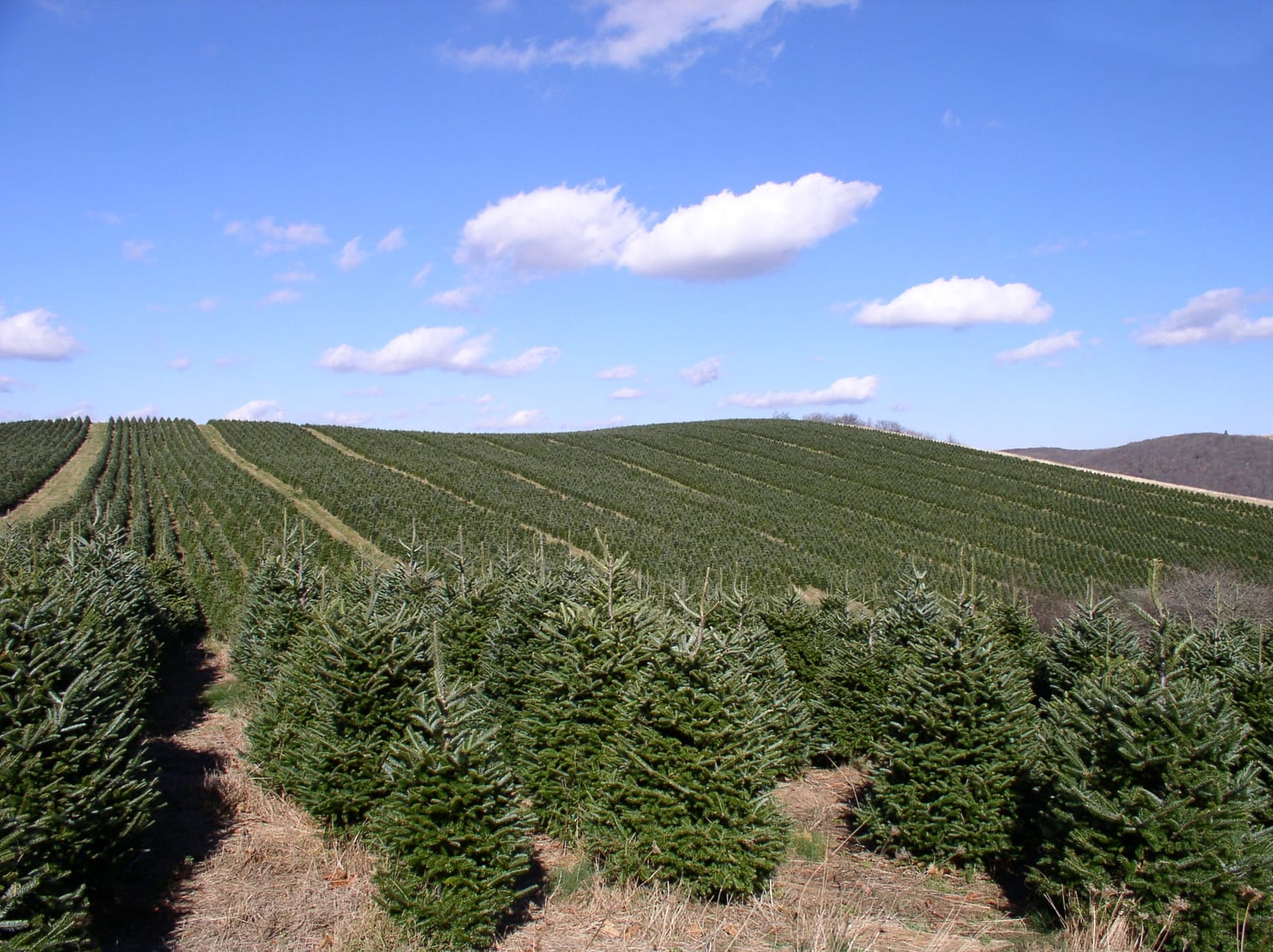
How long does it take to grow a Christmas tree?
Read moreShow less
Most Christmas trees are sold at 6 to 7 feet (1.8 to 2.1 m) tall, say University of Illinois Extension and the Ag Marketing Resource Center at Iowa State. Getting there is slow work. UW-Madison Extension says it takes 7 to 10 years after seedlings are planted, Penn State Extension gives growers the same 7 to 10 years before their first sale, and Illinois Extension says 6 to 10 years.
The tree you pick matters, too. NC State Extension gives these times:
- Fraser fir: about 5 to 8 years in the field, after it's planted out as a 5-year-old transplant.
- Eastern white pine: 6 to 8 years to reach 6 feet (1.8 m).
- Virginia pine: can be ready in 4 to 6 years.
- Spruces: 8 to 15 years.
A few more from around the continent: the USDA Forest Service gives Douglas-fir Christmas trees a 4 to 7 year rotation, Mexico's forestry agency CONAFOR says its trees take 5 to 10 years, and the Government of Quebec says a 2.5 m (about 8 foot) tree takes about 14 years from seed. So the tree in your living room may be older than some of the people decorating it.
Where are Christmas trees grown?
Read moreShow less
The USDA Economic Research Service counts about 16,000 Christmas tree farms across all 50 states, which cut more than 14.5 million trees in 2022. The Ag Marketing Resource Center and Illinois Extension also say trees are grown in every state, and the Ag Marketing Resource Center notes that most Christmas trees are grown on farms.
Farms replant. The Canadian Christmas Trees Association says that in the 1950s most Canadian trees were cut from forests, and today 98% of Canada's trees come from farms, with new trees already growing in transplant beds to replace the ones harvested. Illinois Extension, citing the National Christmas Tree Association, says growers plant 1 to 3 seedlings for every tree they harvest. In Mexico, CONAFOR says a new tree is planted after each harvest.
A few proud places:
- Lunenburg County, Nova Scotia proudly calls itself the "Balsam Fir Christmas Tree Capital of the World," per Tourism Nova Scotia, which says the county's cool, moist winters suit balsam fir. The province itself uses the title for Nova Scotia, too.
- Quebec ships Christmas trees as far as the United Arab Emirates, according to the Government of Quebec.
- Mexico grows its own Christmas trees, mostly pines plus oyamel (sacred fir) and Douglas-fir, according to CONAFOR.
To find the trees grown and sold near you, compare tree types on our Christmas tree guide.
Where did the Christmas tree tradition come from?
Read moreShow less
Evergreens came first. A Texas A&M historian, Troy Bickham, explains that long before Christmas, many cultures saw evergreens as a sign of life in winter.
Germany, 1500s. Decorated Christmas trees took hold in Germany in the 16th century, according to a Library of Congress legal blog and Bickham. Several German and Baltic cities claim the earliest record. Riga, Latvia, for example, claims a decorated tree in 1510, per Illinois Extension. Historians haven't crowned a winner, so neither will we.
Legend: Martin Luther invented the lit Christmas tree after seeing stars twinkle through the evergreens on a winter walk. It's a lovely picture! Bickham describes it as something Luther "supposedly" did, and the Library of Congress folklife blog points out that 19th-century newspapers credited Luther with things he never wrote, such as the carol "Away in a Manger." So enjoy the story, and know it's a story.
Britain, 1848. An 1848 Illustrated London News picture of Queen Victoria, Prince Albert and their children gathered around a decorated tree made the custom fashionable, and an American magazine reprinted it in 1850, Bickham writes.
The United States, early 1800s. German settlers in Pennsylvania brought the tradition with them. The Library of Congress chronology of Germans in America dates a decorated tree in Lancaster to 1821, and its legal blog says trees appeared in the 1830s.
Canada, 1781. A tree decorated in Sorel, Quebec, on Christmas Eve 1781 is often called Canada's first, per The Canadian Encyclopedia.
Which trees end up at the White House?
Read moreShow less
The White House Historical Association says the National Christmas Tree Association has held a contest since 1966 to pick the tree for the Blue Room. A grower first has to win a state or regional contest just to enter. By our count of the association's winner list from 1966 to 2024:
- Most wins by tree: Fraser fir (20), Douglas-fir (12), noble fir (7), balsam fir (6) and blue spruce (5).
- Most wins by state: North Carolina (16), Pennsylvania (11), Wisconsin (9) and Washington (7).
- The very first winner: a balsam fir from Wisconsin, in 1966.
More White House firsts, from the White House Historical Association: Benjamin Harrison put up the first White House Christmas tree in 1889, Jacqueline Kennedy started the tradition of themed Blue Room trees in 1961, and Calvin Coolidge lit the first National Christmas Tree in 1923, a gift from Middlebury College. Bickham also dates the first public White House tree to 1923.
Why does Nova Scotia send Boston a tree every year?
Read moreShow less
The Government of Nova Scotia says the tree thanks Boston for the medical staff and relief supplies it sent to Halifax in December 1917. The tree stands on Boston Common, where the city holds its tree lighting. The City of Boston says the first "Tree for Boston" came from a Lunenburg County grower in 1971, and Illinois Extension gives the same year.
The trees are big. The 2025 tree was a 45 foot (about 14 m) white spruce from Lunenburg County, marking the 54th year of the gift and 108 years of friendship, per the City of Boston. The 2014 tree was a 13 m (about 43 foot) white spruce from Antigonish County. Nova Scotia's page lists the next lighting for Thursday, December 3, 2026.
What are the myths about real Christmas trees?
Read moreShow less
Myth: real trees always shed needles all over the floor. It depends on the tree. UW-Madison Extension says true firs such as balsam, Fraser, Canaan and concolor hold their needles best. Illinois Extension says Scots pine holds its needles for about four weeks, even when it dries out. Penn State Extension rates Douglas-fir, Fraser fir, balsam fir, white pine and Scotch pine as good keepers, and Clemson Extension rates Fraser fir, Virginia pine, Scotch pine, and Leyland and Murray cypress as excellent. Even a spruce can surprise you: in a University of Alaska test, white spruce in plain water kept its needles for about 25 days before it started to lose a moderate amount, per the Alaska Department of Natural Resources. See how the trees stack up in our tree comparison chart, and keep yours happy with our Christmas tree care guide.
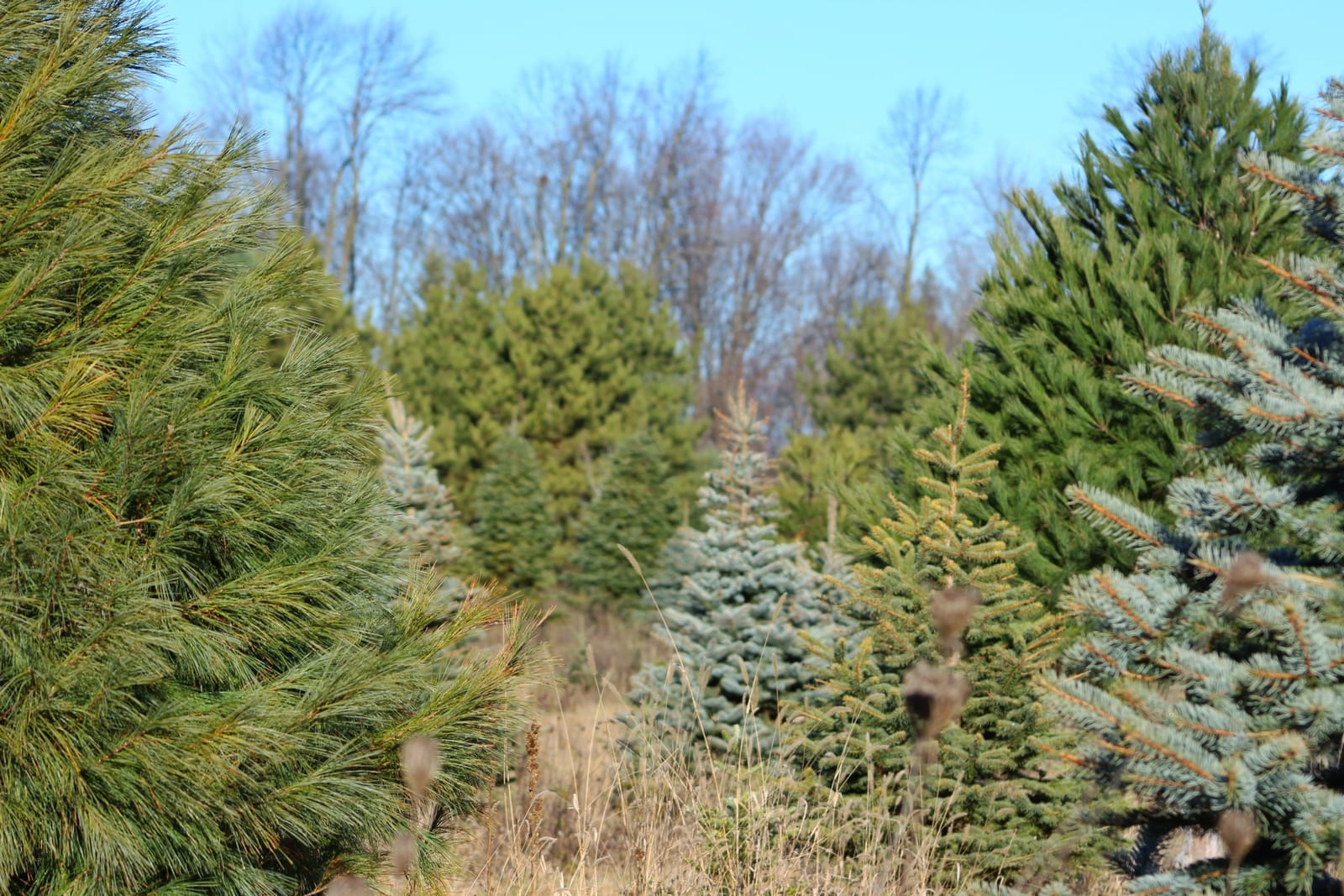
Myth: every Christmas tree is a pine. Pines are only part of the story. The White House winner list alone includes firs, spruces and a pine, and Clemson includes cypresses among its top picks.
Then there's Douglas-fir, the tree with the most confusing name on the lot. It isn't a true fir, and it isn't a pine or a spruce either, say UC Agriculture and Natural Resources, UW-Madison Extension and Brooklyn Botanic Garden. It has its own genus, Pseudotsuga (USDA Forest Service). Brooklyn Botanic Garden says botanists filed it under pine, spruce, fir, hemlock and even sequoia before they settled on a genus of its own. Its common name honors the botanist David Douglas, and its species name, menziesii, honors Archibald Menzies, who discovered it, per UC Agriculture and Natural Resources. Another fun way to tell: its cones fall from the tree whole.
Frequently asked questions (FAQ)
Did Martin Luther invent the Christmas tree?
That's a legend. Historians say decorated trees took hold in Germany in the 1500s, and the story of Luther lighting a tree with candles is one historians treat as something he "supposedly" did. The Library of Congress notes that 1800s newspapers credited Luther with things he never wrote.
What kind of tree goes to the White House?
Whatever tree wins that year's national contest. Since 1966 Fraser fir has won 20 times, more than any other tree, and North Carolina growers have won 16 times, per the National Christmas Tree Association's winner list.
Is a Douglas-fir a real fir?
No. It has its own genus, Pseudotsuga, and botanists don't count it as a true fir, pine or spruce. It's still a popular Christmas tree: it's won the White House contest 12 times.
Are real Christmas trees bad for the environment?
Most real trees are grown on farms, and growers replant after each harvest. For the full side by side, including what the sources say about potted trees, see our potted vs cut Christmas tree guide.
Which Christmas tree should I buy?
That depends on what you want most: needles that last, a strong scent or sturdy branches for heavy ornaments. Our Christmas tree types guide compares them side by side.
Sources
- Douglas-fir (Pseudotsuga menziesii) : UC Agriculture and Natural Resources, Forest Research and Outreach
- Choosing the Right Christmas Tree : UW-Madison Extension Horticulture, L. Jull (December 2024)
- Douglas-fir : Brooklyn Botanic Garden (December 2010)
- Douglas-fir : USDA Forest Service, Silvics of North America (1990)
- Balsam Fir : USDA Forest Service, Silvics of North America (1990)
- Silvical characteristics of balsam fir : USDA Forest Service, Northeastern Forest Experiment Station, A. C. Hart (1959)
- Nova Scotia's unique Christmas tree traditions : Tourism Nova Scotia
- Province Donates Christmas Trees : Government of Nova Scotia (December 2010)
- Tree for Boston : Government of Nova Scotia
- Tree for Boston to Light Up Common : Government of Nova Scotia (December 2014)
- City of Boston's official tree arrives November 18 : City of Boston (November 2025)
- Christmas Tree Facts : University of Illinois Extension
- Tree Species : University of Illinois Extension
- Christmas tree history and industry page : Canadian Christmas Trees Association
- Christmas Trees : Ag Marketing Resource Center, Iowa State University (revised February 2024)
- Charts of Note: Christmas trees : USDA Economic Research Service (December 2024)
- Christmas Tree Production : Penn State Extension (updated January 2014)
- Tips for Selection and Care of Cut Christmas Trees : Penn State Extension (updated September 2025)
- Christmas Tree Species : NC State Extension (revised January 2019)
- Selecting a Christmas Tree : Clemson Cooperative Extension, Home and Garden Information Center (revised November 2019)
- Culture des arbres de Noël : Government of Quebec (in French, updated March 2026)
- Árboles de Navidad naturales y mexicanos, ¿por qué elegirlos? : CONAFOR, Mexico's national forestry commission (in Spanish, November 2022)
- Caring for Black or White Spruce Christmas Trees : Alaska Department of Natural Resources, reprinted from the University of Alaska (2019)
- Winter Holidays at the White House : White House Historical Association
- White House Tree : National Christmas Tree Association
- Oh Christmas tree, oh Christmas tree, how much tax do I owe for thee? : Library of Congress, In Custodia Legis (December 2017)
- The Germans in America: Chronology : Library of Congress Research Guides
- Where Did That Christmas Song Come From? : Library of Congress, Folklife Today (December 2017)
- Christmas tree history essay : Texas A&M Today, Troy Bickham, first published on The Conversation (December 2022)
- Christmas in Canada : The Canadian Encyclopedia, Historica Canada