Rare orchids you can't buy, and why
Some orchids never reach a shop, however much people want them. A few are protected so strictly that taking one from the wild, or selling one across a border, is a crime. Others depend on a fungus or a shrub so completely that almost nobody has grown them outside their home ground, and no one sells them at all. Here are five of the most remarkable, why each one is off the market, and how the rules work. Where nursery-raised plants exist, we say so, because that's the only way any of these should ever change hands.
Why can't you buy some orchids?
Three different things keep an orchid off the market.
- The treaty. CITES sorts protected species into lists called appendices. Nearly every orchid is in Appendix II: it can be traded between countries, but only with export permits and a check that the trade won't harm wild populations, as the review by Hinsley and colleagues explains. The US Fish and Wildlife Service notes that this applies to commercial, scientific and personal shipments alike.
- The strictest list. A small group of orchids sits in Appendix I, notably every species of the slipper orchids Paphiopedilum and Phragmipedium. International commercial trade in them is banned unless the plants were artificially propagated (raised by people under controlled conditions) from legally obtained parents, according to Hinsley and colleagues and the US Department of Justice.
- Biology and national law. Some orchids rely on partners that can't be packed into a pot, so nobody sells them. And many countries protect their own wild orchids by law, whatever CITES says. CITES only covers trade across borders; it does nothing about collecting inside one country, the Fish and Wildlife Service points out.
The good news: almost every orchid you see for sale is nursery-grown. Hinsley and colleagues found that more than 99.9% of the 1.1 billion live orchid plants in reported legal trade from 1996 to 2015 were artificially propagated. The problem is the hidden trade in wild plants, which no official count captures.
Going deeper
Why list nearly every orchid? Hinsley and colleagues explain it as caution: many orchids look alike, and the people inspecting shipments are rarely orchid experts, so a broad listing keeps rare species from slipping through as common ones. Some material is exempt, such as seeds and seedlings growing in sterile lab flasks, with tighter conditions for Appendix I species. For international trade, "artificially propagated" has a specific meaning under CITES: grown in controlled, non-natural conditions. The Appendix I list itself changes over time, so check the current CITES appendices for any one species.
Why can't you buy a ghost orchid?
Read moreShow less
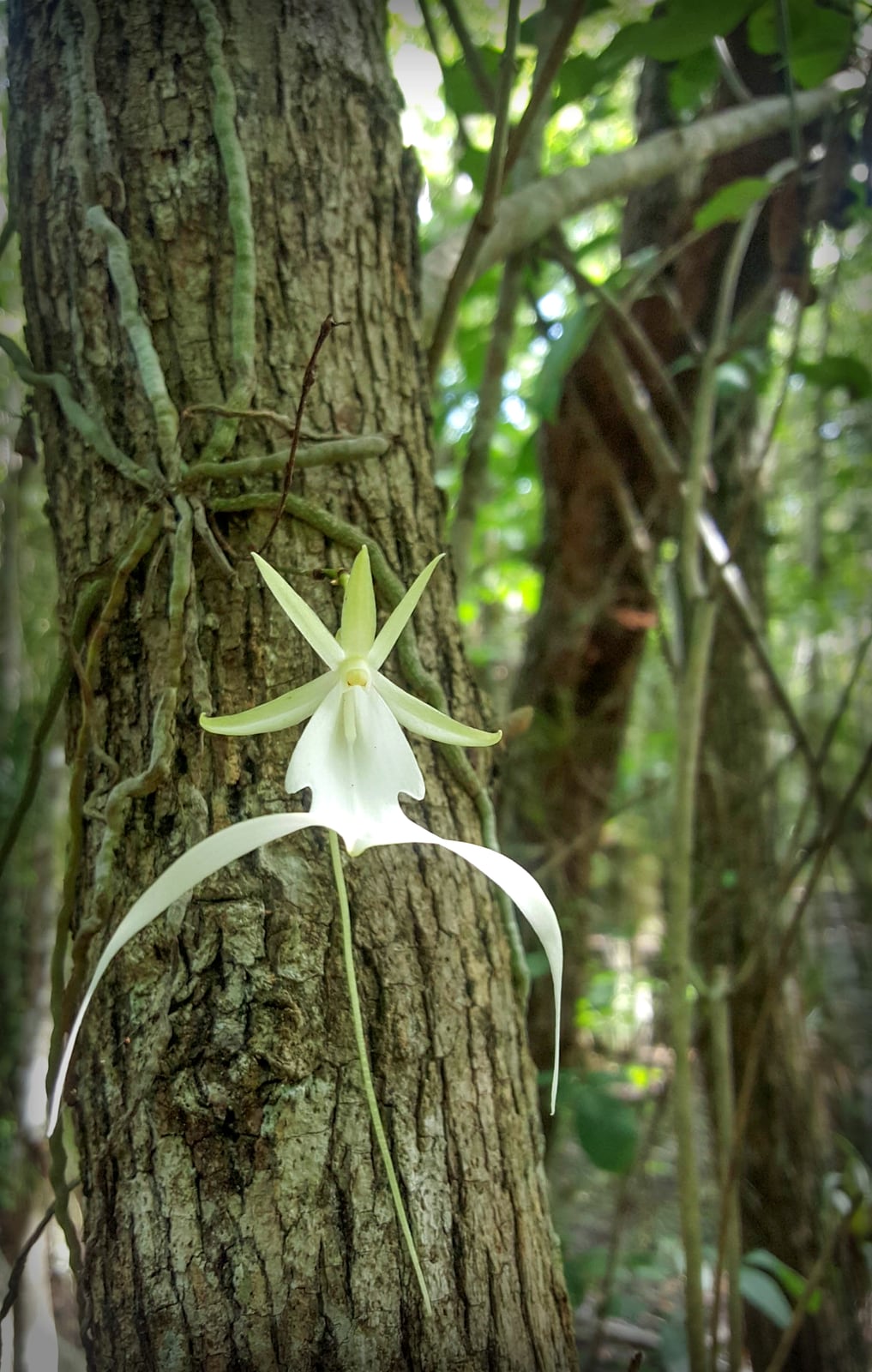
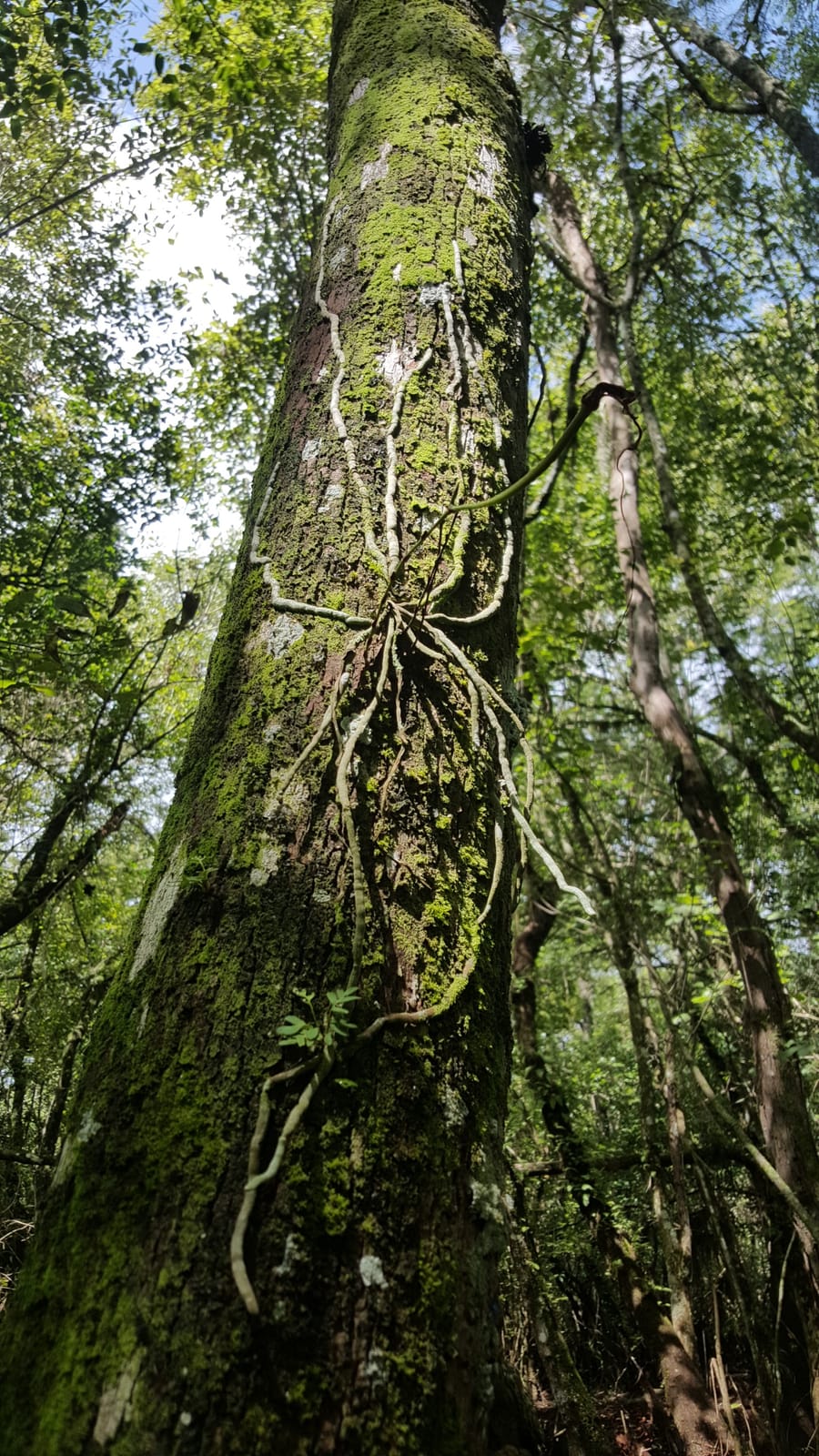
The ghost orchid (Dendrophylax lindenii) seems to float in midair, a white flower with long curling tails hanging off a tree trunk. The rest of the plant is just roots: it has no leaves at all, so its flat green roots do the photosynthesis and hold it to the bark, explains the US Fish and Wildlife Service.
Why it stays in the wild:
- It's genuinely rare. In Florida it grows in about eight isolated places, mostly on protected land; in Cuba fewer than 230 plants are known, from a single area, says the Fish and Wildlife Service. A 2021 study estimated about 2,000 plants remain in Florida and projected a 20% decline over the next decade.
- It's slow and picky. A wild plant can take 15 years or more to flower, and its seeds need one specific fungus, a Ceratobasidium, to sprout (US Fish and Wildlife Service, Hoang and colleagues, Annals of Botany).
- It's hard to grow. Both sources call it difficult to grow outside its habitat, and the Fish and Wildlife Service says that difficulty is part of what makes poachers want it.
- Poaching is a top threat. Poachers take mature, flowering plants, the very ones that make the next generation, even from protected land. Drained or altered swamps, hurricanes and creeping saltwater add to the damage.
- The law protects it. Collecting it in Florida requires the landowner's written permission and a state permit. In 2025 the Fish and Wildlife Service proposed listing it as endangered under the US Endangered Species Act; it was still marked "proposed endangered" when we checked in November 2026. Like all orchids, it's also in CITES Appendix II.
- Its locations are secret. Many sites are kept confidential, and the Fish and Wildlife Service declined to map critical habitat because published maps would help poachers. That's why this page never says where any of these orchids grow.
Is any ghost orchid for sale? The Fish and Wildlife Service notes that plants have been offered in the commercial horticultural trade in recent years, and that poaching continues anyway. A wild plant, taken from a tree, is never a legal purchase.
Going deeper
For decades the giant sphinx moth was assumed to be the ghost orchid's only pollinator. Camera traps told a different story: a 2019 study in Scientific Reports gave the first description of its pollination, and the Fish and Wildlife Service now names two night-flying moths, the fig sphinx and the pawpaw sphinx, as its main pollinators. In Florida it flowers from May to August; in Cuba, from October to December.
Lab work has made growing it possible. Pairing seeds with their wild fungus raised germination sharply (Hoang and colleagues), and greenhouse plants turned out to tolerate drying better than expected. Putting them back has been harder. Of 120 lab-raised plants tied onto trees, only 34 (28%) were alive in 2023, and none of their fruit ripened, probably because all of them came from a single seed capsule, the Fish and Wildlife Service reports.
Why does no one sell the western underground orchid?
Read moreShow less
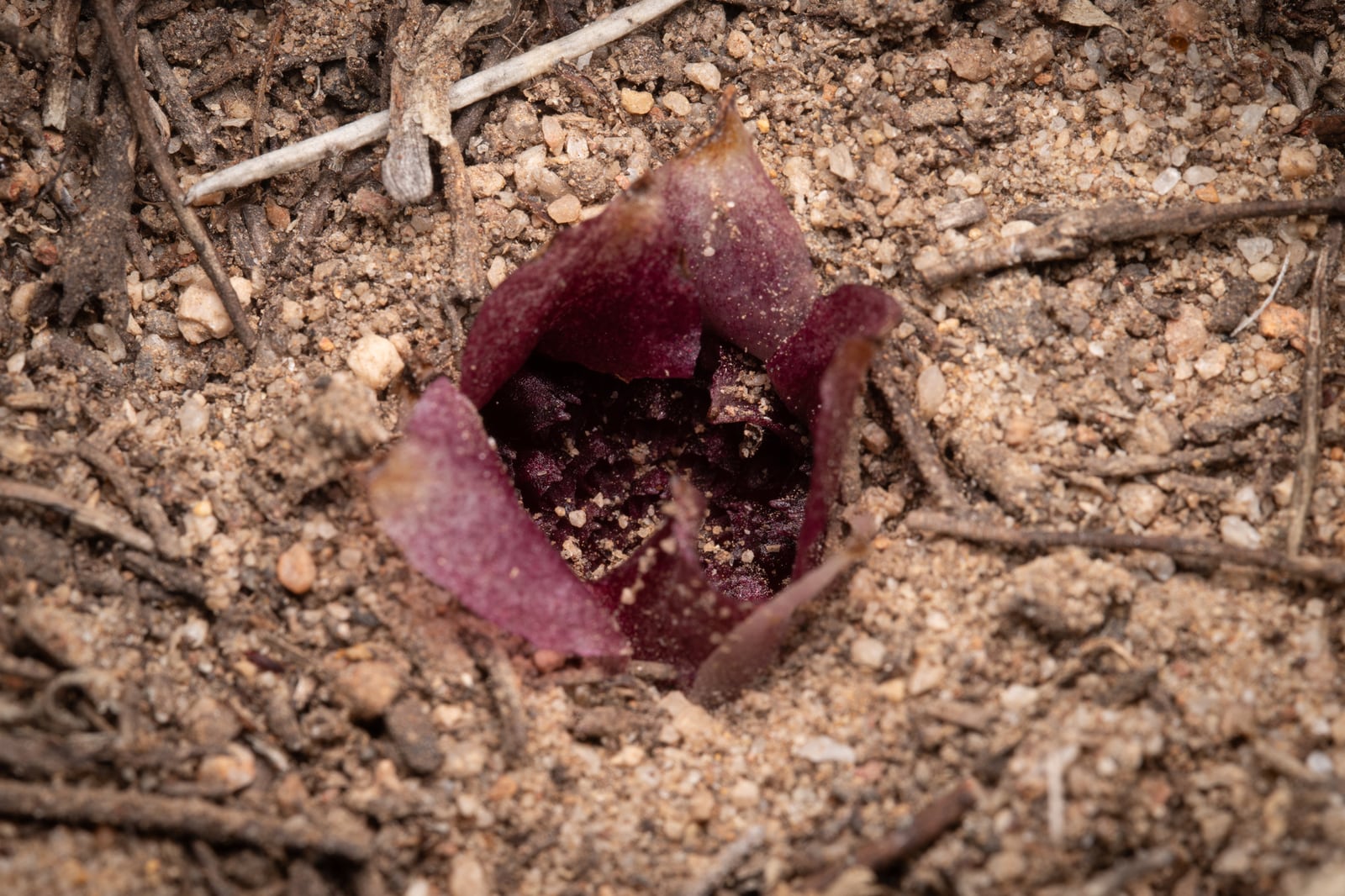
The western underground orchid (Rhizanthella gardneri) is, in the words of a University of Western Australia report, one of the most beautiful, strange and iconic orchids in the world. It grows only in Western Australia, under thickets of broom bush (a Melaleuca shrub). It has no leaves and no chlorophyll, and it flowers just below the soil surface under the leaf litter, according to Western Australia's Interim Recovery Plan and the Australian government's Conservation Advice. Its flower head, up to about 100 small reddish flowers wrapped in pinkish bracts, opens like a tulip just under the litter, where tiny flies and gnats crawl down to pollinate it.
Why you'll never see one for sale:
- It can't feed itself. It lives off a fungus that is also partnered with the broom bush's roots. The shrub makes the food, and the fungus passes some of it to the orchid. A report from the University of Western Australia's Wheatbelt Orchid Rescue Project says this three-way partnership is why it grows only under broom bush and can't be cultivated like other ground orchids.
- Almost no one has grown it. Researchers have managed it: the same report says it was first grown and flowered in pots with broom bush and its fungus in 1985, and seeds were germinated in a research glasshouse in 2004. Seed and fungus are kept frozen for future attempts. None of that has ever produced a plant for sale.
- There are very few left. The 2020 Conservation Advice counted just 9 mature plants in partial surveys and notes that counts haven't topped 50 since the 1980s. It's listed as critically endangered both in Western Australia and nationally under Australia's EPBC Act.
- Even looking for it hurts it. Finding a plant means moving leaf litter, which compacts the soil, so surveys themselves are a threat, along with a drying climate, rising salt, fire, rabbits and weeds.
Going deeper
It was discovered in 1928 by a farmer ploughing his land, and between 1928 and 1959 it turned up only seven times, always by chance during ploughing (Interim Recovery Plan). Unlike other Western Australian orchids, which release clouds of dust-like seed from a dry pod, it makes a fleshy, berry-like fruit, which small animals may eat and spread. In 2018 botanists found that the southern populations were a different species, now called Rhizanthella johnstonii, which left R. gardneri even rarer (Conservation Advice).
Why are wild Rothschild's slipper orchids off limits?
Read moreShow less
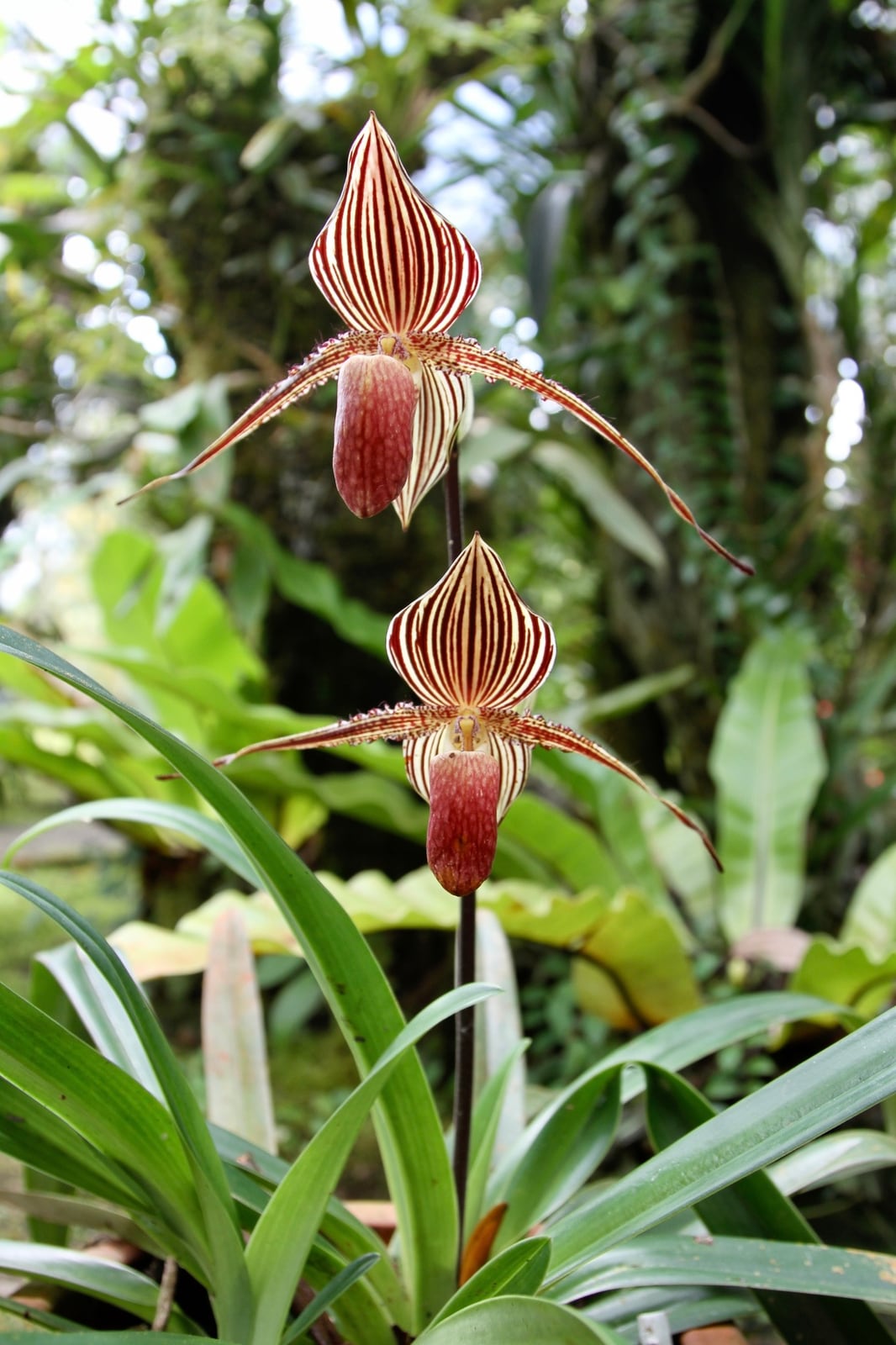
Rothschild's slipper orchid (Paphiopedilum rothschildianum) holds its flowers up on a tall stem, each one striped in cream and deep red, with long side petals stretched out sideways and a pouch, the "slipper", below.
Why the wild ones stay put:
- A tiny range. Kew's World Checklist of Vascular Plants gives its native range as Borneo (Sabah) only.
- Critically endangered. The IUCN Red List rates it critically endangered, citing heavy collection for the ornamental trade.
- Appendix I. As a Paphiopedilum, it's on CITES Appendix I (Hinsley and colleagues). A wild-collected plant can't be legally sold across borders.
Here's the difference that matters. A nursery that raises plants from seed of legally obtained parents can trade them internationally with CITES certificates showing they were artificially propagated. Hinsley and colleagues warn that wild plants are sometimes laundered into that legal stream, which is why paperwork and a known source matter.
What happened to Phragmipedium kovachii?
Read moreShow less
Phragmipedium kovachii is a Peruvian slipper orchid with flowers 11 to 15 cm across, a vivid magenta unlike any other in its group, according to a 2021 study from Peru's Universidad Nacional de San Martín. It grows only in Peru, in the Amazonas region (Kew's World Checklist).
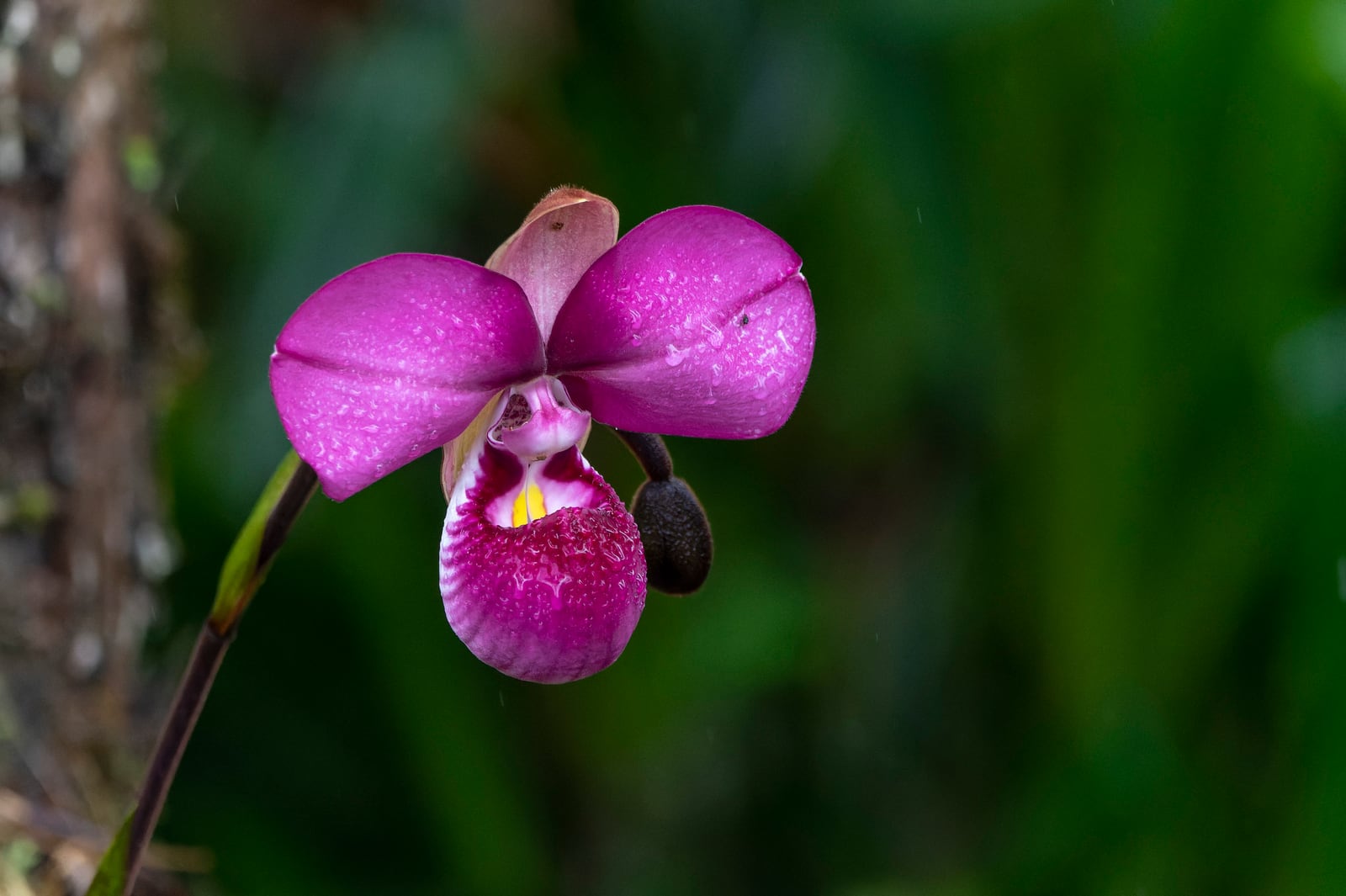
Its story is a warning:
- Discovered, then smuggled. On June 4, 2002, an orchid dealer flew into Miami from Peru carrying more than 300 orchids, including a slipper orchid no one had described, with no CITES permits, according to the US Department of Justice. A Florida botanical garden received a flowering plant and published the new species, naming it after him.
- Prosecuted. The dealer later pleaded guilty under the US Endangered Species Act, and the garden and one of its scientists were also found guilty, the Department of Justice reports. All Phragmipedium species are on CITES Appendix I, so moving one across a border without permits broke the law.
- Stripped from the wild. After its discovery the species was virtually wiped out from its limited range by collecting, the review by Hinsley and colleagues reports.
- Protected at home. Peru lists it as critically endangered under its national list of threatened plants (Decreto Supremo 043-2006-AG), notes the Universidad Nacional de San Martín study, whose authors developed a lab method to grow seedlings for conservation.
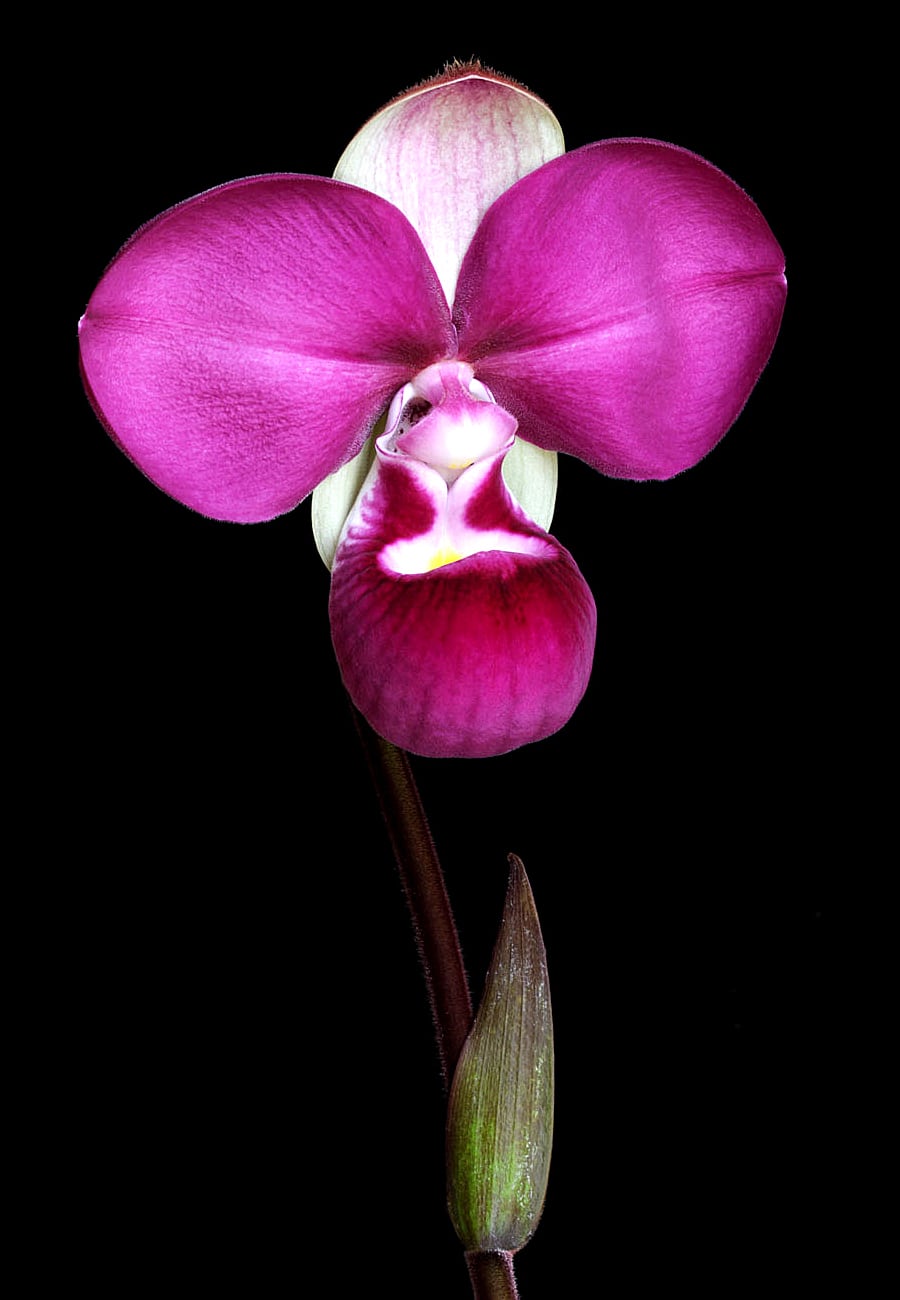
Nursery-raised plants grown from legally obtained parents are the only kind that can legally cross a border, as with every Appendix I orchid.
Why shouldn't you buy a pink lady slipper?
Read moreShow less
The pink lady slipper (Cypripedium acaule) grows wild in the woods of eastern Canada and the eastern United States, per Kew's World Checklist. UNH Extension says it's seldom grown commercially, so plants for sale were almost certainly collected from the wild, and that dug-up plants usually decline and die within a couple of years without the fungus they depend on. Because wild lady slippers so rarely survive a move, the USDA Forest Service says digging or picking them is illegal on US federal lands. Its story, and its fungus, are on our pink lady slipper page.
How do I buy rare orchids responsibly?
- Choose nursery-raised plants. The American Orchid Society supports buying artificially propagated orchids, grown from seed or cloned, because every one sold eases the pressure to collect from the wild.
- Ask where it came from. A good seller can tell you whether a plant came from seed or cultivated stock. Longwood Gardens suggests trusted nurseries, botanic garden shops and plant societies that raise their own plants.
- Skip "wild-collected" listings. Longwood Gardens lists them as a red flag, along with rare or unusually cheap plants that come with no documentation and sellers who won't share where their plants come from.
- Expect paperwork across borders. Any orchid shipped between countries needs CITES permits; an Appendix I orchid such as a Paphiopedilum or Phragmipedium also needs proof it was artificially propagated (Hinsley and colleagues). A seller who offers to skip that step is offering an illegal plant.
- Be ready to care for it. Many rare species need conditions a home can't easily give. Start with our orchid care hub and the moth orchid card at /plants/orchid. If you take on a species that grows on trees, our mounted plants guide shows how to grow one on a slab, and the repotting guide covers the potted kind.
Frequently asked questions (FAQ)
Can you own a ghost orchid?
Taking one from the wild is illegal: collecting it in Florida needs the landowner's written permission and a state permit, and the Fish and Wildlife Service has proposed listing it as endangered. The agency notes that plants have been offered in the commercial horticultural trade in recent years. A plant raised in cultivation, from a seller who can show where it came from, is the only kind anyone should own.
Can you grow a ghost orchid at home?
It's very hard. The plant has no leaves, needs constant high humidity in the wild and depends on a specific fungus as a seedling. Researchers have grown it in greenhouses, and even their plants struggled after being returned to the wild.
What is the rarest orchid in the world?
No single source names one. Some candidates have only a handful of known plants, like the western underground orchid, with 9 mature plants counted in partial surveys for Australia's 2020 assessment. Many rare orchids are also hard to count because they're hidden, tiny or kept secret.
Is it illegal to own a Paphiopedilum?
Owning a legally obtained, nursery-raised one is fine. The CITES rule is about trade: every Paphiopedilum is on Appendix I, so wild-collected plants can't be sold across borders, and nursery-raised ones need CITES paperwork showing they were artificially propagated whenever they cross one. In the United States, possessing a plant that was traded in breach of CITES is itself an offense under the Endangered Species Act, the Department of Justice notes.
What does CITES Appendix I mean for orchids?
It's the strictest CITES list. For orchids it includes all Paphiopedilum and Phragmipedium species and a few others. International commercial trade is banned unless the plants were artificially propagated from legally obtained parents.
Sources
- Endangered and Threatened Wildlife and Plants; Endangered Species Status for Ghost Orchid (proposed rule, 90 FR 23869) : US Fish and Wildlife Service (June 5, 2025)
- Ghost orchid species profile (status checked: proposed endangered) : US Fish and Wildlife Service, ECOS (checked November 12, 2026)
- Comparative seed germination and seedling development of the ghost orchid, and molecular identification of its mycorrhizal fungus : Hoang and colleagues, Annals of Botany (2016)
- Pollination ecology of the ghost orchid (Dendrophylax lindenii) : Houlihan and colleagues, Scientific Reports (2019)
- Projected status of the ghost orchid in Florida during the next decade : Mújica and colleagues, Plants (2021)
- Conservation Advice: Rhizanthella gardneri (Western Underground Orchid) : Threatened Species Scientific Committee, Australian Government (September 25, 2020)
- Underground Orchid (Rhizanthella gardneri) Interim Recovery Plan 2010 to 2015 : Department of Environment and Conservation, Western Australia (June 2010)
- Wheatbelt Orchid Rescue Project Final Report 6: The Western Underground Orchid : Mark Brundrett, University of Western Australia (2011)
- A review of the trade in orchids and its implications for conservation : Hinsley and colleagues, Botanical Journal of the Linnean Society (2018)
- CITES Appendices I, II and III : CITES Secretariat (checked November 12, 2026)
- Paphiopedilum rothschildianum, Rothschild's slipper orchid : IUCN Red List (2015 assessment)
- Paphiopedilum rothschildianum : Royal Botanic Gardens, Kew, Plants of the World Online (checked November 12, 2026)
- Virginia orchid dealer pleads guilty to violating the Endangered Species Act : US Department of Justice (June 10, 2004)
- Marie Selby Botanical Gardens, Inc. and employee charged with violating the Endangered Species Act : US Department of Justice (December 18, 2003)
- Micropropagación de Phragmipedium kovachii, con fines de conservación genética : Ruiz Sánchez, Revista Agrotecnológica Amazónica, Universidad Nacional de San Martín, Peru (2021)
- Can you dig up pink lady's slippers? : UNH Extension, Yard and Garden Infoline (March 29, 2021)
- Meet the Ladies: The Slipper Orchids : USDA Forest Service, Celebrating Wildflowers (archived copy, 2012)
- AOS Conservation Initiatives : American Orchid Society (checked November 12, 2026)
- The illegal plant trade: what plant lovers need to know : Longwood Gardens (October 15, 2025)