Orchids of Colombia: the national flower and the natives behind it
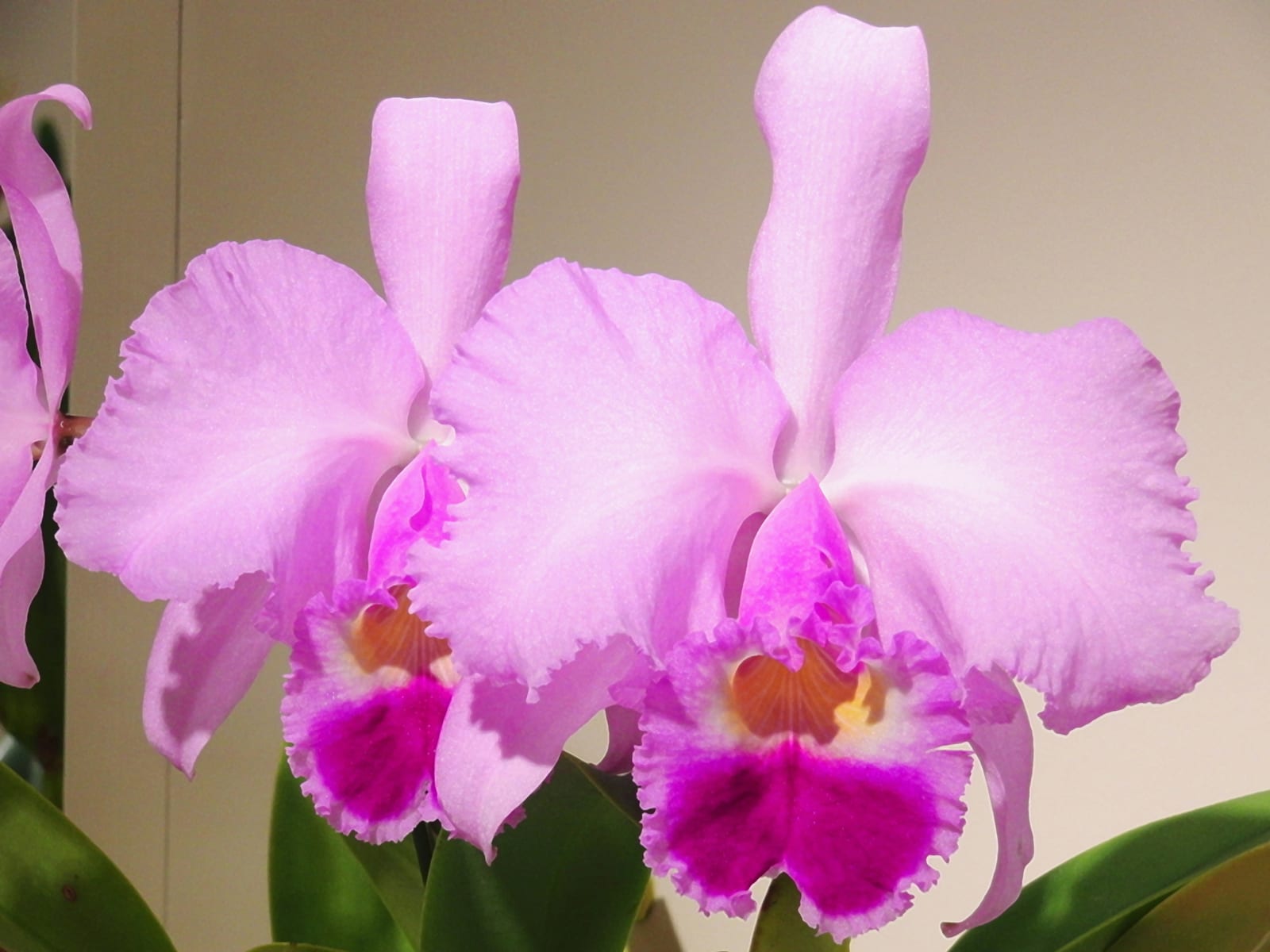
No country on Earth has more orchid species than Colombia. Kew's world checklist counts 4,574 native ones, the highest of any country, and Colombia's own 2015 national orchid plan counted 4,270. The star is Cattleya trianae, the national flower, which grows wild only in the Colombian Andes and is now endangered. That's why Colombia's wild orchids stay in the forest, and the one on your windowsill should come from a nursery.
How many orchid species does Colombia have?
Read moreShow less
Every count we found agrees on the ranking, even though the numbers differ:
- 4,574 native species. That's Kew's count in the June 2026 release of the World Checklist of Vascular Plants, the data behind Plants of the World Online. It's the highest of any country in the checklist, with Ecuador second at 4,456. Kew records 2,323 of them in Colombia alone, across 223 genera.
- 4,270 species in 274 genera, 1,572 found only in Colombia. Those are the numbers in Colombia's 2015 national orchid plan, written by the Ministry of Environment with the Universidad Nacional de Colombia. The ministry adds that 944 of those endemics are in the Andean region.
Each count uses its own list and its own date. The first place holds either way.
Going deeper
By Kew's count, the biggest groups in Colombia are small-flowered genera you'll rarely see for sale: Epidendrum (571 species), Stelis (492), Lepanthes (364), Maxillaria (277) and Pleurothallis (229). Older figures are lower. The ministry's Resolution 0956 of 2010 said about 3,500 species. The same resolution counted 207 threatened orchid species from the 2007 Red Book (6 critically endangered, 64 endangered, 137 vulnerable) and warned that close to 90% of the country's wild orchids had never been assessed.
Why is Cattleya trianae Colombia's national flower?
Read moreShow less
Who picked it. Colombia's Ministry of Environment, in Resolution 0956 of 2010, says the choice came from a 1936 opinion of the Academia Colombiana de Historia. No law or decree ever made it official, the ministry adds, yet the country accepts it socially and culturally. That same resolution named 2010 Colombia's National Year of Orchids.
Why those colors. Longwood Gardens points out that the lip shows colors resembling the Colombian flag's yellow, blue and red. The flower is famously variable, though. The American Orchid Society (AOS) describes petals from pure white to lilac and amethyst purple, with a crimson lip and an orange throat, and says the botanist Lindley once named it quadricolor for the four colors he saw. NC State lists pink, blue to lavender and white forms.
Where the name comes from. It was described in 1860 from a Colombian plant and named for José Jerónimo Triana, a botanist from Bogotá (AOS, Longwood).
Where it grows. Only in Colombia, on trees in the Andes between 900 and 1,800 m (about 3,000 to 5,900 ft), according to ColPlanta, the Universidad Nacional's plant catalog published with Kew. Kew's checklist also records it in Colombia only.
How it's doing. It's endangered. The ministry says its habitat has vanished from much of the country, that some regions lost about 80% of it in the last hundred years, and that collecting has been heavy. ColPlanta lists it as Endangered on Colombia's 2021 national Red List.
In Colombia it's called flor de mayo (May flower), along with lirio de mayo, flor de San Juan and catleya, among other names the Universidad Nacional records (ColPlanta). Travel to Brazil and flor de maio means a different plant: the Christmas cactus. To grow one at home, start with the Cattleya care card.
Which native Colombian orchids are worth knowing?
Read moreShow less
These five genera all have species grown far from the forest. Counts are from Kew's June 2026 checklist, leaving out natural hybrids.
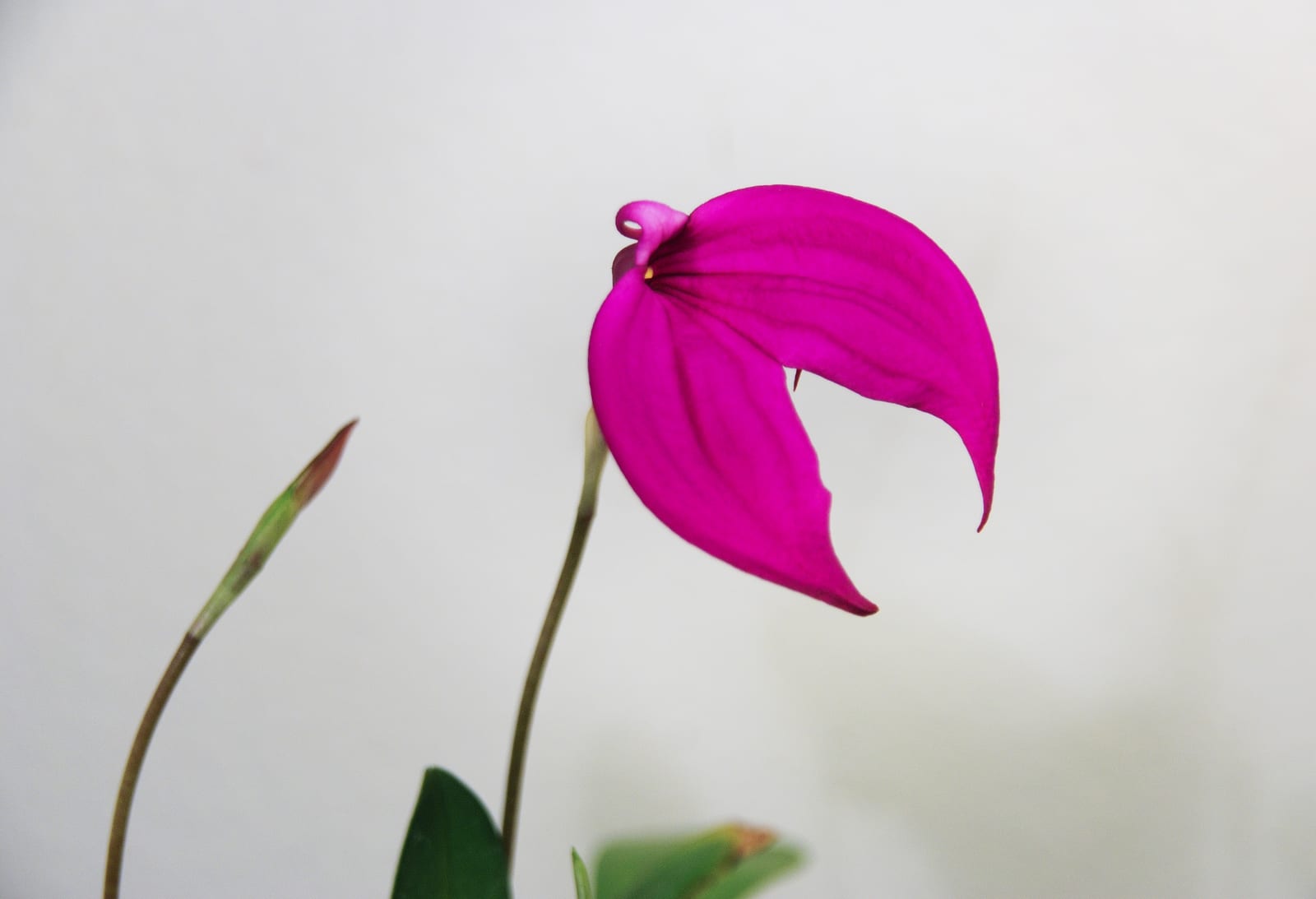
- Masdevallia: 165 species in Colombia, 101 of them found nowhere else; only Ecuador and Peru have more. A Universidad Nacional study in Acta Biológica Colombiana records the Colombian name banderitas ("little flags") for two species. They come from cool, cloudy mountain forests and want 60 to 90% humidity, per the AOS and NC State. The Masdevallia coccinea below grows wild only in Colombia. Care details live on the Masdevallia card.
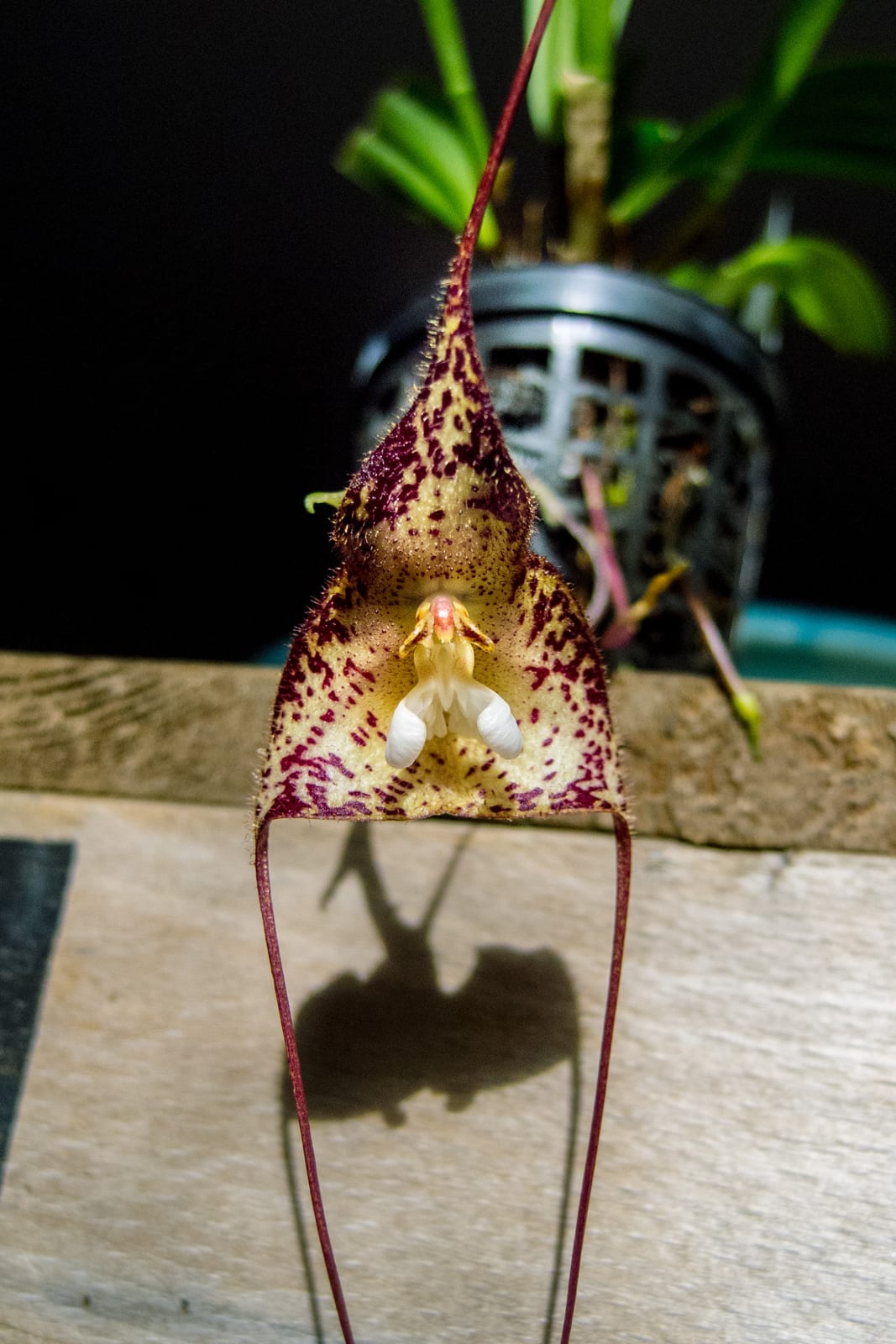
- Dracula: Colombia has 79 species, more than any other country (Ecuador has 61), and 64 grow wild only there. These used to be filed under Masdevallia. Their sepals end in long, thin tails, and the bumpy petal tips can look like two eyes beside a nose, explains a 2023 AOS article. The AOS counts about 134 species in all; Kew counts 147. They grow in cool mountain cloud forest at roughly 1,400 to 2,000 m (4,500 to 6,500 ft). Most hang their flowers downward, so growers use mesh pots or baskets. The AOS says humidity should only dip below 60% briefly (70 to 85% is ideal) and the roots should stay moist, since long dry spells kill them.
- Miltoniopsis: four of its five species grow in Colombia (Kew, ColPlanta), and Miltoniopsis phalaenopsis grows only there. These are the pansy orchids, from high, cool cloud forests, per NC State and the New York Botanical Garden. See the Miltoniopsis card.
- Odontoglossum, now Oncidium: Kew has folded Odontoglossum into Oncidium. The RHS says cool-growing oncidiums used to be called Odontoglossum, and shops still use the name. Colombia has 154 Oncidium species, more than any other country. The famous Odontoglossum crispum, today Oncidium alexandrae, grows wild only in Colombia, according to Kew. Its care is on the Oncidium card.
- Cattleya: besides the national flower, Kew records nine Cattleya species in Colombia, five of them found only there: C. trianae, C. schroederae, C. warscewiczii, C. quadricolor and C. mendelii. The AOS notes that C. schroederae was first described as a variety of C. trianae.
Why do so many of them want cool, damp air? They're mountain plants. Our guide to where orchids come from shows how a cloud forest home shapes their care.
Why are Colombia's wild orchids protected?
Losing the forest is the biggest threat. Colombia's Ministry of Environment names the destruction of natural ecosystems, above all deforestation and land cleared for farming, as the main danger to the country's orchids. Many need a host tree and suffer from small changes like drier air or more direct sun (Resolution 0956 of 2010).
Collecting adds to it. The ministry reports high levels of collecting for Cattleya trianae.
What the law says. The ministry's 2010 resolution recalls two layers of protection:
- A national ban. Since 1977, a resolution from Colombia's former natural resources agency, INDERENA (Resolution 213), has banned harvesting, transporting and selling wild orchids anywhere in the country. In 2021 the ministry opened a public consultation on a draft to clarify and update that resolution, so check with the local environmental authority if a specific plant is in question.
- CITES. Colombia adopted the international treaty on trade in wild species through Law 17 of 1981. Every orchid species is covered, so moving one between countries takes permits. Our rare orchids guide explains how that works.
There's a plan. Colombia's 2015 national plan for the study and conservation of orchids, from the ministry and the Universidad Nacional's Instituto de Ciencias Naturales, gathers what's known about the country's species and how to protect them.
What you can do. Buy orchids raised in a nursery, from seed or in a lab, from someone who can tell you where they came from. The AOS points out that every nursery-raised plant sold eases the pressure on wild ones. If you meet an orchid in the forest, leave it on its tree and enjoy it there. Our step-by-step list is in how to buy rare orchids responsibly.
Where can you see orchid shows in Colombia?
Read moreShow less
- Medellín, during the Feria de las Flores. The Sociedad Colombiana de Orquideología, the Jardín Botánico de Medellín and the artist Julián Posada stage an orchid show in the garden's Orquideorama, a tradition since 1995, according to the Medellín city government. The 2023 show brought together about 2,000 orchids from 23 growers.
- Bogotá, the Exposición Nacional de Orquídeas. The Jardín Botánico de Bogotá José Celestino Mutis runs it with the Asociación Bogotana de Orquideología. Its editions are numbered: the 18th was in September 2019, with about 3,000 plants from exhibitors in nine regions, and the 19th in September 2022, per the Bogotá city government (2019, 2022).
A show is the easiest way to see Colombia's natives up close, and to buy from a grower who can tell you how the plant was raised.
Frequently asked questions (FAQ)
Is Cattleya trianae safe for cats and dogs?
The ASPCA lists it as non-toxic to cats and dogs, under the older spelling Cattleya trianaei. Its list also includes Masdevallia and Odontoglossum crispum as non-toxic. Dracula and Miltoniopsis aren't on the list, so they're unrated. If your pet chews a plant and seems unwell, call your veterinarian or the ASPCA Animal Poison Control Center at (888) 426-4435 (a fee may apply).
When does Cattleya trianae bloom?
The AOS says December to February, which is why it's called the Christmas orchid in English. NC State agrees it tends to flower in winter. We found no reliable source explaining the Colombian name flor de mayo.
Can I bring an orchid home from Colombia?
Only with paperwork. Every orchid is covered by CITES, so taking one across a border needs permits, and the US Fish and Wildlife Service notes that this applies to personal shipments too (see our rare orchids guide). Inside Colombia, the 1977 ban covers taking wild orchids. The simplest souvenir is a photo from an orchid show, or a nursery-raised plant bought at home.
How do I grow Cattleya trianae at home?
NC State says to treat it like any other Cattleya, and Cattleyas need plenty of light to bloom. The Cattleya care card gives light, water and temperature with sources, and our guide to getting an orchid to rebloom helps if it won't flower.
Sources
- World Checklist of Vascular Plants, version 16 (June 2026), the data behind Plants of the World Online : Kew, World Checklist of Vascular Plants (Royal Botanic Gardens, Kew, June 2026)
- Plan para el estudio y la conservación de las orquídeas en Colombia : Colombian Ministry of Environment and Sustainable Development and Universidad Nacional de Colombia (2015)
- Colombia, segundo país con mayor diversidad de plantas del planeta : Colombian Ministry of Environment and Sustainable Development (May 2019)
- Resolución 0956 de 2010 : Colombian Ministry of Environment, Housing and Territorial Development (May 19, 2010)
- Draft resolution amending Resolution 0213 of 1977 : Colombian Ministry of Environment and Sustainable Development (consultation, December 2021)
- Cattleya trianae : ColPlanta, Universidad Nacional de Colombia and Royal Botanic Gardens, Kew
- Orchids as Emblems of National Pride : Longwood Gardens (K. Aguilar, September 2022)
- Cattleya, Queen of the Orchids, Growing Draculas, Masdevallia culture sheet and AOS conservation initiatives : American Orchid Society (1956, edited; W. Wanninger, June 2023)
- Cattleya trianae, Masdevallia and Miltoniopsis roezlii : NC State Extension Gardener Plant Toolbox
- The Magnetic Appeal of Pansy Orchids : New York Botanical Garden (March 2013)
- Morfología y morfometría de dos especies de banderitas (Orchidaceae: Masdevallia) en Colombia : Cuervo Martínez, Bonilla Gómez and Singer, Acta Biológica Colombiana 17(3) (2012)
- Cool growing oncidium orchids : Royal Horticultural Society
- Endangered Species Status for Ghost Orchid (proposed rule) : US Fish and Wildlife Service (June 5, 2025)
- Christmas Orchid (Cattleya trianaei), cats plant list and dogs plant list : ASPCA Animal Poison Control
- Florecer: el maravilloso mundo de orquídeas presente en la Feria de las Flores : Medellín city government (August 2023)
- Exposición Nacional de Orquídeas en el Jardín Botánico (September 2019) and XIX Exposición Nacional de Orquídeas (September 2022) : Bogotá city government